
 By Hendra Lukman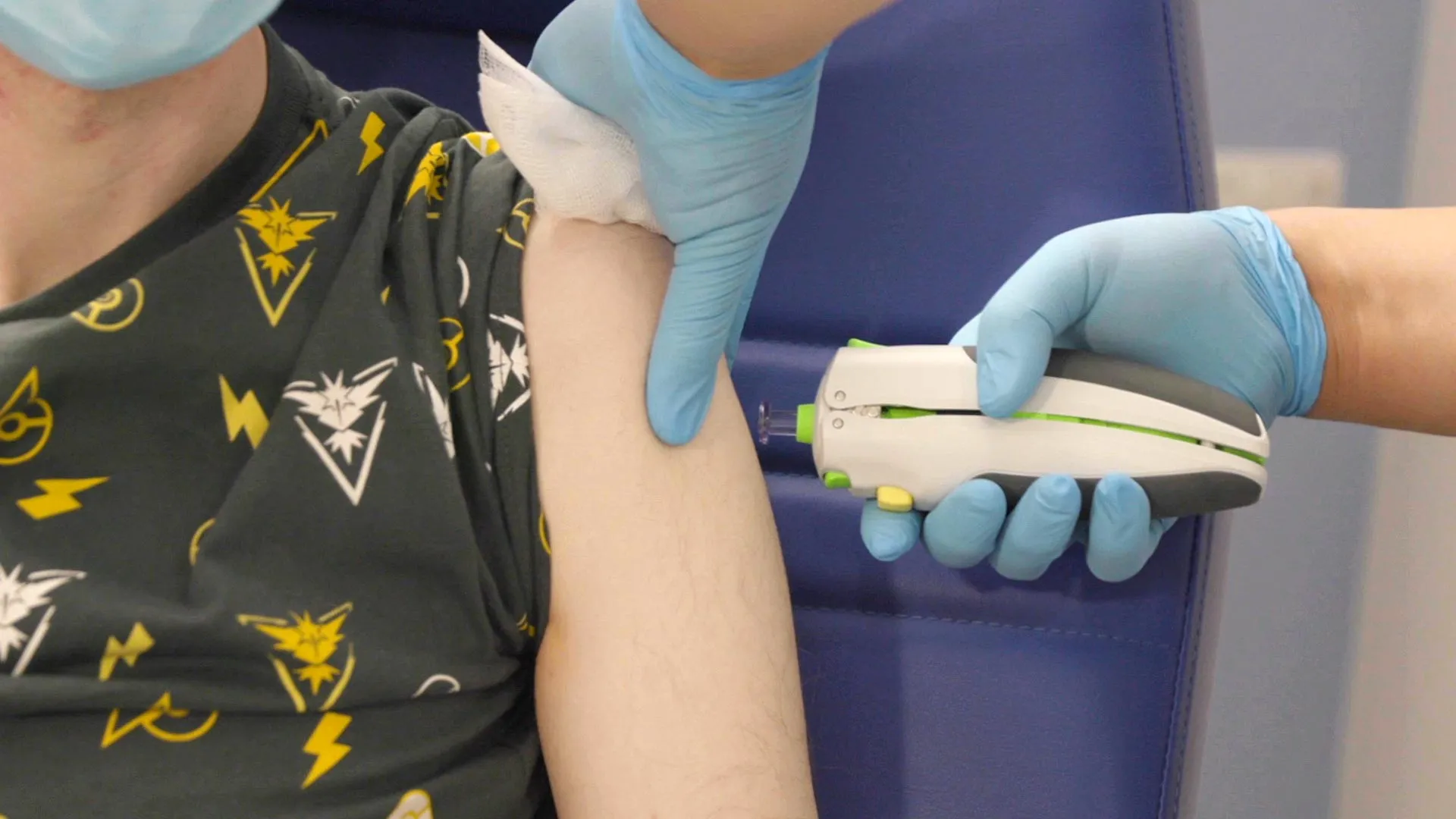
A groundbreaking universal coronavirus vaccine, engineered with artificial intelligence and designed to offer broad protection against a wide spectrum of coronaviruses, has successfully completed its initial human clinical trial. This significant milestone, announced following the publication of findings in the Journal of Infection, represents a pivotal step towards developing vaccines that can proactively defend against current and future viral threats, moving beyond the limitations of strain-specific and constantly updated inoculations.
The experimental vaccine, a collaborative effort between researchers at the University of Cambridge and its spinout company DIOSynVax (DVX) Ltd, underwent rigorous safety testing in a Phase 1 clinical trial involving 39 healthy volunteers aged 18 to 50. The results confirmed the vaccine’s safety profile, with no significant adverse side effects reported. Crucially, the trial demonstrated that the vaccine elicited robust immune responses not only against SARS-CoV-2, the virus responsible for the COVID-19 pandemic, and its predecessor SARS, but also against related bat coronaviruses that have not yet demonstrated the capacity to infect humans. This broad-spectrum immune stimulation is a core tenet of the vaccine’s "universal" design, aiming to provide a more enduring and adaptable defense.
This trial also marks a historic first: it is the initial human evaluation of a vaccine whose active ingredient was conceived entirely through advanced computational simulations. The innovative approach leverages artificial intelligence and machine learning to design what researchers term a "super-antigen." This super-antigen is the key component that educates the immune system to recognize and neutralize viral invaders. Instead of targeting a single, specific virus strain, the AI system meticulously analyzed vast amounts of genetic data from the Sarbeco coronavirus family, a group that includes SARS-CoV-2 and SARS, as well as numerous bat coronaviruses with pandemic potential. By identifying conserved features shared across this entire viral lineage, the AI synthesized a single, optimized antigen designed to confer immunity against a multitude of related viruses, including those yet to emerge or adapt for human transmission.
The Genesis of AI-Driven Vaccine Design
The development of DIOSynVax’s technology stems from a recognition of the inherent limitations of conventional vaccine design. For decades, vaccine development has largely been a reactive process. As viruses mutate and evolve, circulating strains change, necessitating the continuous reformulation and updating of vaccines, a process that is often time-consuming and can lag behind viral evolution. The COVID-19 pandemic starkly illustrated this challenge, with the rapid emergence of numerous variants requiring successive updates to existing vaccines.
Professor Jonathan Heeney, a leading figure in viral zoonotics research at the University of Cambridge’s Department of Veterinary Medicine and the scientific architect behind this new approach, articulated the vision: "We’ve converted vaccine development from being reactive to being future proof. Our vaccines will continue to provide protection against viruses even as they mutate into new strains." He further elaborated on the significance of this paradigm shift: "We’ve overcome the problem of traditional vaccines, which have limited protection. It means we can escape the constant cycle of chasing the virus variants circulating in humans and updating the vaccines to try to catch up, like a dog chasing its tail."
The AI-powered design process for the super-antigen involved intricate computational modeling. The system analyzed the three-dimensional structures and genetic sequences of various Sarbeco coronaviruses, identifying conserved epitopes – the specific parts of an antigen that the immune system recognizes. By combining these conserved elements into a single, potent antigen, the goal was to create an immune response that would be broadly effective across the entire Sarbeco family. This "future-proofing" strategy aims to bypass the need for constant updates, offering a more sustainable and robust defense against a class of viruses known for their adaptability and potential for zoonotic spillover.
From Simulation to Human Trial: A Chronology of Innovation
The journey from conceptualization to human trial involved several critical stages. The initial AI-driven design of the super-antigen was followed by extensive preclinical studies. These included rigorous animal model testing, which demonstrated the vaccine’s ability to generate potent immune responses against a range of coronaviruses. These positive preclinical results paved the way for the commencement of human clinical trials.
The Phase 1 trial, sponsored by University Hospital Southampton NHS Foundation Trust (UHSFT) and conducted at National Institute for Health and Care Research (NIHR) Clinical Research Facilities in Southampton and Cambridge, focused primarily on assessing the safety and tolerability of the vaccine. The 39 healthy volunteers received the vaccine, which was delivered as a DNA vaccine utilizing a novel microfluidic jet system. This needle-free delivery method itself represents a significant innovation, offering a potential alternative for individuals apprehensive about injections and potentially streamlining large-scale vaccination campaigns, especially in resource-limited settings where traditional injection methods can be challenging.
The publication of the trial results in the Journal of Infection marks the culmination of this initial human safety evaluation. The findings not only validate the safety of the AI-designed vaccine platform but also provide crucial early evidence of its immunological potential.
Supporting Data and Scientific Rationale
The Sarbeco coronavirus family, to which SARS-CoV-2 belongs, is a significant area of concern for global public health. This group of viruses has demonstrated a propensity for zoonotic transmission, with SARS (Severe Acute Respiratory Syndrome) and MERS (Middle East Respiratory Syndrome) being notable examples of previous outbreaks originating from animal reservoirs. Bat populations are known to harbor a vast diversity of coronaviruses, many of which possess the genetic machinery to adapt and spill over into human populations.
The effectiveness of traditional vaccines is often predicated on their ability to elicit neutralizing antibodies against specific viral surface proteins, such as the spike protein. However, mutations in these proteins can rapidly render vaccines less effective. The DIOSynVax approach circumvents this by targeting conserved regions of viral proteins that are less prone to mutation. The "super-antigen" is designed to present these conserved regions to the immune system, triggering a broader and more durable immune response.
Data from the preclinical studies, although not detailed in the initial report, indicated that the vaccine could induce cellular and humoral immune responses capable of recognizing and neutralizing multiple Sarbeco coronaviruses. This is crucial because a comprehensive defense requires both antibodies to neutralize the virus and T-cells to clear infected cells. The AI design is intended to stimulate both arms of the adaptive immune system.
Official Responses and Expert Commentary
The success of this initial trial has garnered positive reactions from key figures in public health and medical research. Professor Saul Faust from the University of Southampton, who served as the trial’s chief investigator, emphasized the urgency of developing such future-proof vaccines. "Viruses like Influenza, Coronaviruses and the Ebola group are evolving continuously and by the time vaccines are rolled out, they may be poorly matched — the current ‘reactive’ vaccine system struggles to keep pace," he stated. He further highlighted the potential impact: "This new class of universal vaccines are future-proofed. They not only protect against many variants simultaneously, but potentially against related viruses that haven’t yet emerged and spilt over to humans. If we can develop and clinically advance this new class of vaccines before a virus outbreak begins, millions of lives could be saved, lockdowns avoided and the economy preserved."
Professor Marian Knight, Scientific Director for NIHR Infrastructure, described the results as an "important advance" and a "pivotal leap forward." She underscored the collaborative nature of the achievement: "This milestone was only made possible through partnerships between the life sciences sector and our world-class NIHR infrastructure in Cambridge and Southampton, whose Clinical Research Facilities provided the vital expertise and environment needed to safely fast-track this innovation, and bring it one big step closer to patients."
The National Institute for Health and Care Research (NIHR) plays a critical role in supporting early-stage clinical research, providing the infrastructure and expertise necessary to conduct such trials safely and efficiently. The involvement of NIHR Clinical Research Facilities in both Southampton and Cambridge underscores the national commitment to advancing novel medical technologies.
Broader Impact and Future Implications
The implications of a successful universal coronavirus vaccine extend far beyond the current pandemic. The technology developed by DIOSynVax has the potential to revolutionize vaccine development for a range of infectious diseases. Researchers believe that the same AI-driven strategy could be adapted to create broad-spectrum vaccines against other virus families, including influenza, Ebola, and hemorrhagic fever viruses.
The current model of annually updated flu vaccines, for instance, is a testament to the ongoing challenge of viral evolution. A universal influenza vaccine, if realized, would significantly reduce the burden of seasonal flu and mitigate the risk of devastating influenza pandemics. Similarly, the ability to pre-emptively develop vaccines against emerging hemorrhagic fever viruses could be critical in preventing future outbreaks from escalating into global health crises.
The development pipeline at DIOSynVax already includes candidates targeting seasonal influenza, pandemic influenza threats, hemorrhagic fever viruses, and other coronaviruses. This broad scope highlights the company’s ambition to establish a new standard in infectious disease preparedness.
The funding for this pioneering project, primarily from Innovate UK, a government agency that supports business-led innovation, underscores the strategic importance of investing in cutting-edge biotechnologies. DIOSynVax, founded in 2017 as a University of Cambridge spinout with support from Cambridge Enterprise, the university’s commercialization arm, is at the forefront of this innovation.
While the results of this Phase 1 trial are highly encouraging, further research is imperative. A larger Phase 2 study is planned to evaluate immune responses in a more diverse participant group and to further confirm the vaccine’s ability to generate strong, wide-ranging protection. The ultimate goal is to obtain regulatory approval, making this AI-designed universal vaccine accessible to the public and ushering in a new era of proactive defense against viral threats. This scientific endeavor represents a significant leap towards a future where humanity is better equipped to face the unpredictable challenges posed by emerging infectious diseases.
