
 By admin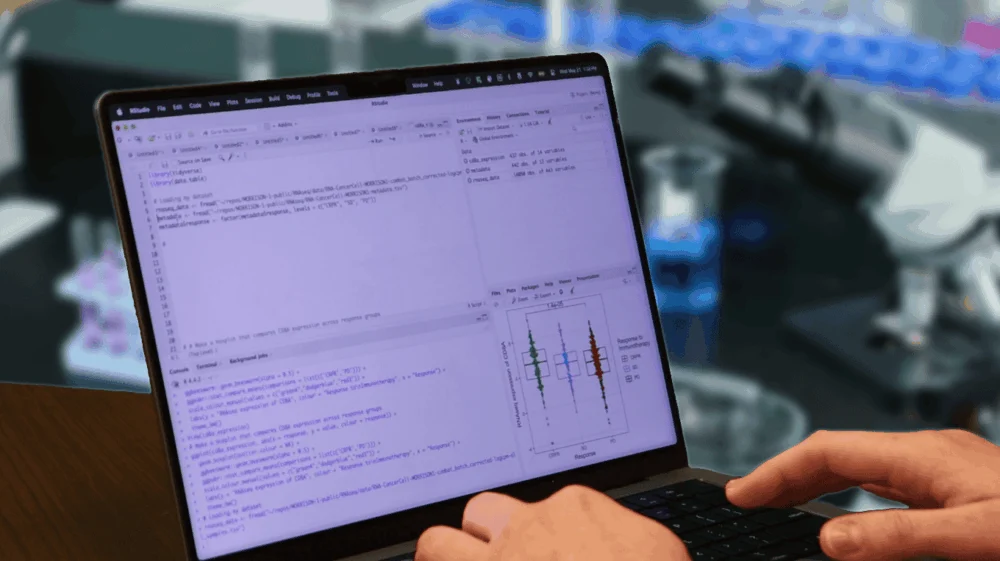
For over 70 years, the Cancer Research Institute (CRI) has stood at the vanguard of cancer immunotherapy, a testament to its unwavering commitment to fostering exceptional talent and its singular focus on deciphering the intricate biological mechanisms that drive transformative discoveries. This enduring legacy has positioned CRI not merely as a participant but as a critical architect in the evolution of cancer treatment, particularly as the field now confronts an unprecedented inflection point where data has transitioned from a supplementary tool to the very engine powering every facet of immunotherapy development. This paradigm shift, driven by monumental advancements in genomic profiling, single-cell and spatial technologies, and the ever-growing trove of real-world patient data, now offers researchers an unparalleled resolution into how the immune system perceives, interacts with, and responds to the insidious threat of cancer.
The Dawn of a Data-Driven Era in Cancer Immunotherapy
The fight against cancer has undergone a profound transformation over the past few decades. Historically dominated by conventional approaches like surgery, chemotherapy, and radiation, the landscape began to shift with the advent of targeted therapies in the late 20th and early 21st centuries. However, it is immunotherapy – harnessing the body’s own immune system to combat cancer – that has truly revolutionized patient outcomes, particularly for previously intractable malignancies. From the initial discoveries that paved the way for checkpoint inhibitors to the development of CAR T-cell therapies, the field has witnessed an explosion of innovation.
This current era, however, is distinguished by an even more fundamental change: the indispensable role of big data. The sheer volume and complexity of biological information now available are staggering. Advances in next-generation sequencing have dramatically reduced the cost and time required for genomic analysis, making it feasible to profile tumors and immune cells at an unprecedented scale. Single-cell technologies allow scientists to dissect the heterogeneity of tumor microenvironments with exquisite detail, while spatial transcriptomics provides critical context by mapping gene expression within tissues. Coupled with the accumulation of real-world data from electronic health records, clinical trials, and patient registries, researchers are now swimming in an ocean of information.
When effectively harnessed, this data empowers scientists to formulate more incisive questions, iterate experimental designs at an accelerated pace, and craft more precise, personalized therapies. It sharpens the early stages of discovery by illuminating novel therapeutic targets, fortifies preclinical research through the elucidation of complex biological mechanisms, and provides invaluable guidance for clinical development by clarifying patient response patterns, mechanisms of resistance, and optimal combination strategies. This deep integration of data ushers in an era of clearer insight and greater confidence as nascent treatments navigate the arduous path from laboratory bench to patient bedside.
CRI’s Legacy and Strategic Pivot into the Data Era
CRI’s seven-decade journey has been marked by a consistent foresight, anticipating the next frontiers in cancer research. Founded in 1953, the institute played a pivotal role in establishing the very concept of cancer immunology as a legitimate and promising field of study. Through its early funding of pioneering researchers, CRI helped lay the groundwork for understanding the immune system’s role in cancer surveillance and elimination. This foundational work culminated in breakthroughs like the discovery of immune checkpoints, for which CRI-funded scientists were recognized with the Nobel Prize in Physiology or Medicine in 2018.
Recognizing the seismic shift occurring in biomedical research, CRI has, over the past several years, made deliberate and substantial investments to strategically position the entire cancer immunotherapy field for this new data era. The institute understands that as data increasingly becomes the central currency of discovery, the focus must extend beyond mere access. Crucially, it involves ensuring that scientists possess the requisite skills and tools to interpret, integrate, and act upon increasingly complex information to generate truly meaningful and actionable insights. This commitment underscores a proactive approach, anticipating the challenges and opportunities presented by the data deluge.
Cultivating Expertise: Investing in Human Capital for a Data-First Future
At the heart of CRI’s data strategy is a profound commitment to people – the researchers who will drive the next wave of innovation. Recognizing a critical need for a new breed of scientists adept at navigating both immunology and informatics, CRI launched the Immuno-Informatics Fellowship in 2022. This groundbreaking program is specifically designed to invest in computational biologists who are applying advanced analytical approaches to immuno-oncology. These are scientists already fluent in the intricacies of computation and data science, now strategically directing their expertise to push the boundaries of cancer immunotherapy. The fellowship aims to bridge the historical gap between wet-lab immunology and dry-lab computational science, fostering a new generation of interdisciplinary leaders.
Complementing this, CRI simultaneously established the Bioinformatics Bootcamp. This immersive, hands-on program is tailored to upskill traditional bench scientists, providing them with foundational and advanced fluency in single-cell, genomic, and spatial data analysis. Many brilliant immunologists, while experts in experimental design and laboratory techniques, historically lacked the specialized computational skills needed to fully exploit the vast datasets generated by modern technologies. The bootcamp directly addresses this gap, empowering these scientists to move seamlessly from generating data to interpreting it, thereby accelerating the pace of discovery.
"The traditional boundaries between experimental and computational biology are dissolving," states a hypothetical CRI spokesperson. "Our Immuno-Informatics Fellowship and Bioinformatics Bootcamp are critical initiatives to ensure that the next generation of cancer immunologists is fully equipped to leverage the power of data. We’re not just funding research; we’re building the intellectual infrastructure for the future."
Participants in these programs consistently report a transformative experience. "Before the bootcamp, I understood the concepts of single-cell sequencing, but I couldn’t independently analyze the data," shares Dr. Anya Sharma, a CRI Postdoctoral Fellow. "Now, I can not only process complex datasets but also ask more sophisticated questions, directly linking my bench experiments to computational insights. It’s truly accelerated my project." Similarly, Dr. Ben Carter, an Immuno-Informatics Fellow, notes, "CRI’s fellowship allows me to apply cutting-edge machine learning techniques to real-world immunological datasets, addressing fundamental questions about tumor-immune interactions that were previously unapproachable. The collaborative environment is unparalleled." Together, these complementary programs ensure that CRI Fellows are not only generating high-quality data but are also equipped to derive maximum insight from it, thereby accelerating discovery and preparing them to lead in a rapidly evolving, data-first research landscape.
Shared Resources for a Global Community: Democratizing Data Access and Analysis
Beyond individual training, CRI understands that the collective advancement of the field relies on shared resources and collaborative platforms. To this end, CRI has been a staunch supporter and catalyst for cornerstone databases that serve the global research community. Among these are ImmGen (Immunological Genome Project) and iAtlas.
ImmGen, a long-standing and highly successful collaboration spanning numerous immunology and computational biology laboratories worldwide, provides an indispensable foundational map of gene activity and regulation across the vast spectrum of immune cell types. This comprehensive resource allows researchers to explore the transcriptional profiles of virtually any immune cell subset, serving as a critical reference for understanding immune cell identity, differentiation, and function. Its open-access nature has democratized access to high-quality immunological gene expression data, enabling countless discoveries and hypothesis generations across the scientific community. The sheer scale and meticulous curation of ImmGen data underscore the power of collaborative science in building foundational knowledge bases.
In parallel, CRI has championed iAtlas, an interactive platform and analytical toolkit specifically designed to explore tumor-immune interactions across a wide array of cancer types. iAtlas integrates multi-omic data from large public datasets like The Cancer Genome Atlas (TCGA), providing a centralized resource for researchers to delve into the immune contexture of tumors, investigate patterns of immune response and resistance, and identify potential biomarkers for immunotherapy efficacy. Its intuitive interface and robust analytical tools empower researchers to generate deeper insights into the complex interplay between cancer cells and the host immune system, facilitating the identification of new therapeutic targets and predictive biomarkers. By supporting such resources, CRI not only facilitates individual research projects but also cultivates an ecosystem of open science, where data can be leveraged by anyone, anywhere, to push the boundaries of understanding.
These collective investments – in nurturing talent, providing advanced training, and sustaining critical shared data resources – strategically position CRI to help the broader cancer research field adapt and to confidently lead the charge into a truly data-first future. This holistic approach recognizes that sustainable progress requires both individual expertise and collective infrastructure.
What Comes Next: Forging the Future with AI, ML, and Collaborative Innovation
CRI is now extending its leadership into a new, even more sophisticated era – one where computational insight and biological expertise converge synergistically to accelerate discovery at an unprecedented scale. The institute recognizes that the rapid evolution of artificial intelligence (AI) and machine learning (ML) presents transformative opportunities for cancer research.
In the months and years ahead, CRI will launch new initiatives meticulously designed to deepen how data, and particularly advanced computational methods, are integrated across all its programs. Central to this ambitious effort is CRI’s enduring role as a convener. The institute will actively bring together the brightest minds from academia, industry, and the nonprofit sector. This collaborative ethos is crucial for sharing cutting-edge knowledge, strengthening analytical capabilities across diverse research groups, and collectively tackling the most complex and pressing scientific questions that no single institution could hope to solve in isolation. This includes fostering data sharing agreements and developing common standards to maximize the utility of diverse datasets.
By integrating AI and ML into this foundational work, CRI aims to significantly raise the field’s collective "batting average." This means employing algorithms to identify the most promising hypotheses earlier in the research pipeline, intelligently focusing precious resources where they promise the greatest impact, and rapidly advancing toward ideas with outsized potential for clinical translation. For instance, AI could be used to predict patient response to specific immunotherapies based on their genomic and clinical profiles, identify novel drug targets by analyzing vast molecular interaction networks, or even accelerate drug discovery by simulating molecular interactions. The application of these technologies promises to streamline the notoriously long and expensive process of drug development, bringing effective treatments to patients faster.
However, this next, expansive phase of discovery extends far beyond the confines of CRI itself. The future of cancer immunotherapy, CRI posits, will not be defined by any single institution or by isolated breakthrough discoveries. Instead, it will be shaped by a vibrant, globally interconnected community of researchers, clinicians, and data scientists united through shared data, shared analytical tools, and a shared, unwavering purpose. Greater precision in understanding the intricate workings of the immune system – how it interacts with cancer, how it can be modulated, and how individual patient variability impacts response – is the ultimate key. This precision is what will unlock faster discovery cycles, facilitate the development of more personalized and effective treatments, and ultimately lead to patient outcomes that once seemed impossibly out of reach.
A Future Defined by Patients and Precision
Underlying every single data point, every genomic sequence, every spatial map, and every computational model, is a human story – the story of a cancer patient who yearns for more time, for a chance at a healthier future. And a future that, ultimately, still belongs only to them. This profound human element remains the driving force behind CRI’s relentless pursuit of scientific excellence.
Data, in its most powerful application, makes that future possible. And the Cancer Research Institute is not merely participating in this transformation; it is committed to building one of the most powerful engines of discovery. This engine will not exclusively serve its immediate community but will be a catalyst for the entire field of cancer immunotherapy, propelling it forward with unprecedented momentum.
CRI is laying the foundation for a new era of immunotherapy – an era characterized by being powered fundamentally by data, meticulously guided by the deepest biological insights, and passionately driven by the unwavering belief that what scientists uncover today has the profound potential to fundamentally change the future of cancer, for patients everywhere across the globe.
The next era of cancer immunotherapy is unequivocally data-first – and the critical, foundational work to power this transformative journey is already well underway.
