
 By Suherman Candra Maholtra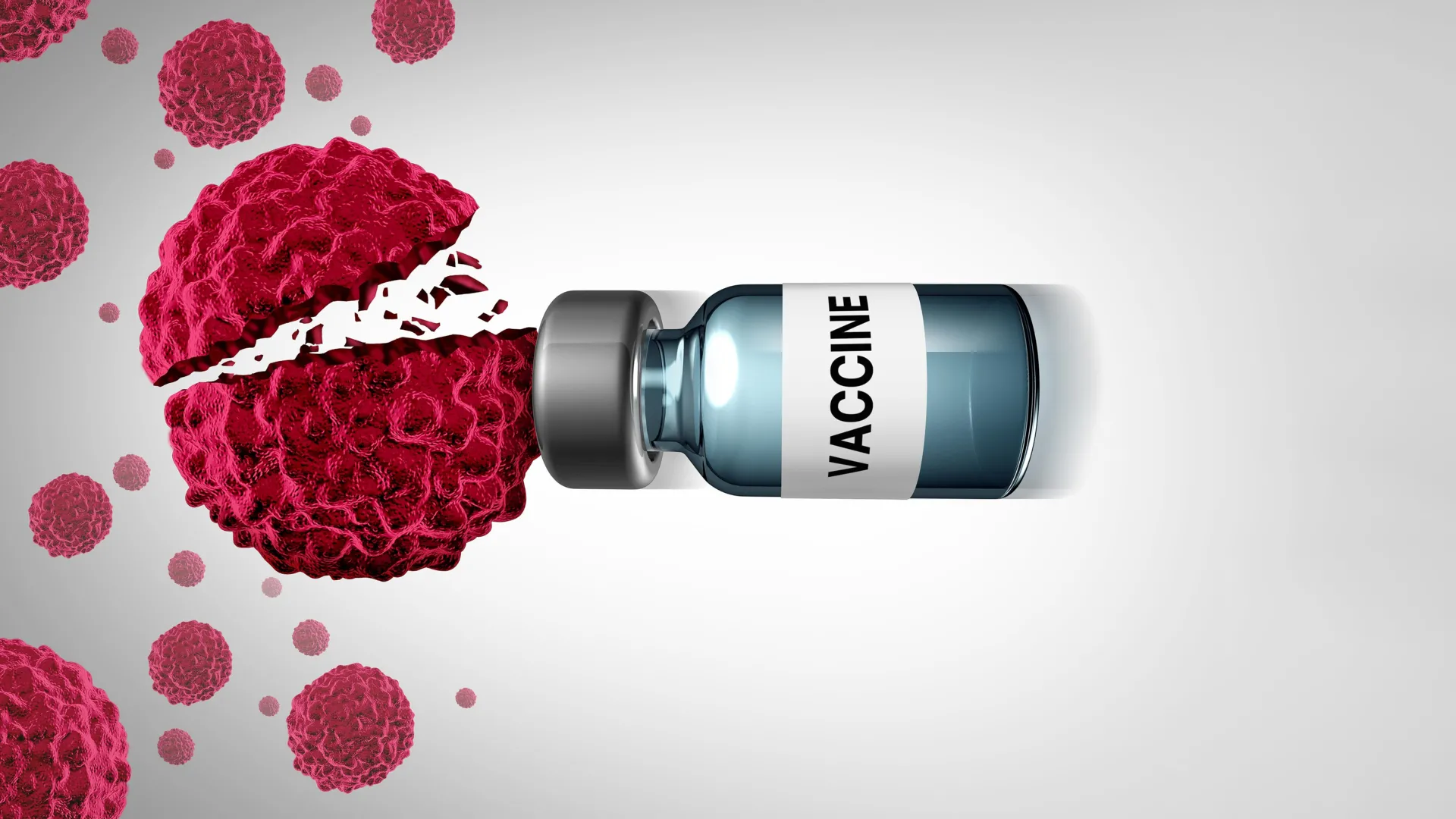
In a groundbreaking study that could fundamentally alter the landscape of oncology, researchers from the University of Florida (UF) and the University of Texas MD Anderson Cancer Center have identified a remarkable correlation between COVID-19 mRNA vaccination and extended survival rates in patients with advanced cancers. The study, published on October 22 in the journal Nature, suggests that patients diagnosed with advanced lung or skin cancer who received an mRNA-based COVID-19 vaccine within 100 days of beginning immunotherapy treatment lived significantly longer than their unvaccinated counterparts. This discovery provides a new lens through which to view the capabilities of messenger RNA technology, moving the medical community closer to the realization of a universal cancer vaccine that can be deployed "off-the-shelf" to enhance existing therapeutic regimens.
The findings are based on a comprehensive retrospective analysis of over 1,000 patient records at MD Anderson Cancer Center. While the data is currently observational and requires confirmation through rigorous clinical trials, the statistical significance of the survival gap has sent ripples through the scientific community. The research team found that for those battling metastatic melanoma and non-small cell lung cancer—two of the most aggressive forms of malignancy—the simple addition of an mRNA vaccine appeared to act as a powerful catalyst, potentially "rebooting" the immune system to recognize and attack tumor cells more effectively.
The Evolution of mRNA Technology in Oncology
To understand the weight of this discovery, it is necessary to look back at the history of messenger RNA (mRNA) research. While the general public became familiar with mRNA through the rapid development of the Pfizer-BioNTech and Moderna COVID-19 vaccines, the technology has been in development for decades, specifically with cancer treatment in mind. Scientists have long sought a way to deliver genetic instructions to cells, telling them to produce specific proteins that would trigger an immune response.
For more than ten years, researchers like Elias Sayour, M.D., Ph.D., a UF Health pediatric oncologist, have been exploring how mRNA can be used to "wake up" the body’s natural defenses. Dr. Sayour’s work has specifically focused on combining lipid nanoparticles—the fatty "envelopes" that protect mRNA—with genetic sequences to stimulate the immune system. In July 2024, Sayour’s lab released a pivotal finding: it may not be necessary to target a specific, unique protein within a tumor to trigger an immune attack. Instead, providing a broad, "nonspecific" stimulus to the immune system—similar to the body’s reaction to a viral infection—could be sufficient to generate a potent antitumor effect.
This realization paved the way for the current study. If a general immune stimulus could help fight cancer, the researchers wondered if the COVID-19 mRNA vaccine, which provides such a stimulus, might accidentally be helping cancer patients who were already undergoing immunotherapy.
Chronology of the Discovery: From Lab to Clinic
The journey toward these findings began with a question posed by Adam Grippin, M.D., Ph.D., the study’s first author. During his training at UF’s Preston A. Wells Center for Brain Tumor Therapy, Grippin worked under Dr. Sayour and Dr. Duane Mitchell. Now a resident at MD Anderson, Grippin sought to bridge the gap between the lab-based discoveries regarding nonspecific mRNA vaccines and the real-world data of the COVID-19 pandemic.
The research followed a structured three-phase approach:
- The Observational Phase (2019–2023): The team analyzed data from patients with Stage 3 and 4 non-small cell lung cancer and metastatic melanoma treated at MD Anderson. This period covered the pre-vaccine era and the rollout of the COVID-19 vaccines, providing a natural control group.
- The Comparative Analysis: Researchers compared the survival outcomes of patients who received the COVID-19 mRNA vaccine within a specific window (100 days before or after starting immunotherapy) against those who did not receive the vaccine.
- The Laboratory Validation: To ensure the human data wasn’t a statistical fluke, the team returned to the laboratory. Using mouse models, they combined immunotherapy drugs with mRNA vaccines targeting the COVID-19 spike protein. The results mirrored the human data: the combination halted tumor growth in mice that were previously resistant to treatment.
Deep Dive into the Data: Survival Metrics
The statistical evidence presented in the study highlights a dramatic shift in patient outcomes. The researchers focused on two primary cohorts: lung cancer patients and melanoma patients.
In the lung cancer cohort, the study analyzed 180 patients who received a COVID-19 mRNA vaccine within the 100-day window and 704 patients who did not. The median survival for the unvaccinated group was 20.6 months. However, for those who received the mRNA vaccine, the median survival jumped to 37.3 months—a near doubling of life expectancy for patients with advanced disease.
The results in the melanoma cohort were equally compelling. Among 43 vaccinated patients and 167 unvaccinated patients, median survival increased from 26.7 months to a range between 30 and 40 months. Researchers noted that because many of the vaccinated patients were still alive at the time of data collection, the final survival benefit could be even higher than currently recorded.
Crucially, the study also looked at patients who received traditional, non-mRNA vaccines, such as those for the flu or pneumonia. These patients saw no change in longevity, suggesting that the survival benefit is unique to the mRNA platform. This distinction is vital, as it implies that the benefit is not merely the result of "healthy user bias" (the idea that patients who seek out vaccines are generally healthier or have better access to care), but rather a specific biological interaction between mRNA technology and the immune system’s response to cancer.
Mechanism of Action: The "Flare" Effect
The biological explanation for this phenomenon lies in how the immune system prioritizes threats. In advanced cancer, the immune system often becomes "exhausted." Immunotherapy drugs, specifically immune checkpoint inhibitors, work by "releasing the brakes" on the immune system, allowing T-cells to attack the cancer. However, many tumors remain "cold," meaning they are effectively hidden from the immune system.
Dr. Sayour describes the mRNA vaccine as a biological "flare." When the vaccine is administered, it triggers a systemic inflammatory response. This response acts as a signal that draws immune cells out of the tumor microenvironment—where they are often suppressed or deactivated—and into the lymph nodes. Once "reset" and activated in the lymph nodes, these immune cells return to the tumor site with renewed vigor.
"One of the mechanisms for how this works is when you give an mRNA vaccine, that acts as a flare that starts moving all of these immune cells from bad areas like the tumor to good areas like the lymph nodes," Sayour explained. This process can transform a "cold" tumor into a "hot" one, making it susceptible to the immunotherapy drugs the patient is already receiving.
Expert Reactions and Industry Implications
The implications of this research have drawn praise from experts across the field of biotechnology and oncology. Jeff Coller, Ph.D., an mRNA expert and professor at Johns Hopkins University, pointed out that this discovery is an unexpected legacy of Operation Warp Speed. "The results from this study demonstrate how powerful mRNA medicines truly are and that they are revolutionizing our treatment of cancer," Coller stated.
The potential for a "universal" cancer vaccine is perhaps the most significant takeaway for the future of oncologic care. Unlike personalized cancer vaccines, which must be custom-made for each patient based on their specific tumor mutations—a process that is both time-consuming and expensive—a nonspecific mRNA vaccine could be produced at scale and kept "on-the-shelf."
Dr. Duane Mitchell, director of the UF Clinical and Translational Science Institute, emphasized the urgency of the next steps. "Although not yet proven to be causal, this is the type of treatment benefit that we strive for and hope to see with therapeutic interventions—but rarely do," he said. The team is now moving toward a prospective, randomized clinical trial, which is the gold standard for proving medical causality.
The Path Forward: Clinical Trials and Real-World Application
The next phase of this research will be conducted through the OneFlorida+ Clinical Research Network. This consortium includes hospitals and clinics across Florida, Alabama, Georgia, Arkansas, California, and Minnesota, ensuring that the follow-up study includes a diverse and representative patient population.
Betsy Shenkman, Ph.D., leader of the OneFlorida+ consortium, highlighted the importance of moving these findings from academic labs into community clinics. The goal is to determine if this survival benefit can be replicated in a controlled environment and if it can be extended to other types of cancer beyond lung and skin.
If confirmed, the use of mRNA vaccines as an adjuvant to immunotherapy could become a standard of care. For patients with advanced-stage cancers who have exhausted traditional options like chemotherapy and radiation, the prospect of doubling their remaining life expectancy represents a monumental shift in prognosis.
Conclusion: A New Era for mRNA Medicine
The study published in Nature represents a convergence of two of the most significant medical advancements of the 21st century: immunotherapy and mRNA technology. By demonstrating that a vaccine designed for a respiratory virus can potentially enhance the body’s ability to fight terminal cancer, the researchers have opened a new door in the quest for a universal cancer cure.
While the scientific community remains cautious, waiting for the results of randomized trials, the initial data provides a powerful proof of concept. As Dr. Sayour noted, even an incremental increase in survival—5% or 10%—would be a major victory for patients with advanced disease. A doubling of survival, however, is a paradigm shift. As the world continues to move beyond the COVID-19 pandemic, the "unique and unexpected" benefits of the vaccines developed during that era may continue to save lives in ways previously unimagined.
