
 By admin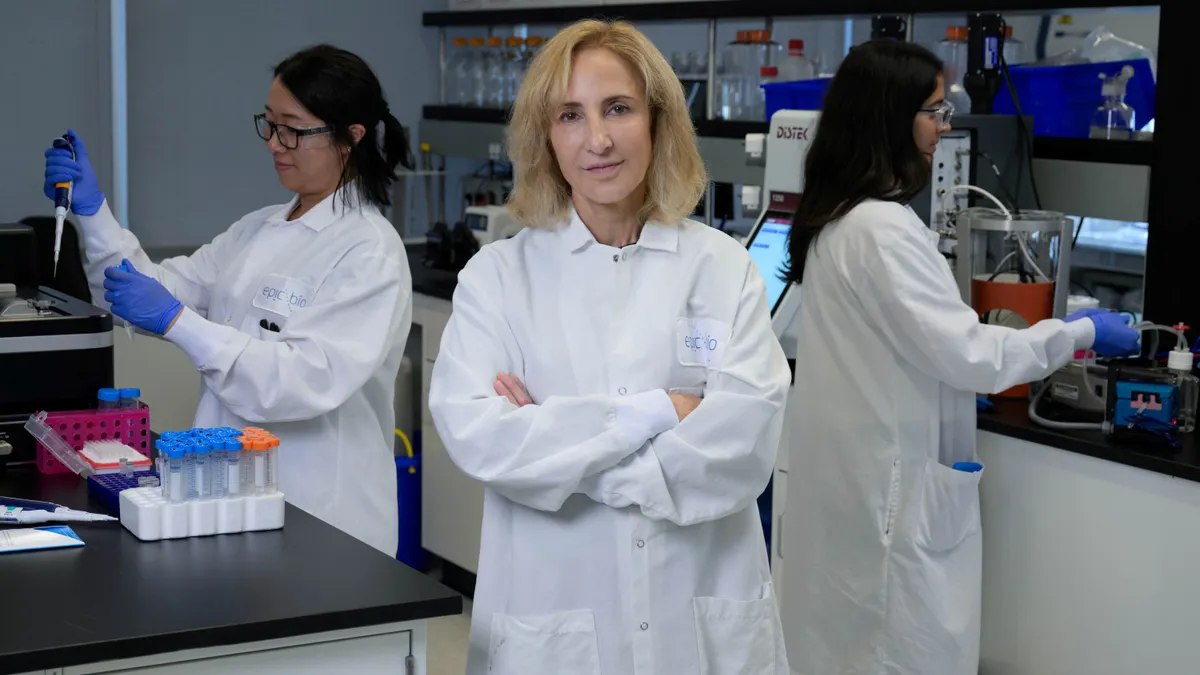
Epicrispr Biotechnologies, a burgeoning player in the genetic medicine landscape, has successfully closed a $90 million Series C financing round, propelling its innovative approach to treating facioscapulohumeral muscular dystrophy (FSHD). This significant financial injection coincides with the completion of enrollment for an early-stage clinical study evaluating EPI-321, the company’s first-of-its-kind epigenetic editing therapy designed to address the root cause of this debilitating rare genetic muscle disorder. The dual announcement, made public on August 11, 2026, marks a pivotal moment for Epicrispr, underscoring investor confidence in its groundbreaking technology and the urgent need for more effective treatments for FSHD, a condition that has long challenged the medical community and attracted the attention of numerous pharmaceutical developers.
A New Frontier in Genetic Medicine: Epigenetic Editing
At the heart of Epicrispr’s strategy is EPI-321, a therapeutic candidate that leverages the nascent field of epigenetic editing. Unlike traditional gene editing techniques, such as the well-known CRISPR-Cas9 system, which directly cut and alter DNA sequences, epigenetic editing employs CRISPR-based tools to modulate gene expression without making permanent changes to the underlying genetic code. This nuanced approach allows for the precise "switching on or off" of genes by modifying the chemical tags attached to DNA or its associated proteins, rather than rewriting the genetic blueprint itself. For many researchers and clinicians, this offers a potentially safer and more reversible alternative, mitigating some of the long-term risks associated with irreversible DNA edits.
In the context of FSHD, EPI-321 is specifically engineered to silence the genetic driver of the disease: the DUX4 gene. Facioscapulohumeral muscular dystrophy is a progressive neuromuscular condition characterized by the abnormal overexpression of DUX4 in muscle cells. This protein, typically silenced in adult muscle tissue, becomes active and toxic, leading to the gradual atrophy and degeneration of muscles, particularly those in the face, shoulders, and upper arms. The resulting muscle weakness can severely impact quality of life, leading to difficulties with daily activities such, as raising arms, walking, or even smiling.
Epicrispr’s EPI-321 is designed to bind to a specific regulatory region of the DUX4 gene. Once bound, it introduces a chemical modification—likely a methylation or acetylation event—that effectively suppresses the gene’s activity and, consequently, the production of the harmful DUX4 protein. The overarching therapeutic hypothesis is that by inhibiting DUX4 overexpression, EPI-321 can halt the progression of muscle cell death and potentially improve muscle function in patients. Early clinical data from the ongoing study have shown promising signs, including the potential to increase muscle volume and impact key biological markers indicative of DUX4 suppression. These initial findings, while from a small cohort of patients, provide crucial preliminary evidence supporting the therapy’s mechanistic action and its potential to address the underlying biology of FSHD.
Understanding Facioscapulohumeral Muscular Dystrophy (FSHD)
Facioscapulohumeral muscular dystrophy is one of the most common forms of muscular dystrophy, affecting an estimated 1 in 8,000 to 1 in 20,000 individuals globally. This prevalence makes it a significant rare disease, with tens of thousands of patients worldwide awaiting effective treatments. FSHD is typically inherited in an autosomal dominant pattern, meaning a child only needs to inherit one copy of the affected gene from a parent to develop the condition. The disease can manifest with varying degrees of severity and onset, ranging from childhood to adulthood.
The genetic basis of FSHD is complex but centers around a region on chromosome 4 called the D4Z4 array. In healthy individuals, this region contains multiple copies of a repeat sequence, and the DUX4 gene within this array is typically epigenetically silenced. However, in FSHD patients, a genetic contraction of this D4Z4 array (FSHD1) or mutations in genes responsible for maintaining its silencing (FSHD2) lead to a de-repression of the DUX4 gene. This results in the aberrant production of the DUX4 protein, which acts as a transcription factor, activating genes that are detrimental to muscle cell survival and function.
Currently, there are no approved disease-modifying treatments for FSHD. Management primarily focuses on symptomatic relief and supportive care, including physical therapy, occupational therapy, and assistive devices to manage muscle weakness and maintain mobility. The lack of targeted therapies highlights the immense unmet medical need and the profound impact a successful treatment like EPI-321 could have on the lives of patients and their families. The progressive nature of the disease means that patients often face increasing disability over time, underscoring the urgency for innovative therapeutic interventions.
Epicrispr’s Funding Journey and Strategic Backing
The successful Series C funding round, which brought in an additional $90 million, elevates Epicrispr Biotechnologies’ total funding to $213 million since its inception in July 2022. This impressive fundraising trajectory in a relatively short period speaks volumes about the perceived potential of its epigenetic editing platform and the clinical promise of EPI-321. The Series C round was co-led by prominent investors Octagon Capital and Janus Henderson Investors, both known for their strategic investments in cutting-edge biotechnology and healthcare innovation. Their leadership signals a strong belief in Epicrispr’s scientific foundation and commercial prospects.
The round also saw participation from a diverse syndicate of high-profile backers, including Fidelity Management & Research, Sanofi Ventures, and Cormorant Asset Management. The involvement of such a robust group of institutional investors and strategic corporate venture arms like Sanofi Ventures not only provides significant capital but also offers invaluable strategic guidance and industry connections. This broad investor base reflects a growing consensus within the biotech investment community regarding the potential of epigenetic editing to revolutionize genetic medicine.

As part of the financing, Anran Li, an investment analyst at Octagon Capital, will join Epicrispr’s board of directors. This addition is a common practice in venture financing, providing the lead investor with direct oversight and input into the company’s strategic decisions, further aligning the interests of the investors with the company’s long-term growth and success. CEO Amber Salzman emphasized that the new financing provides Epicrispr with "the resources and flexibility to advance EPI-321, invest in its pipeline, and build the company for the long term." This statement suggests a multi-faceted strategy, not only focused on the lead candidate but also on expanding the epigenetic editing platform to target other genetic disorders, positioning Epicrispr as a leader in this emerging therapeutic modality.
Clinical Progress and Anticipated Milestones
The completion of enrollment in the early-stage study for EPI-321 is a critical operational milestone for Epicrispr. While the exact phase (e.g., Phase 1, Phase 1/2) was not explicitly detailed, early-stage studies typically focus on assessing the safety, tolerability, and preliminary efficacy of a new drug in a small cohort of human volunteers. For a novel genetic medicine, establishing a favorable safety profile is paramount, particularly given the historical challenges and potential side effects associated with earlier gene therapy approaches. The preliminary data showing potential to boost muscle volume and impact biological markers associated with DUX4 suppression are highly encouraging. These markers often serve as early indicators of a drug’s mechanism of action and its potential to translate into clinical benefit.
According to CEO Amber Salzman, results with six months of study follow-up are anticipated in early October. This upcoming data readout will be closely watched by investors, clinicians, and, most importantly, the FSHD patient community. While still early, these results will provide a more comprehensive picture of EPI-321’s safety profile and its ability to consistently modulate DUX4 expression and improve muscle health over a longer period. Positive data could pave the way for accelerated development, including progression to larger, later-stage clinical trials, and potentially attract further investment or partnership opportunities. Conversely, any setbacks could necessitate adjustments to the development plan or raise questions about the long-term viability of the epigenetic editing approach for FSHD.
The Competitive Landscape in FSHD Therapeutics
The pursuit of effective FSHD treatments has become a highly competitive arena, attracting significant interest from both established pharmaceutical giants and innovative biotech startups. Many of these drugmakers are also focused on blocking DUX4, albeit through different therapeutic modalities. Companies like Novartis, for example, have explored gene therapy approaches, while Arrowhead Pharmaceuticals and Sarepta Therapeutics have investigated RNA interference (RNAi) or antisense oligonucleotide (ASO) strategies to reduce DUX4 expression. Dyne Therapeutics is another notable player, developing an antibody-oligonucleotide conjugate designed to deliver antisense oligonucleotides directly to muscle cells.
This crowded pipeline underscores the high unmet need in FSHD and the potential market opportunity for a successful therapy. While many of these prospective treatments are also in various stages of human testing, Epicrispr’s EPI-321 stands out due to its unique epigenetic editing mechanism. By not directly cutting or altering DNA, EPI-321 might offer a safety advantage and greater flexibility in dose titration or potential reversibility, differentiating it from gene editing or gene therapy approaches that involve permanent genetic modifications. This distinction could be a key competitive advantage in securing regulatory approval and market share, should the clinical data continue to be positive. The diversity of approaches also reflects the complex challenge of targeting DUX4 and delivering therapies effectively to affected muscle tissues.

Broader Implications for Genetic Medicine and Biotech Investment
Epicrispr’s advancements carry significant implications beyond the immediate context of FSHD. The validation of epigenetic editing as a viable therapeutic modality could open new avenues for treating a wide array of genetic diseases that are currently intractable with existing gene editing or gene therapy technologies. Many conditions are caused by the inappropriate activation or silencing of genes, rather than a single mutation that needs correction. Epigenetic editing offers a precise tool to restore normal gene expression patterns, potentially expanding the reach of genetic medicine to diseases like certain neurodevelopmental disorders, metabolic conditions, and even some forms of cancer where gene expression dysregulation plays a critical role.
The successful funding round for Epicrispr also reflects a broader trend in biotech investment. Despite fluctuating market conditions and increased scrutiny on early-stage companies, investors continue to pour capital into truly innovative platforms that address high unmet medical needs with groundbreaking science. The $90 million Series C, co-led by prominent investment firms and including strategic partners, signals a robust belief in the long-term potential of Epicrispr’s technology. This investment not only provides capital for clinical development but also validates the entire epigenetic editing field, potentially attracting more researchers and funding into this promising area.
For patients suffering from FSHD, Epicrispr’s progress offers a renewed sense of hope. The prospect of a therapy that can directly address the underlying genetic cause of their condition, rather than merely managing symptoms, represents a paradigm shift. Patient advocacy groups, which have long championed research and development for FSHD, will undoubtedly welcome these advancements, recognizing the potential for improved quality of life and slowed disease progression. While the journey from early-stage clinical trials to an approved therapy is long and fraught with challenges, Epicrispr Biotechnologies’ recent achievements position it as a frontrunner in bringing a transformative epigenetic treatment to patients in desperate need. The upcoming data readout in early October will be a critical juncture, providing further clarity on the path forward for EPI-321 and the future of epigenetic medicine.
