
 By admin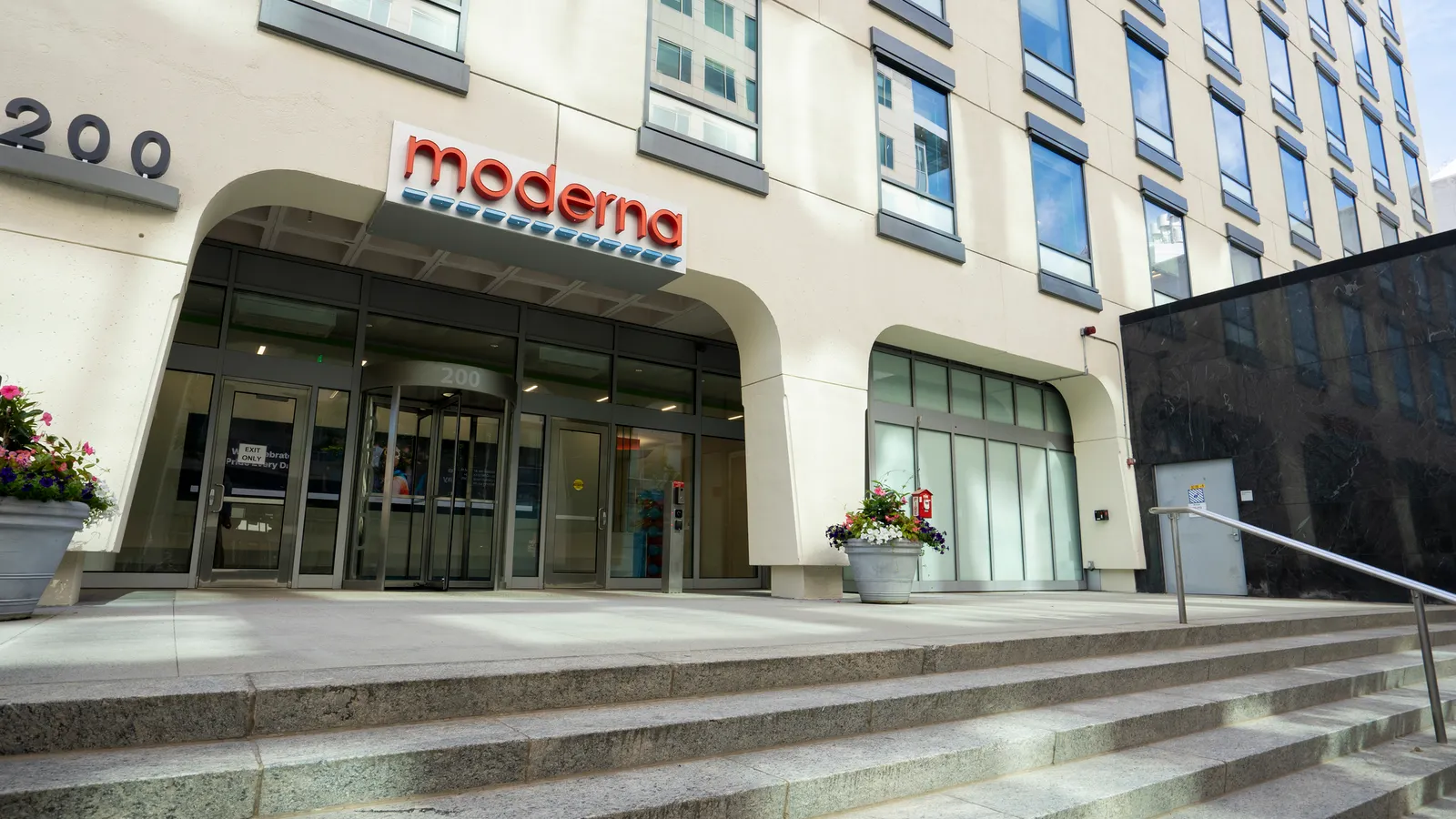
After a challenging period that saw its stock price plummet from pandemic-era highs, Moderna, in collaboration with Merck & Co., has announced a pivotal triumph in the development of its individualized cancer vaccine, intismeran. On Wednesday, the pharmaceutical giants revealed that their novel mRNA-based vaccine met its primary endpoints in a highly anticipated Phase 3 clinical trial for melanoma, triggering an unprecedented surge in Moderna’s market valuation and injecting renewed optimism into the nascent field of personalized oncology. While specific data from the trial remain undisclosed, the positive outcome signals a potential multi-billion-dollar treatment for melanoma and paves the way for its application against a broader spectrum of tumors, marking a significant inflection point for both companies and the future of cancer therapy.
Moderna’s Post-Pandemic Journey: From Hero to the Brink of Reimagination
Moderna’s journey has been a dramatic narrative of meteoric rise and subsequent struggle. Propelled into the global spotlight as a pioneer in mRNA technology, the company delivered one of the world’s first and most effective COVID-19 vaccines, mRNA-1273 (Spikevax), fundamentally altering the course of the pandemic. This monumental achievement saw its stock price soar, reaching peaks well over $400 per share. However, as the immediate crisis of the pandemic receded and vaccine demand normalized, Moderna faced a harsh reality check. The ensuing years were marked by a precipitous decline in its market capitalization, with shares trading for less than $30 for much of 2025.
The factors contributing to this downturn were multi-faceted. Sputtering sales of its flagship COVID-19 vaccine, coupled with slashed revenue projections, eroded investor confidence. A crucial challenge was the company’s struggle to identify another lucrative product to diversify its portfolio and sustain its valuation. Pipeline setbacks, such as the failure of its cytomegalovirus (CMV) vaccine candidate to meet efficacy expectations in a pivotal study, further exacerbated investor anxieties. Analysts and market observers began to question Moderna’s long-term strategy, fearing it might become a "one-hit wonder" reliant solely on its pandemic success. The company desperately needed a new breakthrough to demonstrate the broader applicability and commercial viability of its mRNA platform beyond infectious diseases. Intismeran, developed in partnership with Merck, emerged as that critical beacon of hope, carrying the weight of Moderna’s future prospects.
The Science Behind Intismeran: A New Era in Personalized Oncology
Intismeran, known scientifically as mRNA-4157/V940, represents a groundbreaking approach to cancer treatment, emblematic of the personalized medicine revolution. Unlike traditional cancer therapies that target broad characteristics of tumors or boost general immune responses, intismeran is designed to be highly individualized. Each vaccine is custom-made for a specific patient, targeting a unique set of "neoantigens" found on the surface of their tumor cells.
Neoantigens are novel protein fragments that arise from somatic mutations within cancer cells. These mutations create proteins that are foreign to the body’s immune system, making them ideal targets for an immune response. The process involves sequencing a patient’s tumor and normal tissue DNA to identify these unique mutations. Once identified, Moderna’s mRNA technology is utilized to create a vaccine encoding instructions for the patient’s cells to produce up to 34 specific neoantigens. Upon injection, the vaccine instructs the body’s own cellular machinery to synthesize these neoantigens, thereby training the patient’s immune system, specifically T-cells, to recognize and attack cancer cells expressing these particular markers.
This bespoke approach is a significant departure from conventional oncology, offering the promise of a more precise and potentially more effective treatment with fewer off-target effects. The elegance of mRNA technology lies in its speed and flexibility of manufacturing, allowing for rapid customization and production – a capability dramatically validated during the COVID-19 pandemic. The success of intismeran in late-stage trials could validate personalized neoantigen vaccines as a powerful new class of therapeutics, unlocking a vast potential for mRNA technology in oncology.
A Partnership Forged in Innovation: Merck and Keytruda’s Enduring Role
The development of intismeran is a testament to a strategic partnership between Moderna and Merck & Co., a collaboration that combines Moderna’s cutting-edge mRNA platform with Merck’s formidable expertise in oncology and its blockbuster immunotherapy, Keytruda (pembrolizumab). Keytruda, an anti-PD-1 antibody, has revolutionized cancer treatment by blocking a pathway that cancer cells use to evade the immune system, thereby unleashing the body’s natural defenses against tumors. It has become a cornerstone of treatment across numerous cancer types, including melanoma, and is one of the world’s best-selling drugs.
The Phase 3 trial for intismeran specifically investigated its efficacy when administered alongside Keytruda in the "adjuvant" setting. Adjuvant therapy is given after primary treatment, such as surgery to remove a tumor, with the aim of eliminating any remaining cancer cells and preventing recurrence. The rationale behind this combination is compelling: Keytruda enhances the overall immune response by removing immune checkpoints, while intismeran specifically "primes" the immune system to recognize and attack the tumor’s unique neoantigens. The hope was that this synergistic approach would delay cancer recurrence significantly longer than Keytruda alone.
For Merck, this partnership is strategically vital as it navigates the impending patent cliff for Keytruda. While Keytruda remains a dominant force, its market exclusivity is set to expire in the coming years, necessitating new revenue streams and pipeline innovations. A successful personalized cancer vaccine like intismeran, especially in combination with Keytruda, offers a potent opportunity to extend its therapeutic footprint and secure a significant share of the future oncology market. The success of intismeran could provide Merck with a crucial new pillar in its oncology portfolio, reinforcing its leadership position in the post-Keytruda era.
Chronology of a Breakthrough: From Early Trials to Phase 3 Success
The journey of intismeran from concept to late-stage success has been a meticulous and closely watched progression:
- 2020-2021: Moderna’s mRNA platform gains global recognition with its COVID-19 vaccine, validating the technology for rapid deployment and efficacy.
- October 2021: Moderna and Merck announce an expanded strategic collaboration to develop personalized mRNA cancer vaccines, with intismeran as the lead candidate. The partnership builds on an earlier 2016 agreement.
- Early-Stage Trials (Phase 1/2): Initial studies explore the safety and preliminary efficacy of intismeran, both as a monotherapy and in combination with Keytruda. These trials laid the groundwork for larger studies.
- Late 2022: Promising interim results from a Phase 2 trial (KEYNOTE-942/mRNA-4157-P201) in high-risk melanoma patients are reported, showing that the combination of intismeran and Keytruda significantly reduced the risk of recurrence or death compared to Keytruda alone.
- Early 2026 (ASCO Presentation): Detailed five-year follow-up data from the Phase 2 trial are presented at the American Society of Clinical Oncology (ASCO) meeting. These results showed that the intismeran-Keytruda combination roughly halved the risk of relapse or death after five years, a remarkably positive outcome that fueled high expectations for the ongoing Phase 3 study. This data point became the critical benchmark against which the Phase 3 results would be implicitly measured.
- Late 2025/Early 2026: Enrollment for the pivotal Phase 3 trial (V940-001/KEYNOTE-942) in the adjuvant treatment of melanoma is completed. This trial is designed to confirm the Phase 2 findings in a larger patient population and support regulatory approval.
- Wednesday’s Announcement: Moderna and Merck publicly announce that the Phase 3 trial has successfully met its primary endpoints. While specific data points are withheld pending presentation at a future medical conference, the unequivocal success declaration and the dramatic market reaction underscore the significance of the findings. The early cessation of the trial at the first interim data check further indicates a robust and clinically meaningful benefit, as trials are typically stopped early only when the treatment effect is overwhelmingly positive.
The successful navigation of intismeran through these rigorous clinical stages represents a significant milestone, especially given the historical challenges faced by cancer vaccines in late-stage development. Many drug combinations and vaccine approaches have failed to demonstrate superiority over established immunotherapies like Keytruda, making this achievement particularly noteworthy.
Wall Street’s Verdict: Euphoria and Caution
The announcement sent shockwaves through the financial markets, triggering a euphoric response among investors. Moderna’s share price rocketed by an astonishing 170% in a single trading day, adding nearly $45 billion to the company’s market capitalization. This surge not only recouped much of the value lost in previous years but also signaled a profound shift in investor perception of Moderna’s future. Shares of partner Merck also saw a double-digit spike, reflecting the potential strategic gains for the pharmaceutical giant. Even Moderna rival BioNTech, which is also developing similar mRNA-based cancer vaccines, experienced a notable uplift, suggesting a broader validation of the mRNA oncology platform.
Analysts were quick to react, with many revising their revenue projections and expressing newfound optimism. RBC Capital Markets analyst Trung Huynh hailed the results as a "major win," while TD Cowen analyst Tyler Van Buren called it a "landmark moment" and a "significant validation" of the underlying technology. William Blair analyst Myles Minter upgraded his rating on Moderna’s stock, projecting that the company could eventually earn $5.4 billion in peak annual sales in melanoma alone from its 50-50 revenue split with Merck on intismeran. Van Buren, meanwhile, predicted "impressive" results, given the early halt of the trial.
However, amidst the widespread enthusiasm, some analysts sounded notes of caution, warning that the market’s euphoric response might have overshot intismeran’s actual sales potential and potentially overestimated its therapeutic impact. Cory Kasimov of Evercore ISI noted that Moderna’s new valuation "already prices in substantially more conviction than the data disclosed thus far supports." He highlighted that Moderna management had previously stated a 20% reduction in the risk of cancer recurrence or death as a "clinical benchmark" for the program. Kasimov’s team, however, believes that such a result would be a "meaningful step down" from the impressive Phase 2 data, where a 50% risk reduction was observed. They suggested that a 35% to 40% risk reduction would be needed to be "clearly differentiated" and justify the current valuation.
Leerink Partners analyst Daina Graybosch echoed these concerns, calling the market reaction "overly optimistic" and claiming it had set expectations that would be "difficult to meet." She pointed out that the implied valuation suggests intismeran will generate significantly more revenue in the adjuvant setting than Keytruda currently does as a standalone therapy. Graybosch also raised practical considerations, such as the potentially higher per-patient manufacturing costs for a personalized mRNA vaccine compared to a standard biologic drug. Furthermore, she cautioned against assuming that success in melanoma would automatically translate to other cancer indications, noting that melanoma is "uniquely suited to a vaccine" due to its high mutational burden, which generates more neoantigens for the immune system to target.
Beyond Melanoma: The Broader Horizon for Intismeran
Despite the cautionary notes, the successful Phase 3 readout in melanoma has undoubtedly cast a "halo" over Moderna and Merck’s broader oncology development program. Industry watchers have lifted expectations for the nine other ongoing trials evaluating intismeran in various cancer types. The strategy is to leverage the success in melanoma to explore its efficacy in other solid tumors, potentially transforming the treatment landscape for a wider range of patients.
Key ongoing trials include mid-stage studies in kidney and bladder cancers, with results anticipated later this year or in 2027. Most notably, a late-stage trial is currently underway in lung cancer, one of the world’s most prevalent and deadliest tumors. Success in lung cancer, a significantly larger market than melanoma, would represent an even greater commercial opportunity and a monumental achievement in oncology. The ability to demonstrate efficacy across different tumor types would further validate the personalized neoantigen vaccine platform and solidify its position as a versatile therapeutic modality.
The path forward will involve meticulous data analysis, regulatory filings, and careful consideration of pricing and commercialization strategies. Detailed data from the Phase 3 melanoma trial are eagerly awaited and will be presented at an upcoming major medical meeting, providing the scientific community and investors with the specifics needed to fully assess the vaccine’s clinical profile and market potential.
Navigating the Future: Challenges and Opportunities
The journey ahead for intismeran, while promising, is not without its challenges. The personalized nature of the vaccine necessitates a sophisticated manufacturing and logistics infrastructure to ensure timely production and delivery for each patient. This could lead to higher manufacturing costs and potentially impact pricing strategies, a factor highlighted by skeptical analysts. The competitive landscape is also evolving, with other companies, including BioNTech and its partner Genentech, actively pursuing similar personalized mRNA cancer vaccine technologies. The race to market and establish dominance in this nascent field will be intense.
Regulatory approval, while now appearing more likely, will depend on the detailed data presented to health authorities. Furthermore, payer acceptance and reimbursement policies will be crucial for broad market access. The long-term efficacy and safety profile of intismeran will continue to be monitored in post-marketing studies.
However, the opportunities are immense. The success of intismeran marks a potential paradigm shift in cancer treatment, moving closer to truly individualized medicine. It offers hope for patients with high-risk melanoma who currently face significant challenges with recurrence. More broadly, it cements mRNA technology’s role not just as a tool for infectious disease prevention but as a powerful therapeutic modality with transformative potential in oncology. This landmark achievement could reignite investment and research into mRNA-based therapies across a spectrum of diseases, reinforcing Moderna’s position as a leader in this innovative biotech frontier. The coming months will be critical as Moderna and Merck prepare to unveil the full data, engage with regulators, and lay the groundwork for what could be a new chapter in cancer care.
