
 By Suherman Candra Maholtra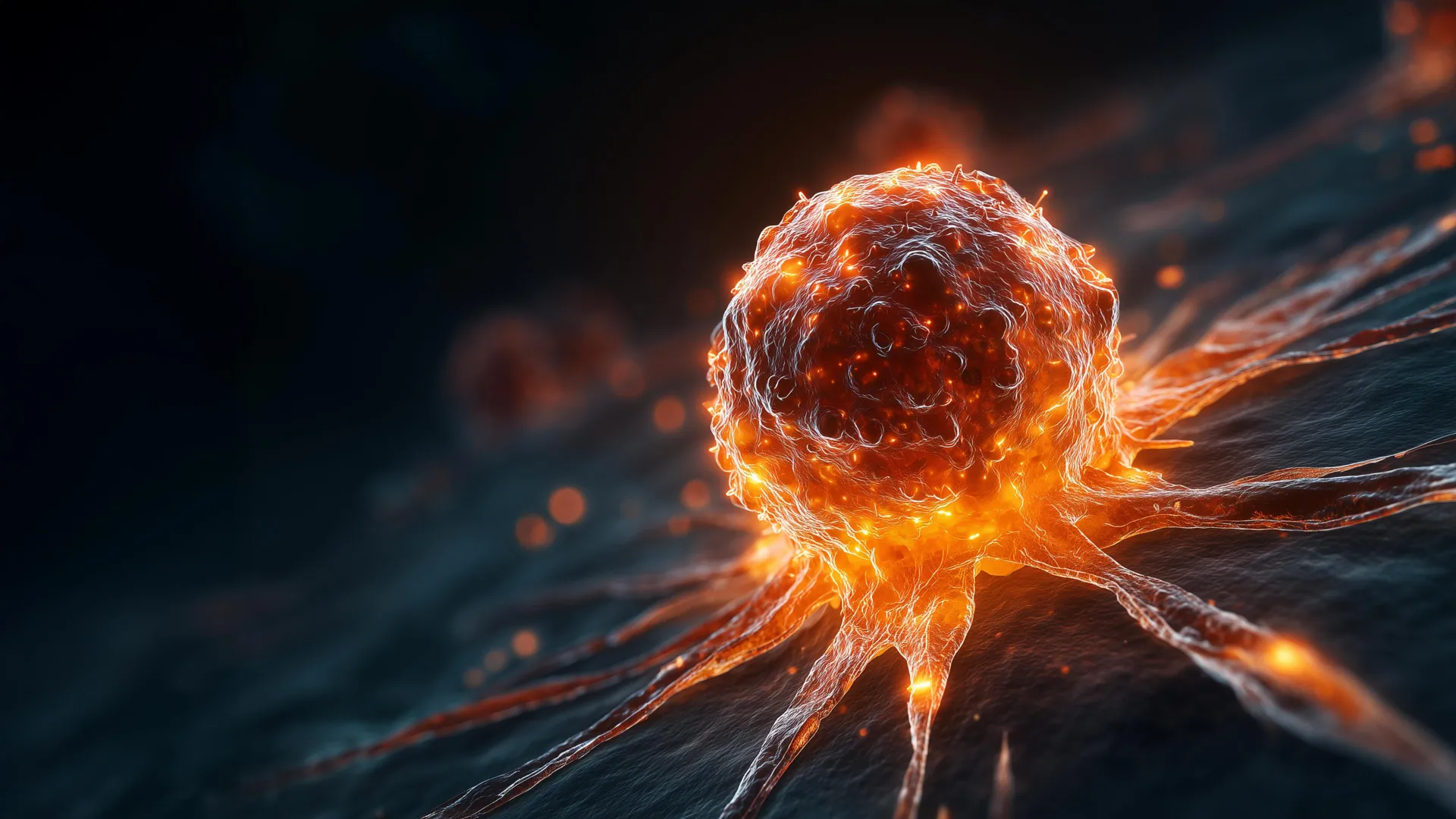
A groundbreaking study led by researchers at NYU Langone Health and its Perlmutter Cancer Center has identified a specific molecule that serves as a dual architect for skin cancer’s survival. The research, published in the prestigious journal Cancer Discovery, reveals that the transcription factor HOXD13 not only accelerates the growth of melanoma by facilitating a robust blood supply but also constructs a chemical shield that prevents the body’s immune system from attacking the tumor. This discovery provides a potential roadmap for new combination therapies designed to dismantle the defenses of aggressive skin cancers that have historically been resistant to standard treatments.
Melanoma, while less common than other types of skin cancer, is significantly more dangerous because of its tendency to spread, or metastasize, to other parts of the body. While the advent of immunotherapy has revolutionized the treatment of melanoma over the last decade, a significant portion of patients either do not respond to these treatments or eventually develop resistance. The NYU Langone study suggests that HOXD13 may be a primary driver behind this resistance, acting as a "master switch" that regulates both the physical infrastructure of the tumor and its ability to remain invisible to the immune system.
The Dual Role of HOXD13 in Tumor Architecture
Transcription factors like HOXD13 are proteins that bind to specific sequences of DNA to control the flow of genetic information. In a healthy biological context, transcription factors ensure that genes are turned on or off at the correct times to build and maintain the body’s tissues. However, in the context of cancer, these proteins can be hijacked to promote uncontrolled growth.
The research team found that HOXD13 is particularly active in melanoma cells, where it orchestrates the process of angiogenesis—the formation of new blood vessels. Tumors require a constant supply of oxygen and nutrients to grow beyond a certain size. By activating pathways involving vascular endothelial growth factor (VEGF), semaphorin-3A (SEMA3A), and CD73, HOXD13 ensures that the tumor is well-nourished.
In laboratory experiments, the researchers demonstrated that reducing the activity of HOXD13 led to a significant decrease in tumor size. This reduction was directly linked to the failure of the tumor to develop the complex network of blood vessels needed to sustain its rapid expansion. This finding highlights HOXD13 as a critical vulnerability in the structural development of melanoma.
Creating a "No-Go Zone" for Immune Cells
Perhaps the most significant finding of the study involves how HOXD13 manipulates the tumor microenvironment to evade the immune system. The body’s primary defense against cancer is the cytotoxic T cell, a type of white blood cell capable of identifying and killing malignant cells. For a treatment like immunotherapy to be successful, these T cells must be able to infiltrate the tumor.
The study revealed that melanoma patients with high levels of HOXD13 had significantly fewer cytotoxic T cells within their tumors. Further analysis showed that HOXD13 increases the production of CD73, an enzyme that leads to the accumulation of adenosine in the area surrounding the tumor. Adenosine is a potent immunosuppressive molecule; in high concentrations, it acts as a chemical barrier that slows down T cells and prevents them from entering the cancerous tissue.
"Our study provides new evidence that transcription factor HOXD13 is a potent driver of melanoma growth and that it suppresses the T cell activity needed to fight the disease," stated Pietro Berico, PhD, the study’s lead investigator and a postdoctoral research fellow at the NYU Grossman School of Medicine and its Perlmutter Cancer Center. This mechanism explains why some tumors are "cold," meaning they lack immune cell infiltration, making them largely unresponsive to current immunotherapies.
Global Collaboration and Experimental Validation
The conclusions of the study were based on an extensive analysis of tumor samples from more than 200 melanoma patients across three countries: the United States, Brazil, and Mexico. This diverse dataset allowed the researchers to confirm that the influence of HOXD13 is a consistent factor across different populations and stages of the disease.
The international team used a combination of genomic sequencing, mouse models, and human melanoma cell lines to validate their findings. By observing how tumors behaved when HOXD13 was present versus when it was suppressed, they were able to confirm that the protein is essential for both the physical growth of the tumor and its immune-evasive properties.
In mouse models, the researchers found that blocking the pathways controlled by HOXD13—specifically the VEGF and adenosine pathways—allowed T cells to flood back into the tumor. This "re-warming" of the tumor microenvironment suggests that targeting these pathways could make previously resistant cancers susceptible to the body’s natural defenses and to existing immunotherapy drugs.
Shifting the Paradigm Toward Combination Therapy
The discovery of the HOXD13-driven mechanism has immediate implications for the future of melanoma treatment. Current clinical trials are already exploring the efficacy of drugs that block VEGF receptors or adenosine receptors. However, these are often tested as standalone treatments or in limited combinations.
The NYU Langone team argues that for patients with high HOXD13 expression, a multi-pronged approach is necessary. By combining VEGF inhibitors (to starve the tumor of nutrients) with adenosine-receptor inhibitors (to break down the immune barrier) and standard immunotherapy (to boost T cell activity), doctors may be able to achieve much higher response rates.
"This data supports the combined targeting of angiogenesis and adenosine-receptor pathways as a promising new treatment approach for HOXD13-driven melanoma," said senior investigator Eva Hernando-Monge, PhD, a professor in the Department of Pathology at the NYU Grossman School of Medicine. Dr. Hernando-Monge noted that if ongoing clinical trials for these individual components prove successful, the next logical step is to design trials specifically for high-HOXD13 patients using this triple-threat combination.
Broader Implications for Oncology
While the current study focused on melanoma, the researchers believe the findings could have a ripple effect across the field of oncology. Preliminary data suggests that HOXD13 is also elevated in several other aggressive forms of cancer, including glioblastomas (a type of brain cancer), sarcomas (cancers of the connective tissues), and osteosarcomas (bone cancer).
These cancers share a common trait: they are notoriously difficult to treat because they create "hostile" environments for the immune system. If HOXD13 plays a similar role in these diseases, the therapeutic strategies developed for melanoma could potentially be adapted to treat a wide range of solid tumors. This would mark a significant shift toward precision medicine, where treatments are tailored not just to the type of cancer, but to the specific transcription factors driving the tumor’s behavior.
Future Research and Clinical Outlook
The research team plans to move forward by investigating how HOXD13 is regulated in the first place. Understanding what triggers the overproduction of this protein could lead to the development of drugs that inhibit HOXD13 directly, rather than just blocking the pathways it activates.
Furthermore, the team is interested in developing a diagnostic test to identify patients with high HOXD13 levels early in their diagnosis. Such a test would allow oncologists to bypass standard treatments that are likely to fail and move directly to the more aggressive combination therapies suggested by this research.
The study was a massive undertaking involving a global network of scientists. Contributors from NYU Langone included Amanda Flores Yanke, Fatemeh Vand Rajabpour, Catherine Do, Ines Delclaux, Tara Muijlwijk, Robert Stagnitta, Theodore Sakellaropoulos, Michelle Krogsgaard, Ata Moshiri, Iman Osman, Jane Skok, Amanda Lund, and Markus Schober. The international effort was bolstered by principal investigators Carla Daniela Robles-Espinoza at the National Autonomous University of Mexico and Patricia Possik at the Brazilian National Cancer Institute.
Support and Funding
This research was made possible through significant financial backing from multiple national and international organizations. Key funding was provided by National Institutes of Health (NIH) grants P30CA016087, R01CA274100, P50CA225450, and U54CA263001. Additional support came from the Melanoma Research Foundation, the Melanoma Research Alliance, and the United Kingdom Medical Research Council.
International funding included grants from the Brazilian National Council for Scientific and Technological Development (CNPQ) and the Wellcome Trust Career Development Award. This broad base of support underscores the scientific community’s recognition of the critical need for new insights into melanoma progression and the potential impact of the HOXD13 discovery.
As the medical community continues to battle rising rates of skin cancer globally, the identification of HOXD13 represents a vital step forward. By unmasking the molecular "conductor" behind the tumor’s survival strategies, researchers are closer than ever to turning the tide against the most aggressive forms of melanoma.
