
 By admin
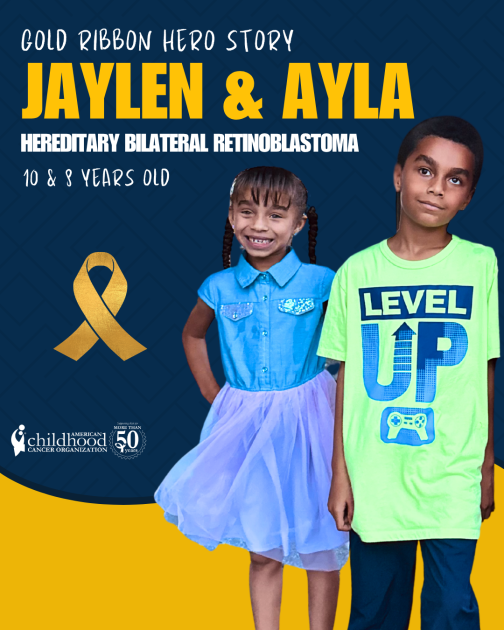
The journey of Jaylen and Ayla, two siblings who have successfully navigated the complexities of hereditary bilateral retinoblastoma, serves as a poignant intersection of pediatric oncology, genetic predispositions, and the critical necessity for accessible healthcare for the Deaf and hard-of-hearing community. Jaylen, now 10, and his younger sister Ayla, 8, are both survivors of a rare and aggressive form of eye cancer that affects approximately one in every 15,000 to 20,000 live births. Their story highlights not only the medical rigors of treating childhood cancer but also the systemic hurdles that families must overcome when facing communication barriers within the medical establishment.
Retinoblastoma is a rare cancer of the retina, the thin membrane on the inner surface of the back of the eye. In the case of these two siblings, the condition was bilateral—meaning it affected both eyes—and hereditary, which typically indicates a germline mutation in the RB1 gene. This genetic component necessitated heightened vigilance for the family, yet the path to diagnosis was fraught with challenges that extended beyond the biological reality of the disease.
A Timeline of Diagnosis and Systemic Obstacles
The family’s encounter with retinoblastoma began when Jaylen was just two months old. His mother, Denice, observed a subtle physical abnormality: his left eye appeared to veer outward, a condition known as strabismus. Additionally, early photographs of Jaylen captured what is colloquially known as the "glow"—a white reflection in the pupil rather than the standard "red-eye" effect caused by a camera flash. At the time, the family attributed this to photographic lighting rather than a clinical symptom. This phenomenon, known medically as leukocoria, is the most common early sign of retinoblastoma.
The pursuit of a formal diagnosis for Jaylen was significantly delayed by a failure in medical accessibility. When Denice took Jaylen to his four-month check-up, the medical facility refused to provide care because they lacked an American Sign Language (ASL) interpreter for Denice. This refusal represents a significant breach of the Americans with Disabilities Act (ADA), which mandates that healthcare providers provide effective communication aids to patients and their family members.
Faced with a medical system that had initially failed her, Denice was forced to navigate the healthcare landscape independently. Her persistence eventually led to a facility capable of accommodating her communication needs and diagnosing Jaylen’s condition. By the time Jaylen was diagnosed, the cancer was confirmed as bilateral.
The hereditary nature of Jaylen’s diagnosis meant that any subsequent children would be at an extremely high risk for the same condition. When Ayla was born, she was monitored from birth with a high degree of clinical scrutiny. This proactive approach led to the discovery of retinoblastoma in Ayla when she was only four weeks old. While the diagnosis was devastating, the early detection—made possible by the knowledge gained from Jaylen’s case—allowed for immediate intervention.
The Clinical Reality of Retinoblastoma Treatment
The treatment of bilateral retinoblastoma is a multi-year, multi-modal process aimed at preserving life, and where possible, vision. For Jaylen and Ayla, the clinical path involved a grueling combination of systemic and localized therapies.
Over several years, both children underwent various treatments:
- Chemotherapy: Used to shrink tumors (chemoreduction) so that localized treatments could be more effective.
- Cryotherapy: A procedure that uses extreme cold to freeze and destroy cancer cells in the retina.
- Laser Therapy (Photocoagulation): Utilizing focused light to cut off the blood supply to tumors or destroy them directly.
- Strabismus Surgery: Performed specifically for Jaylen to correct the alignment of his eyes.
- Enucleation: For Ayla, the severity of the disease in one eye necessitated its surgical removal. This is often a life-saving measure when a tumor is too large to be treated by other means or when there is a risk of the cancer spreading via the optic nerve to the brain.
Both children eventually transitioned to the use of ocular prosthetics. Modern ocularistry allows for highly customized prosthetic eyes that match the patient’s remaining natural eye in color, vascularity, and movement. Ayla, in particular, has embraced this aspect of her recovery, viewing her collection of custom-colored irises as a form of self-expression rather than a clinical necessity.
Understanding the Genetic and Medical Context
Retinoblastoma is unique among childhood cancers due to its strong genetic links. Approximately 40% of cases are hereditary. In these instances, the child inherits a mutation in one copy of the RB1 gene in every cell of their body. A second "hit" or mutation in the remaining RB1 gene in a retinal cell leads to tumor formation. Because the mutation is present in all cells, these children are at risk for bilateral tumors and have an increased risk of developing other types of cancer later in life, such as osteosarcoma or soft tissue sarcomas.
The survival rate for retinoblastoma in developed nations is remarkably high, exceeding 95%. However, the quality of life and the preservation of vision depend heavily on early detection. The "white glow" or leukocoria remains the most critical diagnostic indicator for parents. Public health campaigns, such as those supported by the American Childhood Cancer Organization (ACCO), emphasize that catching this glow in a photograph can be the difference between preserving a child’s sight and the necessity of enucleation.
The Intersection of Disability Rights and Healthcare
The challenges Denice faced as a Deaf mother seeking care for her children highlight a broader issue in the American healthcare system. Under Title III of the ADA, hospitals and doctors’ offices are required to provide "auxiliary aids and services" to ensure effective communication. This includes providing qualified ASL interpreters.
Denice’s experience of being turned away at a critical juncture in her son’s health journey illustrates the "compounded frustration" often felt by the Deaf community. The delay in diagnosis for Jaylen could have had catastrophic consequences, as retinoblastoma is a fast-growing cancer. Her subsequent role as a "fearless advocate" was a necessity born from a system that did not initially accommodate her rights as a parent.
Medical analysts suggest that Denice’s experience is not isolated. Studies have shown that patients with disabilities often face significant barriers to care, ranging from physical inaccessibility to communication breakdowns. In pediatric oncology, where the parent-physician relationship is vital for informed consent and complex home-care routines, the absence of an interpreter is a critical failure of the standard of care.
Broader Implications and the Path Forward
The story of Jaylen and Ayla concludes with a narrative of triumph over both biological and systemic adversity. Both children are currently in remission and have adapted to their prosthetic eyes with remarkable resilience. Ayla’s decision to learn ASL during her post-operative recovery further bridges the communication gap within the family and reinforces her independence.
The family’s choice to share their story online, despite the potential for public scrutiny, serves a dual purpose: it raises awareness about the early signs of retinoblastoma and advocates for the rights of Deaf parents in medical settings. Denice’s philosophy of "choosing joy" and "living in the present moment" reflects a common psychological adaptation among childhood cancer survivors and their families, often referred to as "post-traumatic growth."
From a public health perspective, the implications are clear:
- Awareness: Continued education regarding leukocoria (the "glow") is essential for early diagnosis.
- Genetic Counseling: Families with a history of retinoblastoma must have access to genetic testing and proactive screening for newborns.
- Healthcare Reform: Stricter enforcement of ADA compliance in medical facilities is necessary to ensure that no parent is turned away due to a disability.
- Psychosocial Support: Long-term follow-up for survivors must include not only physical monitoring for secondary cancers but also psychological support for the family unit.
Jaylen and Ayla are more than just survivors of a rare disease; they are evidence of the progress in pediatric oncology and the power of parental advocacy. Their journey underscores the fact that while a cancer diagnosis is life-altering, the combination of early detection, advanced medical treatment, and an unwavering commitment to patient rights can lead to a future defined by joy and vitality rather than illness. As the medical community continues to refine treatments for hereditary retinoblastoma, the social imperative remains: ensuring that the systems meant to provide care are as resilient and inclusive as the families they serve.
