
 By admin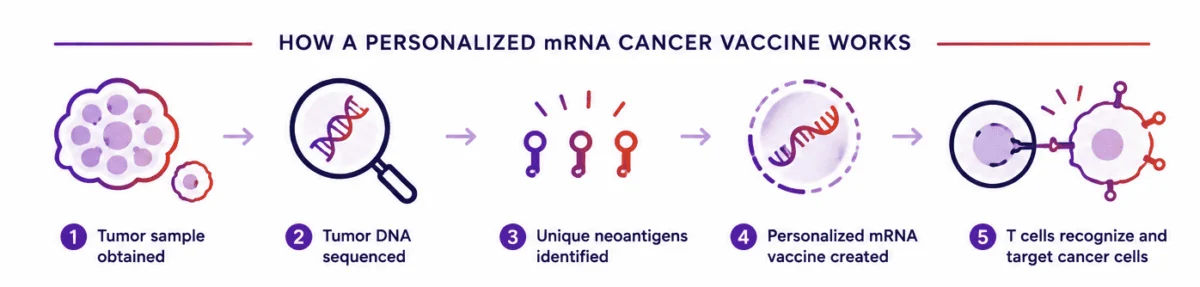
For decades, the medical and scientific communities have pursued an ambitious and often elusive goal: to harness a patient’s own immune system to specifically identify and eliminate their unique cancer. This vision, once relegated to the realm of theoretical possibility, has moved demonstrably closer to reality with the announcement of groundbreaking Phase 3 clinical trial results for an individualized mRNA-based cancer vaccine.
Pharmaceutical giants Merck and Moderna recently unveiled positive topline data from the Phase 3 INTerpath-001 trial. The study evaluated intismeran autogene, an individualized mRNA neoantigen therapy, in combination with the well-established immune checkpoint inhibitor pembrolizumab (Keytruda®), for patients suffering from high-risk melanoma whose tumors had been surgically removed. The findings represent a pivotal moment in oncology, marking the first positive Phase 3 trial for an individualized neoantigen therapy and an mRNA-based cancer treatment, a testament to decades of relentless scientific pursuit.
The combination therapy demonstrated a statistically significant and clinically meaningful extension in recurrence-free survival (RFS) compared to Keytruda® alone, meaning patients experienced a longer period without their cancer returning. Crucially, the trial also met its secondary endpoint, significantly improving distant metastasis-free survival (DMFS), indicating a prolonged period without the cancer spreading to other parts of the body. These outcomes underscore the profound potential of this personalized approach to redefine the post-surgical treatment landscape for high-risk melanoma patients, offering renewed hope where options were previously limited.
A New Paradigm in Cancer Treatment: How Personalized mRNA Vaccines Work
Unlike traditional prophylactic vaccines designed to prevent infectious diseases, intismeran autogene is a therapeutic cancer vaccine. Its purpose is not to prevent cancer from developing but to actively treat existing disease by re-educating the immune system. What sets intismeran apart is its deeply personalized nature: it is not a "one-size-fits-all" solution, but a bespoke therapy tailored precisely to each individual patient’s unique tumor profile.
The development of this personalized vaccine begins with a sophisticated process. Researchers obtain a sample of the patient’s tumor and perform comprehensive genetic sequencing to identify its specific mutations. Within these mutations lie crucial identifiers known as neoantigens. These neoantigens are abnormal proteins or protein fragments that are unique to the cancer cells and not present on healthy cells, making them ideal targets for immune system recognition.
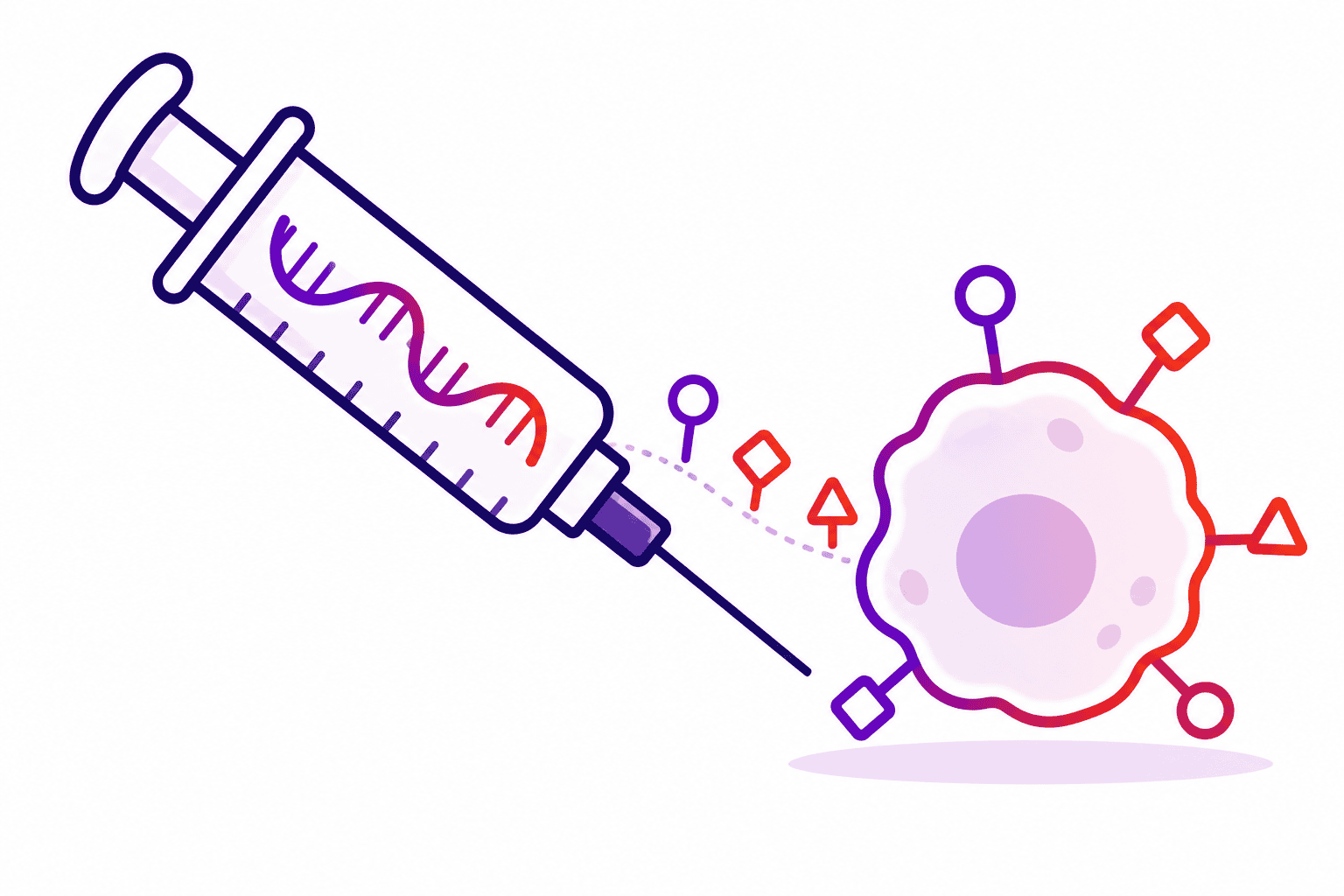
Once these patient-specific neoantigens are identified, scientists select the most immunogenic ones and encode their blueprints into messenger RNA (mRNA). This mRNA acts as a temporary set of instructions, essentially teaching the patient’s immune cells – particularly T cells – to recognize these unique cancer markers. Upon vaccination, the body’s cells translate the mRNA into the specific neoantigens, presenting them to the immune system. This process effectively provides the immune system with a highly precise, personalized "most-wanted" list, guiding it to identify and target the patient’s specific cancer cells.
The Synergistic Power of Combination Therapy
Recognizing cancer cells is a critical first step, but it is often insufficient on its own. Tumors are notoriously adept at evading immune responses, frequently exploiting natural immune checkpoints. These checkpoints are regulatory mechanisms that normally prevent the immune system from overreacting and attacking healthy tissues. Cancer cells can hijack these checkpoints, such as the PD-1 pathway, to suppress the activity of T cells, allowing the tumor to grow unchecked.
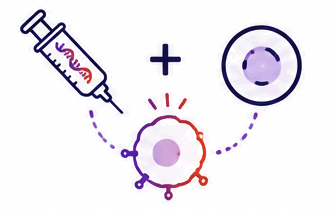
This is where pembrolizumab (Keytruda®) plays its vital role. As an immune checkpoint inhibitor, Keytruda® blocks the PD-1 receptor on T cells, effectively releasing the "brakes" on the immune response. By doing so, it empowers T cells to sustain their attack against cancer cells. In essence, the personalized mRNA vaccine provides the immune system with precise instructions on what to target, while Keytruda® ensures that the immune system’s T cells are unhindered and potent enough to act on those instructions and maintain a durable response. This synergistic combination represents a powerful dual strategy: specific targeting combined with enhanced immune effector function.
Decades of Discovery Converge: A Historical Perspective
For organizations like the Cancer Research Institute (CRI), the positive results of INTerpath-001 resonate deeply, representing the culmination of more than 70 years of foundational investment in cancer immunology. Long before immunotherapy became a cornerstone of modern oncology, CRI championed the fundamental science necessary to understand how the immune system could recognize and respond to cancer.
The pursuit of cancer vaccines has been integral to this historical journey. In the 1950s, CRI’s founding scientific and medical director, Dr. Lloyd J. Old, was instrumental in demonstrating that the tuberculosis vaccine Bacillus Calmette-Guérin (BCG) could stimulate an immune response against tumors in mice. Decades later, BCG earned its place in history as the first active immunotherapy approved by the U.S. Food and Drug Administration (FDA) for cancer treatment, specifically for early-stage bladder cancer. Dr. Old dedicated much of his career to the visionary idea that scientists could pinpoint features unique to cancer cells – what we now call neoantigens – and leverage them to direct a targeted immune response against tumors.
This vision propelled further collaborative efforts. In 2001, CRI partnered with the Ludwig Institute for Cancer Research to establish the Cancer Vaccine Collaborative (CVC). This global academic network was specifically designed to accelerate the development and rigorous testing of therapeutic cancer vaccines. Over its initial decade, the CVC orchestrated nearly 60 early-phase trials, meticulously investigating not only which cancer targets could elicit an immune response but also what additional signals might be required to make those responses stronger, more specific, and enduring.
Simultaneously, another revolutionary path in cancer immunology was unfolding. In 1992, CRI began funding research in the laboratory of Dr. James P. Allison. His groundbreaking discoveries revealed that blocking immune checkpoints could effectively release the natural "brakes" on T cells, enabling them to mount more potent and sustained responses against cancer. Dr. Allison’s pioneering work fundamentally reshaped cancer treatment, launching checkpoint blockade as an entirely new therapeutic modality, and earned him the 2018 Nobel Prize in Physiology or Medicine.
More recently, CRI also recognized the pivotal contributions to mRNA-based therapies. In 2021, the organization awarded its prestigious William B. Coley Award to Katalin Karikó, Drew Weissman, Uğur Şahin, and Özlem Türeci. This honor acknowledged their transformative work in applying mRNA-based approaches to both cancer and infectious diseases. Karikó and Weissman subsequently received the 2023 Nobel Prize in Physiology or Medicine for their discoveries that enabled the rapid development of highly effective mRNA vaccines against COVID-19, underscoring the broad applicability and profound impact of mRNA technology.
Today, these distinct yet interconnected scientific pathways are converging in a powerful synergy. The individualized cancer vaccine provides the immune system with precise intelligence on what to recognize, while checkpoint blockade creates an optimal environment for immune cells to respond robustly and persist in their fight against cancer. This combination embodies the very essence of cancer immunology that CRI has tirelessly championed for over seven decades, culminating in the strongest late-stage evidence to date that combining these concepts can dramatically improve patient outcomes.
Detailed Findings from the Phase 3 INTerpath-001 Trial
The global Phase 3 INTerpath-001 trial was a comprehensive study, enrolling 1,137 patients diagnosed with stage IIB-IV cutaneous melanoma. All participants had undergone complete surgical removal of their tumors, making them a high-risk population for recurrence. Following surgery, patients were randomized to receive either the combination of intismeran autogene plus Keytruda® or Keytruda® alone. The primary objective was to assess the reduction in the risk of cancer recurrence.
At a pre-specified interim analysis, Merck and Moderna announced that the combination therapy achieved its primary endpoint, demonstrating statistically significant and clinically meaningful improvements in recurrence-free survival (RFS). Furthermore, the trial also successfully met a key secondary endpoint, showing a significant improvement in distant metastasis-free survival (DMFS). While the precise magnitude of benefit from the Phase 3 trial has not yet been publicly disclosed, the positive topline results are highly encouraging.
These results build upon compelling data from the earlier, smaller Phase 2b trial. In that study, five-year follow-up data revealed that the combination therapy reduced the risk of recurrence or death by a remarkable 49% and the risk of distant metastasis or death by an even more significant 59% when compared to Keytruda® alone. Such substantial reductions in these critical endpoints in the Phase 2b trial provide a strong indication of the potential clinical impact that could be expected from the Phase 3 data once it is fully presented.
Implications and Future Directions
While these findings are undeniably exciting and represent a monumental leap forward, intismeran autogene remains an investigational therapy and has not yet received regulatory approval for routine clinical use. The detailed data from the Phase 3 trial are eagerly awaited and will be presented publicly at an upcoming scientific conference. The trial is also continuing to evaluate other crucial outcomes, including overall survival (OS), which will be essential for researchers to determine if the combination ultimately helps patients live longer lives.

Beyond the immediate clinical data, several practical considerations must be addressed if personalized cancer vaccines are to become a standard of care. The individualized nature of intismeran means that each patient’s tumor must undergo detailed genetic analysis, followed by the bespoke manufacture of a vaccine tailored specifically for them. Scaling this process to meet potential widespread demand will necessitate significant advancements in infrastructure, logistics, and manufacturing capabilities. Questions surrounding the time required for vaccine production, ensuring equitable patient access, and the overall cost-effectiveness of such a personalized therapy will be paramount.
Furthermore, melanoma, while a significant and often aggressive cancer, is just one piece of the broader oncology puzzle. Intismeran autogene is currently being investigated in clinical trials for several other cancer types, hinting at its potential applicability beyond skin cancer. Concurrently, researchers globally are exploring diverse vaccine technologies, novel tumor targets, and various combination treatment strategies. Future studies will be crucial in determining how broadly individualized cancer vaccines can benefit a wider spectrum of cancer patients.
A New Chapter in the War Against Cancer
Scientific breakthroughs are rarely sudden epiphanies; rather, they are the culmination of years, often decades, of incremental discoveries, each building upon the last to make previously unimaginable advancements possible. The idea that the immune system could recognize and fight cancer was once a controversial notion. The concept of releasing immune checkpoints to unleash T cells was met with skepticism. And the possibility of identifying an individual’s unique cancer mutations to craft a personalized vaccine seemed like science fiction.
Today, these audacious ideas have converged in a pivotal Phase 3 clinical trial, delivering results that validate the unwavering commitment of generations of scientists, researchers, and funding bodies like CRI. CRI’s sustained investment in cancer immunology for over 70 years has been driven by the singular mission to identify and support exceptional science early, empower researchers to pursue bold ideas, and meticulously build the knowledge base that ultimately translates into better treatments and, crucially, better outcomes for patients.
The positive results from the INTerpath-001 trial do not signify the end of the cancer vaccine story. On the contrary, they herald the beginning of an important, transformative new chapter, promising a future where cancer treatment is increasingly precise, personalized, and powered by the patient’s own immune system.

Sources:
- Moderna cancer vaccine stops melanoma returning: what’s next for personalized treatments? Nature, August 2026.
- Merck and Moderna Announce Phase 3 INTerpath-001 Trial of Intismeran Autogene Plus KEYTRUDA® Met Endpoints of Recurrence-Free Survival (RFS) and Distant Metastasis-Free Survival (DMFS) in Patients With Completely Resected Stage IIB-IV Melanoma. Merck, August 2026.
- The Cancer Vaccine Collaborative: a new model of coordinated discovery. Cancer Immunology, May 2012.
