
 By admin
The narrative of pediatric cancer is often defined by its clinical challenges, but for the family of Jaylen and Ayla, now aged 10 and 8, the journey was further complicated by systemic barriers within the healthcare system. Both siblings are survivors of hereditary bilateral retinoblastoma, a rare form of eye cancer that originates in the retina. Their story highlights not only the medical complexities of treating childhood ocular tumors but also the critical importance of parental advocacy, particularly when navigating the intersection of disability and healthcare access. For Denice, the children’s mother, the battle for her children’s lives began not with a diagnosis, but with a struggle for basic communication and equitable treatment in a medical environment that initially failed to accommodate her needs as a deaf parent.
The Early Warning Signs and Diagnostic Obstacles
The family’s experience with retinoblastoma began when Jaylen was just two months old. Denice noticed a subtle but concerning misalignment in his left eye, which appeared to veer outward—a condition known clinically as strabismus. Strabismus is one of the most common early indicators of retinoblastoma, yet it is often overlooked in the absence of other symptoms. Simultaneously, the family noticed a peculiar "glow" in Jaylen’s eye in flash photography. This phenomenon, known as leukocoria, occurs when a tumor at the back of the eye reflects light, creating a white or yellowish pupillary reflex instead of the standard "red-eye" effect. At the time, the family mistook the reflection for a standard camera artifact, a common occurrence that often delays the diagnosis of ocular cancers in young children.
The situation reached a critical juncture when Jaylen was four months old. Seeking a routine check-up to address these concerns, Denice faced a significant hurdle: the medical facility refused to provide services because they did not have an American Sign Language (ASL) interpreter on-site. Under the Americans with Disabilities Act (ADA), healthcare providers are required to provide effective communication for patients and their families, which often necessitates the provision of qualified interpreters. The refusal forced Denice to navigate a complex and often indifferent medical landscape entirely on her own. Her persistence eventually led to a referral to a specialist who could facilitate a proper examination, ultimately confirming the diagnosis of bilateral retinoblastoma—cancer in both eyes.
Understanding Hereditary Bilateral Retinoblastoma
Retinoblastoma is a rare cancer of the retina, the thin nerve tissue that lines the back of the eye. While it is the most common primary intraocular tumor in children, it affects only about 200 to 300 children in the United States annually. Approximately 40% of cases are hereditary, meaning the child carries a germline mutation in the RB1 gene. Hereditary cases are almost always bilateral, affecting both eyes, and typically present at a much earlier age than sporadic, non-hereditary cases.
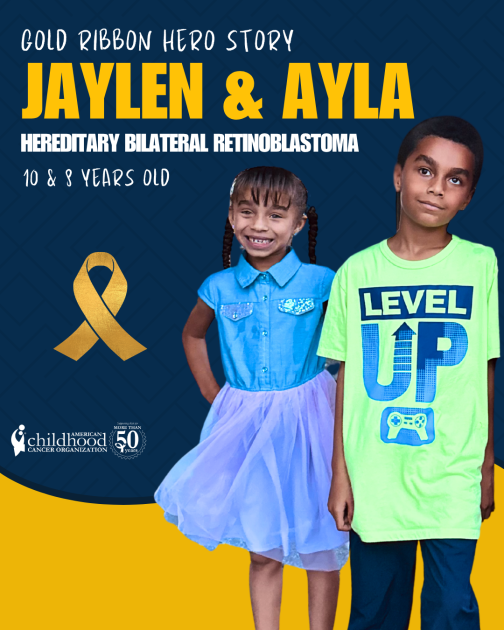
Because Jaylen’s condition was identified as hereditary, the medical team knew that any future siblings would be at a significantly higher risk. When Ayla was born two years later, she was placed under immediate and rigorous monitoring. This proactive approach proved life-saving; Ayla was diagnosed with the same bilateral cancer at just four weeks old. While the news was devastating, the early detection allowed for an immediate intervention that is often not possible in cases where the family history is unknown.
A Decade of Intensive Medical Intervention
The treatment of retinoblastoma is a multi-modal process aimed at three primary goals: saving the child’s life, preserving the eye, and maintaining as much vision as possible. For Jaylen and Ayla, the road to recovery spanned several years and involved a variety of aggressive therapies.
- Chemotherapy: Both children underwent systemic or localized chemotherapy to shrink the tumors. Chemotherapy remains a cornerstone of retinoblastoma treatment, though advancements in intra-arterial chemotherapy (IAC) have increasingly allowed doctors to deliver drugs directly to the ophthalmic artery, reducing systemic side effects.
- Cryotherapy and Laser Treatments: To address smaller tumors or those remaining after chemotherapy, doctors utilized cryotherapy (freezing the tumor cells) and laser photocoagulation (using heat to destroy the blood vessels feeding the tumor). These focal therapies are essential for preventing recurrence.
- Surgical Interventions: Jaylen required strabismus surgery to correct the alignment of his eyes following the initial tumor treatments. However, the severity of Ayla’s condition necessitated a more permanent solution. To prevent the spread of the cancer to the brain through the optic nerve, Ayla underwent an enucleation—the surgical removal of the eye.
- Ocular Prosthetics: Today, both Jaylen and Ayla live with prosthetic eyes. Modern ocular prosthetics are custom-made from medical-grade acrylic and are hand-painted to match the patient’s natural eye. In Ayla’s case, she has turned a medical necessity into a form of self-expression, maintaining a collection of custom-colored irises that allow her to change her look according to her personal style.
The Intersection of Disability Rights and Pediatric Oncology
The challenges faced by Denice during the diagnostic phase highlight a broader issue in the American healthcare system: the "communication gap" for disabled parents. When a healthcare provider refuses to provide an interpreter, it does more than just violate the ADA; it places the child’s health at risk by delaying diagnosis and treatment. For a fast-growing cancer like retinoblastoma, where days or weeks can determine whether a child loses their sight or their life, such delays are potentially catastrophic.
Denice’s experience forced her into the role of a "fearless advocate" and "manager" of her children’s health. This role is common among parents of children with chronic or life-threatening illnesses, but for a deaf mother, it required overcoming an additional layer of institutional bias. Her success in securing care for her children serves as a case study in the necessity of patient-centered care and the importance of hospitals adhering to accessibility mandates.
Broader Implications and Public Health Awareness
The story of Jaylen and Ayla serves as a vital public health reminder regarding the "glow" or leukocoria. Organizations like the American Childhood Cancer Organization (ACCO) and "Know the Glow" emphasize that a white reflection in a child’s eye in photos is a medical emergency until proven otherwise. Increased public awareness of this simple visual cue has the potential to significantly increase early detection rates, which directly correlates to better survival outcomes and higher chances of eye preservation.
Furthermore, the siblings’ journey reflects the evolving nature of survivorship. With a survival rate of over 95% in high-income countries, the focus of retinoblastoma care is shifting toward the long-term quality of life. This includes psychological support for children growing up with prosthetics and the management of potential secondary cancers, which individuals with the RB1 germline mutation are at a higher risk of developing later in life.
Resilience and the Choice of Joy
Despite the rigors of their treatment and the scrutiny that often accompanies sharing a medical journey on social media, Jaylen and Ayla have reached a state of stable health. Denice has been vocal about her parenting philosophy, which she describes as "beautifully spoiling" her children. This approach is a response to the trauma of their early years, prioritizing presence and joy over the criticisms of those who have not navigated the complexities of a childhood cancer diagnosis.
Ayla’s journey is particularly notable for her embrace of her identity. In addition to her "wardrobe" of prosthetic eyes, she began learning ASL during her post-operative recovery, bridging the communication gap within her own family and asserting her independence. Her ability to view her prosthetic as a fashion accessory rather than a limitation is a testament to the psychological resilience that can be fostered when children are empowered throughout their medical treatment.
Conclusion: A Triumphant Path Forward
The narrative of Jaylen and Ayla is one of medical triumph and the power of maternal tenacity. From the initial struggle to find a doctor who would respect the rights of a deaf mother to the "legendary" milestone of both children being declared cancer-free, the family has navigated a decade of uncertainty with a focus on the present moment.
Their story underscores the need for a more inclusive medical system that recognizes the diverse needs of families. It also serves as a beacon of hope for other families facing a retinoblastoma diagnosis, proving that while the path is arduous, a joyful and fulfilling life is possible on the other side of cancer. As Jaylen and Ayla continue to thrive, their legacy lies in the awareness they raise and the barriers they have broken, ensuring that the next family facing such a diagnosis might find a path that is slightly less obstructed.
