
 By Lina carolina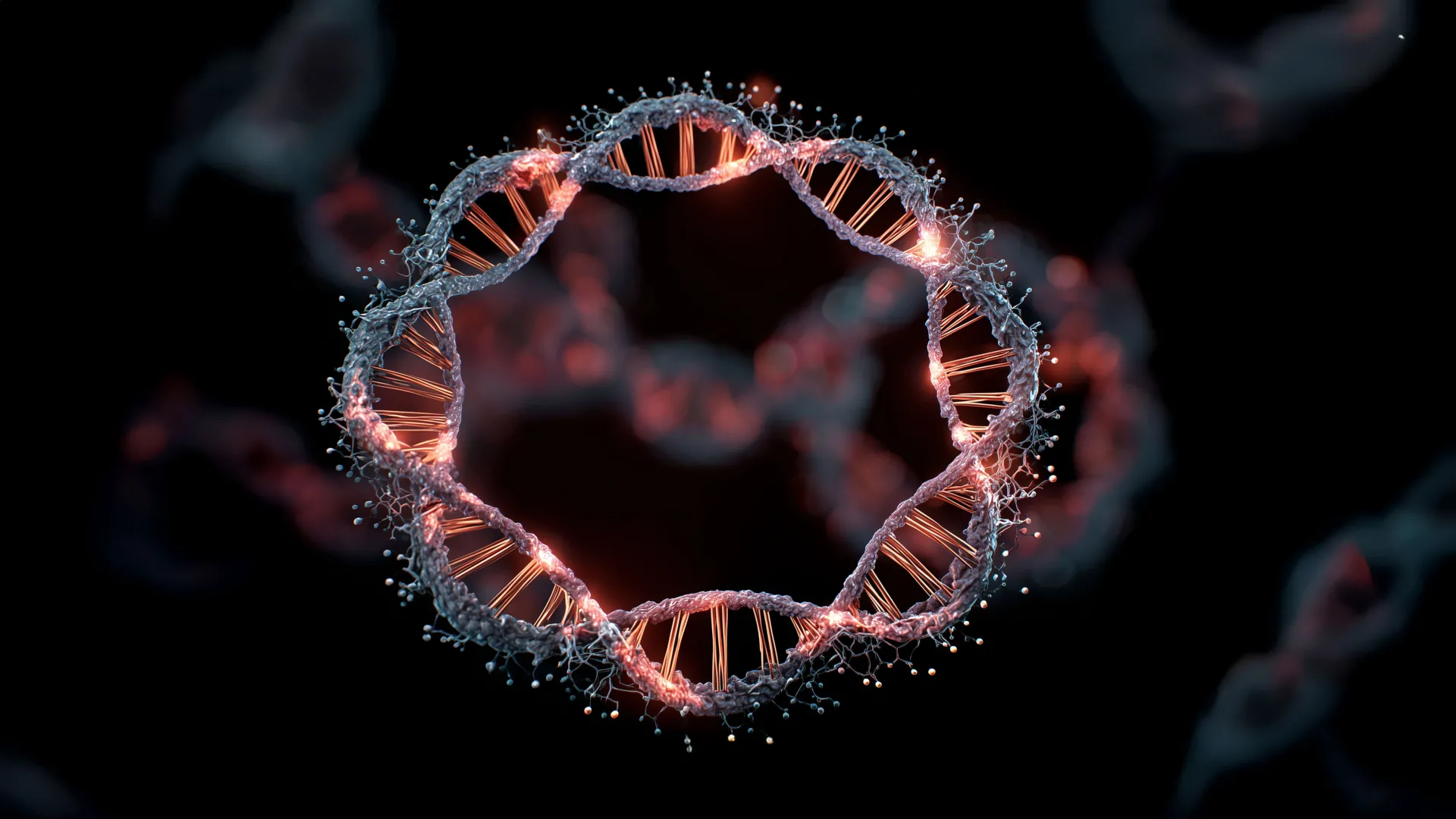
An international team of scientists has revealed how rogue rings of DNA that float outside of our chromosomes – known as extrachromosomal DNA, or ecDNA – can drive the growth of a large proportion of glioblastomas, the most common and aggressive adult brain cancer. This groundbreaking discovery could unlock much-needed new approaches for early diagnosis, progress tracking, and more effective treatment of glioblastoma. The findings, published on September 8 in the prestigious journal Cancer Discovery, represent a significant leap forward in understanding the fundamental biology of this devastating disease.
Unraveling the Mystery of Extrachromosomal DNA in Glioblastoma
For decades, the primary focus of cancer research has been on alterations within the chromosomes – the organized structures of DNA within a cell’s nucleus. However, a growing body of evidence has pointed to the critical role of extrachromosomal DNA (ecDNA) in cancer development and progression. These circular DNA molecules, existing independently of the main chromosomal DNA, have been observed in various cancers, but their precise function and origin have remained largely enigmatic, particularly in the context of glioblastoma.
Glioblastoma (GBM) stands as one of the most formidable challenges in oncology. Despite decades of intensive research and various treatment modalities, the median survival for patients remains tragically short, often around 14 months. The aggressive nature of GBM stems from its rapid growth, remarkable adaptability, and inherent resistance to therapies. This urgent need for novel diagnostic and therapeutic strategies has spurred ambitious international collaborations to delve into the intricacies of GBM biology.
The Genesis of Aggression: ecDNA’s Early Arrival
The new study, a culmination of years of meticulous research by the Cancer Grand Challenges’ team eDyNAmiC, provides compelling evidence that ecDNA rings are not merely bystanders but active architects of glioblastoma’s aggressive phenotype. Crucially, the findings suggest that ecDNA rings, often carrying potent cancer-driving genes, can appear in the earliest stages of glioblastoma development. In some instances, these rogue DNA elements may even predate the formation of a discernible tumor, setting the stage for the cancer’s rapid proliferation and recalcitrance to treatment.
This early emergence of ecDNA is particularly significant. It implies that the genetic landscape of a cell can become oncogenic not just through chromosomal mutations but also through the acquisition and amplification of these independent DNA circles. The presence of ecDNA in nascent cancer cells could provide an immediate advantage, fueling uncontrolled growth and conferring a survival benefit in the competitive microenvironment of the brain.
A Collaborative Endeavor: Team eDyNAmiC’s Approach
The study was spearheaded by a formidable international consortium of experts. Dr. Benjamin Werner, a group leader at the Barts Cancer Institute, Queen Mary University of London, and Professor Paul Mischel, from Stanford University, co-led the research as part of Cancer Grand Challenges’ eDyNAmiC team. Professor Charlie Swanton, based at The Francis Crick Institute, also played a pivotal role. Cancer Grand Challenges, a joint initiative between Cancer Research UK and the US National Cancer Institute, champions bold, high-risk, high-reward research aimed at tackling the most intractable problems in cancer. Understanding ecDNA was identified as one such grand challenge, leading to the establishment of the $25 million eDyNAmiC consortium in 2022. This multidisciplinary team comprises specialists from diverse fields including cancer biology, clinical research, evolutionary biology, computer science, and mathematics, pooling their expertise to decipher ecDNA’s complex role and explore its therapeutic potential.
Excavating the Tumor’s Evolutionary History
The eDyNAmiC team employed a novel, "archaeological" approach to reconstruct the evolutionary timeline of glioblastoma, focusing on the emergence and proliferation of ecDNA. Instead of relying on single tumor samples, researchers meticulously collected multiple tissue samples from various locations within individual glioblastoma tumors. This extensive sampling allowed for a more comprehensive understanding of the tumor’s spatial heterogeneity and temporal evolution.
"We studied the tumors much like an archaeologist would," explained senior author Dr. Benjamin Werner. "Rather than taking a single sample, we excavated multiple sites around the tumour, allowing us to build computational models describing how they evolved. We simulated millions of different scenarios to reconstruct how the earliest ecDNAs emerged, spread, and drove tumour aggressiveness, giving us a clearer picture of the tumour’s origins and progression."
This sophisticated computational modeling, integrated with genomic and imaging data from glioblastoma patients, provided unprecedented insights into the dynamics of ecDNA. The analysis revealed that the vast majority of these ecDNA rings contained the EGFR (Epidermal Growth Factor Receptor) gene. EGFR is a well-established oncogene, meaning it plays a critical role in promoting cell growth and division, and its aberrant activation is a common driver in many glioblastomas.
The study’s most striking revelation was the early appearance of EGFR-carrying ecDNA. In some patient cases, these rings were detected even before a definitive tumor mass had formed, suggesting they are initiators rather than mere consequences of cancer development. Furthermore, the research demonstrated that these EGFR ecDNA molecules frequently acquired additional genetic alterations, such as the EGFRvIII variant. This specific variant is known to enhance the cancer’s aggressiveness and bolster its resistance to various therapeutic agents, underscoring the adaptive and insidious nature of ecDNA-driven tumors.
A Window of Opportunity for Intervention
The early detection of EGFR ecDNA offers a tantalizing "window of opportunity" for medical intervention. Dr. Magnus Haughey, a postdoctoral researcher in Dr. Werner’s group and a lead author on the study, commented, "These subtle mechanisms show that there may be a window of opportunity to detect and treat the disease between the first appearance of EGFR ecDNA and the emergence of these more aggressive variants."
The prospect of developing a reliable diagnostic test, potentially a non-invasive blood test capable of detecting early EGFR ecDNA, could revolutionize glioblastoma management. Such a test could enable clinicians to identify individuals at high risk or diagnose the disease at its nascent stages, before it has become entrenched and difficult to treat. This proactive approach could significantly alter the prognosis for patients, shifting the paradigm from late-stage intervention to early detection and prevention of aggressive tumor progression.
The Multifaceted Nature of ecDNA and Tailored Therapies
Beyond EGFR, the study confirmed that ecDNA is a versatile platform capable of carrying multiple cancer-driving genes simultaneously. The combination of genes present on these extrachromosomal rings can uniquely influence how tumors evolve and respond to treatment. This finding has profound implications for personalized medicine, suggesting that a patient’s ecDNA profile could serve as a crucial biomarker for tailoring therapeutic strategies. By understanding the specific genetic cargo of a tumor’s ecDNA, clinicians could potentially select the most effective treatments and anticipate potential resistance mechanisms.
While this research marks a significant advance, several mysteries surrounding ecDNA persist. The eDyNAmiC team plans to further investigate how various treatments impact the number and types of ecDNA present in glioblastomas. Understanding these dynamic interactions could lead to the development of therapies specifically designed to target and eliminate ecDNA, thereby disrupting cancer growth. The consortium will continue its broad investigation into the role of ecDNAs across a spectrum of cancer types, aiming to uncover further opportunities for earlier diagnosis, more precise disease monitoring, and the design of smarter, more effective cancer treatments.
Expert Perspectives on the Impact
The significance of these findings has been widely acknowledged by leading figures in cancer research. Professor Charlie Swanton emphasized the transformative potential of this discovery: "These findings suggest that ecDNA is not just a passenger in glioblastoma, but an early and powerful driver of the disease. By tracing when and how ecDNA arises, we open up the possibility of detecting glioblastoma much earlier and intervening before it becomes so aggressive and resistant to therapy. I hope this might help to drive a new era in how we diagnose, track and treat this devastating cancer."
Dr. Paul Mischel, a key figure in the eDyNAmiC team and a renowned pathologist, highlighted the novelty of the findings: "These findings reveal an important new insight into the role of ecDNA in tumour development and progression. Previous work from our collaborative team and other researchers, has shown that ecDNA can arise early in tumor development, including at the stage of high-grade dysplasia, and it can also arise later to drive tumor progression and treatment resistance. The findings here show that in glioblastoma, there is an early event driven by ecDNA that could potentially be more actionable, raising the possibility that glioblastoma is another cancer for which earlier detection and intervention based upon ecDNA may be possible."
Dr. David Scott, Director of Cancer Grand Challenges, lauded the study as a prime example of the ambitious science the organization supports. "This study exemplifies the bold, boundary-pushing science Cancer Grand Challenges was created to support," he stated. "By unravelling the evolutionary history of ecDNA in glioblastoma, team eDyNAmiC is not only deepening our understanding of one of the most devastating cancers but also illuminating new paths for earlier detection and treatment. It’s a powerful reminder that when we bring together diverse disciplines and global talent, we can begin to solve the toughest problems facing cancer research."
Broader Implications for Cancer Research and Treatment
The discovery that ecDNA can act as an early driver in glioblastoma has far-reaching implications beyond this specific cancer type. Given that ecDNA is implicated in a wide range of adult and pediatric cancers, this research opens up new avenues for investigation across the broader oncology landscape. The sophisticated methodologies developed by team eDyNAmiC, particularly their computational approach to reconstructing evolutionary histories, can be applied to study ecDNA in other malignancies.
The potential for developing ecDNA-based biomarkers for early cancer detection is immense. If validated across different cancer types, simple blood tests could become routine screening tools, identifying individuals at risk long before symptoms manifest. This would represent a paradigm shift in cancer care, moving from reactive treatment of advanced disease to proactive management of nascent or pre-cancerous conditions.
Furthermore, understanding the specific genetic content and dynamics of ecDNA could lead to the development of highly targeted therapies. These might include drugs that inhibit ecDNA replication, promote its degradation, or disrupt the function of the oncogenic proteins it encodes. Such therapies could offer more precise and less toxic alternatives to conventional chemotherapy, which often has debilitating side effects due to its impact on healthy rapidly dividing cells.
The journey to fully harness the potential of ecDNA in cancer diagnosis and treatment is ongoing. However, the groundbreaking work by team eDyNAmiC has provided a critical roadmap, illuminating the dark corners of extrachromosomal DNA and offering a beacon of hope for millions affected by aggressive cancers like glioblastoma. This research underscores the power of international collaboration and interdisciplinary science in tackling humanity’s most persistent health challenges.
