
 By admin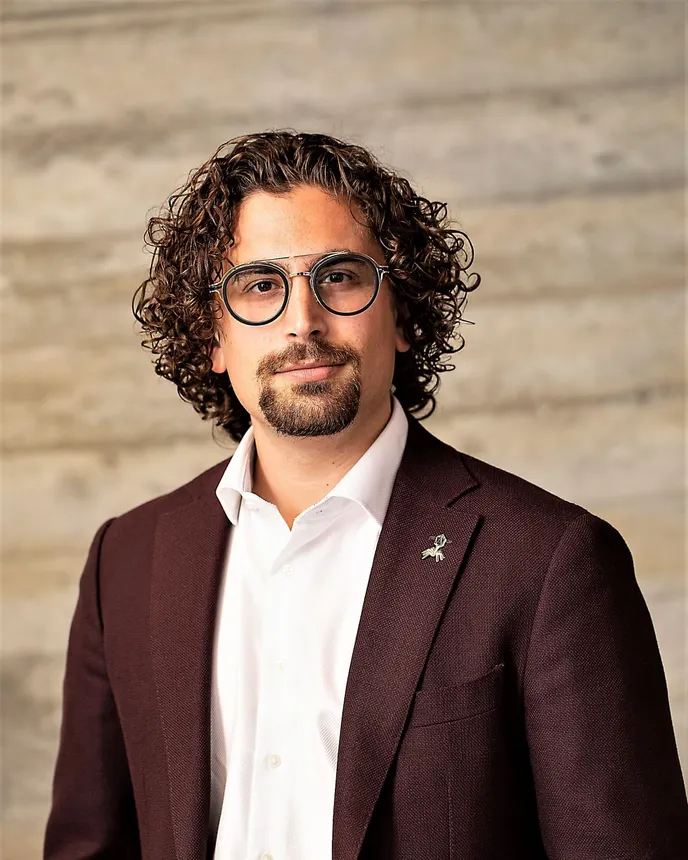
In a striking juxtaposition of industrial heritage and futuristic biotechnology, Scribe Therapeutics, a burgeoning gene editing company, has established its headquarters within two meticulously renovated buildings on the historic grounds of the former Alameda Works Shipyard in California. This setting, once a bustling hub where steelworkers forged and repaired 18,000-ton ships during World War II, now serves as the crucible for designing cutting-edge, microscopic gene-modifying medicines. Benjamin Oakes, CEO of Scribe, notes the profound irony in this transformation, highlighting the company’s ambition to build a new future from the remnants of a powerful past.
Scribe Therapeutics stands at the vanguard of a new wave of biotechnology firms dedicated to translating the revolutionary potential of CRISPR technology into accessible medical treatments. Launched with the foundational expertise of several acclaimed genetic medicine researchers from the University of California, Berkeley, Scribe is specifically targeting widespread cardiovascular conditions that afflict millions globally. The company recently navigated a significant milestone: its initial public offering (IPO), which marked the first such event for a gene editing company in over two years. In its IPO filings, Scribe articulated ambitious plans to enhance the scalability of its gene editing approach, differentiating itself through its primary program designed to "switch off" a gene linked to high cholesterol, rather than permanently altering the genome—a key distinction from some other gene editing methodologies.
Despite this promising trajectory, the path for gene editing companies to public markets and sustained growth has been fraught with challenges. The industry has witnessed numerous instances where bold claims have been met with unforeseen setbacks in clinical trials, leading to significant drops in stock valuations. Furthermore, investors and Wall Street analysts often express skepticism regarding public acceptance of gene editing drugs, particularly in therapeutic areas where conventional, well-established alternatives are already available. This cautious environment underscores a critical inscription Benjamin Oakes once scrawled in thick black marker on a canvas in one of Scribe’s conference rooms: "plan B is your plan A." This adage encapsulates the pragmatic resilience required to innovate in a field as transformative and scrutinized as gene editing.
Oakes recently elaborated on the intricate process of convincing investors not only of the inherent promise of gene editing but also of the unique potential of Scribe’s specific medicines, which will inevitably face considerable competition if ultimately approved. His insights reveal a strategic approach rooted in both scientific innovation and a deep understanding of human psychology in healthcare.
The Landscape of Gene Editing IPOs and Investor Skepticism
The journey to the public market for gene editing companies has historically been volatile. While the promise of CRISPR technology—the ability to precisely edit genes—is immense, translating that promise into safe, effective, and widely adopted therapeutics presents numerous hurdles. Many early entrants into the gene editing space, despite initial enthusiasm, have struggled to maintain momentum post-IPO. Clinical trial failures, unexpected side effects, and the sheer complexity of developing novel genetic medicines have frequently battered stock prices and eroded investor confidence. This historical context makes Scribe’s recent IPO, the first for a gene editing firm in over two years, particularly noteworthy and a testament to the company’s differentiated narrative.
Oakes addressed the prevailing investor skepticism by articulating a design principle he refers to as "MAYA"—Most Advanced Yet Acceptable. This philosophy posits that true innovation lies in pushing boundaries without exceeding the threshold of perceived accessibility or comfort. He analogized this to designing a cup: "There’s 1,000 different ways to build a cup, and I can build a really cool looking cup, but if I put wildly crazy things on it, like 10 handles, it may look like it’s the cup of the future, but no one’s going to want to use it because it doesn’t feel accessible." For Scribe, this principle translates into developing gene editing therapies that, while cutting-edge, are designed to be "more acceptable" to both the medical community and, crucially, to patients.
Epigenetic Silencing: A Differentiated Approach
Scribe’s core innovation centers on epigenetic silencing, a method that "switches off" gene expression without permanently altering the underlying DNA sequence. This contrasts with traditional gene editing techniques that involve irreversible changes to the genome. Oakes emphasized that this epigenetic approach is key to making Scribe’s treatments "more acceptable," particularly in conditions like high cholesterol where permanent genomic alterations might raise ethical or safety concerns for a broad patient population. This strategy is also rooted in a profound understanding of "human psychology," which Oakes posits is the most critical framework for modern medicine. He believes that human behavior significantly influences how individuals interact with their own health, and therefore, how they will embrace novel medical interventions.
The global gene editing market is projected to reach substantial valuations in the coming years, driven by advancements in CRISPR-Cas9, TALENs, and ZFNs. Reports indicate a market size in the billions, with significant growth expected due to increasing prevalence of genetic disorders and oncology applications. However, the path to commercialization is long and expensive, often requiring hundreds of millions, if not billions, of dollars in research and development. Scribe’s approach aims to mitigate some of the perceived risks associated with permanent gene editing, potentially broadening the addressable patient population and easing regulatory pathways.
Addressing the "Human Behavior Problem" in Cardiovascular Care
The application of Scribe’s epigenetic silencing to treat high cholesterol exemplifies its human-centric approach. Oakes highlighted the pervasive challenge of patient adherence to existing cholesterol-lowering medications, particularly statins. Despite the proven efficacy of drugs like statins, bempedoic acid, PCSK9 inhibitors (e.g., Repatha, Leqvio), and various combinations, adherence rates remain alarmingly low. Studies consistently show that between 50% and 70% of patients discontinue statin therapy within the first year. This issue is particularly acute given that these drugs often need to be taken for decades—a significant commitment for patients.
"This is not a drug problem anymore. This is a human behavior problem," Oakes asserted. Scribe’s objective is not merely to create a "better drug" in terms of efficacy, but rather to design a therapeutic solution that aligns more effectively with human behavior. A gene editing treatment that could potentially offer a long-lasting or even a one-time intervention for high cholesterol could dramatically improve adherence rates and, consequently, patient outcomes. By reducing the burden of daily medication, Scribe aims to solve a fundamental challenge that current pharmacological interventions, no matter how effective, have struggled to overcome. The implications for public health are profound, given that cardiovascular disease remains the leading cause of morbidity and mortality worldwide.

Navigating a Competitive Landscape
The field of cardiovascular disease treatment, especially for lipid disorders, is highly competitive, with established pharmaceutical giants like Eli Lilly and innovative biotech firms like Verve Therapeutics already making significant strides with their own gene editing programs. Eli Lilly, for example, has been advancing its own base-editing therapies for similar conditions, often with programs further along in clinical development. However, Oakes views this landscape not as a zero-sum game but as an opportunity to expand options for an underserved population.
"There’s a very obvious difference between the medicines that are being created," Oakes noted, emphasizing that patients, providers, and payers can make their own distinctions. He pointed out that only about 30% of individuals who would benefit from LDL-C-lowering medication are currently on it. "The number is so large that almost all we have to do is provide more options." This perspective underscores a collaborative rather than purely competitive ethos. Oakes explicitly stated his desire for competitors like Verve and Lilly to be "wildly successful," recognizing that Scribe’s distinct offerings can broaden accessibility and cater to different patient needs. The market, while seemingly well-served by existing therapies, is in fact "so wildly underserved, and in many instances, unserved," presenting ample room for multiple innovative solutions.
Pioneering Preventive Medicine
Oakes has consistently advocated for a shift in medical paradigms from reactive treatment to proactive prevention. His vision for Scribe’s work aligns perfectly with this philosophy: "My goal is to try to build a drug that ultimately can be thought of as a preventative medicine to help people avoid cardiovascular disease risk." The ultimate ambition is to confer "cardio-protective genetics to everybody," making such preventative measures as broadly accessible as possible.
This goal touches upon broader discussions in biomedical research, particularly the burgeoning field of longevity research. While acknowledging the excitement around reprogramming the entire body for extended "usefulness," Oakes, as a pragmatic engineer, emphasizes the current lack of proven science for such grand ambitions. He contrasts this with the immediate and tangible impact of addressing the leading cause of global morbidity and mortality. Scribe’s focus on cardiovascular disease offers "a very real way to lengthen a lifespan for everybody" through a targeted, evidence-based approach, rather than waiting for speculative breakthroughs in generalized longevity. This strategic prioritization highlights Scribe’s commitment to delivering impactful therapies based on current scientific understanding.
Strategic Financial Decisions and Capital Efficiency
The timing of Scribe’s IPO was a calculated decision, driven by both scientific progress and financial prudence. Oakes highlighted that Scribe was the first in vivo gene editing company to be in the clinic at the time of its IPO. This significant clinical milestone, coupled with the advancement of its second and third assets, provided a strong foundation for public offering. The company sought to accelerate not only the success of its lead asset but also the progression of its subsequent programs into clinical development.
Beyond scientific readiness, the IPO also aimed to provide a meaningful opportunity for investors to participate in Scribe’s journey. Oakes explained the company’s approach: "Is our profile as an organization that has been incredibly capital efficient for a very long time, and very reasonable in our approaches, one that you want to support?" Scribe’s capital efficiency stands out in an industry often characterized by massive fundraising rounds. Over seven years, Scribe raised only $150 million to reach the clinic—a remarkably lean figure compared to many peers. This discipline stems from an iterative development process, where molecules licensed from Berkeley, initially with low editing efficiency, were systematically improved over years. "We’re not getting awards for improving our molecule’s potency by 50% every year. But when I improve my potency 50% every year, you get this compounding interest in something like potency and specificity that starts to become really meaningful for the therapeutic window," Oakes detailed. This incremental, focused improvement has allowed Scribe to bridge the gap between CRISPR molecules as bacterial immune systems and their potential as human therapeutics.
While the median IPO in the current year has often hovered around $300 million, with larger offerings surpassing $600 million, Scribe raised a comparatively modest amount. This difference, Oakes attributes to the company’s disciplined and focused operational philosophy. This capital-efficient model, combined with tangible clinical progress, was designed to appeal to investors seeking judicious allocation of capital in a high-risk, high-reward sector.
Investor Confidence and Future Outlook
The broader investment community harbors legitimate concerns about the gene editing sector, often painting it with a "broad brush" due to past failures or overestimations by other organizations. Oakes acknowledged this reality, stating, "Previous organizations, some of which no longer even exist, have done things wrong, and it’s very easy for an investor to paint a broad brush." He drew parallels to the early days of antibody and RNAi companies, which also faced skepticism before becoming mainstream therapeutic modalities.
Scribe’s strategy is to differentiate itself through focused innovation and operational efficiency. By demonstrating a clear path to clinical application, a distinct and potentially safer epigenetic approach, and a commitment to addressing a major global health burden (cardiovascular disease) in a capital-efficient manner, Scribe aims to carve out its own unique position. "We can go and paint our own picture and say ‘no, we can be highly focused. We can build therapeutics that have the chance to change how we think about the leading cause of disease globally. We can do so in a way that’s focused and efficient,’" Oakes affirmed.
The successful IPO of Scribe Therapeutics signals a renewed, albeit cautious, investor appetite for gene editing companies, particularly those with differentiated technologies and clear clinical strategies. As Scribe progresses its programs, especially its lead candidate for high cholesterol, the industry will closely watch its ability to deliver on its promise of "most advanced yet acceptable" therapeutics. The company’s vision to transform reactive medicine into preventive care for cardiovascular disease, coupled with its prudent capital management and innovative epigenetic silencing platform, positions it as a significant player to watch in the evolving landscape of genetic medicine. Its journey from the industrial legacy of Alameda Works Shipyard to the forefront of biotechnology embodies a powerful narrative of transformation and the relentless pursuit of medical progress.
