
 By Suherman Candra Maholtra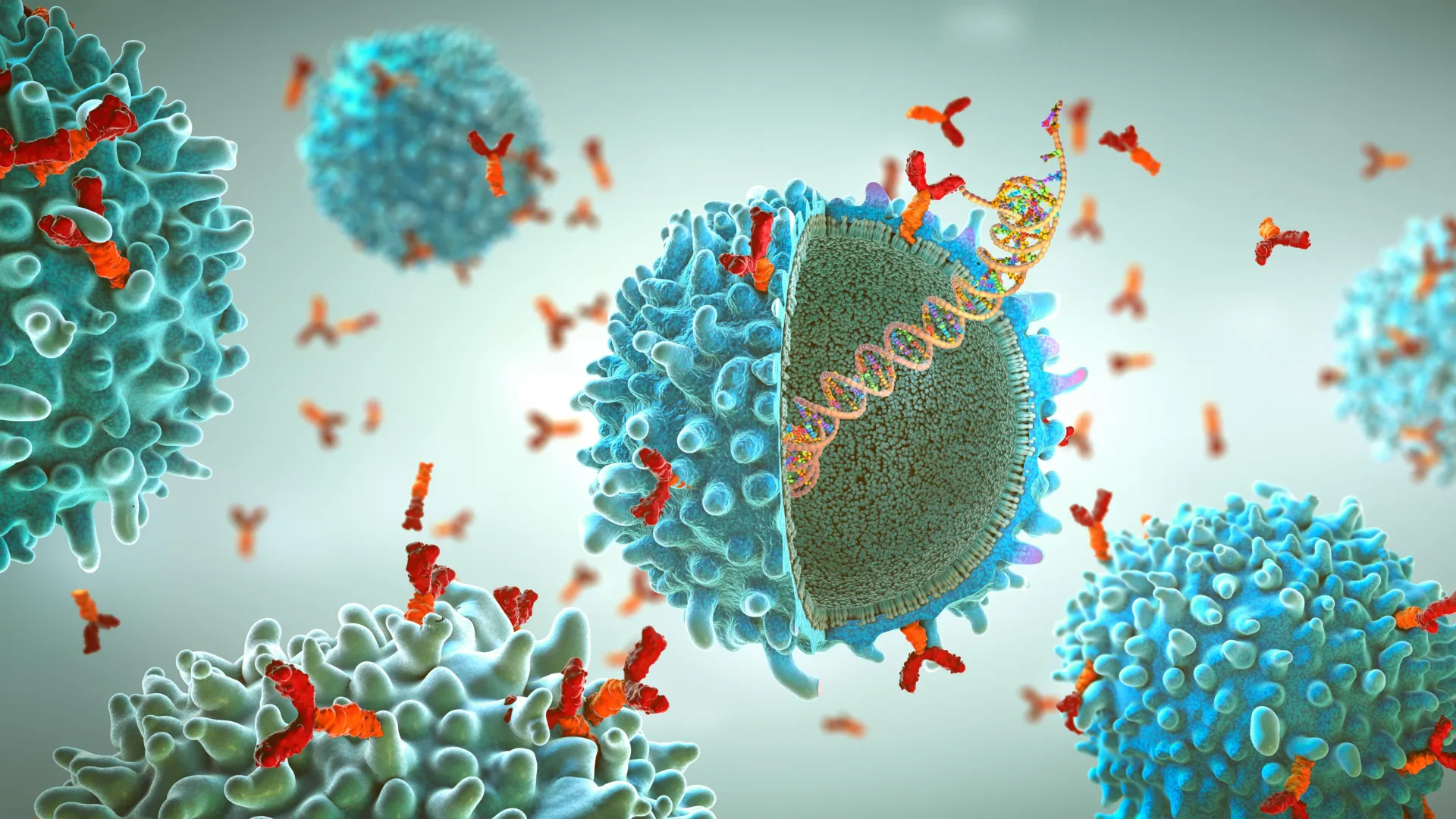
The development of effective vaccines against some of the world’s most elusive pathogens, including HIV-1 and Ebola, has long been stymied by a fundamental challenge in structural biology: the inability to observe viral surface proteins in their native, membrane-bound state. In a landmark study published in Nature Communications, a multidisciplinary team led by researchers from Scripps Research and IAVI (International AIDS Vaccine Initiative) has introduced a transformative platform that utilizes nanodisc technology to bridge this gap. By embedding viral glycoproteins into synthetic lipid bilayers that mimic the outer envelope of a virus, scientists can now analyze these proteins with unprecedented accuracy. This breakthrough not only provides a clearer roadmap for antibody recognition but also significantly compresses the timeline for vaccine candidate evaluation from months to a single week.
The Structural Dilemma in Vaccine Design
At the heart of every viral infection is a sophisticated entry mechanism driven by glycoproteins—specialized proteins that protrude from the viral surface. These proteins act as the "keys" that unlock human cells. Consequently, they are the primary targets for the immune system’s antibodies. To design a vaccine, scientists must create laboratory versions of these glycoproteins that can teach the immune system to recognize and neutralize the actual virus.
However, a persistent technical bottleneck has hampered these efforts. Viral surface proteins are naturally anchored into a fatty, lipid membrane. In a laboratory setting, these proteins are notoriously difficult to stabilize when removed from their natural environment. To make them easier to study and produce at scale, researchers have historically utilized "solubilized" versions of these proteins. This involves truncating the protein, specifically removing the hydrophobic "tail" that sits inside the virus’s membrane.
While these simplified models have been instrumental in the development of many vaccines, they are inherently flawed. Without the membrane anchor, the protein’s three-dimensional structure can shift, hiding critical regions or exposing parts that would normally be buried. This structural divergence means that antibodies generated in response to a lab protein might fail to recognize the real virus during a natural infection. The region closest to the membrane, known as the membrane-proximal external region (MPER), is particularly vulnerable to these distortions, yet it is one of the most stable and conserved targets across different viral strains.
Nanodisc Technology: A Synthetic Mimicry of Life
To resolve this discrepancy, the research team at Scripps Research, in collaboration with IAVI and Moderna Inc., turned to nanodiscs. These are microscopic, disc-shaped particles composed of a lipid bilayer—the same material that makes up human and viral cell membranes—held together by a specialized "scaffold" protein.
The innovation lies in the platform’s ability to integrate full-length or near-full-length viral glycoproteins into these nanodiscs. By providing a stable, lipid-rich environment, the nanodiscs act as a surrogate membrane, allowing the proteins to maintain their natural shape and orientation. This setup ensures that the "base" of the protein, which is often a target for broadly neutralizing antibodies, remains accessible and structurally accurate for study.
"For many years, we’ve had to rely on versions of viral proteins that are missing important pieces," explained co-senior author William Schief, a professor at Scripps Research and executive director of vaccine design at IAVI’s Neutralizing Antibody Center. "Our platform lets us study these proteins in a setting that better reflects their natural environment, which is critical if we want to understand how protective antibodies recognize a virus."
Case Studies: HIV-1 and Ebola Virus
The research team validated their platform using two of the most challenging targets in modern virology: HIV-1 and the Ebola virus.
In the case of HIV, the virus is known for its extreme mutability. However, certain regions of its surface protein, specifically those near the membrane interface, rarely change. These regions are the targets of "broadly neutralizing antibodies" (bNAbs), which can block a wide array of HIV variants. Using the nanodisc platform, the researchers were able to capture high-resolution structural images of these bNAbs binding to the HIV protein in its membrane-anchored state. These images revealed subtle interactions between the antibodies and the lipid surface itself—details that were entirely invisible in previous studies using solubilized proteins.
The Ebola virus presented a different challenge. While vaccines for Ebola now exist, understanding the long-term durability of the immune response and the effectiveness against different strains remains a priority. The team successfully incorporated the Ebola glycoprotein into the nanodiscs, demonstrating that the platform is versatile and can be adapted to various viral families. The results confirmed that the nanodisc-bound proteins reacted to known antibodies with high fidelity, proving the system’s reliability as an analytical tool.
Technical Milestones and Data-Driven Efficiency
Beyond structural accuracy, the study highlights a significant leap in laboratory efficiency. Traditional methods for evaluating how an immune system responds to a vaccine candidate often involve complex, multi-stage processes that can take four to six weeks to produce actionable data. These processes include protein purification, stabilization checks, and various binding assays.
The nanodisc platform streamlines these workflows. By creating a standardized "plug-and-play" system where different viral proteins can be swapped into the same nanodisc architecture, the researchers reduced the turnaround time to approximately seven days. This 75% reduction in time allows scientists to test significantly more vaccine variations in a shorter period, accelerating the iterative cycle of vaccine design.
Key technical capabilities of the platform include:
- Antibody Binding Tests: Rapidly measuring the affinity and kinetics of how antibodies latch onto the viral target.
- Immune Cell Sorting: Using the nanodiscs as "bait" to identify and isolate rare B-cells from blood samples that produce the most effective antibodies.
- High-Resolution Imaging: Compatibility with cryo-electron microscopy (cryo-EM) to visualize the atomic structure of protein-antibody complexes.
"Putting all of these components together into a single, reliable system was the key," said first author Kimmo Rantalainen, a senior scientist in Schief’s lab. "The individual pieces already existed, but making them work together in a way that’s reproducible and scalable opens up new possibilities for how vaccines are analyzed and designed."
Chronology of Development and Collaborative Support
The development of this platform is the culmination of years of progress in the fields of nanotechnology and structural biology. The use of nanodiscs first gained traction in the early 2000s for the study of membrane proteins in general, but their application to vaccine-specific glycoprotein analysis required significant refinement to ensure the discs could handle the large, complex "spikes" found on viruses like HIV.
The study was a massive collaborative effort involving experts in immunology, chemistry, and computational biology. Authors included researchers from Scripps Research, IAVI, and Moderna, with support from the National Institute of Allergy and Infectious Diseases (NIAID), part of the National Institutes of Health (NIH).
Financial backing was provided by several high-profile organizations, reflecting the global importance of the work. The Bill & Melinda Gates Foundation Collaboration for AIDS Vaccine Discovery and the Alexander von Humboldt Foundation were among the primary funders. This level of institutional support underscores the urgent need for new tools to combat persistent global health threats.
Broader Implications for Global Health and Future Outbreaks
While the current study focused on HIV and Ebola, the implications of this technology extend far beyond these two viruses. The researchers noted that the platform is theoretically applicable to any virus with membrane-bound surface proteins. This includes the influenza virus, which requires a new vaccine every year due to constant mutation, and SARS-CoV-2, the virus responsible for COVID-19.
In the context of "Disease X"—the term used by the World Health Organization to describe a future, unknown pathogen with pandemic potential—this platform could be revolutionary. The ability to rapidly characterize the surface proteins of a new virus and identify the antibodies that best neutralize it in a realistic environment could shave months off the development of emergency vaccines.
Furthermore, the insights gained into the "membrane interface" could lead to a new class of vaccines. If researchers can design immunogens that specifically train the body to target the stable regions of a virus near its membrane, we may finally see the development of a "universal" flu vaccine or a truly effective HIV vaccine.
Analysis: A Paradigm Shift in Vaccine Analytics
The shift toward more realistic laboratory models marks a broader trend in biomedical research—moving away from reductionist approaches toward systems that better mimic human biology. By acknowledging that a protein’s environment is just as important as its sequence, the Scripps and IAVI team has addressed a major blind spot in virology.
The platform’s success in revealing how antibodies interact with the lipid membrane itself is particularly noteworthy. This "lipid-protein" interaction is an emerging frontier in immunology. Some of the most potent antibodies discovered in the last decade do not just bind to the protein; they appear to use the viral membrane as a physical anchor to increase their binding strength. The nanodisc platform is currently the only high-throughput tool capable of studying this phenomenon in detail.
Conclusion
The "Virus glycoprotein nanodisc platform for vaccine analytics" represents a significant technological leap. While it is a research tool rather than a vaccine itself, its role as an "accelerant" for the field cannot be overstated. By providing a more accurate, faster, and more versatile way to study the frontline of viral infection, Scripps Research and its partners have provided the scientific community with a powerful new weapon in the ongoing battle against infectious diseases.
As the platform moves toward wider adoption in both academic and industrial laboratories, the hope is that the next generation of vaccines will be not only faster to produce but also more effective at providing long-lasting, broad-spectrum protection for populations worldwide. "This gives the field a more realistic, accurate way to test ideas early on," Schief emphasized. "By improving how we study viral proteins and antibody responses, we hope this platform will help advance next-generation vaccines against some of the world’s most challenging viruses."
