
 By Suherman Candra Maholtra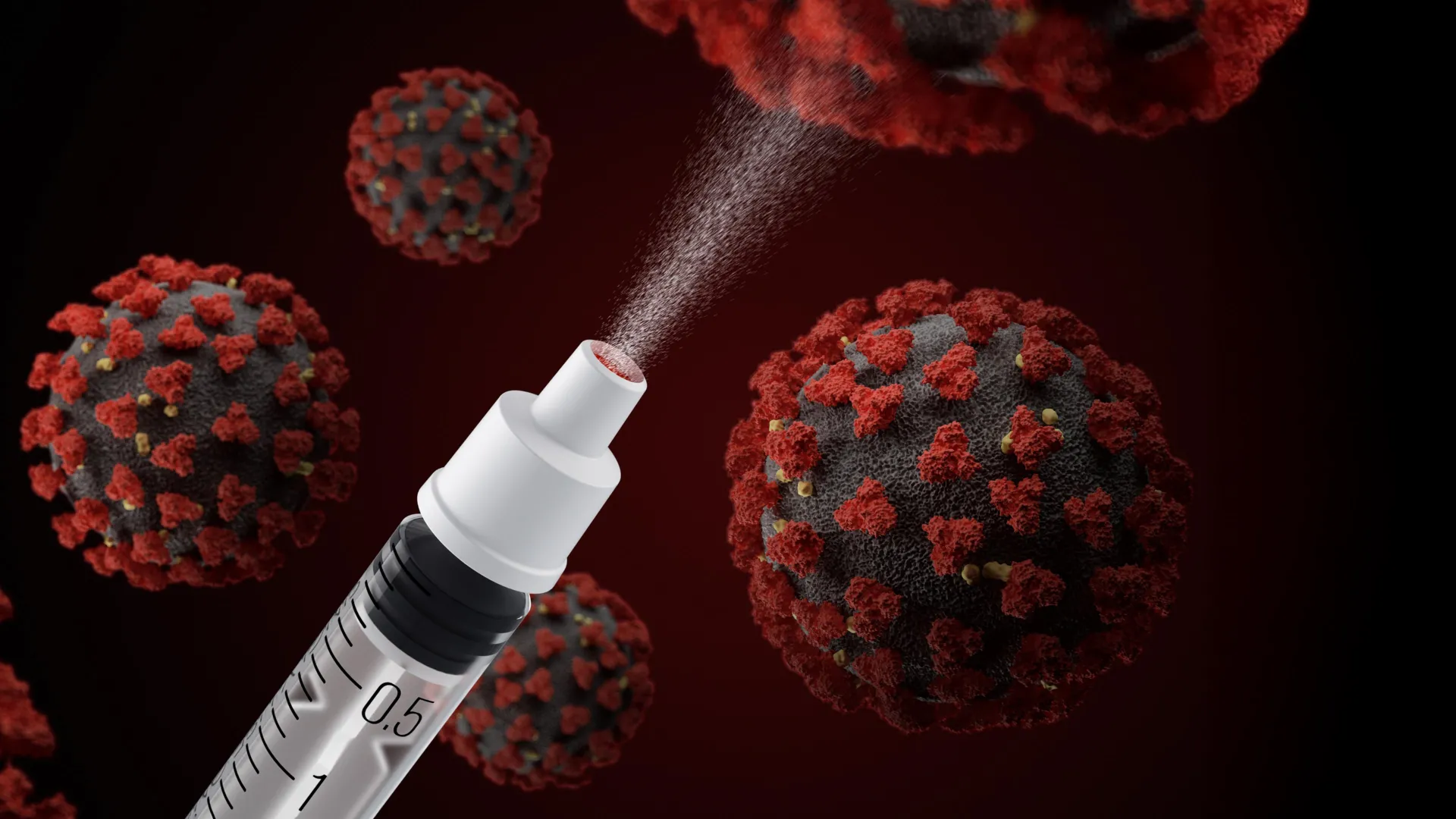
In a breakthrough that could fundamentally alter the landscape of preventive medicine, researchers at Stanford Medicine and their international collaborators have announced the development of an experimental universal vaccine designed to protect against an extensive array of respiratory threats. The study, published February 19 in the journal Science, details a novel intranasal vaccine that provides broad-spectrum protection against viruses, antibiotic-resistant bacteria, and even common environmental allergens. This development represents a significant departure from the traditional vaccine models that have dominated medical science for more than two centuries, potentially offering a "one-size-fits-all" shield for the human respiratory system.
For decades, the pursuit of a universal vaccine—one capable of neutralizing virtually any infectious threat—has been viewed by many in the scientific community as a noble but likely unattainable goal. Current vaccinology is built upon the principle of antigen specificity, a concept introduced by Edward Jenner in 1796. This traditional approach involves training the immune system to recognize a specific piece of a pathogen, such as the spike protein of a virus. However, as the COVID-19 pandemic and seasonal influenza cycles have demonstrated, pathogens are highly adept at mutating to evade these specific defenses. The Stanford team’s new approach bypasses this limitation by focusing on a more generalized and durable immune activation.
Breaking the 230-Year Paradigm of Antigen Specificity
The foundational challenge of modern vaccinology lies in the evolutionary speed of pathogens. "It’s becoming increasingly clear that many pathogens are able to quickly mutate," noted Bali Pulendran, PhD, the Violetta L. Horton Professor II and professor of microbiology and immunology at Stanford, and the senior author of the study. He likened the behavior of viruses to the "proverbial leopard that changes its spots," noting that surface antigens can shift so rapidly that previously effective vaccines lose their potency within months. This necessitates the frequent updating of boosters and the annual reformulation of flu shots.
While previous attempts at "broad" vaccines have focused on targeting conserved regions within a single viral family—such as trying to create a universal flu shot or a universal coronavirus vaccine—the Stanford team aimed for something more ambitious. They sought a mechanism that could defend against entirely unrelated pathogens simultaneously. According to Pulendran, the idea was initially considered "outrageous" because it defied the long-held belief that the immune system required a specific "ID card" for every threat it encountered.
The new strategy shifts the focus from the pathogen to the host’s own communication network. Instead of mimicking a specific virus, the experimental vaccine mimics the complex signaling that occurs between immune cells during a natural infection. This approach effectively bridges the body’s two primary lines of defense: the innate immune system and the adaptive immune system.
Bridging the Gap: The Synergistic Role of Innate and Adaptive Immunity
To understand the significance of this breakthrough, one must look at the dichotomy of human immunity. The innate immune system is the body’s first responder; it acts within minutes of an infection, deploying macrophages, neutrophils, and dendritic cells to attack any perceived foreign threat. However, this response is typically short-lived, fading within a few days. The adaptive immune system, conversely, is highly specific and long-lasting, producing antibodies and T cells tailored to a specific invader. The downside is that the adaptive system can take up to two weeks to fully mobilize during a first encounter.
The Stanford researchers, led by postdoctoral scholar Haibo Zhang, PhD, sought to harness the versatility of the innate system and give it the longevity of the adaptive system. This concept was inspired by observations of the Bacillus Calmette-Guerin (BCG) tuberculosis vaccine. For years, scientists noticed that newborns receiving the BCG vaccine had lower mortality rates from unrelated infections, suggesting a phenomenon known as "trained immunity" or cross-protection.
In 2023, Pulendran’s team identified the mechanism behind this cross-protection in mice. They discovered that certain T cells recruited to the lungs during the adaptive response were sending cytokine signals that kept the innate immune cells in a state of high alert for months, rather than days. By identifying these specific signals, the researchers realized they could synthetically replicate the effect.
Experimental Methodology: The "Double Whammy" of GLA-3M-052-LS+OVA
The resulting formulation, currently identified as GLA-3M-052-LS+OVA, is designed for intranasal administration. The vaccine contains a combination of toll-like receptor (TLR) stimuli—molecules that trigger the pathogen-sensing receptors on innate immune cells—and a harmless egg protein known as ovalbumin (OVA). The OVA acts as a decoy antigen that draws T cells into the lung tissue, where they then release the signals necessary to keep the innate immune system activated.
In the study, mice received the vaccine as nasal droplets. The researchers found that after three doses, the mice were shielded from SARS-CoV-2 and other coronaviruses for at least three months. The results were stark: unvaccinated mice exposed to these viruses suffered severe weight loss and high mortality rates, with their lungs showing massive viral loads and inflammation. In contrast, the vaccinated mice survived, maintained their weight, and showed a 700-fold reduction in viral levels in their lungs.
Pulendran described this as a "double whammy" for pathogens. The sustained innate response acts as a constant sentinel, dramatically lowering the initial viral load. Simultaneously, the "alert" state of the lungs allows the adaptive immune system to launch a specific response—producing antibodies and T cells—in as little as three days. In a typical unvaccinated subject, this process takes fourteen days, often a window of time long enough for a pathogen to cause irreversible damage.
Beyond Viruses: Confronting Superbugs and Chronic Allergens
The versatility of the GLA-3M-052-LS+OVA vaccine extends beyond viral pathogens. The research team tested the formulation against two of the most problematic bacterial threats in modern healthcare: Staphylococcus aureus and Acinetobacter baumannii. These are common causes of hospital-acquired infections and are frequently resistant to multiple antibiotics.
The vaccinated mice showed significant protection against these bacterial threats for a duration of approximately three months. This suggests that the vaccine could be a critical tool in the fight against antimicrobial resistance, providing a prophylactic shield for patients entering high-risk environments like intensive care units or long-term care facilities.
Perhaps most surprisingly, the vaccine demonstrated efficacy against environmental allergens. The team exposed mice to proteins from house dust mites, a primary trigger for allergic asthma. In a typical allergic reaction, the immune system launches a Th2 response, leading to mucus accumulation and airway constriction. The study found that vaccinated mice had a significantly suppressed Th2 response, maintaining clear airways and showing much lower levels of inflammation compared to the control group.
"I think what we have is a universal vaccine against diverse respiratory threats," Pulendran stated, emphasizing the breadth of the protection which covers viruses, bacteria, and allergens in a single delivery system.
Chronology and Future Development: The 5-to-7-Year Horizon
The journey toward this universal vaccine has been a multi-year effort involving a coalition of institutions, including the Emory University School of Medicine, the University of North Carolina at Chapel Hill, Utah State University, and the University of Arizona.
- 2020–2022: Initial research into the "off-target" protective effects of existing vaccines during the height of the COVID-19 pandemic.
- 2023: Publication of the mechanism identifying how T cells sustain innate immunity in the lungs.
- February 2024: Publication of the Science study detailing the successful synthetic universal vaccine in mouse models.
- Upcoming (2024–2025): Initiation of Phase I human safety trials to ensure the intranasal delivery of TLR stimuli is well-tolerated in humans.
If Phase I trials are successful, the researchers anticipate larger Phase II and III trials that could involve "challenge studies," where volunteers are vaccinated and then exposed to mild respiratory pathogens in a controlled setting. Pulendran estimates that with consistent funding and positive clinical data, a universal respiratory vaccine could be available to the general public within five to seven years.
Broader Impact and Public Health Implications
The implications of a universal nasal vaccine are profound. From a public health perspective, such a tool would simplify the complex and often low-compliance world of seasonal vaccinations. Instead of tracking which flu strain is dominant or whether a new COVID variant requires a specific booster, individuals could receive a biannual or annual nasal spray that bolsters their entire respiratory defense system.
Furthermore, the vaccine offers a proactive solution to "Disease X"—the term used by the World Health Organization to describe a currently unknown pathogen that could cause a future pandemic. Because this vaccine does not rely on knowing the specific antigen of the pathogen beforehand, it could provide immediate, broad-spectrum protection the moment a new threat emerges, buying critical time for the development of more specific interventions.
The economic impact would also be substantial. Respiratory infections and allergic asthma cost global economies billions of dollars annually in healthcare expenses and lost productivity. A single vaccine that mitigates the severity of the common cold, prevents bacterial pneumonia, and reduces the incidence of asthma attacks would transform the standard of care.
"Imagine getting a nasal spray in the fall months that protects you from all respiratory viruses including COVID-19, influenza, respiratory syncytial virus and the common cold, as well as bacterial pneumonia and early spring allergens," Pulendran said. "That would transform medical practice."
While the transition from mouse models to human application remains a significant hurdle, the Stanford study provides a rigorous scientific roadmap for achieving what was once considered a mythical goal. By moving away from the "one-pathogen, one-vaccine" model and toward a strategy of integrated, sustained immunity, the researchers have opened a new chapter in the history of medicine—one where the human respiratory system is permanently "ready and alert" for whatever threat may come its way.
