
 By Gabriel Paijo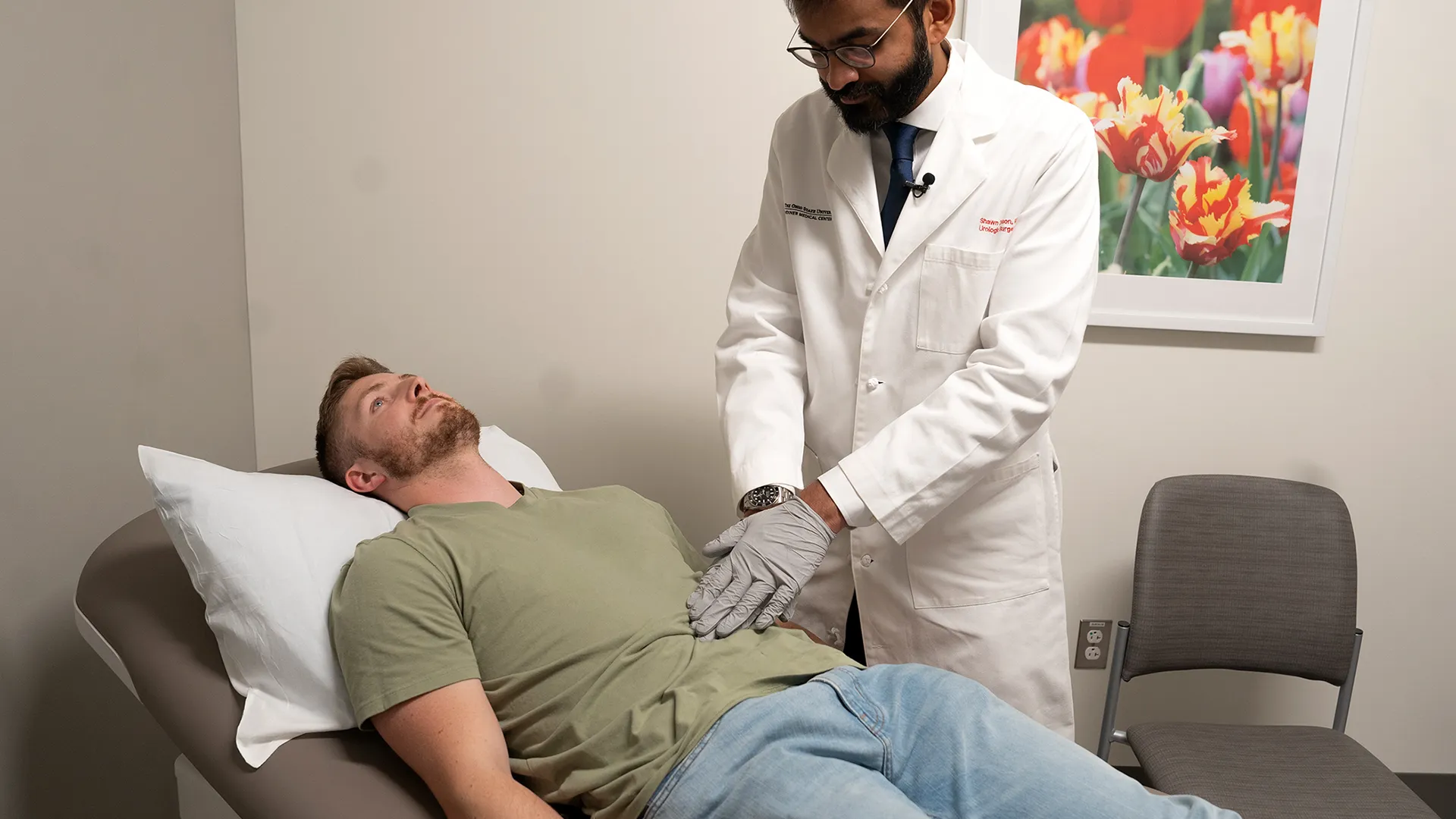
A comprehensive national survey commissioned by The Ohio State University Comprehensive Cancer Center – Arthur G. James Cancer Hospital and Richard J. Solove Research Institute (OSUCCC – James) has uncovered a significant gap in public knowledge regarding testicular cancer. Despite being the most common form of cancer among young men, the survey indicates that a vast majority of Americans are unaware of the primary age demographics at risk, the typical symptoms of the disease, and the appropriate timing for medical screenings. These findings come at a time when the American Cancer Society estimates that nearly 10,000 new cases of testicular cancer are diagnosed in the United States annually, highlighting an urgent need for targeted public health education.
The survey, which sampled over 1,000 adults across the country, revealed that only 13% of respondents—roughly one in ten—could correctly identify that testicular cancer most frequently affects men under the age of 40. This statistical oversight is particularly concerning to oncologists, as the disease is most prevalent among men between the ages of 20 and 40. The disconnect between public perception and clinical reality suggests that many young men may not be vigilant about their health during the decades when they are most vulnerable to this specific malignancy.
The Age Misconception and the "Over 40" Fallacy
One of the most striking revelations of the OSUCCC – James survey is the prevailing belief that testicular cancer is a disease of middle or older age. According to the data, 65% of respondents believe that evaluations for testicular cancer should only become a standard part of an annual physical examination after a man reaches the age of 40. This mirrors the general public’s understanding of other male-specific health issues, such as prostate cancer or colorectal cancer, where screening risks and recommendations do indeed scale upward with age.
However, medical experts point out that this logic is inverse when applied to testicular cancer. "In my experience, a lot of men are surprised that testicular cancer is most common among young men," said Dr. Shawn Dason, a urologic oncologist at the OSUCCC – James and an associate clinical professor of urology at the Ohio State College of Medicine. Dr. Dason noted that the psychological state of men in their 20s and 30s often contributes to this lack of awareness. "It’s something you’re just not expecting in your twenties or thirties. A lot of young men’s focus might be on developing their career, their day-to-day life. That’s a very different track of mind than perhaps your health."
This "track of mind" often leads to a delay in diagnosis. When young men assume they are too young for cancer, they are more likely to dismiss physical changes or delay seeking medical advice, assuming that any discomfort or abnormality is the result of a sports injury or minor infection.
Understanding the Disease: Prevalence and Survivability
Testicular cancer, while relatively rare compared to skin or lung cancer, remains a significant health challenge because of the demographic it targets. Most cases are germ cell tumors, which are categorized into two main types: seminomas and non-seminomas. Seminomas tend to grow more slowly and are highly sensitive to radiation therapy, while non-seminomas often grow more quickly and may require different combinations of surgery and chemotherapy.
The survey results offered a glimmer of hope regarding the public’s understanding of the disease’s prognosis. Approximately 63% of respondents correctly identified that testicular cancer is often curable if detected in its early stages. This high rate of survivability is one of the hallmarks of modern urologic oncology. When the cancer is localized to the testicle, the five-year survival rate is upwards of 95%.
"We are really fortunate in testicular cancer that the vast majority of patients are diagnosed at an early stage," Dr. Dason explained. "That means the vast majority of patients are actually diagnosed before the cancer has had an opportunity to spread to other parts of the body." However, this high success rate depends entirely on early detection, which is currently hindered by the lack of awareness identified in the survey.
The Myth of the Painful Symptom
A critical barrier to early detection is the misconception regarding how testicular cancer presents physically. The survey found that younger adults (ages 18-29) were significantly more likely than older age groups to incorrectly believe that testicular cancer symptoms are always painful, with 18% of this demographic agreeing with that statement.
In reality, testicular cancer is frequently a "silent" disease in its early stages. "Testicular cancer does not typically come with painful symptoms," Dr. Dason emphasized. "That’s why routine self-exams are so important to detect any lumps or changes to the testicle. If you feel something out of the ordinary, like a lump or bump, or if the testicle changes in size, call your doctor."
The absence of pain often leads to a false sense of security. A young man might discover a small, hard, painless lump and decide to wait several months to see if it disappears. In the context of aggressive non-seminoma tumors, a few months can be the difference between a localized cancer treated with a simple surgical procedure and a metastatic disease requiring intensive systemic chemotherapy.
Fertility Concerns and Demographic Awareness
The survey also delved into the long-term implications of a testicular cancer diagnosis, specifically regarding reproductive health. Younger Americans (ages 18-29) and adults (ages 30-49) showed a higher level of awareness regarding fertility risks than their older counterparts. Specifically, 68% of those in the 18-29 bracket and 61% of those in the 30-49 bracket recognized that testicular cancer and its subsequent treatments can affect a man’s ability to father children.
This awareness is likely driven by the fact that individuals in these age groups are often in their peak reproductive years and are more attuned to health issues that might impact family planning. Treatments for testicular cancer, including the surgical removal of a testicle (orchiectomy), chemotherapy, and radiation, can all impact sperm production. Consequently, oncologists at institutions like OSUCCC – James frequently discuss sperm banking and fertility preservation with patients immediately following a diagnosis.
A Call for Monthly Self-Checks
Despite the gaps in knowledge, the survey found that 54% of respondents were aware that monthly self-checks should be conducted. While this represents a slim majority, health advocates argue that the number should be much higher, comparable to the public’s awareness of breast self-exams.
The medical community recommends that starting at puberty, men should perform a monthly testicular self-exam. The process is simple and takes only a few minutes, ideally performed during or after a warm shower when the scrotal skin is relaxed. The goal is for men to become familiar with the normal size, shape, and "feel" of their testicles so that they can immediately identify any new developments.
Common signs that warrant a medical consultation include:
- A painless lump or swelling in either testicle.
- Any change in the shape or size of the testicle.
- A feeling of heaviness in the scrotum.
- A dull ache in the lower abdomen or groin.
- Sudden collection of fluid in the scrotum.
Broader Impact and Public Health Implications
The implications of the OSUCCC – James survey extend beyond the clinic and into the realm of public health policy and education. The data suggests that current health communication strategies are failing to reach the most at-risk population: young men. While much of the national conversation around men’s health focuses on the "Movember" movement and prostate cancer awareness in November, testicular cancer—which is the leading cancer for men in their 20s and 30s—often receives less consistent attention.
Health analysts suggest that the lack of awareness may be a byproduct of the "invincibility complex" often associated with youth, combined with a lack of routine engagement with the healthcare system among young adults. Unlike women, who are often introduced to regular gynecological screenings in their late teens or early 20s, many young men do not see a physician regularly once they outgrow their pediatrician.
To bridge this gap, experts suggest integrating testicular health education into high school and college health curricula and utilizing digital platforms where young men are most active. By reframing the conversation to emphasize that testicular cancer is a "young man’s disease," the medical community hopes to shift the 13% awareness figure toward a much safer majority.
Methodology and Study Background
The survey was conducted by SSRS on its Opinion Panel Omnibus platform, a national, probability-based survey designed to be representative of the U.S. adult population. Data collection took place between May 2 and May 5, 2025. The sample consisted of 1,008 respondents aged 18 and older.
The survey was administered primarily via the web (978 respondents), with a smaller portion conducted via telephone (30 respondents) to ensure a diverse reach. All interviews were conducted in English. The margin of error for the total sample is plus or minus 3.6 percentage points at the 95% confidence level. To ensure accuracy, the data were weighted to match the target population of U.S. adults based on variables such as age, gender, race, education, and geographic region.
The OSUCCC – James continues to lead efforts in both the treatment of testicular cancer and the education of the public. As a National Cancer Institute-designated Comprehensive Cancer Center, the institution provides access to cutting-edge clinical trials and multidisciplinary care teams that specialize in the unique needs of young adult cancer patients.
For those seeking more information on testicular cancer symptoms, treatment options, or how to perform a self-exam, resources are available through the Ohio State University Comprehensive Cancer Center website at cancer.osu.edu or by contacting their dedicated health line. Increased awareness remains the most effective tool in the fight against this highly treatable, yet often misunderstood, disease.
