
 By Suherman Candra Maholtra
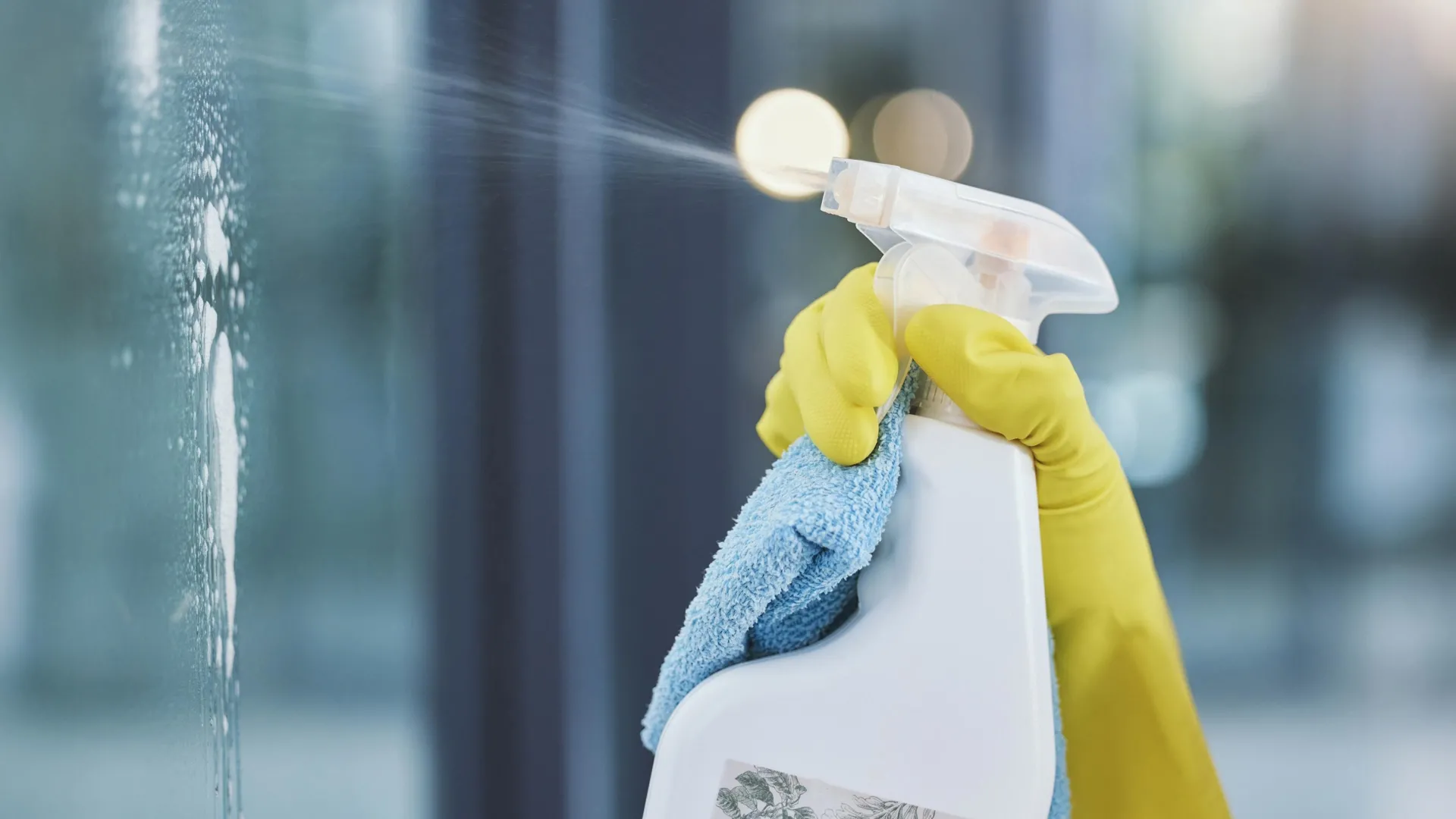
The Chemistry of the Scented Environment
For decades, the cleaning industry has relied on terpenes—organic compounds produced by a variety of plants—to provide the "fresh" scents consumers associate with cleanliness. Common examples include limonene, which provides a lemon or citrus scent; pinene, associated with pine forests; and linalool, which gives lavender its characteristic aroma. In the outdoor environment, these compounds are released by trees and plants, where they react slowly with atmospheric oxidants like ozone. Over time, these reactions contribute to the formation of natural aerosols that can eventually lead to cloud formation.
However, the Purdue University study, presented at the fall meeting of the American Chemical Society (ACS) during the "Healthy Indoor Spaces: Bridging the Microbiome and Chemistry" symposium, highlights a stark contrast between outdoor and indoor chemical behavior. Inside a confined space, the concentration of these terpenes can skyrocket during cleaning activities. Brandon Boor, an Assistant Professor of Civil and Construction Engineering at Purdue, notes that indoor terpene levels can reach concentrations tens or even hundreds of times higher than those found in a dense forest.
When these high concentrations of terpenes meet indoor ozone—which enters homes through ventilation or is produced by certain electronic devices—the result is a rapid "nucleation" process. This process creates secondary organic aerosols, or nanoparticles, at a rate and density that far exceeds typical outdoor atmospheric conditions.
Methodology: The Purdue "Tiny House" Experiments
To quantify these invisible risks, Boor and his team, including colleague Nusrat Jung, utilized a specialized model home on the Purdue campus. This "living lab" is a fully functional residential structure equipped with a kitchen, wood flooring, and a bathroom, designed specifically to recreate the nuances of daily household life. Unlike a sterile laboratory, the model home allowed researchers to measure chemical interactions in a realistic setting where air currents, surface materials, and standard ventilation play a role.
The researchers tested a variety of products, ranging from conventional liquid cleaners to "green" or botanical-based disinfectant sprays and wipes. Using high-resolution mass spectrometry and advanced aerosol measurement tools, the team monitored the air in real-time. They specifically focused on the nanocluster aerosol regime, measuring particles as small as 1 to 3 nanometers in diameter.
The findings were startling: routine tasks such as mopping a floor or wiping down a countertop can generate billions, or even trillions, of ultrafine particles. These particles form almost instantly, often within minutes of the product being applied to a surface. Because these particles are between 1 and 30 nanometers in size, they are effectively invisible to the naked eye and are too small to be detected by standard consumer-grade air quality monitors.
The Ozone Factor and UV-C Complications
The intensity of nanoparticle formation is heavily dependent on the presence of oxidants, most notably ozone ($O_3$). While ozone is a known outdoor pollutant, it frequently infiltrates indoor spaces. The Purdue study found that even moderate levels of indoor ozone, ranging from 20 to 40 parts per billion, were sufficient to ignite intense chemical reactions when paired with scented cleaners.
A significant modern complication identified by Boor and Professor Ernest Blatchley involves the use of germicidal far-UV (UV-C) lamps. These devices became increasingly popular during the COVID-19 pandemic as a means to neutralize airborne viruses and bacteria. However, UV-C lamps interact with oxygen molecules in the air to produce ozone as a byproduct.
When these lamps are operated simultaneously with the use of scented cleaning agents, the nanoparticle production becomes even more aggressive. The study revealed that this combination creates a "perfect storm" for indoor air pollution, where the very tools used to disinfect the environment contribute to a secondary layer of chemical pollution. The resulting inhalation dose for occupants can be comparable to, or even exceed, the particulate matter exposure experienced by someone standing next to a high-traffic roadway.
Health Implications of Ultrafine Particles
The primary concern regarding these nanoparticles is their ability to bypass the body’s natural defenses. Larger dust particles are often trapped in the nose or upper throat, but ultrafine particles (those smaller than 100 nanometers) are small enough to travel deep into the alveolar regions of the lungs.
Once they reach the deep lung tissue, these particles can cause localized inflammation and oxidative stress. There is also emerging evidence in the field of aerosol toxicology suggesting that the smallest of these particles may be able to cross the blood-air barrier, potentially entering the bloodstream and affecting other organ systems.
"By the time you finish cleaning up an indoor space, you’ve already formed a lot of nanoparticles and inhaled them," Boor explained during the ACS presentation. This rapid exposure timeline means that the person performing the cleaning is at the highest risk, as they are standing directly within the "plume" of the reaction as it occurs.
Comparative Data: Indoor vs. Outdoor Exposure
One of the most compelling aspects of the Purdue research is the comparison between indoor cleaning and outdoor industrial pollution. The study found that the "respiratory dose"—the amount of particulate matter actually deposited in the lungs—during a standard cleaning session with scented products can be higher than the dose received from breathing air near a busy urban highway.
While the chemical composition of cleaning-generated nanoparticles differs from the soot and metal-based particles found in vehicle exhaust, the physical impact on the lungs can be just as significant. The sheer number of particles is a key factor; while a forest might see a gradual increase in aerosols over hours, a kitchen being mopped with a pine-scented cleaner sees a massive spike in seconds. The research recorded nucleation rates of approximately $10^5$ particles per cubic centimeter per second, with growth rates of up to 300 nanometers per hour—orders of magnitude higher than what is typically observed in nature.
Chronology of Research and Industry Context
The investigation into indoor chemistry has gained significant momentum over the last four years. The timeline of this specific research began during the height of the COVID-19 pandemic in 2020. As global health authorities emphasized the need for frequent disinfection of high-touch surfaces, the use of scented sprays and wipes reached unprecedented levels.
- 2020-2021: Boor and Jung began observing the correlation between increased cleaning frequency and a decline in perceived indoor air quality, despite the absence of visible pollutants.
- 2022: The focus shifted toward the specific interaction between "botanical" cleaners and indoor oxidants. Many consumers had switched to essential oil-based products, believing them to be safer, yet these products often contain higher concentrations of reactive terpenes than conventional cleaners.
- 2023: Collaborative work with Ernest Blatchley integrated the study of UV-C air purifiers, identifying the ozone-terpene synergy.
- Fall 2023: The findings were presented to the American Chemical Society, marking a pivotal moment in bringing indoor atmospheric chemistry to the forefront of public health discussions.
Professional Analysis and Future Implications
The implications of this research are expected to ripple through several sectors, including public health policy, building management, and the chemical manufacturing industry. Currently, most air quality regulations focus on outdoor environments or specific industrial toxins like asbestos or carbon monoxide. There is very little regulatory oversight regarding "secondary" pollutants formed by the interaction of legal, household products.
Industry experts suggest that this data may lead to a shift in "Green Building" certifications, such as LEED or WELL, which may begin to place a higher premium on unscented cleaning protocols and advanced ventilation strategies. For the cleaning product industry, there may be a move toward reformulating products to reduce terpene content or developing stabilizers that prevent rapid evaporation.
Furthermore, the study challenges the "botanical is better" narrative. Because essential oils are naturally rich in terpenes, "natural" cleaners can actually be more reactive than synthetic ones. This highlights a need for better consumer education regarding the chemical reality of "natural" scents.
Recommendations for Reducing Exposure
The goal of the research is not to discourage cleaning, which remains essential for controlling pathogens, but to encourage "informed cleaning." To mitigate the risks of nanoparticle formation, the researchers suggest several practical steps:
- Transition to Unscented Products: Choosing "fragrance-free" or "unscented" versions of cleaners can significantly reduce the volume of reactive terpenes released into the air.
- Enhanced Ventilation: Using exhaust fans in kitchens and bathrooms, or opening windows during and after cleaning, can help dilute terpene concentrations and flush out newly formed nanoparticles.
- Strategic Timing: If using ozone-generating devices or UV-C lamps, they should not be operated at the same time as surface cleaning.
- Air Filtration: While standard filters may not catch the smallest nanoparticles, high-efficiency particulate air (HEPA) cleaners can help reduce the overall load of organic vapors if they include activated carbon stages.
As Brandon Boor summarized, the ultimate objective is to redefine what "clean" feels like. "Clean air should not smell like highly concentrated citrus fruit," he stated. "It should not really smell of anything." This research serves as a vital reminder that in the realm of indoor air quality, the most important pollutants are often the ones we cannot see—and the ones we have been taught to enjoy.
