
 By admin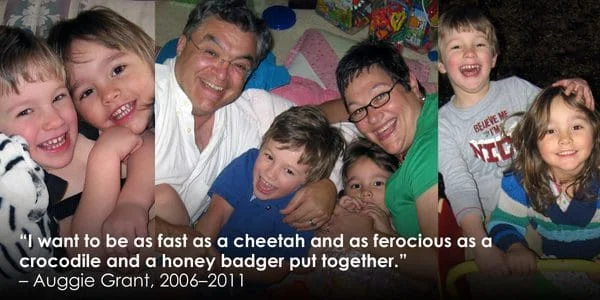
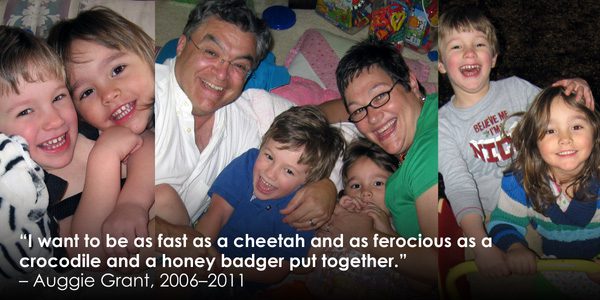
The story of Augusto “Auggie” Grant serves as a poignant catalyst for a national movement dedicated to closing the research gap in pediatric oncology, highlighting the urgent need for accelerated clinical solutions for childhood diseases. Auggie Grant, a five-year-old characterized by his parents as a child of boundless imagination and energy, succumbed to acute monoblastic leukemia in December 2011, just five days after his initial diagnosis. His brief but impactful life has since become the cornerstone of a fundraising and advocacy powerhouse known as "Auggie’s Honey Badgers," which operates in partnership with CureSearch for Children’s Cancer. This evolution from a family’s private tragedy to a public-facing mission underscores the critical intersections of clinical research funding, community-driven philanthropy, and the systemic challenges inherent in treating rare pediatric malignancies.
Clinical Context: Understanding Acute Monoblastic Leukemia
To understand the urgency behind the Grant family’s mission, one must examine the clinical nature of the disease that claimed Auggie’s life. Acute monoblastic leukemia (AML-M5) is a subtype of acute myeloid leukemia, a cancer of the blood and bone marrow. While pediatric cancer is rare, AML is one of the more aggressive forms found in children. It is characterized by the rapid proliferation of abnormal monoblasts, which are immature white blood cells. These cells fail to mature into functional monocytes, instead crowding out healthy blood cells and impairing the body’s ability to fight infection, manage clotting, and transport oxygen.
In Auggie’s case, the disease was "silent" until its final stages. Medical experts note that symptoms of pediatric leukemia—such as fatigue, bruising, and bone pain—can often be mistaken for common childhood ailments or "growing pains." By the time Auggie was diagnosed via a five-minute blood test, the malignancy had reached a critical threshold. The five-day window between his diagnosis and his passing on December 5, 2011, illustrates the devastating speed with which certain pediatric cancers can progress, leaving families with almost no time for therapeutic intervention.
Chronology of a Legacy: From Diagnosis to Advocacy
The timeline of Auggie Grant’s legacy began in late 2011. Before the onset of visible symptoms, Auggie was described as a highly active child, often seen wearing "uniforms" ranging from astronaut suits to firefighter gear. His parents, Jon and Cheryl Grant, recall his vibrant personality, which they say "consumed the room." This vitality masked the internal progression of the leukemia.
Following his death, the Grant family was faced with the standard procedures of mourning, including the drafting of an obituary. It was during this process that Cheryl Grant decided to pivot from traditional floral tributes to a call for research funding. After consulting with Auggie’s oncologists to identify organizations that prioritize clinical outcomes, the family directed their efforts toward CureSearch for Children’s Cancer.
CureSearch, a national non-profit, distinguishes itself by focusing on "bench-to-bedside" research. The organization specifically targets projects that are positioned for fast-tracked clinical trials. This focus addressed the primary frustration of the Grant family: the lack of available, effective treatments that could have intervened during Auggie’s short diagnostic window. The response to the obituary was immediate and substantial, providing the initial capital for what would become a decade-long partnership with the organization.
The Role of CureSearch in the Research Ecosystem
CureSearch for Children’s Cancer occupies a specific niche in the oncology landscape. Unlike broader cancer foundations that may focus heavily on adult malignancies, CureSearch is dedicated exclusively to the pediatric population. This distinction is vital because pediatric cancers are biologically different from adult cancers; they are not simply "smaller versions" of adult diseases. They often arise from different genetic mutations and occur in developing tissues, requiring specialized therapeutic approaches.
The organization’s strategy involves the "CureSearch Acceleration Fund," which utilizes a rigorous "Shark Tank"-style review process to vet research proposals. By funding researchers who are on the verge of moving their discoveries from the laboratory into human clinical trials, CureSearch aims to reduce the "valley of death"—the period where promising research stalls due to a lack of funding for early-phase trials. For families like the Grants, this mission is personal. They advocate for a system where a five-minute blood test leads not to a terminal prognosis, but to a suite of viable, safe, and effective treatment options.
Auggie’s Honey Badgers and the Ultimate Hike
In the years following their loss, Jon and Cheryl Grant formalized their fundraising efforts through the creation of "Auggie’s Honey Badgers." The team name was inspired by Auggie’s own words, expressing his desire to be as "ferocious" as a honey badger. This team has become a staple of the "Ultimate Hike" program, a signature CureSearch event that challenges participants to complete high-mileage treks—often 28.3 miles in a single day—to raise funds.
The Ultimate Hike serves a dual purpose. Physically, it mirrors the grueling "uphill battle" faced by children undergoing chemotherapy and radiation. Socially, it provides a community for "bereaved-warrior" parents and supporters. Jon Grant has noted that the experience has been "transformative," allowing his grief to evolve into a sense of communal purpose. The "Honey Badgers" have consistently ranked among the top fundraising teams, contributing significantly to the millions of dollars raised by the Ultimate Hike program since its inception.
Statistical Analysis of Pediatric Cancer Funding
The advocacy work of the Grant family highlights a significant disparity in medical research funding. According to data from the National Cancer Institute (NCI), only about 4% of the total federal budget for cancer research is dedicated specifically to childhood cancers. This "4% problem" has long been a point of contention for advocacy groups.
The implications of this funding gap are multifaceted:
- Drug Development Stagnation: Since pediatric cancer is considered a "rare disease" by pharmaceutical standards, there is often a lack of market incentive for private companies to develop new pediatric drugs.
- Toxicity and Long-term Effects: Many of the treatments currently used for children were originally developed for adults decades ago. While these treatments can be life-saving, they are often highly toxic to developing bodies, leading to "late effects" such as secondary cancers, heart disease, and cognitive impairments in survivors.
- Survival Rates: While the overall five-year survival rate for childhood cancer has risen to over 80%, this statistic is skewed by high success rates in certain types of leukemia. For other diagnoses, such as certain brain tumors or aggressive AML subtypes like Auggie’s, the survival rates remain stubbornly low.
By raising private funds through CureSearch, the Grants and their supporters are essentially bypassesing the limitations of federal and commercial funding, directly injecting capital into the most promising pediatric-specific pipelines.
Broader Impact: Childhood Cancer Awareness Month
Every September, the United States observes Childhood Cancer Awareness Month (CCAM), a designation intended to increase public knowledge and support for the leading cause of death by disease in children. The Grant family uses this month to amplify Auggie’s story, emphasizing that "five minutes"—the time it takes to set up a donation or a blood test—can alter the trajectory of a child’s life.
The impact of CCAM is measured not just in dollars raised, but in legislative progress. Advocacy efforts surrounding stories like Auggie’s have contributed to the passage of key legislation, such as the RACE for Children Act, which requires companies developing adult cancer drugs to also evaluate those drugs in children if the molecular targets are relevant. This shift toward "precision medicine" is exactly the type of progress the Grant family envisions.
Analysis of Implications and Future Outlook
The narrative of Auggie Grant is a case study in how personal loss can be leveraged to address systemic failures in healthcare. The transition from the "jubilant ferocity" of a five-year-old’s imagination to the "ferocious" advocacy of a national fundraising team illustrates a profound shift in the pediatric cancer community.
In the long term, the work of the Honey Badgers and CureSearch points toward a future where pediatric oncology is no longer an underfunded afterthought. The goal is a paradigm shift where "safe and effective" are the standard for pediatric treatment, rather than the exception. As research continues to move into the realms of immunotherapy and genomic targeting, the funds raised in Auggie’s memory are helping to ensure that the next child diagnosed with AML-M5 has a timeline measured in decades, not days.
The Grant family’s commitment to "sharing Auggie" ensures that his name is associated not just with a tragedy, but with the scientific breakthroughs that will eventually render such tragedies obsolete. Through the Ultimate Hike, the recurring donations, and the ongoing advocacy of Childhood Cancer Awareness Month, Auggie’s legacy remains "up and running," moving at the speed of the cheetah he so admired toward a cure.
