
 By admin
The appointment of four-year-old Rylee as a 2026 Ambassador for the American Childhood Cancer Organization (ACCO) marks a significant milestone in a journey defined by medical persistence, maternal intuition, and the grueling reality of pediatric oncology. Diagnosed with Acute Lymphoblastic Leukemia (ALL), Rylee’s case serves as a poignant case study in the critical importance of parental advocacy within the healthcare system. Her story, documented by her mother Ashley, highlights the often-difficult path to diagnosis and the intensive, multi-year treatment protocols required to combat the most common form of childhood cancer.
The Diagnostic Struggle and the Role of Maternal Intuition
The path to Rylee’s diagnosis was not immediate, illustrating a common challenge in pediatric medicine where early symptoms of serious illness often mimic minor childhood ailments. For several days prior to the official diagnosis, Rylee exhibited a escalating series of symptoms, including persistent fevers, chills, body aches, and joint pain. These were accompanied by more specific physiological red flags: a swollen eye, enlarged lymph nodes, and unexplained bruising.
Despite these symptoms, initial medical assessments at various Urgent Care facilities and Emergency Rooms attributed her condition to allergies or minor infections. Ashley’s account details a repetitive cycle of seeking help and being dismissed—a phenomenon often referred to in medical sociology as "clinical gaslighting," where a caregiver’s concerns are minimized by professionals.
"I knew in my gut that something was seriously wrong," Ashley noted in her public documentation of the events. This persistence culminated on August 6, when she refused to leave a medical facility without a comprehensive blood test. At 5:00 PM that evening, the results confirmed the presence of leukemia, a revelation that occurred while Rylee’s father, Jacob, was deployed overseas. This separation added a layer of logistical and emotional complexity common to military families dealing with acute health crises.
Clinical Profile of Acute Lymphoblastic Leukemia (ALL)
To understand the gravity of Rylee’s journey, it is necessary to examine the clinical nature of her diagnosis. Acute Lymphoblastic Leukemia (ALL) is a type of cancer of the blood and bone marrow that affects white blood cells. It is the most common cancer diagnosed in children, representing approximately 25% of all pediatric cancer cases.
ALL progresses rapidly, characterized by the overproduction of immature lymphocytes (lymphoblasts). These abnormal cells crowd out healthy white blood cells, red blood cells, and platelets, leading to the symptoms Rylee experienced: infection-related fevers (due to lack of functional white cells), bruising and bleeding (due to low platelets), and fatigue or aches (due to anemia and bone marrow overcrowding).
While the prognosis for pediatric ALL has improved significantly over the last several decades—with five-year survival rates now exceeding 90% in the United States—the treatment remains one of the most intensive in pediatric medicine. The standard of care typically involves several phases: induction, consolidation (intensification), and maintenance, usually spanning a period of two to three years.
Chronology of Treatment and Medical Milestones
Rylee’s transition from a healthy toddler to a cancer patient was instantaneous. Within hours of her diagnosis on August 6, she was transported via ambulance to a specialized pediatric facility in Denver, Colorado. The first week of her treatment involved a battery of invasive procedures designed to stabilize her condition and begin the eradication of malignant cells.
August 6 – August 13: Initial Stabilization
During this critical window, Rylee underwent:
- Port Placement: The surgical insertion of a subcutaneous port to allow for frequent blood draws and the administration of chemotherapy without repeated needle sticks.
- Bone Marrow Biopsy: A procedure to determine the percentage of leukemic blasts in the marrow.
- Lumbar Puncture: The administration of "intrathecal" chemotherapy directly into the spinal fluid to prevent the leukemia from spreading to the central nervous system.
- Transfusions: Three blood transfusions and two platelet transfusions were required to address the severe depletion of her healthy blood counts.
- Initial Chemotherapy: The commencement of a two-hour systemic chemotherapy treatment.
September: Remission Induction
By early September, Rylee was declared to be in clinical remission. In oncological terms, remission indicates that the cancer is no longer detectable via standard testing and that the bone marrow has returned to normal function. However, in ALL, remission is not synonymous with being "cured." To prevent a relapse, patients must continue a rigorous chemotherapy schedule to eliminate any "minimal residual disease" (MRD).
October: The Blinatumomab Phase
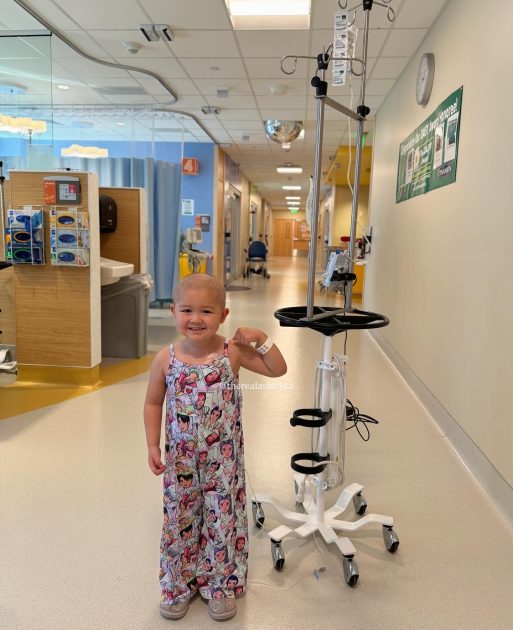
In October, Rylee began treatment with Blinatumomab (marketed as Blincyto), a sophisticated form of immunotherapy. Unlike traditional chemotherapy, which attacks all rapidly dividing cells, Blinatumomab is a bispecific T-cell engager (BiTE). It works by linking the patient’s own T-cells (immune cells) to the CD19 protein found on the surface of B-cell leukemia cells, allowing the immune system to target and destroy the cancer directly. This treatment requires a continuous 28-day infusion, which Rylee managed by carrying her medication in a portable pump housed in a small backpack.
Supporting Data: The Landscape of Pediatric Cancer
Rylee’s story is a singular instance of a broader public health issue. According to the National Cancer Institute and the ACCO:
- Incidence: Approximately 15,000 children and adolescents in the U.S. are diagnosed with cancer each year.
- Research Funding: Despite being the leading cause of death by disease in children, pediatric cancer research receives a disproportionately small fraction of federal funding compared to adult cancers.
- Treatment Duration: The average length of treatment for pediatric leukemia is approximately 2.5 to 3 years, significantly longer than many adult cancer protocols.
- Long-term Effects: Up to 60% of childhood cancer survivors will experience at least one chronic or late-occurring health issue as a result of their intensive treatments.
The economic impact is also substantial. Families of children with cancer often face significant "out-of-pocket" costs, including travel to specialized centers, lost wages due to caregiving duties, and specialized home care requirements. For military families like Rylee’s, these stressors are compounded by the potential for relocation and the absence of a spouse during deployment.
Psychosocial Support and the ACCO Medical Play Kit
A critical component of Rylee’s journey as an ACCO Ambassador is the promotion of "medical play." For a four-year-old, the hospital environment can be traumatizing. The ACCO provides Medical Play Kits designed to help children process their experiences through play therapy.
Rylee’s engagement with these kits—where she assumes the role of "Dr. Ta"—serves a clinical purpose. Medical play allows children to gain a sense of agency and control over a situation where they are usually passive recipients of painful or frightening procedures. By "treating" dolls or using toy versions of medical equipment, children can demystify the tools used in their care, which has been shown to reduce anxiety and improve cooperation during actual medical procedures.
Broader Implications and Official Responses
The American Childhood Cancer Organization emphasizes that Rylee’s role as an Ambassador is to provide a "face" to the statistics and to advocate for continued legislative support for pediatric cancer research, such as the Research to Accelerate Cure and Equity (RACE) for Children Act.
Ashley’s public advocacy has also sparked a dialogue regarding the "standard of care" for parental concerns in emergency settings. Her advice to "trust your gut" serves as a call to action for healthcare providers to implement more rigorous screening protocols when a caregiver reports a cluster of non-specific but persistent symptoms.
From a journalistic perspective, the case of Rylee highlights a systemic need for:
- Enhanced Early Screening: Better diagnostic tools or protocols in primary and urgent care settings to identify pediatric malignancies sooner.
- Support for Military Families: Specific programs to support the "solo" parent when a child is diagnosed during a spouse’s deployment.
- Continued Funding for Immunotherapy: The success of treatments like Blinatumomab in younger patients underscores the need for more targeted, less toxic alternatives to traditional chemotherapy.
The Long Road to 2027
While Rylee is currently in remission and serving her community as an ACCO Ambassador, her medical journey is far from over. Her current treatment protocol is scheduled to continue through October 2027. This long-term "maintenance" phase is vital for ensuring that the leukemia does not return, but it requires the family to remain in a state of constant vigilance.
Rylee’s ability to maintain a positive disposition—hosting tea parties and riding her bike between treatments—is a testament to the resilience of children. However, as the ACCO notes, "kids can’t fight cancer alone." The organization continues to call for donations and awareness to ensure that resources like the Medical Play Kits remain free for families, and that research continues to move toward a future where a leukemia diagnosis is met with even more effective and less invasive treatments.
Rylee’s journey from a misdiagnosed toddler to a national ambassador highlights the intersection of medical science, family endurance, and the critical need for systemic support in the fight against pediatric cancer. Her story remains a powerful reminder that in the face of a "world-shattering" diagnosis, the combination of maternal advocacy and medical innovation provides the best hope for a cure.
