
 By admin
The transition from a routine dental checkup to a life-altering medical crisis can happen in a matter of hours, a reality that Erika and Joe discovered when their nine-year-old son, Fritz, was diagnosed with one of the rarest forms of pediatric cancer. What began as a suspected impacted tooth quickly escalated into an emergency room visit that would redefine the family’s existence. When Erika sent a text to her husband, Joe, stating, “Come here right now. Something big is happening,” she was witnessing the beginning of a medical odyssey that highlights both the incredible advancements in modern oncology and the harrowing "collateral damage" caused by current treatment protocols. Fritz, who has since been named the 2026 Glamorama Ambassador for the Children’s Cancer Research Fund (CCRF), represents a demographic of patients known as the "rarest of the rare," highlighting a critical gap in medical research and funding for childhood bone cancers.
The Diagnostic Timeline: From Dental Chair to Emergency Surgery
The chronology of Fritz’s diagnosis underscores the aggressive nature of Ewing sarcoma and the importance of clinical intuition. On the day of his initial diagnosis, Erika took Fritz to the dentist to address what appeared to be a common childhood dental issue—an impacted tooth. However, the dentist identified a suspicious mass that did not align with typical dental pathology. Recognizing the potential severity, the dentist bypassed standard referral procedures and sent the family directly to the hospital.
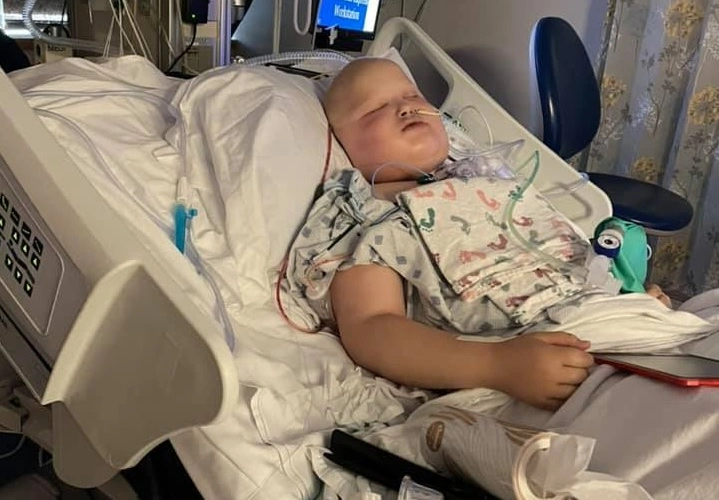
Upon arrival at the emergency room, the clinical atmosphere shifted instantly. Standard waiting room procedures were waived as Fritz was rushed into imaging. “We didn’t even sit in the waiting room,” Erika recalled. “When they roll out the red carpet in the ER, you know something is wrong.” A CT scan confirmed the presence of a significant tumor in Fritz’s jaw. The subsequent biopsy revealed the tumor’s dangerous nature; it was highly vascular, meaning it was densely packed with blood vessels. During the procedure, Fritz lost nearly a liter of blood—a staggering amount for a nine-year-old—necessitating an immediate emergency blood transfusion.
The pathology report confirmed a diagnosis of Ewing sarcoma. This specific type of cancer is a "small round blue cell tumor" that typically manifests in the long bones of the legs or arms, or within the pelvis. Fritz’s presentation, however, was an anomaly. His tumor originated in the jaw, a site that accounts for less than 1% of all Ewing sarcoma cases. Considering that Ewing sarcoma itself represents only about 1% of all pediatric cancer diagnoses, Fritz’s condition placed him in an extremely small cohort of patients globally, complicating the standard treatment trajectory.

The Biological Reality of Ewing Sarcoma
Ewing sarcoma is the second most common bone cancer in children and young adults, yet it remains poorly understood compared to adult carcinomas. It is characterized by a specific genetic translocation—most commonly a fusion between the EWS gene on chromosome 22 and the FLI1 gene on chromosome 11. This genetic "glitch" creates a fusion protein that acts as an aberrant transcription factor, essentially turning on genes that promote rapid, uncontrolled cell growth while turning off genes that suppress tumors.
Because Fritz’s tumor was located in the mandible (jawbone), the surgical requirements were exceptionally complex. To achieve "clear margins"—the removal of all cancerous tissue along with a surrounding layer of healthy tissue—surgeons had to remove more than two-thirds of his jaw. This necessitated a sophisticated reconstructive surgery known as a fibula free flap, where a portion of the bone from Fritz’s leg was harvested and reshaped to create a new jaw. This was followed by a complex airway reconstruction to ensure he could breathe and swallow effectively following the massive structural changes to his face and throat.
The "Red Devil" and the Toxicity of Cure
While surgery addressed the primary mass, systemic treatment was required to eliminate any circulating micrometastases. This involved months of intensive chemotherapy, including the administration of Doxorubicin. Known in oncology circles as the "Red Devil" due to its bright red hue and its notoriously harsh side effects, Doxorubicin is an anthracycline antibiotic that works by interfering with the DNA of rapidly dividing cancer cells.
While effective at killing Ewing sarcoma cells, Doxorubicin is also known for its cardiotoxicity and its potential to cause long-term damage to healthy organs. For Fritz, the treatment was a double-edged sword. It successfully eradicated the cancer, leading to his current "No Evidence of Disease" (NED) status, but it left his body in a state of premature physiological aging. Erika noted the stark contrast in his daily life: “He went from a kid who took a Flintstones vitamin to a kid who takes medications most people don’t encounter until much later in life.”
The side effects of such aggressive treatment are not merely temporary. Fritz now manages a complex regimen of medications and maintains a grueling schedule of follow-up appointments with a multidisciplinary team of specialists. His care involves oncologists, reconstructive surgeons, endocrinologists to manage hormonal imbalances caused by treatment, and sleep medicine doctors to address respiratory issues stemming from his airway reconstruction.
The Funding Gap in Pediatric Oncology
Fritz’s story serves as a poignant case study for why private philanthropy is essential in the fight against childhood cancer. Nationally, pediatric cancer research receives a disproportionately small fraction of federal funding compared to adult cancers. Of the total budget allocated by the National Cancer Institute (NCI), only about 4% is typically directed toward all types of childhood cancers combined. Within that 4%, rare subtypes like Ewing sarcoma must compete for even smaller slices of the pie.
Because these cancers are rare, they do not offer the same "return on investment" for major pharmaceutical companies as adult cancers like lung or breast cancer, which affect millions. Consequently, the development of new, less toxic drugs for children often stalls in the laboratory. This is where organizations like the Children’s Cancer Research Fund (CCRF) intervene. By funding early-stage, "high-risk, high-reward" research, CCRF allows scientists to gather the preliminary data necessary to qualify for larger federal grants.
Recent CCRF-funded research into Ewing sarcoma has focused on "hunting the spotted zebra"—a metaphor for the rare and elusive nature of the disease. This research has contributed to the launch of new clinical trials that explore targeted therapies. Unlike traditional chemotherapy, which attacks all fast-growing cells, targeted therapies aim to disrupt the specific genetic mutations (like the EWS-FLI1 fusion) that drive the cancer. The goal is to achieve the same survival rates as the "Red Devil" but without the lifelong systemic damage.
The Psychological Impact and the Role of Advocacy
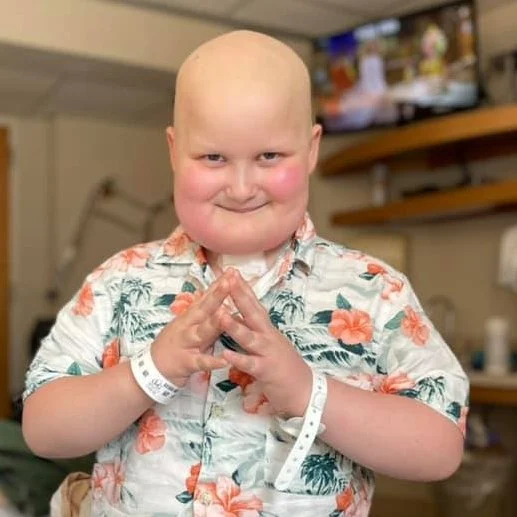
Beyond the physiological toll, the journey through pediatric cancer has profound psychological implications for the patient and the family. Throughout his treatment, Fritz’s parents observed that his personality remained his greatest asset. Known for his sense of humor and his penchant for pranks, Fritz used levity as a survival mechanism. Joe, Fritz’s father, expressed immense pride in his son’s resilience: “We’re proud of Fritz for continuing to be exactly who he is all throughout treatment—especially now, as he becomes a teenager while still dealing with plenty of side effects.”
As the 2026 Glamorama Ambassador, Fritz is now using his platform to humanize the statistics. Glamorama, a major fundraising event for CCRF, highlights the stories of survivors to drive community engagement and financial support. The involvement of families like Fritz’s is crucial for advocacy; they provide the "lived experience" that informs research priorities and policy changes.
Analysis of Implications: The Future of Survivorship
Fritz’s case highlights a growing challenge in modern medicine: the "survivorship burden." As treatment efficacy improves, the population of childhood cancer survivors is growing. However, these survivors face a lifetime of "late effects," including secondary cancers, heart disease, and endocrine disorders. The medical community is increasingly shifting its focus from "cure at any cost" to "cure with minimal long-term impact."
The implications of Fritz’s journey suggest three primary areas for future focus:
- Precision Medicine: Moving toward genomic-based treatments that spare healthy tissue, reducing the need for "scorched earth" chemotherapy.
- Integrated Survivorship Care: Establishing long-term clinics that treat the survivor as a whole person, addressing the interplay between surgical changes, hormonal health, and mental well-being.
- Philanthropic Momentum: Continued reliance on private donors to bridge the "innovation gap" left by federal funding limitations.
The sentiment shared by Joe resonates as a call to action for the broader community: “It takes a community of people who say, ‘our kids deserve better,’ and then help make it happen.” Fritz is no longer just a patient; he is a symbol of the progress made and a reminder of the work that remains. While he is currently cancer-free, his daily life remains a testament to the fact that for many children, the end of chemotherapy is not the end of the battle, but the beginning of a new chapter of resilience. Through continued research and support, the hope is that future children diagnosed with Ewing sarcoma will have a path to recovery that is defined by their dreams rather than their side effects.
