
 By Gabriel Paijo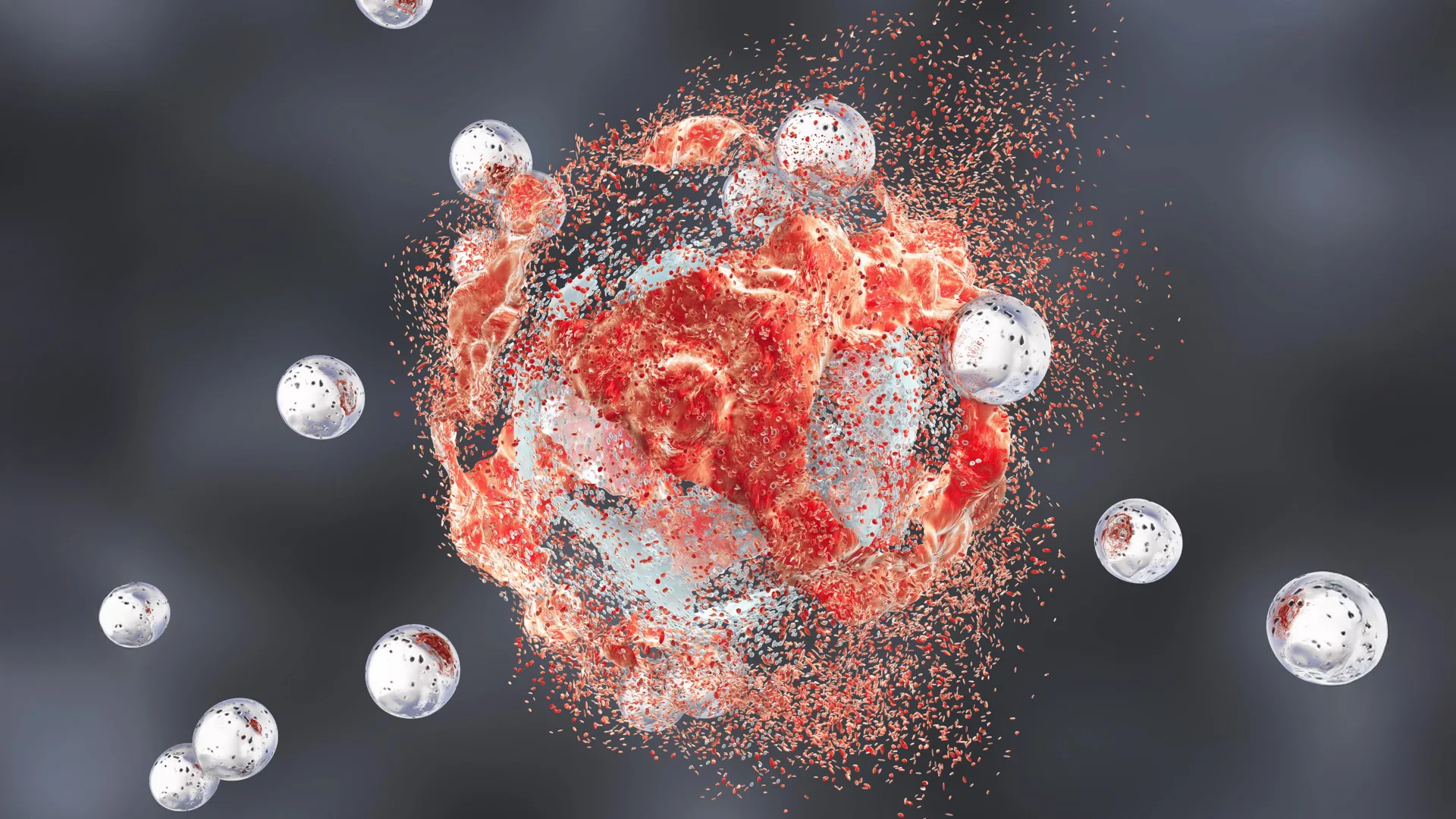
In a significant breakthrough for precision oncology, researchers have engineered specialized silica nanoparticles that demonstrate a potent dual-action capability: directly destroying prostate tumor cells while simultaneously recalibrating the body’s immune system to recognize and attack the malignancy. This discovery, detailed in a preclinical study led by scientists at Weill Cornell Medicine and the Cornell Duffield College of Engineering, offers a promising new strategy for treating aggressive forms of prostate cancer that have historically been resistant to standard therapies. The study, published in the journal Cancer Research, highlights the potential of these "Cornell Prime dots" (C’ dots) to transform the landscape of cancer treatment by turning "cold" tumors into "hot," immune-responsive targets.
The Evolution of C’ Dots: From Imaging to Therapy
The nanoparticles at the center of this research, known as ultrasmall fluorescent core-shell silica nanoparticles or C’ dots, were not originally conceived as a primary therapeutic agent. Developed over several years through a collaboration between Dr. Michelle Bradbury’s laboratory at Weill Cornell Medicine and Dr. Ulrich Wiesner’s laboratory at Cornell’s Ithaca campus, these particles were initially designed to enhance medical imaging. Because of their ultrasmall size—typically less than 10 nanometers in diameter—they possess unique pharmacokinetic properties, allowing them to circulate through the bloodstream and clear through the kidneys with minimal systemic toxicity.
C’ dots have already established a track record of safety in humans, having progressed into late-stage clinical trials for applications such as image-guided surgery. In these roles, the dots serve as highly bright, stable fluorescent markers that help surgeons identify the exact margins of a tumor. However, as researchers began to observe the interactions between these silica structures and cancer cells more closely, they discovered an inherent biological activity that went far beyond mere visualization. The particles appeared to possess an intrinsic ability to disrupt the internal mechanics of cancer cells, leading the research team to investigate their potential as a direct-action drug.
The Mechanism of Action: Harnessing Ferroptosis
The most striking revelation of the new study is the ability of C’ dots to induce ferroptosis, a relatively recently discovered form of programmed cell death. Unlike apoptosis, which is the most common way cells die and is often bypassed by cancer cells that have developed resistance mechanisms, ferroptosis is driven by iron-dependent lipid peroxidation. This process involves the overwhelming oxidation of the fatty molecules that constitute the cell membrane, leading to the eventual rupture and death of the cell.
The researchers found that when these silica nanoparticles are targeted to prostate cancer cells, they facilitate the accumulation of iron within the tumor environment. While the exact molecular pathways are still being mapped, the evidence suggests that the particles act as a delivery vehicle or a catalyst for iron-rich oxidative stress. By concentrating iron ions within the tumor, the C’ dots trigger a chemical "firestorm" that compromises the structural integrity of the cancer cells.
To ensure that this destructive process is confined to the malignancy, the team decorated the surface of the nanoparticles with a targeting molecule that binds to Prostate-Specific Membrane Antigen (PSMA). PSMA is highly overexpressed on the surface of most prostate cancer cells but is found in very low levels in healthy tissue. This "lock and key" mechanism ensures that the nanoparticles bypass healthy cells and concentrate their ferroptotic payload directly within the tumor site.
Transforming the Tumor Microenvironment
Beyond the direct killing of cancer cells, the C’ dots perform a second, perhaps more critical, function: they remodel the tumor microenvironment. In the field of oncology, many aggressive prostate cancers are classified as "cold" tumors. This means the environment surrounding the tumor is immunosuppressive, effectively hiding the cancer from the body’s T cells and other immune defenses. Even the most advanced immunotherapy drugs, such as checkpoint inhibitors, often fail in these environments because the immune system simply cannot "see" the enemy.
The study demonstrated that the introduction of these silica nanoparticles shifts the tumor environment from "cold" to "hot." The researchers observed a significant influx of activated T cells and macrophages—cells that are essential for an effective anti-cancer immune response. Furthermore, the particles appeared to disrupt the metabolic pathways that tumor cells use to sustain their rapid growth. By altering the "neighborhood" around the tumor, the C’ dots make the cancer highly vulnerable to the body’s natural defenses and to supplementary immunotherapy treatments.
Preclinical Results and Survival Data
The efficacy of this dual-action approach was tested in mouse models of aggressive, metastatic prostate cancer. The results were remarkably robust, particularly when the nanoparticles were used in combination with existing treatments.
In the survival studies, mice treated with only the C’ dots or only a standard immune checkpoint blockade therapy showed modest improvements in lifespan compared to untreated control groups. However, when the two treatments were combined, the synergy was profound. Four out of ten mice achieved complete or nearly complete remission, surviving indefinitely.
To push the boundaries further, the team added a third component: a CSF-1R blockade, which targets a specific type of immune-suppressing macrophage often found in tumors. With this triple-combination therapy, the rate of complete remission rose to 50 percent. According to the study’s senior author, Dr. Michelle Bradbury, this level of durable tumor suppression is nearly unprecedented in such aggressive models of the disease.
Expert Reactions and Scientific Significance
The research has drawn praise from leaders in the field of cancer immunotherapy. Dr. Jedd Wolchok, a co-author of the study and a pioneer in the development of checkpoint inhibitors, noted that the convergence of direct cell killing and broad immune remodeling is one of the most intriguing aspects of the work. He emphasized that by creating conditions that support an antitumor immune response, these particles might finally unlock the potential of immunotherapy for prostate cancer patients, a group for whom these drugs have historically offered limited benefit.
Dr. Ulrich Wiesner, a co-corresponding author, expressed surprise at the multifaceted impact of the silica particles. He speculated that the ubiquitous nature of silica in the environment—found in everything from leafy greens to cereal grains—might have given it a unique, yet-to-be-fully-understood connection to biological systems. The fact that the particles can trigger such complex, simultaneous effects only within the tumor environment, while leaving healthy tissues untouched, suggests a high degree of biological compatibility and specificity.
Safety Profile and Biocompatibility
One of the primary hurdles for any new nanoparticle therapy is the risk of systemic toxicity. However, because C’ dots are made of amorphous silica—a material generally recognized as safe by regulatory bodies—the safety profile is encouraging. The researchers noted that while some particles did temporarily accumulate in the spleen, there were no signs of toxicity or damage to vital organs. The body naturally clears the particles through the renal system, a key advantage over larger nanoparticles that can linger in the liver or bone marrow for extended periods.
This safety data is bolstered by the fact that earlier iterations of C’ dots have already undergone Phase I and Phase II clinical trials for imaging, where they demonstrated an excellent safety record in human subjects. This existing clinical data could significantly accelerate the timeline for bringing this new therapeutic application into human trials.
Broader Implications and Future Directions
The implications of this research extend beyond prostate cancer. The fundamental mechanism—using targeted silica nanoparticles to induce ferroptosis and remodel the immune environment—could theoretically be applied to other "cold" solid tumors, such as those found in the pancreas, brain, or lungs.
The research team is currently focused on several next steps. First, they aim to refine the targeting mechanism to see if it can be adapted for other types of cancer markers. Second, they are investigating the long-term effects of the immune remodeling to see if it provides a "memory" effect that prevents cancer recurrence. Finally, the team is preparing the necessary data to apply for human clinical trials, where they hope to evaluate the safety and effectiveness of the treatment in patients with advanced prostate cancer who have exhausted other options.
The study was a collaborative effort involving multiple laboratories and was supported by significant funding from the Department of Defense, the National Cancer Institute (part of the National Institutes of Health), and the Parker Institute for Cancer Immunotherapy. As the researchers move toward clinical evaluation, the medical community remains optimistic that this "nanoparticle paradigm" could represent a new frontier in the fight against aggressive malignancies, combining the precision of engineering with the power of the body’s own immune system.
