
 By Gabriel Paijo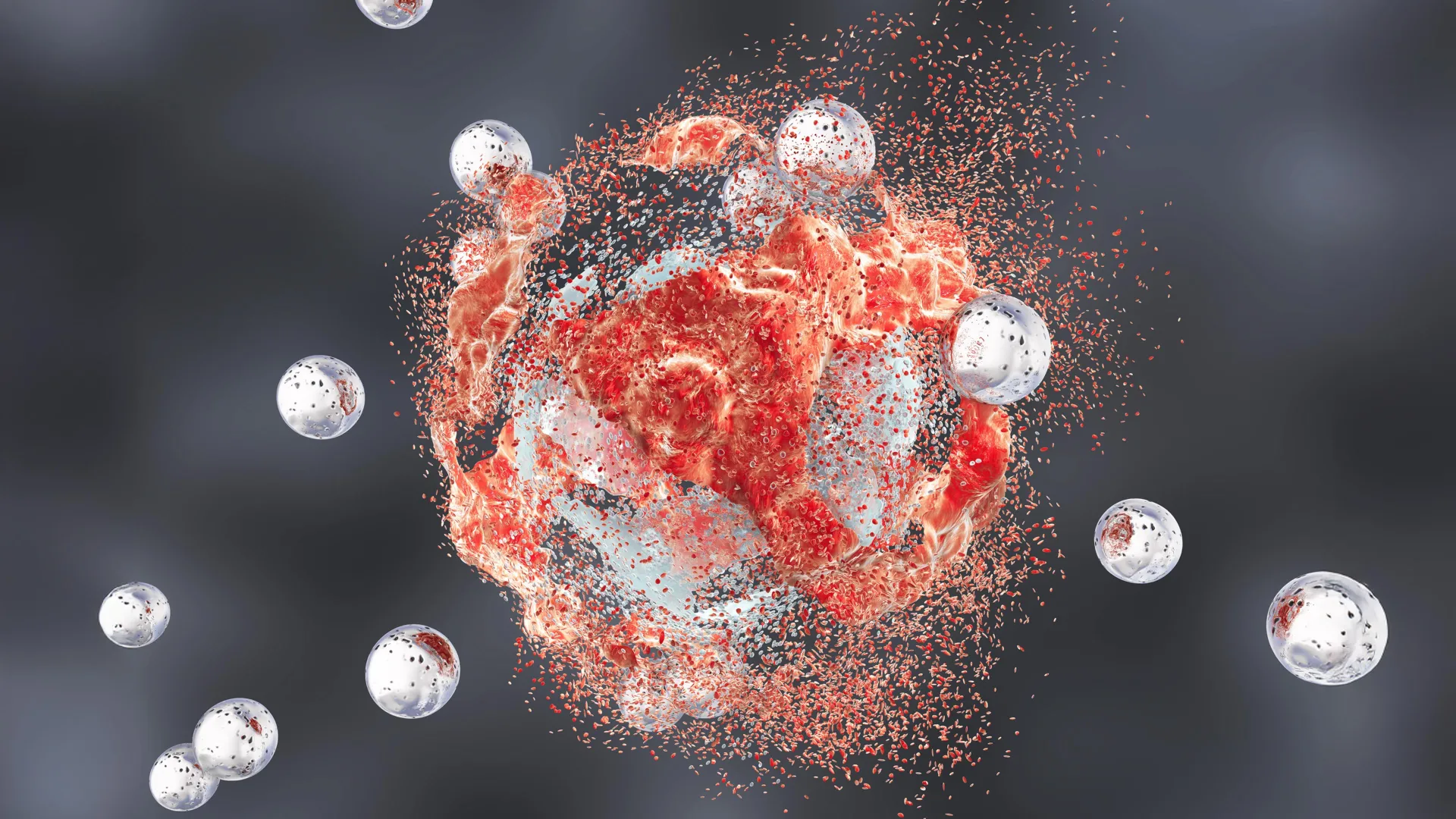
Researchers at Weill Cornell Medicine and the Cornell Duffield College of Engineering have announced a significant advancement in nanomedicine, demonstrating that engineered silica nanoparticles can be utilized to directly eliminate prostate tumors while simultaneously activating a robust immune response. This dual-action approach, detailed in a preclinical study published in the journal Cancer Research, offers a potential paradigm shift in the treatment of aggressive prostate cancer, a disease that has historically shown limited response to conventional immunotherapies. By utilizing "Cornell Prime dots" (C’ dots), the research team achieved complete tumor remissions in mouse models, paving the way for future human clinical trials and the development of a new class of therapeutic agents.
The Evolution of C’ Dots: From Medical Imaging to Cancer Therapy
The nanoparticles at the center of this breakthrough, known as ultrasmall fluorescent core-shell silica nanoparticles or C’ dots, were not originally designed as a primary cancer treatment. Developed through a long-standing collaboration between Dr. Michelle Bradbury of Weill Cornell Medicine and Dr. Ulrich Wiesner of Cornell’s Department of Materials Science and Engineering, these particles were initially engineered to enhance medical imaging.
Composed of amorphous silica—a form of silicon dioxide found naturally in various foods and the fossilized remains of microscopic organisms—C’ dots are designed to be "ultrasmall," typically measuring less than 10 nanometers in diameter. This specific size is critical for medical applications, as it allows the particles to circulate through the bloodstream effectively, penetrate deep into tumor tissues, and be safely cleared through the kidneys, minimizing the risk of long-term toxicity.
Over the past decade, C’ dots have moved through various stages of clinical validation. They are currently involved in late-stage clinical trials for use in image-guided surgery, helping surgeons identify the precise margins of tumors and locate cancerous lymph nodes. However, the latest research indicates that these particles possess intrinsic therapeutic properties that go far beyond their role as imaging contrast agents. Scientists discovered that when properly targeted and concentrated within a tumor, the particles themselves can initiate a cascade of biological events that lead to the death of cancer cells.
A Dual-Action Strategy: Ferroptosis and Immune Reawakening
The preclinical study highlights two distinct but synergistic mechanisms by which C’ dots combat prostate cancer. The first is a direct attack on the structural integrity of the cancer cell, while the second involves a fundamental restructuring of the tumor’s surrounding environment to facilitate an immune-led eradication.
Inducing Ferroptosis via Iron Transport
One of the most significant findings of the study involves "ferroptosis," a regulated form of cell death that differs from the more commonly known process of apoptosis. Ferroptosis is characterized by the overwhelming accumulation of iron-dependent lipid peroxides, which lead to catastrophic oxidative damage to the cell’s fatty membranes.
While the exact molecular triggers are still being investigated, evidence suggests that the C’ dots act as vehicles for iron transport. Although the particles were initially designed to carry imaging dyes, they appear to sequester positively charged iron ions from the bloodstream. Once the particles are internalized by the tumor cells—guided by a targeting molecule that recognizes Prostate-Specific Membrane Antigen (PSMA)—the iron is released within the cell. This sudden influx of iron fuels intense oxidation, essentially causing the cancer cell to self-destruct from the inside out.
Converting "Cold" Tumors to "Hot" Tumors
Perhaps more impactful for long-term cancer management is the ability of the nanoparticles to "reawaken" the immune system. In many cases of aggressive prostate cancer, the tumor microenvironment is "cold," meaning it is populated by immunosuppressive cells that prevent the body’s T cells from recognizing or attacking the malignancy. This environment makes traditional immunotherapy drugs, such as checkpoint inhibitors, largely ineffective.
The study found that the introduction of C’ dots transformed this environment into an immune-active "hot" state. The researchers observed a significant shift in the behavior of T cells and macrophages near the tumors. Cells that were previously inactive or even supporting tumor growth were reprogrammed into active cancer-fighting agents. Furthermore, the particles disrupted the metabolic processes of various cell types within the tumor microenvironment, creating a hostile environment for cancer progression.
Preclinical Data and Survival Outcomes
To test the efficacy of the nanoparticles, the research team utilized mouse models of aggressive prostate cancer that typically do not respond to standard treatments. The results provided a compelling case for the therapeutic potential of the C’ dots, particularly when used in combination with existing treatments.
The researchers tested three primary treatment arms:
- C’ Dots Alone: This led to a modest improvement in survival compared to untreated control groups, demonstrating the intrinsic anti-tumor activity of the particles.
- Combination with Checkpoint Blockade: When C’ dots were paired with an immune checkpoint blockade therapy (a standard form of immunotherapy), the results improved dramatically. In this group, four out of ten mice (40%) experienced complete or nearly complete remissions and achieved indefinite survival.
- Triple Combination Therapy: The team added a third agent, a CSF-1R blockade, which specifically targets tumor-associated macrophages that often protect cancer cells from the immune system. This triple-combination approach increased the rate of complete remission to 50% (five out of ten mice).
"We think there’s nothing else out there that has such a strong and durable tumor growth-suppressing effect," stated senior author Dr. Michelle Bradbury, the Endowed Professor of Imaging Research in Radiology at Weill Cornell Medicine. The data suggests that the nanoparticles do not just kill cells but create a sustainable "antitumor memory" within the immune system.
Safety and Targeting Precision
A critical component of the study was ensuring that the treatment did not damage healthy tissues. To achieve this, the researchers functionalized the C’ dots with a targeting ligand that binds to PSMA. PSMA is highly overexpressed on the surface of prostate cancer cells but is present at much lower levels in healthy tissues.
The study monitored the biodistribution of the particles and found that while some particles briefly accumulated in the spleen—a common occurrence for nanomaterials—there were no signs of systemic toxicity or damage to vital organs. The "ultrasmall" nature of the silica particles ensures they are excreted through the renal system, reducing the risk of the "bioaccumulation" issues that have hindered other types of nanoparticle therapies in the past.
Dr. Ulrich Wiesner expressed a sense of wonder at the multifaceted nature of the particles’ impact. "It seems unreal—how is it possible that rather than a single pathway we see all these effects happening simultaneously and only in tumors and not in healthy tissues?" he noted. He hypothesized that the ubiquitous presence of silica in the natural environment and human diet might contribute to its unique biocompatibility and biological activity.
Expert Reactions and Clinical Implications
The broader oncology community has long sought ways to make prostate cancer more responsive to immunotherapy. Dr. Jedd Wolchok, a co-author of the study and the Meyer Director of the Sandra and Edward Meyer Cancer Center at Weill Cornell Medicine, emphasized the clinical significance of the findings.
"One of the most intriguing aspects of this work is the convergence of direct tumor cell killing with broad immune remodeling," Dr. Wolchok said. "By creating conditions that support a more effective antitumor immune response, these particles may help unlock the full potential of immunotherapy in prostate cancer, where durable responses have historically been difficult to achieve."
The research team also credited the collaborative effort of co-first authors Drs. Nabil Siddiqui, Li Zhang, and Gabriel DeLeon, alongside graduate students Nada Naguib and Rachel Lee. Their work in synthesizing the particles and conducting the complex biological assays was essential to proving the "dual-strategy" hypothesis.
Future Outlook and Timeline for Human Trials
The successful preclinical results have set the stage for the next phase of research: translating these findings into human clinical applications. The research team is currently focused on further investigating the inflammatory, immune, and metabolic pathways influenced by the silica particles to optimize dosing and combination strategies.
The long-term goal is to initiate human clinical trials to evaluate the safety and effectiveness of C’ dots as a therapeutic agent for patients with advanced prostate cancer. Because C’ dots have already been tested in humans for imaging purposes and have a known safety profile, the path to therapeutic trials may be more streamlined than it would be for an entirely new, untested material.
If successful in humans, this technology could represent a new clinical paradigm. Rather than relying on a single drug to kill a tumor, clinicians could use C’ dots to simultaneously "poison" the tumor via ferroptosis and "unmask" it for the immune system, providing a potent one-two punch against some of the most aggressive forms of the disease.
Acknowledgments and Funding
This research was a multi-disciplinary effort supported by several high-profile organizations. Funding was provided by the Department of Defense, the National Cancer Institute (NCI) of the National Institutes of Health (NIH), and the Parker Institute for Cancer Immunotherapy at Weill Cornell Medicine. Additional support came from Cycle for Survival and the Cancer Center Support Grant.
Drs. Michelle Bradbury and Ulrich Wiesner are listed as inventors on patents related to the C’ dot technology, highlighting the commercial and clinical potential of this engineering feat. As the scientific community looks toward the future of oncology, the "ultrasmall" silica particle stands as a testament to the power of converging engineering and medicine to tackle the most complex challenges in human health.
