
 By admin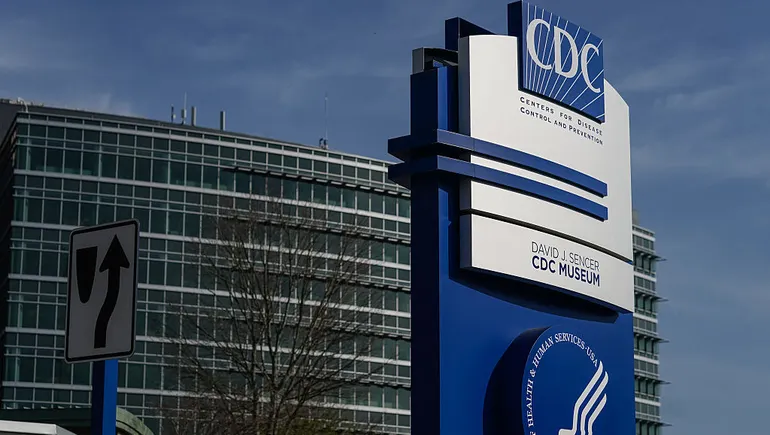
President Donald Trump on Thursday announced his nomination of Erica Schwartz, a prominent public health leader from his first administration, to serve as the next director of the Centers for Disease Control and Prevention (CDC). This critical appointment comes at a period of unprecedented instability and significant policy shifts within the nation’s premier public health agency, which has been operating without a permanent leader for an extended duration. Schwartz’s nomination, communicated via Trump’s Truth Social platform, was accompanied by the naming of three other key figures to senior agency positions, signaling a comprehensive restructuring effort aimed at realigning the CDC’s strategic direction.
Erica Schwartz: A Profile in Public Service and Leadership
Erica Schwartz brings a robust background in public health and military service to her prospective role as CDC Director. During President Trump’s first term, she served as the deputy surgeon general, a pivotal position that involved advising the Surgeon General on scientific and public health matters and helping to lead the U.S. Public Health Service Commissioned Corps. Her career spans over two decades of dedicated service across various branches of the U.S. military and public health infrastructure. This extensive experience includes tenures in the U.S. Navy, the U.S. Coast Guard, and the Commissioned Corps of the U.S. Public Health Service, where she would have been involved in a wide array of public health initiatives, from emergency response to preventative medicine.
Schwartz’s academic credentials further underscore her qualifications. She holds degrees from Brown University, an Ivy League institution known for its rigorous academic programs, and the University of Maryland, a prominent public research university. These educational foundations, combined with her practical experience in high-stakes environments, position her as a candidate with a deep understanding of both the scientific principles and operational demands of public health leadership. Her military background, in particular, suggests an ability to manage complex logistics, command large teams, and operate effectively under pressure—qualities that would be invaluable in leading an agency responsible for protecting the American public from diverse disease threats.
A New Leadership Team for the CDC
Beyond the director position, President Trump also unveiled a slate of additional nominations designed to bolster the CDC’s leadership structure. These appointments include Jennifer Shuford as a CDC deputy director and chief medical officer, Sean Slovenski as a deputy director and chief operating officer, and Sara Brenner as a senior counsel for public health.
Jennifer Shuford, an experienced infectious disease physician, is slated to become a CDC deputy director and chief medical officer. Her background in infectious diseases is particularly pertinent given the CDC’s core mission of disease surveillance, prevention, and control. As chief medical officer, she would be instrumental in ensuring that the agency’s policies and responses are grounded in sound medical science and clinical expertise. Shuford’s prior roles, such as her leadership position within the Texas Department of State Health Services, suggest a strong understanding of state-level public health operations and their integration with federal initiatives.
Sean Slovenski, formerly an executive at Walmart, has been tapped as a deputy director and chief operating officer. His corporate background, particularly from a large retail entity like Walmart, suggests an emphasis on operational efficiency, logistical management, and strategic planning. In this role, Slovenski would likely be charged with streamlining the CDC’s internal processes, optimizing resource allocation, and ensuring that the agency functions effectively and accountably, potentially bringing a business-oriented approach to public health administration.
Completing this new leadership cadre is Sara Brenner, a top official from the Food and Drug Administration (FDA) and a former acting commissioner, who is nominated as a senior counsel for public health. Brenner’s extensive experience at the FDA, a sister agency within the Department of Health and Human Services (HHS) responsible for drug and device regulation, provides critical expertise in regulatory science, public health law, and the complex interplay between science and policy. Her role as senior counsel would likely involve navigating legal challenges, ensuring compliance, and providing strategic advice on sensitive public health issues, particularly those related to the agency’s evolving vaccine policies.
The CDC’s Recent Turmoil and Leadership Vacuum
Schwartz’s nomination emerges against a backdrop of profound instability and controversy that has plagued the CDC over the past year and a half. The agency, traditionally viewed as a global gold standard for public health, has experienced an unusually high turnover in its top leadership positions, operating without a Senate-confirmed director for much of President Trump’s second term. This leadership vacuum has not only created uncertainty within the agency but has also contributed to an erosion of its standing within the scientific community and among the broader public.
The chronology of leadership changes underscores the tumultuous period:
- August of Last Year: The CDC’s last full-time director concluded their tenure, initiating a prolonged period of acting leadership.
- Last Year (Specifics Unclear but Prior to March): President Trump’s initial nominee for CDC Director, Dave Weldon, withdrew his nomination. His withdrawal was reportedly due to a clear lack of sufficient support from the Senate, indicating early political challenges in confirming a permanent leader.
- July: The White House named Susan Monarez, who had been serving as the CDC’s acting director, as its next pick for the permanent role. Monarez initially garnered more positive reception from Congress than her predecessor.
- Less than a Month Later (July/August): Monarez was abruptly fired. She later testified at a congressional hearing, revealing that her dismissal stemmed from her refusal to "rubber-stamp" new vaccine guidelines proposed by Health and Human Services Secretary Robert F. Kennedy Jr. without adequate supporting evidence. This incident reportedly prompted other senior officials to resign from the agency, highlighting deep internal divisions and concerns over scientific integrity.
- Following Monarez’s Departure: Jim O’Neill stepped into the role of acting director.
- February: O’Neill departed his post, continuing the cycle of temporary leadership.
- Post-February: Jay Bhattacharya, a prominent leader from the National Institutes of Health (NIH), assumed the role of acting director, marking yet another interim appointment.
This relentless churn in leadership has created a challenging environment for the CDC, impacting its ability to maintain long-term strategic planning, sustain staff morale, and project a consistent, authoritative voice on public health matters. The perception of political interference in scientific decision-making, particularly concerning vaccine policies, has been a significant factor in the erosion of public trust and the agency’s reputation for scientific independence.
Controversial Shifts in Vaccine Policy
The leadership instability at the CDC has coincided with, and is largely intertwined with, a series of significant and controversial changes to longstanding vaccine policy, spearheaded by HHS Secretary Robert F. Kennedy Jr. These changes have drawn sharp criticism from major medical organizations and public health experts, raising concerns about evidence-based decision-making and public health outcomes.
One of the most impactful changes involved the reform of the Advisory Committee on Immunization Practices (ACIP). ACIP is an influential panel of medical and public health experts that plays a crucial role in developing vaccine recommendations for the U.S. population. Its recommendations are particularly significant because they are often adopted by states and insurance providers, directly influencing which vaccines are covered and widely administered. Under Secretary Kennedy’s direction, the composition and possibly the mandate of this panel were reportedly altered. Following this "reformation," the ACIP panel has reportedly softened recommendations for multiple immunizations and has been accused of fueling skepticism about many existing shots. This shift is a stark departure from ACIP’s historical role in promoting robust, evidence-based vaccine uptake.
Further illustrating the agency’s departure from established protocols, the CDC in January bypassed normal procedures in announcing plans to reduce the number of universally recommended childhood vaccines. Typically, any changes to the childhood immunization schedule undergo a rigorous, multi-stage process involving extensive review of scientific data, public comment periods, and consensus among medical professionals and public health bodies. Bypassing these protocols raised alarm bells among public health advocates, who argued that such moves could undermine vaccine confidence and potentially lead to preventable outbreaks of infectious diseases.
These policy changes, both those originating from the recast ACIP panel and the direct actions by the CDC, were met with widespread condemnation from a broad spectrum of medical organizations, including likely the American Academy of Pediatrics, the American Medical Association, and infectious disease societies. These groups consistently emphasized the robust scientific evidence supporting existing vaccine schedules and warned of the public health risks associated with weakening recommendations or fostering vaccine skepticism. The scientific consensus for decades has affirmed the safety and efficacy of routine childhood immunizations in preventing devastating diseases.
The controversy culminated in a legal challenge, resulting in a federal judge blocking some of these new vaccine policies. This judicial intervention underscored the concerns about the legality and scientific basis of the administration’s public health directives, reinforcing the notion that these changes were not adequately supported by evidence or proper administrative procedures. The judge’s decision provided a temporary halt to policies that could have significantly altered the public health landscape.
HHS Secretary Robert F. Kennedy Jr.’s Vision and the "Make America Healthy Again" Agenda
Robert F. Kennedy Jr.’s appointment as HHS Secretary was itself a controversial move, given his well-documented history of expressing skepticism about certain vaccines and public health mandates. His stated goal, as articulated in a post on X, is to "restore trust, accountability, and scientific integrity at the [CDC] so we can return it to its core mission and Make America Healthy Again." This declaration frames the administration’s approach to public health as a corrective measure, implying that the CDC had previously strayed from its core mission or lacked integrity.
The slogan "Make America Healthy Again" echoes the broader political rhetoric of the Trump administration, suggesting a desire to reclaim or redefine aspects of American society. In the context of public health, it could imply a shift towards policies that emphasize individual autonomy over broad public health mandates, a re-evaluation of established scientific consensus, or a focus on alternative health approaches. The practical implementation of this vision, particularly through changes to vaccine policy and the composition of advisory panels, has been a central point of contention.
A Strategic Pivot: Vaccines to Nutrition
Amidst the intense scrutiny and public backlash over its vaccine policies, recent published reports have indicated a strategic shift within the White House regarding the messaging emanating from Secretary Kennedy’s HHS. Ahead of the upcoming midterm elections, there appears to be an effort to pivot away from the more controversial vaccine views and towards a focus on universally more popular topics like nutrition. This strategic reorientation suggests an awareness of the political liabilities associated with the administration’s stance on vaccines and an attempt to broaden its appeal by emphasizing health initiatives that are less polarizing.
Erica Schwartz’s nomination appears to align with this evolving narrative. While her background is deeply rooted in traditional public health and military medicine, her specific public statements or past policy positions on the more controversial aspects of vaccine policy under the Kennedy-led HHS are not explicitly detailed in the original report. However, her professional background suggests a more conventional public health approach, potentially offering a more palatable face for the CDC’s leadership as the administration seeks to temper the controversy. The selection of an infectious disease physician (Shuford) and an FDA veteran (Brenner) alongside her further indicates a desire to project an image of scientific rigor and operational competence, potentially to reassure a skeptical public and scientific community.
The Road Ahead: Senate Confirmation
Erica Schwartz’s nomination, like all high-level presidential appointments, will require confirmation by the U.S. Senate. She is slated to appear before the Senate Health, Education, Labor and Pensions (HELP) Committee, which has jurisdiction over public health matters. A date for her confirmation hearing has not yet been announced.
The confirmation process is likely to be thorough and potentially contentious, given the recent history of the CDC and the political sensitivities surrounding public health policy, particularly vaccines. Senators on the HELP Committee are expected to scrutinize Schwartz’s qualifications, her views on key public health issues, her stance on the controversial policy changes enacted under Secretary Kennedy, and her commitment to scientific independence. They will likely seek assurances that she will uphold the CDC’s mission of protecting public health based on the best available science, free from political interference. The committee’s questioning will also likely delve into her plans for restoring public trust in the CDC and addressing the concerns raised by the scientific community.
Given the previous challenges in confirming a CDC director, Schwartz’s ability to garner bipartisan support will be crucial. Her military service and background as deputy surgeon general could potentially appeal to a broader range of senators, but her alignment with the current administration’s public health agenda will undoubtedly be a central focus of the hearings.
Implications for Public Health and the CDC’s Future
The nomination of Erica Schwartz marks a critical juncture for the CDC and the future of public health in the United States. If confirmed, Schwartz will inherit an agency grappling with diminished public trust, internal dissent, and a mandate that has been subjected to significant political reinterpretation. Her leadership will be pivotal in determining whether the CDC can regain its standing as an authoritative, independent scientific body.
The implications of these leadership and policy shifts are far-reaching. Continued instability at the CDC could impair the nation’s ability to effectively respond to future public health crises, whether they be infectious disease outbreaks, bioterrorism threats, or environmental health emergencies. A CDC perceived as politicized or lacking scientific independence risks undermining global public health efforts, as its international partnerships and influence rely heavily on its reputation for objectivity and scientific excellence.
Restoring "trust, accountability, and scientific integrity," as articulated by Secretary Kennedy, will require a delicate balance. For many in the scientific community, this means re-establishing evidence-based decision-making, ensuring transparent processes, and protecting the agency from undue political influence. For others within the administration, it might mean aligning the agency’s mission more closely with a particular political philosophy. Erica Schwartz’s task, should she be confirmed, will be to navigate these complex expectations while steering the CDC back towards its fundamental role of safeguarding the health of all Americans. Her ability to unify the agency, rebuild external partnerships, and communicate effectively with the public will largely determine the CDC’s trajectory in the years to come.
