
 By Lina carolina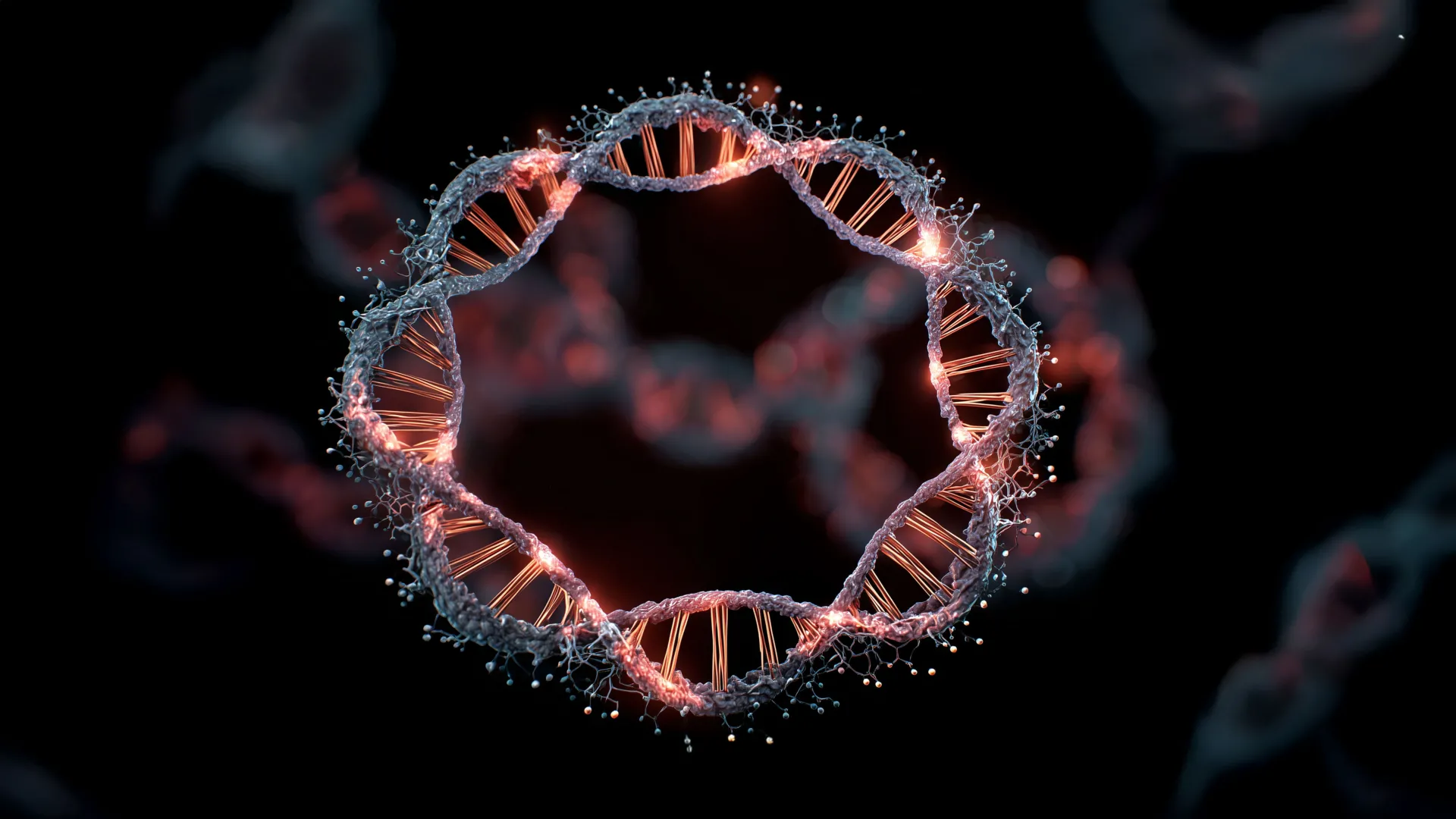
An international consortium of scientists has unveiled groundbreaking insights into the origins and progression of glioblastoma, the most common and deadliest form of adult brain cancer. Their research, published in the esteemed journal Cancer Discovery, pinpoints rogue rings of DNA, known as extrachromosomal DNA (ecDNA), as potent drivers of this formidable disease. These circular DNA fragments, which exist independently of the cell’s main chromosomes, have been implicated in the rapid growth, adaptability, and resistance to treatment characteristic of glioblastomas. The discovery holds significant promise for revolutionizing early diagnosis, monitoring treatment efficacy, and developing novel therapeutic strategies against this devastating cancer.
The Early Arrival of Aggressive Drivers
For decades, glioblastoma has remained a formidable challenge for oncologists, characterized by a grim prognosis with a median survival rate of approximately 14 months. Advances in treatment have been incremental, underscoring the urgent need for innovative approaches. The recent findings by the eDyNAmiC team, a multidisciplinary global collaboration funded by Cancer Grand Challenges, suggest that ecDNA rings containing critical cancer-driving genes, such as EGFR, appear remarkably early in the disease’s trajectory. In some instances, these genetic anomalies have been observed even before a discernible tumor has fully formed. This precocious emergence positions ecDNA as a foundational element in glioblastoma’s aggressive nature, potentially predisposing cells to uncontrolled proliferation and resilience against therapeutic interventions from the outset.
The study meticulously analyzed genomic and imaging data from glioblastoma patients, employing sophisticated computational models to reconstruct the evolutionary history of ecDNA within the tumor microenvironment. Dr. Benjamin Werner, a lead author and group leader at the Barts Cancer Institute, Queen Mary University of London, likened the process to archaeological excavation. "We studied the tumours much like an archaeologist would," Dr. Werner explained. "Rather than taking a single sample, we excavated multiple sites around the tumour, allowing us to build computational models describing how they evolved. We simulated millions of different scenarios to reconstruct how the earliest ecDNAs emerged, spread, and drove tumour aggressiveness, giving us a clearer picture of the tumour’s origins and progression."
Decoding the Genetic Landscape of Glioblastoma
Central to the discovery is the identification of the EGFR gene, a well-known oncogene, as a frequent inhabitant of these ecDNA rings. The EGFR gene plays a crucial role in cell growth and division, and its aberrant activation is a hallmark of many cancers, including glioblastoma. The research indicates that EGFR ecDNA is not only present early but also undergoes further genetic modifications, such as the acquisition of the EGFRvIII variant. This specific variant has been consistently linked to increased tumor aggressiveness and a heightened resistance to standard therapies, including radiation and chemotherapy. The presence and evolution of these genetic alterations on ecDNA provide a detailed molecular narrative of how glioblastoma gains its pernicious characteristics.
Dr. Magnus Haughey, a postdoctoral researcher in Dr. Werner’s group and a co-lead author, highlighted the therapeutic implications of these early genetic events. "These subtle mechanisms show that there may be a window of opportunity to detect and treat the disease between the first appearance of EGFR ecDNA and the emergence of these more aggressive variants," Dr. Haughey stated. "If scientists can develop a reliable test to detect early EGFR ecDNA — for example through a blood test — it could enable them to intervene before the disease becomes harder to treat." This concept of an "actionable window" is a pivotal aspect of the research, suggesting that early detection based on ecDNA markers could significantly alter patient outcomes.
The Power of Extrachromosomal DNA
The study further revealed that ecDNA can harbor multiple cancer-driving genes simultaneously, each contributing uniquely to the tumor’s evolution and response to treatment. This complexity underscores the potential for personalized medicine, where therapeutic strategies could be tailored based on the specific ecDNA profile of an individual patient’s tumor. Understanding the intricate interplay of these genetic elements on ecDNA could unlock more precise and effective treatment regimens.
The research is a significant milestone for the Cancer Grand Challenges initiative, a global partnership between Cancer Research UK and the US National Cancer Institute. This ambitious program aims to tackle the most intractable problems in cancer research. Recognizing the profound yet poorly understood role of ecDNA, the initiative funded the eDyNAmiC team in 2022. This $25 million consortium brings together experts from diverse fields, including cancer biology, clinical research, evolutionary biology, computer science, and mathematics, to unravel the mysteries of ecDNA. The current study is a testament to the power of such collaborative, cross-disciplinary efforts.
A Timeline of Discovery: From Early Hypotheses to Groundbreaking Evidence
The understanding of extrachromosomal DNA’s role in cancer has evolved over several decades. Initial observations of non-chromosomal genetic elements in bacteria and yeast date back to the mid-20th century. However, their significance in human cancers began to gain traction more recently with advancements in genomic sequencing technologies.
- Mid-20th Century: Discovery of plasmids and other extrachromosomal genetic elements in microorganisms.
- Late 20th Century – Early 21st Century: Development of high-throughput sequencing technologies enables researchers to identify and characterize ecDNA in various human cancer cell lines and patient samples. Early studies suggest a correlation between ecDNA and gene amplification, a key driver of cancer progression.
- 2010s: Increasing evidence points to ecDNA as a critical mechanism for rapid gene amplification in cancer, contributing to drug resistance and tumor evolution. Research begins to focus on specific cancer types where ecDNA is prevalent, such as glioblastoma.
- 2020s: The formation of large, international consortia like eDyNAmiC, funded by initiatives like Cancer Grand Challenges, signifies a concerted global effort to systematically investigate ecDNA’s multifaceted roles. The current study, published in Cancer Discovery, represents a significant leap in understanding ecDNA’s early and pervasive influence in glioblastoma.
Expert Perspectives on the Breakthrough
The implications of these findings have been met with enthusiasm and anticipation from leading figures in cancer research.
Professor Charlie Swanton, Deputy Clinical Director and head of the Cancer Evolution and Genome Instability Laboratory at The Francis Crick Institute and chief clinician at Cancer Research UK, commented on the study’s transformative potential: "These findings suggest that ecDNA is not just a passenger in glioblastoma, but an early and powerful driver of the disease. By tracing when and how ecDNA arises, we open up the possibility of detecting glioblastoma much earlier and intervening before it becomes so aggressive and resistant to therapy. I hope this might help to drive a new era in how we diagnose, track and treat this devastating cancer."
Dr. Paul Mischel, MD, the Fortinet Founders Professor and professor and vice chair of research in the pathology department at Stanford Medicine, emphasized the clinical relevance: "These findings reveal an important new insight into the role of ecDNA in tumour development and progression. Previous work from our collaborative team and other researchers, has shown that ecDNA can arise early in tumor development, including at the stage of high-grade dysplasia, and it can also arise later to drive tumor progression and treatment resistance. The findings here show that in glioblastoma, there is an early event driven by ecDNA that could potentially be more actionable, raising the possibility that glioblastoma is another cancer for which earlier detection and intervention based upon ecDNA may be possible."
Dr. David Scott, Director of Cancer Grand Challenges, lauded the study as an exemplar of the initiative’s mission: "This study exemplifies the bold, boundary-pushing science Cancer Grand Challenges was created to support. By unravelling the evolutionary history of ecDNA in glioblastoma, team eDyNAmiC is not only deepening our understanding of one of the most devastating cancers but also illuminating new paths for earlier detection and treatment. It’s a powerful reminder that when we bring together diverse disciplines and global talent, we can begin to solve the toughest problems facing cancer research."
Future Directions and Broader Impact
Despite the significant progress, researchers acknowledge that many questions remain. Future research will focus on understanding how various treatments impact the quantity and diversity of ecDNA within glioblastoma cells. This knowledge will be crucial for developing strategies that target ecDNA directly or exploit its presence to enhance existing therapies. The eDyNAmiC team plans to extend their investigations to a broader spectrum of cancer types, seeking to identify common mechanisms and unique vulnerabilities associated with ecDNA across different malignancies.
The implications of this research extend beyond glioblastoma. The principles and methodologies employed by the eDyNAmiC team can be applied to study ecDNA in other aggressive cancers, potentially accelerating the discovery of new diagnostic markers and therapeutic targets. The development of non-invasive diagnostic tests, such as blood tests capable of detecting early ecDNA signatures, could transform cancer screening and early detection paradigms. Furthermore, understanding ecDNA’s role in treatment resistance opens avenues for developing combination therapies that overcome or prevent the emergence of drug-resistant cancer clones. This breakthrough represents a crucial step towards a future where cancers like glioblastoma can be detected at their earliest, most treatable stages, and where personalized treatments are informed by a deep understanding of the tumor’s molecular architecture.
