
 By Lina carolina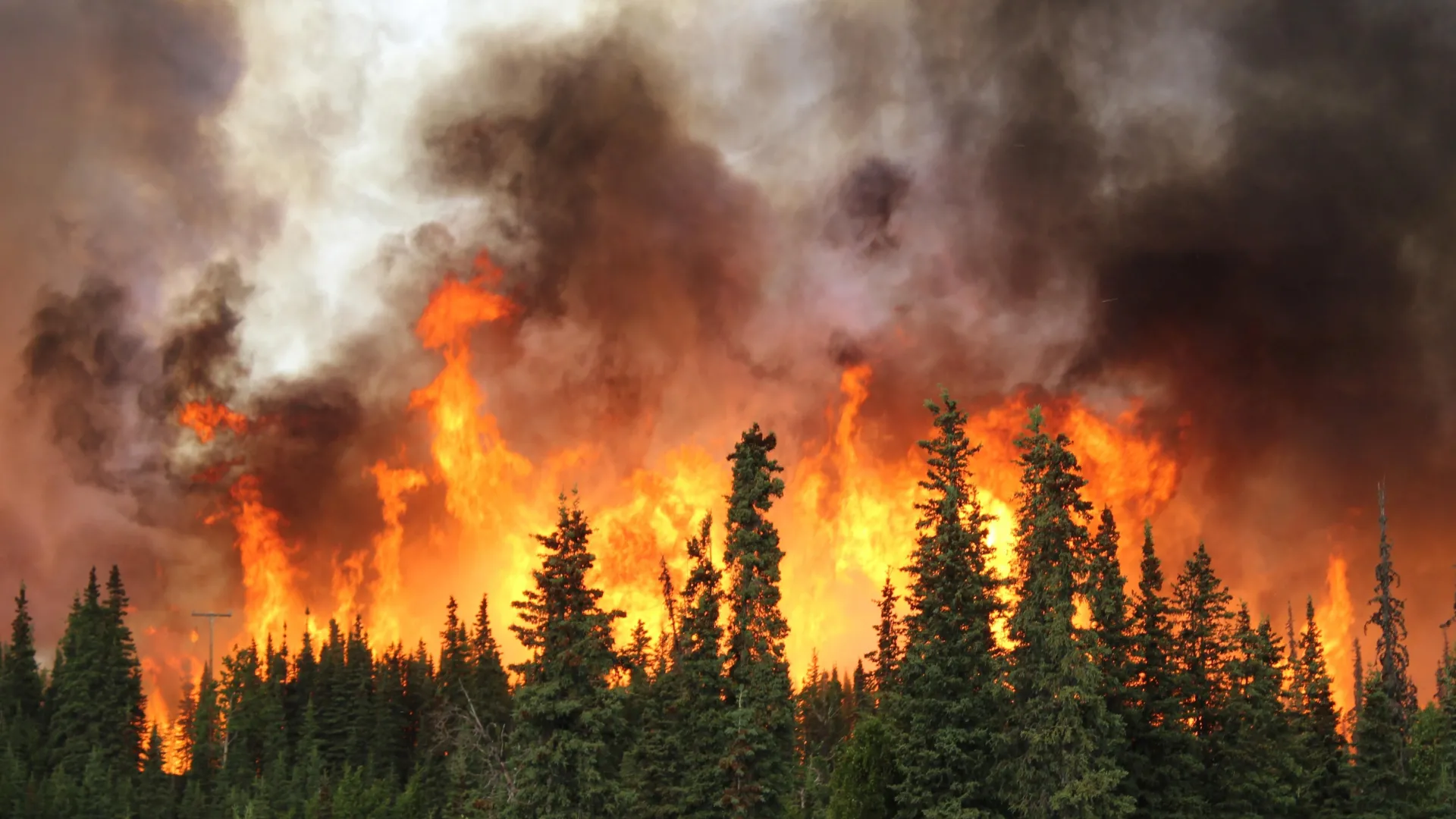
The persistent, ashy haze blanketing millions of Americans due to wildfires raging across Canada and the Western United States represents a stark and escalating public health threat, with scientists now estimating its impacts to be far more severe than previously understood. The increasing frequency, intensity, and geographical reach of these fire events, fueled by warmer and drier climatic conditions, are transforming smoke exposure from a regional concern into a nationwide public health challenge. A groundbreaking study published on September 18th in the prestigious journal Nature by researchers at Stanford University projects a grim future: continued global warming could lead to approximately 30,000 additional deaths annually across the United States by 2050, directly attributable to increased wildfire smoke pollution.
The Escalating Threat of Wildfire Smoke
Wildfires have historically been a natural part of the ecosystem in the Western United States, but the confluence of rising global temperatures and altered precipitation patterns is creating a volatile environment. These conditions are not only fostering larger and more destructive blazes but are also extending their duration and amplifying their reach. Smoke plumes, once confined to the immediate vicinity of fires, are now traveling thousands of miles, impacting communities far removed from the ignition points. This phenomenon is not isolated to the West Coast; recent years have seen substantial smoke events affecting the Eastern and Midwestern United States, originating from fires as far north as Canada.
Marshall Burke, a senior study author and professor of environmental social sciences at the Stanford Doerr School of Sustainability, emphasized the tangible reality of this changing landscape. "There’s a broad understanding that wildfire activity and wildfire smoke exposure are changing quickly. This is a lived experience, unfortunately, for folks on the West Coast over the last decade and folks on the East Coast in the last few years," Burke stated. "Our paper puts some numbers on what that change in exposure means for health outcomes, both now and in the future as the climate warms."
The study’s findings underscore the pervasive nature of this threat, revealing that no community in the U.S. is entirely immune to smoke exposure. When the economic costs associated with these smoke-related deaths are monetized, the damages could reach a staggering $608 billion annually by 2050, assuming a "business-as-usual" emissions scenario where global temperatures rise by approximately 2 degrees Celsius above pre-industrial levels. This projected economic toll significantly surpasses current estimates for all other climate-driven damages in the U.S. combined, including those related to extreme heat, agricultural losses, and storm damage.
Minghao Qiu, the lead author of the study and an assistant professor at Stony Brook University, who conducted the research as a postdoctoral scholar in Burke’s lab, elaborated on the nationwide trend. "What we see, and this is consistent with what others find, is a nationwide increase in wildfire smoke," Qiu explained. "There are larger increases on the West Coast, but there’s also long-range transport of wildfire smoke across the country, including massive recent smoke events in the Eastern and Midwestern U.S. from Canadian fires."
The Uniquely Dangerous Nature of Wildfire Smoke Pollution
The mortality linked to wildfire smoke stems from the inhalation of a complex cocktail of chemical compounds. These fires can expose vast populations to potent toxins for extended periods, often days or even weeks. Alarmingly, the study indicates that the health consequences can persist for up to three years following initial exposure, leading to premature deaths.
While public health researchers commonly focus on fine particulate matter, known as PM2.5, which readily penetrates the lungs and enters the bloodstream, the specific dangers posed by PM2.5 originating from wildfire smoke are less understood compared to other sources. However, emerging research suggests that wildfire smoke contains a broader spectrum of toxic chemicals that can be detrimental to human health. To address this knowledge gap, Qiu, Burke, and their team leveraged U.S. death records to meticulously assess these amplified risks.
Their methodology involved integrating county-level mortality data from 2006 to 2019 with comprehensive measurements of ground-level smoke emissions, wind patterns, and the movement of airborne particulate matter. Utilizing sophisticated machine learning algorithms, they were able to predict how changes in wildfire emissions in one region influenced smoke concentrations in others. By correlating these shifts in smoke concentrations with historical mortality variations and employing global climate models, they projected future fire activity, smoke levels, and subsequent health impacts under various warming scenarios through 2050.
The study’s projections are stark: under a business-as-usual emissions scenario, excess deaths attributed to smoke PM2.5 exposure could escalate by over 70%, rising from an estimated 40,000 annual deaths during the 2011-2020 period to approximately 70,000 deaths per year by 2050. The states projected to experience the largest increases in annual smoke exposure deaths include California, with an estimated 5,060 additional fatalities; New York, with 1,810; Washington, with 1,730; Texas, with 1,700; and Pennsylvania, with 1,600. This widespread impact highlights that even states not typically associated with major wildfire activity are increasingly vulnerable.
A Deeper Understanding of Climate Impacts
By quantifying the economic burden of smoke-related mortality, the study illuminates a significant, yet often overlooked, financial cost borne by families and businesses. The research indicates that even if the global community embarks on a rapid emissions reduction pathway to stabilize global temperatures below 2°C by the end of the century, the United States could still face more than 60,000 deaths annually from climate-driven smoke exposure by 2050.
"If you look at the leading climate impact assessment tools that are used to inform policy, none of them incorporate how changes in climate could influence wildfire smoke and related human mortality," Qiu stated. "Our study shows climate models are missing a huge part of the climate impacts in the U.S. – it’s like leaving the main character out of a movie." This suggests that current policy frameworks and economic models may be significantly underestimating the true cost of climate change.
A Shared Burden Requiring Collective Action
The growing threat of wildfire smoke necessitates proactive measures from public health officials and communities alike. Strategies such as investing in enhanced indoor air filtration systems can provide critical protection for vulnerable individuals and communities during periods of poor air quality. Furthermore, land management practices, including prescribed burns and other fuel reduction initiatives, can play a vital role in mitigating the severity and extent of wildfires, thereby reducing the incidence and duration of smoke waves.
"Our understanding of who is vulnerable to this exposure is much broader than we thought," Burke cautioned. "It’s pregnant people, it’s kids in schools, it’s anyone with asthma, it’s people with cancer. We look at one specific health outcome in this study – mortality – and unfortunately find a shared burden of exposure for individuals across the U.S." This broad vulnerability spectrum underscores the urgency for comprehensive public health interventions.
The study’s findings are a critical call to action, highlighting that the impacts of climate change are not abstract future predictions but present-day realities with tangible and severe consequences. The increasing prevalence of wildfire smoke serves as a powerful, visible indicator of a rapidly changing climate, demanding immediate and coordinated efforts to both mitigate greenhouse gas emissions and adapt to the unavoidable impacts already in motion. The scientific consensus is clear: addressing wildfire smoke pollution requires a multi-faceted approach that integrates climate science, public health policy, and community resilience strategies.
Chronology of Growing Concern
The increasing frequency and severity of wildfire smoke events impacting North America can be traced through a series of notable occurrences:
- Early 2000s: While not as widespread as in recent years, significant smoke events from Western U.S. wildfires began to draw increased public and scientific attention.
- 2010s: A pattern of increasingly intense wildfire seasons in the Western U.S. became more apparent. Smoke from these fires began to be observed more frequently in the Midwest and even the East Coast.
- 2018: A severe wildfire season in California, including the Camp Fire, produced exceptionally dense smoke that significantly impacted air quality across the state and sent plumes eastward.
- 2020: The Western U.S. experienced another devastating wildfire season, with record-breaking acreage burned and unprecedented levels of smoke pollution affecting major cities like San Francisco and Los Angeles for extended periods. Smoke also reached across the country.
- 2021: Wildfires in the Pacific Northwest and Canada generated smoke that traveled across large swathes of the U.S. and Canada, impacting air quality in areas far from the fire origins.
- 2022: While varied across regions, significant wildfire activity in Canada and the Western U.S. continued to produce smoke that affected air quality in numerous American states.
- 2023: An exceptionally active wildfire season in Canada generated widespread and prolonged smoke events across the Eastern and Midwestern United States, leading to historic levels of air pollution in cities like New York and Chicago, and prompting widespread health advisories. This event served as a stark illustration of the nationwide reach of wildfire smoke, as highlighted by the Nature study.
Supporting Data and Projections
The Stanford study, by integrating extensive datasets and advanced modeling techniques, provides critical quantitative insights:
- Projected Annual Deaths by 2050: An estimated 30,000 additional deaths annually nationwide due to climate-driven wildfire smoke.
- Monetized Annual Damages by 2050: Up to $608 billion under a business-as-usual emissions scenario.
- Percentage Increase in Deaths: A potential increase of over 70% in excess deaths from smoke PM2.5 exposure by 2050, rising from approximately 40,000 annually (2011-2020) to 70,000.
- Leading States for Projected Increased Deaths:
- California: 5,060
- New York: 1,810
- Washington: 1,730
- Texas: 1,700
- Pennsylvania: 1,600
- Long-Term Health Effects: Deaths can occur up to three years after initial smoke exposure.
- PM2.5 Composition: Wildfire smoke contains a complex mix of chemicals, including fine particulate matter (PM2.5), that are harmful to human health.
Broader Implications and Future Outlook
The implications of this research extend far beyond immediate health advisories. It suggests that climate change mitigation strategies must explicitly account for the impact of wildfire smoke on human mortality and economic stability. The study’s authors call for the integration of wildfire smoke projections into existing climate impact assessment tools, which currently often overlook this critical factor.
The financial burden highlighted by the study underscores the need for policy decisions that reflect the true cost of inaction on climate change. Furthermore, the finding that even aggressive emissions reductions may not entirely avert a significant increase in smoke-related deaths by 2050 emphasizes the importance of adaptation strategies. Investing in public health infrastructure, improving indoor air quality monitoring and filtration, and developing community resilience plans are crucial steps in preparing for the realities of a smoke-impacted future.
The research team, comprising scholars from various leading institutions, including Stony Brook University, the University of California, San Diego, the University of Washington, and Princeton University, as well as government agencies like NOAA and the National Bureau of Economic Research, has provided a vital data-driven perspective on a pressing environmental and public health crisis. Their work, supported by grants from organizations like the Keck Foundation, serves as a foundation for future policy development and public awareness campaigns aimed at addressing the escalating threat of wildfire smoke.
This article was compiled with contributions from research conducted at Stanford University, Stony Brook University, and other collaborating institutions. It was supported by grants from the Keck Foundation, Stanford’s Center for Innovation in Global Health, Stony Brook University, the Harvard University Center for the Environment, and the Stanford Research Computing Center.
