
 By admin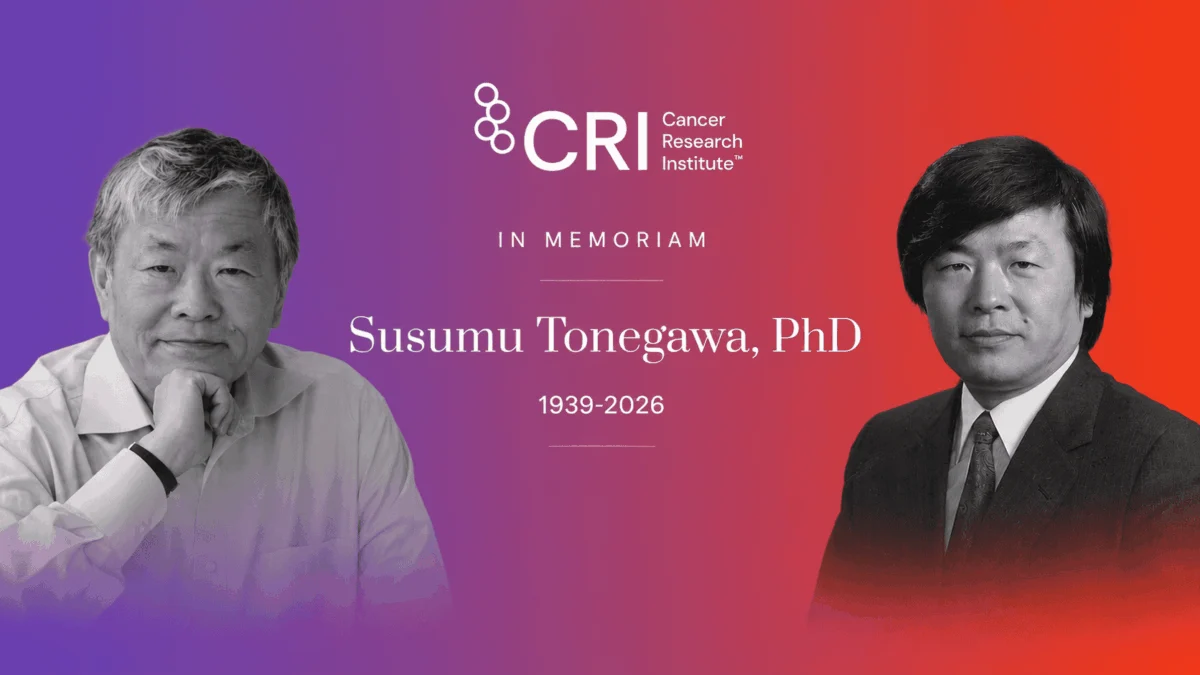
The global scientific community is in mourning following the passing of Susumu Tonegawa, PhD, a towering figure in modern biology whose groundbreaking work fundamentally reshaped our understanding of the immune system and the brain. Dr. Tonegawa, a Nobel laureate, pioneering molecular biologist, and a cherished, longtime member of the Cancer Research Institute’s (CRI) Scientific Advisory Council, passed away on July 11, 2026, at the age of 86. His death marks the end of an era defined by profound scientific curiosity, relentless rigor, and a transformative impact on medicine and human health.
A Life Dedicated to Unraveling Biological Mysteries
Born in Nagoya, Japan, in 1939, Susumu Tonegawa embarked on a scientific journey that would lead him to the pinnacle of discovery. After completing his undergraduate studies at Kyoto University, he pursued doctoral research at the University of California, San Diego, earning his PhD in 1969. His early career saw him immerse himself in the burgeoning field of molecular biology, a discipline that would become the crucible for his most significant contributions. It was during his tenure at the Basel Institute for Immunology in Switzerland, a hub of pioneering immunological research in the 1970s, that Tonegawa tackled one of biology’s most perplexing paradoxes: how the immune system, with a finite number of genes, could generate an almost limitless repertoire of antibodies capable of recognizing an astonishing array of foreign invaders.
Prior to Tonegawa’s work, the prevailing scientific theories struggled to reconcile this vast diversity with the known constraints of genetic inheritance. The "germline theory" posited that every antibody specificity was encoded by a separate gene present in the germ cells, a notion that would require an implausibly large number of genes. Conversely, the "somatic mutation theory" suggested that a smaller set of germline genes underwent extensive somatic mutations during an individual’s lifetime to generate diversity. Neither theory fully explained the sheer scale and specificity of the immune response observed in nature.
The Revolutionary Discovery of Antibody Diversity
In a series of elegant and meticulous experiments conducted throughout the 1970s, Dr. Tonegawa provided the definitive answer, dismantling long-held assumptions and ushering in a new era for immunology. He demonstrated that antibody genes are not inherited as complete units but are assembled from separate gene segments through a process of somatic recombination in developing B lymphocytes. This revolutionary mechanism, known as V(D)J recombination (Variable, Diversity, and Joining gene segments), revealed how the body could generate an extraordinary diversity of antibodies from a relatively small number of genetic components.
Tonegawa’s work showed that during B-cell development, specific gene segments are cut, rearranged, and joined together in countless combinations. This genomic rearrangement, unique to each developing B cell, creates a unique antibody-encoding gene. Coupled with junctional diversity (the imprecise joining of segments) and somatic hypermutation (further mutations introduced into the rearranged genes), this process allows for the theoretical generation of millions, if not billions, of distinct antibody specificities. His findings were a monumental achievement, solving a fundamental biological mystery that had puzzled immunologists for decades and providing the molecular blueprint for adaptive immunity.
For this groundbreaking work, which fundamentally transformed our understanding of how the immune system adapts and responds to novel threats, Susumu Tonegawa was awarded the 1987 Nobel Prize in Physiology or Medicine. The Nobel Assembly at Karolinska Institutet recognized his "discovery of the genetic principle for generation of antibody diversity," hailing it as a pivotal moment in biomedical science.
Laying the Foundation for Modern Immunotherapy
The implications of Dr. Tonegawa’s discovery extended far beyond basic science. His revelation that immune cells dynamically rearrange their DNA to recognize and defend against countless threats provided the foundational understanding necessary for nearly all subsequent advances in immunology and immunotherapeutics. By explaining how the immune system could recognize an almost limitless array of foreign targets despite having a finite number of genes, his insight laid the groundwork for decades of research into adaptive immunity, deepening our understanding of how immune cells distinguish healthy cells from diseased ones.
Today, these principles continue to underpin advances in cancer immunology and immunotherapy, a field that has revolutionized cancer treatment in recent years. Therapies such as checkpoint inhibitors, which unleash the immune system to target cancer cells, and CAR T-cell therapies, which genetically engineer a patient’s own immune cells to fight their tumors, are direct beneficiaries of the profound knowledge gained from Tonegawa’s work. His research clarified the intricate mechanisms by which the immune system mounts a targeted response, enabling scientists to design strategies to harness this power against diseases like cancer, autoimmune disorders, and infectious diseases. The global market for cancer immunotherapies, estimated to be tens of billions of dollars, stands as a testament to the practical applications stemming from such fundamental biological insights.
A Second Act: Pioneering Neuroscience at MIT
Remarkably, after achieving the pinnacle of recognition in immunology, Dr. Tonegawa demonstrated his intellectual breadth and insatiable curiosity by embarking on a second, equally impactful scientific journey. In the mid-1980s, he transitioned his focus to neuroscience, joining the Massachusetts Institute of Technology (MIT) where he became a leading figure in the molecular and cellular basis of learning and memory. As a professor of biology and neuroscience, and later as the director of the RIKEN-MIT Center for Neural Circuit Genetics and the Picower Institute for Learning and Memory at MIT, he pioneered research into the fundamental mechanisms underlying these complex brain functions.
His work in neuroscience, particularly on the concept of "engram cells" – specific neural ensembles that store particular memories – provided crucial insights into how memories are formed, retrieved, and potentially manipulated. Using cutting-edge genetic and optical techniques, Tonegawa and his team identified and characterized these memory-encoding neurons, offering a concrete biological basis for memory. His later work also explored the molecular underpinnings of neurodegenerative diseases such as Alzheimer’s, seeking to understand how memory function is impaired and how it might be restored. This shift demonstrated an unparalleled intellectual courage and a rare ability to excel in vastly different, complex scientific domains, solidifying his reputation as a polymath.
Guiding the Future of Cancer Research
Throughout his tenured career, even as he delved into the mysteries of the brain, Dr. Tonegawa remained steadfast in his commitment to pushing the boundaries of scientific discovery and mentoring generations of researchers across disciplines. His connection to the Cancer Research Institute (CRI) as a member of its Scientific Advisory Council was a testament to his enduring belief in the power of fundamental research to transform human health, particularly in the fight against cancer.
For decades, Dr. Tonegawa generously shared his unparalleled expertise, scientific vision, and incisive intellect with CRI. As part of this esteemed council, he played a critical role in guiding the organization’s commitment to supporting innovative, high-risk, high-reward research with the potential to transform cancer treatment. His profound understanding of immune system adaptability was invaluable in shaping CRI’s strategic investments in cancer immunology and immunotherapy, helping to identify and nurture the most promising avenues for scientific exploration. His curiosity, rigor, and willingness to challenge conventional thinking exemplified the spirit of discovery that has driven CRI’s mission for more than 70 years, positioning the institute at the forefront of immunotherapy research.
Tributes and Enduring Legacy
The news of Dr. Tonegawa’s passing prompted an outpouring of tributes from across the scientific community. Alicia Zhou, PhD, CEO of CRI, articulated the immense impact of his work: "The history of cancer immunotherapy rests on a handful of discoveries that fundamentally changed how we think about the immune system. Dr. Tonegawa’s discovery of the genetic mechanism that creates antibody diversity is one of them. His work revealed the remarkable adaptability of the immune system and forever changed how scientists study immunity, disease, and cancer. We were honored to benefit from his wisdom as a member of our Scientific Advisory Council, and his legacy will continue to inspire generations of scientists working to improve the lives of patients."
Colleagues at MIT and within the broader neuroscience community also mourned his loss, reflecting on his pioneering contributions to understanding memory. Experts frequently cited his ability to bridge molecular biology with complex neurological phenomena, a testament to his unique interdisciplinary approach. His profound insights into cellular and molecular mechanisms, whether in the immune system or the brain, consistently opened new fields of inquiry and inspired countless researchers.
Dr. Tonegawa was not only a brilliant scientist but also a profound thinker on the nature of scientific inquiry itself. Later in life, when asked how he defined creativity, he offered a humble yet inspiring reply, emphasizing the grounding principles of open-mindedness and collaboration that make great science possible. While the specific principles he articulated are detailed in interviews, his general philosophy championed the courage to explore uncharted territories, the intellectual honesty to follow data wherever it leads, and the collaborative spirit to build upon collective knowledge. This approach characterized his entire career, from his early work on antibody diversity to his later explorations of memory.
Susumu Tonegawa’s discoveries changed the course of immunology, fundamentally shaped modern biomedical research, and continue to inspire scientists working tirelessly to improve the lives of patients grappling with cancer, Alzheimer’s, and countless other diseases. His life serves as a powerful testament to the transformative power of fundamental scientific inquiry and the enduring impact of a truly visionary mind. The Cancer Research Institute extends its heartfelt condolences to Dr. Tonegawa’s family, friends, colleagues, and former trainees. His monumental legacy will undoubtedly continue to illuminate pathways for future generations of scientists striving to unravel the mysteries of life and disease.
