
 By Lina carolina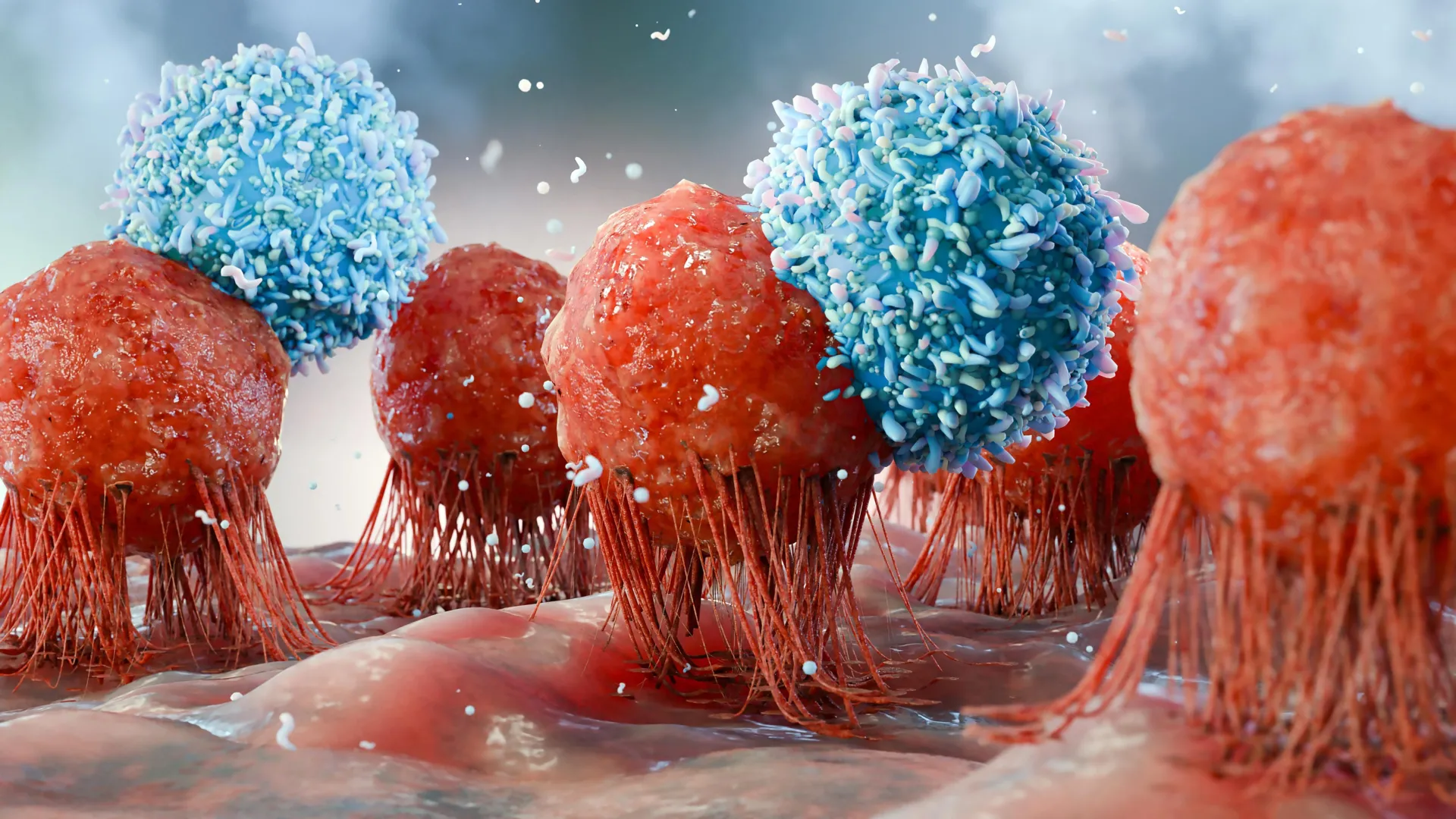
Cancer immunotherapy, a revolutionary approach that harnesses the body’s own immune system to combat malignancies, often relies on unleashing T cells – the specialized assassins of the immune system – against tumors. However, a significant hurdle has persistently challenged the efficacy of these treatments: T cell exhaustion. This phenomenon occurs when T cells, despite their initial potent anti-cancer activity, become functionally impaired, unable to sustain their attack or effectively control tumor progression. This critical limitation, particularly pronounced with checkpoint inhibitors designed to disinhibit T cell activity, can lead to a disheartening scenario where initial therapeutic promise fades, leaving patients with limited options.
A groundbreaking study emerging from Memorial Sloan Kettering Cancer Center (MSK) has illuminated a crucial molecular player in this debilitating process. Researchers have identified the signaling molecule MEK as a significant driver of T cell exhaustion. This discovery, detailed in the esteemed journal Immunity, suggests that targeting MEK could potentially invigorate waning T cell responses and bolster the effectiveness of various immunotherapy strategies. The implications are particularly exciting given the availability of FDA-approved MEK inhibitors, paving a potential path for rapid translation to human clinical trials.
The Metabolic Burden of Anti-Cancer Warfare: MEK’s Role in T Cell Exhaustion
Understanding T cell exhaustion has been a central focus for cancer immunologists in recent years. Prior research by Dr. Vardhana’s laboratory in 2020 had already pinpointed cellular metabolism – the intricate biochemical processes by which cells convert nutrients into usable energy – as a key factor in this decline. When T cells are perpetually exposed to tumor antigens, the proteins that mark cancer cells as foreign to the immune system, their mitochondria, the cell’s powerhouses, can become overwhelmed. These organelles are responsible for generating adenosine triphosphate (ATP), the universal energy currency of cells.
"There is a large metabolic demand being imposed as T cells encounter cancer cells and try to produce cancer-killing, or cytotoxic, proteins," explained Dr. Santosha Vardhana, a physician-scientist at MSK and senior author of the study. "It turns out that the decision to make high levels of these proteins is regulated by MEK."
Essentially, MEK acts as a critical regulator in the intricate decision-making process of T cells. When MEK activity escalates, it can compel T cells to ramp up production of cytotoxic proteins, a crucial function for tumor cell destruction. However, this intense metabolic expenditure, if sustained, can lead to a state of terminal exhaustion, a profound depletion that renders immunotherapy incapable of reactivating the cells.
Tanmana Mitra, PhD, a doctoral student in the Vardhana lab and the study’s first author, elaborated on this complex interplay: "We realized T cell exhaustion isn’t simply a loss of function — it reflects an imbalance between what these cells are being asked to do and the energy they have available."
A Surprising Discovery: Exhausted T Cells Aren’t Sluggish, They’re Overworked
Counterintuitively, the research team discovered that exhausted T cells were not metabolically inert. Instead, they were remarkably active. When treated with MEK inhibitors, these cells exhibited increased proliferation and reduced energy consumption. This paradox prompted further investigation into where this substantial energy was being directed.
"That paradox made us ask where all that energy was going, and we discovered that these cells were investing enormous resources into making proteins," Dr. Mitra stated. "It changed how we think about T cell exhaustion — from a problem of too little energy to one of excessive energy demand."
This finding fundamentally reframed the understanding of T cell exhaustion. It is not merely a state of cellular fatigue, but rather a consequence of an overwhelming demand for protein synthesis, driven by MEK signaling.
Pacing for Persistence: The Strategic Advantage of MEK Inhibition
The study’s findings strongly suggest that dampening MEK signaling could alleviate the relentless pressure on T cells to continuously churn out cytotoxic proteins. By reducing this metabolic burden, T cells might be able to conserve energy, maintain activity for longer durations, and crucially, retain their capacity for self-renewal. This could translate into a more sustained and ultimately more effective immune response against cancer.
The researchers drew an analogy to pacing oneself on a long road trip, emphasizing that driving at full throttle without respite inevitably leads to depletion. Similarly, moderating the intensity of T cell activity could preserve their "fuel" and enable them to persist. In laboratory models, blocking MEK signaling demonstrated the ability of T cells to survive and function even within the challenging microenvironment of a tumor.
The Double-Edged Sword of Exhaustion: A Survival Mechanism
However, the researchers cautioned that a universal suppression of MEK might not be the optimal strategy for all cancer patients. T cell exhaustion, they revealed, is a more nuanced phenomenon than initially understood. Previous work by MSK immunologist Andrea Schietinger, PhD, had established that T cell exhaustion can also serve as a protective survival mechanism. By deliberately reducing their activity, T cells can avoid becoming overstimulated and undergoing programmed cell death.
"As we’ve learned more about T cell exhaustion," Dr. Vardhana commented, "we’ve increasingly understood that it’s not the case that exhausted T cells are bad, so let’s try to reverse the process with a drug. Instead, exhaustion is more of an equilibrium state that lets the cells survive and keep going — almost like a ‘safe mode’ for T cells."
This "safe mode" involves a delicate metabolic balance. When a T cell is actively engaged in destroying cancer cells and producing cytotoxic proteins, its mitochondria must work overtime to generate ATP. This ATP is akin to a cellular bank account, and spending it on high-intensity protein production leaves less for other essential functions, including self-maintenance and proliferation. MEK, in this context, acts as a dispatcher, influencing whether exhausted cells conserve their limited ATP or expend it rapidly.
"The exhaustion program is a sign that the cell’s bank account is getting close to zero. MEK tells exhausted cells whether to conserve fuel or go for broke. What we found is that inhibiting MEK makes the cells more conservative — helping them live longer while reducing the rate at which they produce the proteins that actually kill cancer cells," Dr. Vardhana explained.
This revelation underscores the complexity of MEK’s role. While strong MEK activity fuels immediate, high-intensity attacks, it can also hasten burnout. Conversely, inhibiting MEK offers a trade-off: a potentially less intense immune assault, but with significantly enhanced longevity and persistence of the T cells. The optimal approach, therefore, may hinge on the specific characteristics of an individual’s cancer and their immune response.
Strategic Application: When to Accelerate and When to Conserve
Dr. Vardhana emphasized that MEK inhibitors would likely need to be employed judiciously, based on a patient’s clinical profile. Two key indicators can suggest a patient’s likely positive response to immunotherapy: a robust initial T cell response and a high proportion of T cells already expressing certain markers associated with active tumor infiltration.
"In these patients, conservation of T cells is not that important," he stated. "It’s like being in a car with 1/8 of a tank left, but you can see the finish line. In these patients, you would just let the car keep burning the gas — in other words, take the traditional immunotherapy approach. These are the patients in whom MEK inhibition is probably not needed."
The scenario shifts for patients with large tumors or a paucity of tumor-infiltrating immune cells. In such cases, the initial immune response may be insufficient to rapidly eradicate the cancer. Here, the strategic application of MEK inhibitors could prove invaluable, fostering a slower, more sustained T cell response. This prolonged presence of functional T cells could be critical when facing a substantial tumor burden or when the available "workforce" of immune cells is limited.
Broadening the Horizon: MEK Inhibition Across Immunotherapy Modalities
The potential applications of carefully managed MEK inhibition extend across several established and emerging cancer immunotherapy platforms.
Checkpoint Inhibitors: Preliminary studies have already demonstrated the efficacy of combining MEK inhibitors with checkpoint inhibitors and BRAF inhibitors in treating melanoma. This suggests a synergistic effect in overcoming resistance mechanisms.
Chimeric Antigen Receptor (CAR) T Cell Therapy: CAR T cell therapy, a potent form of adoptive cell transfer, has faced challenges with T cell persistence. Dr. Vardhana believes that MEK inhibition could significantly improve the longevity of these engineered T cells, a critical factor for sustained anti-tumor activity.
Tumor-Infiltrating Lymphocyte (TIL) Therapy: TIL therapy involves isolating and expanding T cells that have already infiltrated a patient’s tumor. Administering MEK inhibitors either before or after TIL therapy could potentially enhance the survival of the most effective tumor-fighting TILs, amplifying their therapeutic impact.
Bispecific Antibodies: These engineered proteins are designed to bridge T cells and cancer cells, thereby activating T cell-mediated killing. However, the intense stimulation they provide can also contribute to T cell exhaustion. MEK inhibition could serve to temper this exhaustion, allowing for a more sustained therapeutic effect.
"This study shows the importance of understanding core principles of T cell biology — what sets the balance between conservation of energy and strong, cancer-fighting activity," Dr. Vardhana concluded. "Once we know the answer to that, the therapeutic possibilities really start to fan out."
The research was supported by grants from the National Institutes of Health and the National Cancer Institute. Additional authors on the study include Jahan Rahman, Madeline Hwee, Yan-Ting Chen, Ruben Jose Jesus Faustino Ramos, Hui Liu, Travis Hartman, Justin Cross, Miguel de Jesus, Morgan Huse, Valerie Longo, and Pat Zanzonico.
Key Takeaways:
- MEK identified as a critical regulator of T cell exhaustion in cancer immunotherapy.
- Exhaustion is characterized by excessive protein production and high energy demand, not simply metabolic sluggishness.
- Inhibiting MEK can promote T cell persistence and longevity, potentially enhancing immunotherapy effectiveness.
- MEK inhibition may offer a therapeutic advantage in specific patient populations, particularly those with less aggressive initial T cell responses or larger tumor burdens.
- The findings have broad implications for improving various immunotherapy modalities, including checkpoint inhibitors, CAR T cell therapy, TIL therapy, and bispecific antibodies.
- Further research and clinical trials are anticipated to translate these findings into tangible patient benefits.
