
 By Lina carolina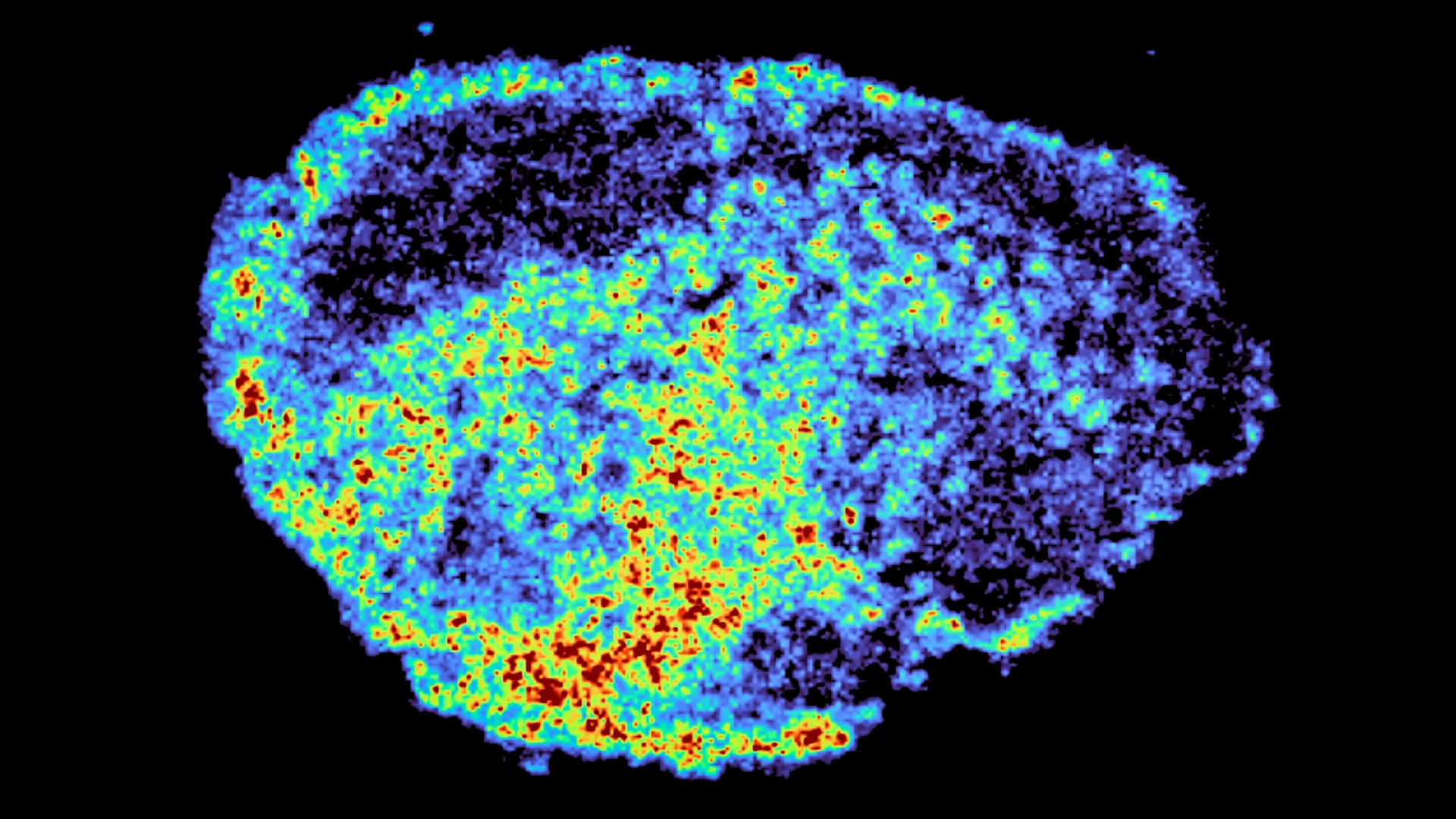
The intricate landscape of cancer treatment is often marked by a frustrating paradox: therapies that offer remarkable success for some individuals can prove entirely ineffective for others. This variability, a persistent hurdle in oncological care, is the focus of groundbreaking research published in the esteemed journal Nature Communications. A team of scientists, spearheaded by Dr. Louise Fets at the MRC Laboratory of Medical Sciences (LMS), has meticulously investigated the internal journey of PARP inhibitors, a vital class of targeted drugs, within ovarian tumor samples. Employing sophisticated imaging technologies, their work sheds new light on why these powerful agents exhibit such divergent responses among patients.
The core of their discovery centers on the unexpected role of lysosomes, minuscule cellular compartments traditionally understood as the cell’s "recycling centers." The study’s findings reveal that PARP inhibitors can accumulate within these lysosomes, becoming temporarily sequestered. This internal warehousing mechanism significantly influences drug availability within cancer cells, ultimately impacting the overall efficacy of the treatment.
The Elusive Journey of Cancer Drugs Within Tumors
The past decade has witnessed an unprecedented expansion in the arsenal of cancer therapies, leading to substantial improvements in patient outcomes across a spectrum of malignancies. Among these advancements, PARP inhibitors have emerged as transformative agents, particularly in the management of ovarian cancer. Their mechanism of action relies on their ability to reach and accumulate within cancer cells at concentrations sufficient to induce cell death. However, the clinical reality is that not all patients achieve lasting benefit, and the development of resistance over time remains a significant clinical challenge. Despite the critical need for effective drug delivery, a comprehensive understanding of how these drugs distribute within the complex tumor microenvironment and, more granularly, within individual cancer cells, has remained notably limited.
This latest research meticulously addresses this knowledge gap. It posits that the success of cancer drugs like PARP inhibitors is not solely dictated by their initial delivery to the tumor site. Instead, their effectiveness is profoundly influenced by their subsequent diffusion within the tumor mass and, critically, their intracellular distribution. To explore this complex interplay, the researchers utilized innovative "explants" – meticulously prepared, thin slices of ovarian tumors harvested from patients and maintained in a viable state within the laboratory. These ex vivo samples provided a unique platform to directly observe the behavior of PARP inhibitors in authentic human tumor tissue.
The scientific team employed a dual-pronged approach, integrating advanced imaging techniques. Mass spectrometry imaging was instrumental in generating highly detailed spatial maps, precisely delineating areas of drug accumulation within the tumor explants. This was synergistically combined with spatial transcriptomics, a cutting-edge technology that enabled the researchers to simultaneously examine gene expression patterns within regions exhibiting both high and low drug concentrations on the same tissue slice. The results of this integrated analysis were striking, revealing significant heterogeneity in drug distribution. This variability was not only observed between different tumor samples but also, remarkably, within individual tumors, even when subjected to identical drug dosages.
Dr. Zoe Hall, a senior author on the study and Associate Professor at Imperial’s Department of Metabolism, Digestion and Reproduction, emphasized the novelty of their methodology. "A novel aspect of this study was the use of mass spectrometry imaging to directly measure and visualize drug uptake in patient tumour tissue," Dr. Hall stated. "Through the spatial mapping of drug molecules, we could pinpoint regions of high and low drug and compare gene expression, from the same tissue slice, using spatial transcriptomics." This integrated approach provided an unprecedented level of detail regarding drug localization and its immediate cellular consequences.
Lysosomes: Unexpected Reservoirs Influencing Drug Availability
The investigation revealed a central and hitherto underappreciated role for lysosomes in orchestrating this observed uneven drug distribution. Certain PARP inhibitors were found to be preferentially internalized by lysosomes, effectively becoming sequestered within these organelles rather than dispersing uniformly throughout the cell. This cellular trafficking pattern leads to the formation of internal pockets of high drug concentration.
These lysosomes, therefore, function as a form of slow-release reservoir. By retaining the drug and gradually releasing it, they can prolong the exposure of some cancer cells to therapeutic levels, while other cells in proximity may experience significantly lower drug concentrations. The study further elucidated that this lysosomal sequestration is not a universal phenomenon across all PARP inhibitors. Specific drugs, such as rucaparib and niraparib, were found to be susceptible to this lysosomal trapping mechanism. In contrast, other PARP inhibitors, including olaparib, did not exhibit this pronounced lysosomal accumulation.
Dr. Carmen Ramirez Moncayo, the first author of the study and a Postdoctoral Researcher at the LMS, expressed her surprise at the findings. "We were surprised to see large variability in drug accumulation at the single-cell level," she commented. "This variability was driven by the build-up of a drug in lysosomes, which are acting as reservoirs, increasing the exposure of cancer cells to drugs, by storing and releasing the drug when needed." This observation underscores the dynamic and often unpredictable behavior of drugs within the complex cellular environment.
Implications for Precision Cancer Therapeutics
PARP inhibitors are currently a cornerstone of treatment for ovarian, breast, and prostate cancers, and their therapeutic potential is being actively explored in a multitude of other cancer types. The insights gleaned from this research into the mechanisms of drug storage and distribution within cells hold significant promise for the development of more personalized and effective cancer treatment strategies. By understanding and potentially manipulating these intracellular drug dynamics, clinicians may be able to optimize therapeutic regimens, thereby enhancing efficacy, mitigating the development of drug resistance, and reducing the incidence of treatment failure and subsequent relapse.
Dr. Louise Fets, a senior author and Head of the LMS’ Drug Transport and Tumour Metabolism Group, highlighted the future trajectory of this research. "By understanding how drugs are taken up into cells, we can understand whether this influences why cancer drugs work for some people and not for others," Dr. Fets stated. "Eventually, we hope to be able study the molecular signature of a patient’s tumor to help to tailor therapeutic approaches in a more personalized way." This vision points towards a future where treatment decisions are informed by a deep understanding of individual tumor biology and drug pharmacokinetics at the cellular level.
It is crucial to acknowledge that the current study was conducted using tumor tissue maintained ex vivo. In a living patient, drug delivery is mediated by the bloodstream, and the often disorganized vasculature within tumors can introduce additional complexities to drug distribution. This disorganized blood supply may further exacerbate the uneven delivery and accumulation of therapeutic agents. Future research endeavors will necessarily extend to in vivo models and larger patient cohorts to more comprehensively investigate the intricate interplay between drug delivery dynamics, tumor architecture, and lysosomal sequestration in clinical settings. This includes a particular focus on understanding these mechanisms in the context of relapsed or refractory cancers, where treatment challenges are often magnified.
The scientific community’s ongoing efforts to dissect the mechanisms of drug response and resistance are critical for advancing the fight against cancer. This study, by illuminating the unexpected role of lysosomes in modulating PARP inhibitor efficacy, represents a significant step forward. The potential to translate these findings into tailored therapeutic strategies offers a renewed sense of hope for improving outcomes for countless cancer patients worldwide.
This research was made possible through substantial funding from various prestigious organizations, including the Medical Research Council, Cancer Research UK, a PhD studentship from the Integrative Toxicology Training Partnership administered by the MRC Toxicology Unit, and a Victoria’s Secret Global Fund for Women’s Cancers Career Development Award, in partnership with Pelotonia and AACR. These collective investments underscore the critical importance and broad support for investigations into fundamental cancer biology and therapeutic innovation.
