
 By admin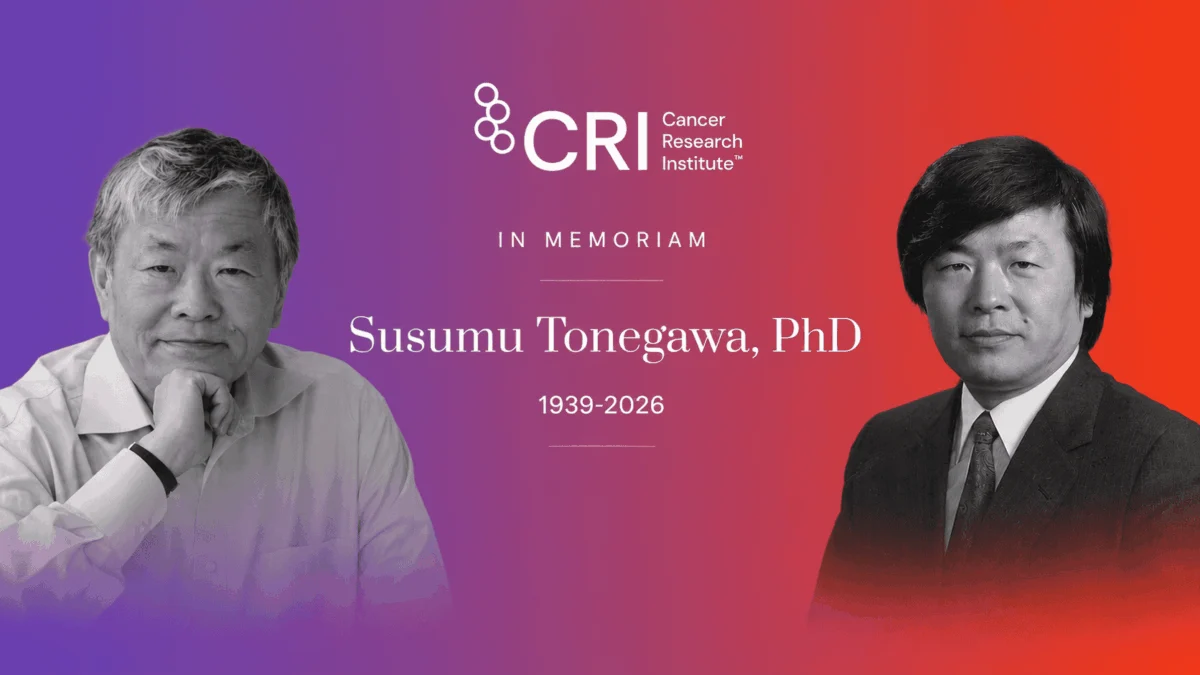
The global scientific community is in mourning following the passing of Dr. Susumu Tonegawa, a towering figure in molecular biology and a Nobel laureate whose groundbreaking work fundamentally reshaped our understanding of the immune system and memory. Dr. Tonegawa, a long-standing and esteemed member of the Cancer Research Institute’s (CRI) Scientific Advisory Council, died peacefully on July 11, 2026, at the age of 86. His departure marks the end of an era for a scientist whose relentless curiosity and intellectual rigor propelled two distinct fields of biology into new frontiers.
A Paradigm Shift in Immunology: Unraveling Antibody Diversity
Dr. Tonegawa’s most celebrated achievement, for which he was awarded the 1987 Nobel Prize in Physiology or Medicine, came from his revolutionary work in immunology during the 1970s. At the time, a profound mystery plagued immunologists: how could the human body, with a finite number of genes, produce an almost infinite array of antibodies capable of recognizing and neutralizing countless foreign invaders, from bacteria and viruses to toxins and abnormal cells? The prevailing "germline theory" suggested that every antibody type was encoded by a separate gene, a notion that clashed with the limited genetic capacity of even complex organisms. Conversely, the "somatic mutation theory" proposed that genetic changes occurred during an individual’s lifetime to generate diversity, but the precise mechanism remained elusive.
Working initially at the Basel Institute for Immunology in Switzerland, Dr. Tonegawa applied cutting-edge recombinant DNA technology to tackle this enigma. In a series of elegant experiments, particularly with mouse B cells, he demonstrated that the genes encoding antibodies are not inherited in their complete form. Instead, different segments of DNA—variable (V), diversity (D), and joining (J) gene segments—are separately encoded in germline DNA. During the development of B lymphocytes, these segments are rearranged and randomly combined through a process now known as V(D)J recombination. This genetic shuffling, coupled with junctional diversity and somatic hypermutation, creates an astronomical number of unique antibody specificities from a relatively small set of gene fragments.
His seminal discovery, first published in 1976 for lambda light chain genes and further elucidated for kappa light and heavy chain genes by 1978, provided the definitive answer to the long-standing puzzle of antibody diversity. It was a revelation that not only solved a fundamental biological problem but also introduced a novel genetic principle: that genes are not static entities but can be dynamically rearranged within somatic cells to generate functional diversity. This insight was a radical departure from established genetic dogma and opened an entirely new avenue for understanding genetic plasticity in biological systems.
The Enduring Legacy of V(D)J Recombination
The implications of Dr. Tonegawa’s work extended far beyond the immediate understanding of antibody production. It fundamentally reshaped immunology, establishing the molecular basis for adaptive immunity—the body’s ability to mount a highly specific and memory-driven response to pathogens. His discovery explained how the immune system learns, adapts, and remembers, distinguishing between "self" and "non-self" with astonishing precision.
The principles he uncovered laid the groundwork for decades of subsequent research, including the discovery of similar gene rearrangement mechanisms for T-cell receptors, which are crucial for cellular immunity. Understanding V(D)J recombination has been indispensable for:
- Vaccine Development: By revealing how the immune system generates specific responses, Tonegawa’s work has informed strategies for designing vaccines that elicit robust and long-lasting antibody production.
- Monoclonal Antibodies: The ability to generate highly specific antibodies, a direct consequence of understanding diversity, has led to the development of monoclonal antibody therapies now widely used in treating cancers, autoimmune diseases, and infectious diseases.
- Cancer Immunotherapy: Perhaps most profoundly, Tonegawa’s insights underpin modern cancer immunology. Therapies like CAR T-cell therapy, which engineers a patient’s T cells to recognize and destroy cancer, and checkpoint inhibitors, which unleash the immune system’s natural anti-tumor activity, rely on a deep understanding of how immune cells recognize and target specific antigens. His work provided the foundational knowledge of how the immune system develops its vast repertoire of recognition molecules, enabling scientists to harness this power against cancer.
A Second Act: Pioneering Neuroscience at MIT
Demonstrating an extraordinary breadth of scientific ambition and intellectual versatility, Dr. Tonegawa embarked on a second pioneering career chapter after his Nobel-winning work in immunology. In 1981, he joined the faculty of the Massachusetts Institute of Technology (MIT) and later became the director of the Picower Institute for Learning and Memory, where he turned his formidable intellect to the complex mysteries of the brain.
At MIT, Dr. Tonegawa’s research group pioneered the application of molecular biology and genetic engineering techniques to investigate the molecular and cellular mechanisms underlying learning and memory. His laboratory made seminal contributions to understanding how memories are formed, stored, and retrieved. Key findings included identifying specific neural circuits and cell types involved in memory processes, particularly the concept of "engram cells"—the specific neurons activated during learning and reactivated during memory recall.
Through innovative studies using genetically engineered mice, Dr. Tonegawa’s team provided critical evidence for the existence of memory engrams, demonstrating that reactivating these specific neuronal ensembles could retrieve dormant memories or even alter their emotional valence. His work explored the molecular basis of synaptic plasticity, the strengthening or weakening of connections between neurons, which is widely believed to be the cellular basis of learning and memory. This research has profound implications for understanding neurological disorders such as Alzheimer’s disease, PTSD, and depression, offering new avenues for therapeutic intervention. His transition and subsequent success in an entirely different, highly complex field underscored his unparalleled scientific acumen and fearless approach to challenging established paradigms.
Guidance and Vision for the Cancer Research Institute
For many years, Dr. Tonegawa generously contributed his unparalleled expertise and profound scientific vision as a valued member of the Cancer Research Institute’s (CRI) Scientific Advisory Council. This council, comprising a distinguished group of leading immunologists and cancer researchers, plays a critical role in guiding CRI’s mission to fund and support the most innovative and promising research in cancer immunology and immunotherapy.
His involvement with CRI was particularly significant because his fundamental discoveries directly illuminated the potential of the immune system to combat cancer. His presence on the council ensured that CRI’s strategic direction was informed by the deepest insights into immune system function. Dr. Tonegawa’s curiosity, intellectual rigor, and unwavering willingness to challenge conventional thinking perfectly embodied the spirit of discovery that has propelled CRI’s mission for over seven decades. His counsel helped to identify and nurture high-risk, high-reward research projects that had the potential to transform cancer treatment, always pushing for scientific excellence and translational impact.
Alicia Zhou, PhD, CEO of CRI, articulated the profound impact of his contributions: "The history of cancer immunotherapy rests on a handful of discoveries that fundamentally changed how we think about the immune system. Dr. Tonegawa’s discovery of the genetic mechanism that creates antibody diversity is undeniably one of them. His work revealed the remarkable adaptability of the immune system and forever changed how scientists study immunity, disease, and cancer. We were profoundly honored to benefit from his wisdom and discerning judgment as a member of our Scientific Advisory Council. His legacy will continue to inspire generations of scientists working relentlessly to improve the lives of patients worldwide."
A Life Dedicated to Discovery and Mentorship
Throughout his illustrious career, Dr. Tonegawa remained a staunch advocate for fundamental scientific inquiry and a dedicated mentor to countless students and postdoctoral researchers. He fostered an environment of intellectual freedom and rigorous scientific pursuit in his laboratories, encouraging young scientists to ask bold questions and pursue unconventional paths. His mentorship style emphasized critical thinking, experimental precision, and the courage to challenge existing dogmas, shaping the careers of numerous researchers who have gone on to make their own significant contributions to science.
Later in life, when asked about his definition of creativity, Dr. Tonegawa offered a humble yet profound perspective. While the specific three principles he detailed in his response are not provided here, he famously emphasized the grounding principles of open-mindedness, collaboration, and a willingness to venture into the unknown as essential ingredients for groundbreaking scientific discovery. This philosophy resonated deeply with his own journey, where he consistently sought to unravel nature’s most complex puzzles, often by bridging disparate fields and embracing novel methodologies. His approach to science was not merely about accumulating facts but about forging new conceptual frameworks that illuminated previously dark corners of biology.
The passing of Dr. Susumu Tonegawa represents an immense loss to the global scientific community. His extraordinary contributions to both immunology and neuroscience have left an indelible mark on biomedical research, providing foundational knowledge that continues to drive therapeutic innovations for cancer, autoimmune diseases, neurological disorders, and countless other conditions. He will be remembered not only for his Nobel-winning discovery but also for his boundless intellectual curiosity, his remarkable versatility, and his unwavering commitment to advancing human understanding.
The Cancer Research Institute extends its heartfelt condolences to Dr. Tonegawa’s family, his many friends, his colleagues at MIT and other institutions, and the generations of trainees whose lives and careers he profoundly impacted. His discoveries have irrevocably changed the course of immunology, shaped the trajectory of modern biomedical research, and will continue to inspire scientists globally to push the boundaries of knowledge, ultimately improving the lives of patients confronting cancer and myriad other diseases.
