
 By Suherman Candra Maholtra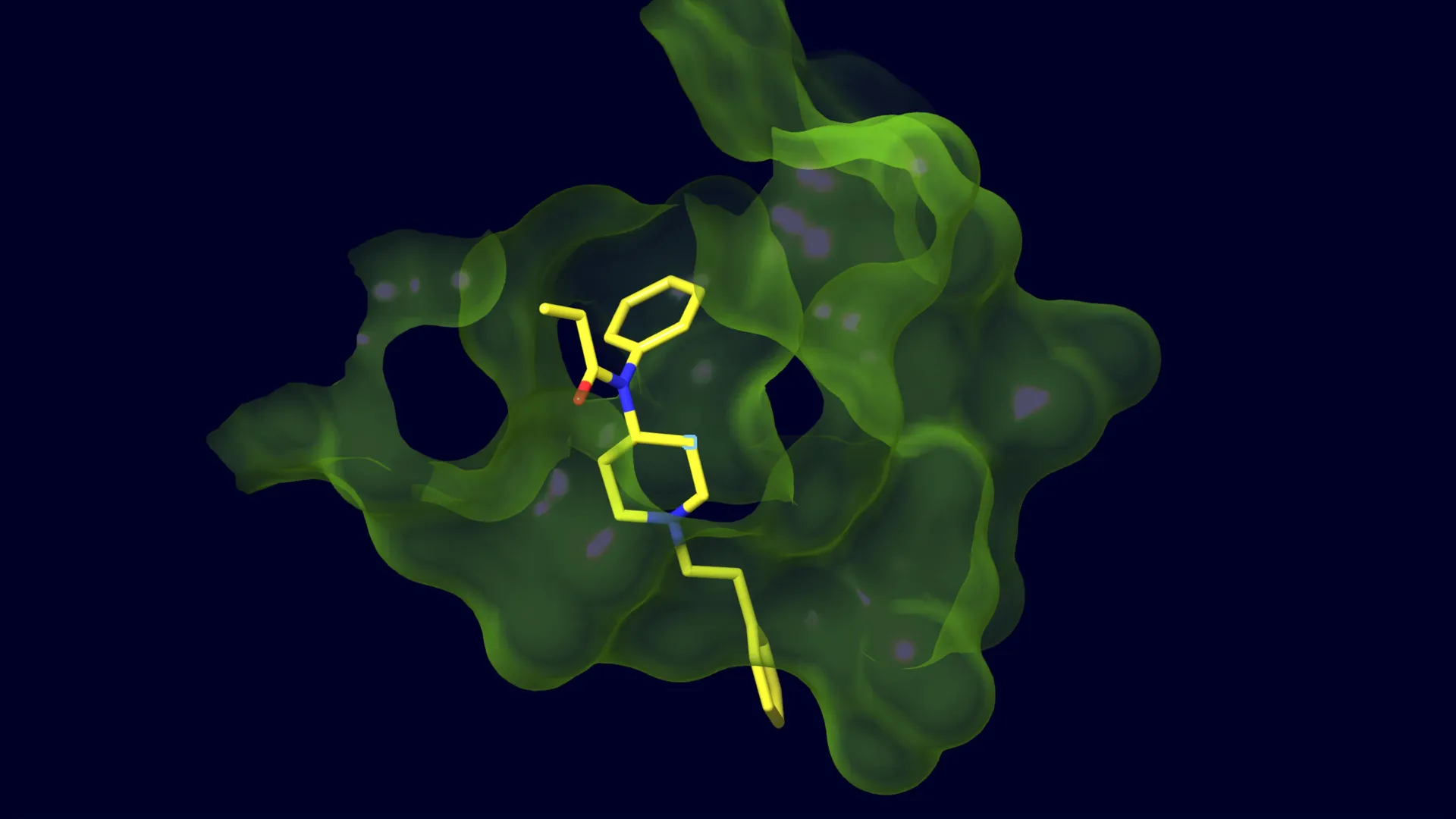
In a landmark development for public health and immunology, researchers at Scripps Research have unveiled an experimental vaccine designed to neutralize the effects of fentanyl and its numerous synthetic derivatives before they can reach the brain. This breakthrough, detailed in the Journal of Medicinal Chemistry, represents a fundamental shift in the strategy against the opioid epidemic, moving from reactive emergency treatments to a proactive immunological defense. By training the human immune system to recognize the molecular signature of an entire class of synthetic opioids, the vaccine aims to provide a long-term shield for individuals at high risk of overdose, potentially saving tens of thousands of lives annually.
The Escalating Crisis of Synthetic Opioids
The United States is currently grappling with the most lethal drug crisis in its history. According to data from the Centers for Disease Control and Prevention (CDC), drug overdose deaths exceeded 100,000 annually for the first time in recent years, with synthetic opioids—primarily fentanyl—accounting for nearly 70% of those fatalities. Fentanyl is approximately 50 times more potent than heroin and 100 times more potent than morphine. Its lethality is so high that an amount equivalent to a few grains of salt can be fatal to an average adult.
The drug’s impact on the human body is swift and devastating. In high doses, fentanyl crosses the blood-brain barrier almost immediately, binding to mu-opioid receptors in the brainstem that regulate breathing. This leads to profound respiratory depression, where the body simply "forgets" to breathe, often resulting in death within minutes. While the medication naloxone (Narcan) can reverse these effects by displacing the opioids from the receptors, it requires immediate administration by a bystander. In many cases of solitary use or when fentanyl is unknowingly mixed into other substances, help does not arrive in time.
Furthermore, the crisis has been exacerbated by the "Iron Law of Prohibition," a concept in drug policy suggesting that as law enforcement becomes more effective at interdicting bulky drugs like marijuana or cocaine, traffickers shift to more concentrated, potent, and easily hidden synthetic alternatives. This has led to a proliferation of "designer drugs"—fentanyl analogs that are slightly modified at the molecular level to evade legal restrictions and detection.
A Paradigm Shift in Immunopharmacotherapy
For decades, the primary pharmacological tools for treating opioid use disorder (OUD) have been substitution therapies like methadone or buprenorphine, which satisfy the brain’s craving for opioids without producing a high. However, the Scripps Research team, led by Kim Janda, the Ely R. Callaway, Jr. Professor of Chemistry, has spent years refining a different approach known as immunopharmacotherapy.
Instead of targeting the brain’s receptors, this approach targets the drug molecules themselves while they are still in the bloodstream. The vaccine works by stimulating the production of highly specific antibodies. When fentanyl enters the body, these antibodies bind to the drug molecules, creating a complex that is too large to pass through the blood-brain barrier. Essentially, the drug is sequestered in the blood and eventually filtered out by the liver and kidneys, never reaching the central nervous system to cause euphoria or respiratory failure.
The primary challenge in developing such a vaccine has always been the "specificity trap." Most vaccines are designed using a hapten—a small molecule that mimics the structure of the target drug. However, the immune system often becomes so specialized that it only recognizes that specific molecule. If a chemist in a clandestine lab changes a single atom on the fentanyl molecule to create a new analog, a traditional vaccine might fail to recognize it.
The Breakthrough: Radically Reconfigured Molecular Architecture
The recent study, titled "Redefining Drug Immune Recognition: A Radically Reconfigured Molecular Architecture Enables Broad Fentanyl-Class Protection," documents how the Janda lab overcame this hurdle. Rather than using a direct analog of fentanyl as the basis for the vaccine, the team utilized a molecule with a fundamentally different core structure that still shared essential "recognition points" with the fentanyl family.
"The conventional wisdom says that to get the immune system to recognize fentanyl, you have to use something that looks like fentanyl," explained Arran Stewart, a research associate at Scripps Research and the study’s first author. "We were doing the opposite."
The researchers attached this unconventional molecule to a carrier protein—a necessary step because drug molecules are too small for the immune system to notice on their own—and administered it to murine models. The results were unexpected and highly promising. The immune system did not just learn to recognize the vaccine’s specific molecule; it developed a generalized "template" for the structural hallmarks of the entire fentanyl class.
Data and Experimental Results
The efficacy of the vaccine was tested against a battery of the most dangerous synthetic opioids currently found on the black market. The antibodies produced by the vaccinated mice showed strong binding affinity for:
- Fentanyl: The primary synthetic opioid.
- Carfentanil: A derivative 100 times more potent than fentanyl, often used as a large-animal tranquilizer.
- China White (3-methylfentanyl): A highly potent and illicitly manufactured variant.
- Acetylfentanyl and Furanylfentanyl: Common analogs used to circumvent the Federal Analogue Act.
Crucially, the vaccine demonstrated "smart" selectivity. The antibodies did not bind to non-fentanyl opioids like morphine, oxycodone, or methadone. This is a critical feature for clinical application, as it ensures that a vaccinated individual can still receive standard pain management in a hospital setting or utilize medication-assisted treatment (MAT) for recovery.
In live animal trials, the results were equally compelling. Vaccinated mice were administered doses of fentanyl that would typically induce near-total respiratory failure. These mice maintained nearly normal breathing patterns and oxygen saturation levels. Quantitative analysis revealed that the concentration of fentanyl in the brain tissue of vaccinated mice was approximately 70% lower than in the control group. This reduction is significant enough to prevent the lethal threshold of respiratory depression from being reached.
Chronology of Development and Future Outlook
The development of this vaccine is the culmination of over a decade of research into synthetic opioid immunology.
- 2010–2015: The Janda lab focuses on vaccines for heroin and cocaine, establishing the feasibility of drug-targeted antibodies.
- 2016–2018: As fentanyl deaths surge, the research pivots toward synthetic opioids. Early candidates show success but are limited to specific analogs.
- 2020–2022: The team experiments with "deconstructed" molecular architectures to find a way to trigger broad-spectrum immunity.
- 2024: Publication of the current study in the Journal of Medicinal Chemistry, proving that a single vaccine can cover the entire fentanyl class.
The next phase for the Scripps Research team involves moving toward human clinical trials. This process typically involves three phases:
- Phase I: Testing for safety and dosage in a small group of healthy volunteers.
- Phase II: Evaluating the immune response and efficacy in a larger group, likely individuals already in recovery programs.
- Phase III: Large-scale trials to confirm safety and effectiveness across diverse populations.
If successful, the vaccine could serve as a "safety net" for various groups. For those in recovery, it could prevent a momentary lapse or relapse from turning into a fatal overdose. For first responders or military personnel, it could provide protection against accidental exposure to high-potency analogs like carfentanil.
Analysis of Implications and Potential Impact
The public health implications of a broad-spectrum fentanyl vaccine are profound. Current strategies rely heavily on harm reduction (needle exchanges and Narcan) and law enforcement interdiction. While essential, these methods have not been enough to bend the curve of the overdose epidemic.
A vaccine introduces a biological barrier that traffickers cannot easily circumvent. If a vaccine protects against the entire chemical "scaffold" of the fentanyl class, illicit chemists cannot simply tweak a side chain to make the drug invisible to the user’s immune system. This could effectively devalue fentanyl as a commodity in the illicit market, as its primary "benefit" to traffickers—its extreme potency and small size—becomes a liability if the target population is immune to its effects.
However, experts caution that a vaccine is not a "silver bullet" for the complex socio-economic issue of addiction. It does not treat the underlying psychological or social drivers of substance use disorder. Instead, it serves as a powerful tool for mortality reduction.
"What this research shows us is that we don’t have to keep playing catch-up with every new synthetic designer drug that emerges," says Kim Janda. "By training the immune system to recognize the entire fentanyl class—not just individual structures—we can stay ahead of illicit drug traffickers."
The study was supported by the Shadek Family Foundation, highlighting the role of private philanthropy in advancing high-risk, high-reward medical research that addresses urgent societal needs. As the Scripps Research team prepares for the rigorous path toward FDA approval, the scientific community remains optimistic that this "radically reconfigured" approach could finally turn the tide in the nation’s struggle against synthetic opioids.
