
 By admin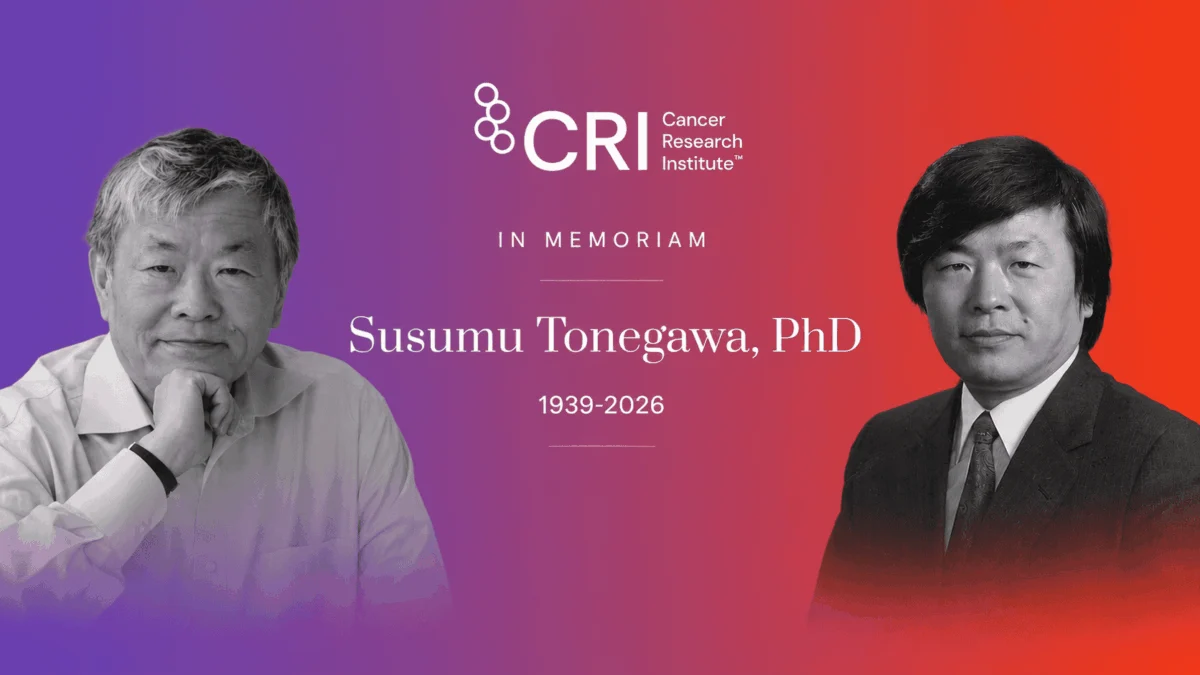
The global scientific community is profoundly saddened by the passing of Dr. Susumu Tonegawa, a towering figure in molecular biology and immunology whose groundbreaking discoveries reshaped our understanding of life itself. Dr. Tonegawa, a Nobel laureate and long-standing member of the Cancer Research Institute’s (CRI) Scientific Advisory Council, died on July 11, 2026, at the age of 86. His departure marks the end of an era for a scientist whose intellectual curiosity knew no bounds, leaving behind a legacy that continues to inspire and inform modern biomedical research, from the fight against cancer to unraveling the mysteries of the brain.
The Immunological Breakthrough: Solving the Antibody Diversity Mystery
Dr. Tonegawa’s most celebrated contribution, for which he received the 1987 Nobel Prize in Physiology or Medicine, was his revolutionary discovery of the genetic mechanism behind antibody diversity. In the 1970s, the scientific world grappled with a fundamental paradox: how could the human immune system, with a finite number of genes, produce an almost infinite array of antibodies capable of recognizing and neutralizing countless pathogens and foreign invaders? The prevailing "germline theory" posited that each antibody was encoded by a separate, pre-existing gene, a notion that seemed biologically improbable given the sheer number of antibodies observed.
The Enigma of Adaptive Immunity
Before Tonegawa’s work, immunologists understood that the immune system could mount highly specific responses to novel threats, a phenomenon known as adaptive immunity. However, the genetic basis for this adaptability remained elusive. Scientists knew that B lymphocytes, a type of white blood cell, were responsible for producing antibodies. Each B cell produced only one specific type of antibody, designed to bind to a unique antigen. The challenge was to explain how the vast repertoire of B cells, each with its distinct antibody specificity, was generated from the relatively limited genetic material in the human genome, estimated at the time to contain tens of thousands of genes, far fewer than the potential antibody specificities.
Unraveling V(D)J Recombination
Working at the Basel Institute for Immunology in Switzerland, Dr. Tonegawa embarked on a series of elegant and meticulous experiments using recombinant DNA technology, then a nascent field. He compared the DNA of embryonic mouse cells with that of mature antibody-producing B cells. His findings were astonishing and counter-intuitive. He demonstrated that the genes encoding antibodies were not static and pre-arranged in the germline but were instead assembled from separate, discontinuous gene segments during the development of B cells. Specifically, he identified distinct variable (V), diversity (D), and joining (J) gene segments that recombine in a process now known as V(D)J recombination.
This process involves the precise cutting and pasting of these segments, along with the random addition of nucleotides at the junctions, creating a combinatorial explosion of possibilities. For instance, in humans, there are approximately 40 V, 25 D, and 6 J segments for the heavy chain, and about 40 V and 5 J segments for the light chain. The random selection and recombination of these segments, combined with junctional diversity and somatic hypermutation, can generate an estimated 10^11 to 10^13 distinct antibody specificities. This explained how the body could generate an extraordinary diversity of antibodies from a relatively small number of genes, capable of recognizing virtually any foreign antigen it might encounter throughout an individual’s lifetime.
The 1987 Nobel Recognition
Tonegawa’s discovery was not merely an incremental step; it was a paradigm shift that fundamentally reshaped immunology. It provided the molecular basis for understanding adaptive immunity, explaining how the immune system could distinguish self from non-self and mount targeted attacks against a vast array of pathogens, including bacteria, viruses, and even cancerous cells. The Royal Swedish Academy of Sciences recognized the profound impact of this work, awarding Dr. Tonegawa the sole Nobel Prize in Physiology or Medicine in 1987. His work laid the intellectual groundwork for virtually all subsequent research into adaptive immunity, influencing fields from vaccine development to the treatment of autoimmune diseases and, crucially, cancer.
A Pivotal Shift: Pioneering Neuroscience Research
Remarkably, after achieving such a monumental breakthrough in immunology, Dr. Tonegawa demonstrated his unparalleled intellectual versatility by pivoting his research focus entirely. In the late 1980s, he transitioned to neuroscience, joining the Massachusetts Institute of Technology (MIT) as an investigator at the Howard Hughes Medical Institute (HHMI) and a professor in the Department of Biology and the Picower Institute for Learning and Memory. This shift was not merely a change of subject but a testament to his boundless curiosity and a willingness to tackle new, complex biological mysteries.
From Immune Cells to Memory Circuits
At MIT, Dr. Tonegawa pioneered research into the molecular and cellular basis of learning and memory. His laboratory made seminal contributions to understanding how memories are formed, stored, and retrieved in the brain. He was instrumental in developing techniques to manipulate specific neuronal circuits and study their roles in memory processes. His team identified and characterized "engram cells," specific populations of neurons that are activated during learning and subsequently reactivated during memory recall, providing compelling evidence for the physical substrate of memory.
His work further elucidated the role of various molecular pathways, such as NMDA receptor-dependent synaptic plasticity, in memory consolidation. Through sophisticated genetic engineering and optogenetic techniques, his lab demonstrated that reactivating these engram cells could retrieve specific memories, even those that appeared to be lost due to conditions like Alzheimer’s disease. This work offered tantalizing possibilities for therapeutic interventions in memory disorders.
Impact on Understanding Learning and Memory
Dr. Tonegawa’s contributions to neuroscience have been as profound as his immunological discoveries. He not only provided critical insights into the fundamental mechanisms of memory but also established new methodologies that continue to be widely adopted across the field. His research illuminated how different brain regions, such as the hippocampus and cortex, interact to process and store memories, and how these processes can be disrupted in neurological and psychiatric conditions. His work opened new avenues for understanding and potentially treating cognitive impairments associated with aging, neurodegenerative diseases, and trauma.
A Life of Scientific Inquiry: Chronology and Career Highlights
Susumu Tonegawa’s life was a testament to dedication and relentless scientific pursuit, spanning multiple continents and disciplines.
Early Life and Education
Born on September 6, 1939, in Nagoya, Japan, Tonegawa displayed an early aptitude for science. He pursued his undergraduate studies at Kyoto University, where he earned his Bachelor of Science degree in chemistry in 1963. His thirst for knowledge led him to the United States, where he received his Ph.D. in molecular biology from the University of California, San Diego, in 1969. It was during his postdoctoral work at the Salk Institute in La Jolla, California, and later at the Basel Institute for Immunology in Switzerland, that he embarked on the research that would define his immunological legacy.
Key Institutional Affiliations
- 1971-1981: Member of the Basel Institute for Immunology, Switzerland, where he conducted the groundbreaking research on antibody gene rearrangement.
- 1981-Present: Joined the Massachusetts Institute of Technology (MIT), initially as a professor in the Department of Biology.
- 1981-2016: Investigator, Howard Hughes Medical Institute (HHMI), MIT.
- 1994-2006: Founding Director of the RIKEN Brain Science Institute in Japan, demonstrating his commitment to fostering scientific research in his home country while maintaining his base at MIT.
- 1994-Present: Professor of Neuroscience and Biology, and Director of the Picower Institute for Learning and Memory at MIT.
Throughout his tenured career, Dr. Tonegawa remained a prolific researcher, publishing hundreds of peer-reviewed articles and mentoring countless students and postdoctoral fellows who have gone on to make their own significant contributions to science.
Guiding Future Discoveries: Contributions to the Cancer Research Institute
Beyond his direct research, Dr. Tonegawa generously shared his immense expertise and visionary scientific outlook through advisory roles. For many years, he served with distinction on the Cancer Research Institute’s (CRI) Scientific Advisory Council. This council, composed of leading immunologists and cancer researchers, plays a critical role in guiding CRI’s mission to fund and foster innovative research that holds the greatest promise for breakthroughs in cancer immunotherapy.
A Legacy of Strategic Counsel
As a council member, Dr. Tonegawa brought his unparalleled understanding of the immune system’s fundamental mechanisms to bear on the challenges of cancer. His insights were invaluable in evaluating research proposals, identifying emerging areas of high potential, and shaping CRI’s strategic direction. His curiosity, intellectual rigor, and unwavering willingness to challenge conventional thinking perfectly embodied the spirit of discovery that has propelled CRI’s mission for more than seven decades. He helped ensure that CRI continued to support foundational research, recognizing that today’s basic science often becomes tomorrow’s life-saving therapy.
Echoes in Immunotherapy
The impact of Dr. Tonegawa’s early work on antibody diversity directly underpins much of modern cancer immunotherapy. His elucidation of how the immune system can generate specific recognition capabilities provided the theoretical framework for developing therapies that harness the immune system to target and eliminate cancer cells. Today, advanced treatments like checkpoint inhibitors, which unleash T cells to attack tumors, and CAR T-cell therapy, which engineers a patient’s own T cells to recognize cancer, owe their very conceptual existence to the foundational understanding of immune adaptability that Tonegawa pioneered. His work helped explain how immune cells could be trained or reprogrammed to distinguish between healthy cells and diseased ones, a critical step in effective cancer treatment.
Tributes and Lasting Influence
The news of Dr. Tonegawa’s passing has elicited widespread tributes from across the scientific spectrum, acknowledging his profound impact and inspirational journey.
CRI CEO’s Homage
Dr. Alicia Zhou, CEO of the Cancer Research Institute, eloquently captured the magnitude of his contributions: "The history of cancer immunotherapy rests on a handful of discoveries that fundamentally changed how we think about the immune system. Dr. Tonegawa’s discovery of the genetic mechanism that creates antibody diversity is one of them. His work revealed the remarkable adaptability of the immune system and forever changed how scientists study immunity, disease, and cancer," she stated. "We were honored to benefit from his wisdom as a member of our Scientific Advisory Council, and his legacy will continue to inspire generations of scientists working to improve the lives of patients." This sentiment is echoed by countless researchers whose careers and discoveries have been directly influenced by his foundational work.
Broader Scientific Community’s Condolences
Leading figures in immunology and neuroscience, as well as former students and colleagues, have expressed their deep sadness and gratitude for his mentorship and intellectual leadership. Many highlight not only his scientific genius but also his humility, dedication, and the rigorous standards he set for himself and those around him. His ability to transition successfully and make profound contributions to two distinct, complex fields is often cited as a testament to his extraordinary intellect and fearless approach to scientific inquiry. His passing is seen as a significant loss to the global scientific community, yet his contributions will continue to resonate for generations.
The Philosophy of Creativity: A Scientist’s Wisdom
Dr. Tonegawa was not only a brilliant researcher but also a profound thinker about the nature of scientific discovery itself. Later in life, when asked to define creativity, he shared insights that encapsulated his own approach to science. While the specific principles he articulated are not detailed here, his broader philosophy, as described by those who knew him and observed his work, emphasized open-mindedness, a willingness to challenge established dogmas, and the critical importance of collaboration. He believed that true innovation often emerged from questioning fundamental assumptions and pursuing unconventional paths, a mindset evident in his audacious shift from immunology to neuroscience. His humble and inspiring reply to the question of creativity reflected a deep understanding that great science is a collaborative endeavor, built on intellectual rigor, persistent questioning, and a receptiveness to unexpected findings.
Enduring Legacy: Shaping Biomedical Science
Dr. Susumu Tonegawa’s monumental contributions have left an indelible mark on biomedical science. His pioneering work on antibody diversity provided the conceptual and mechanistic framework for understanding adaptive immunity, paving the way for advancements in vaccine design, the treatment of autoimmune diseases, and, most notably, the revolutionary field of cancer immunotherapy. By elucidating how the immune system generates its vast repertoire of specific defenses, he provided the blueprint for harnessing this power to combat disease.
Foundations for Modern Medicine
Furthermore, his later work in neuroscience laid critical foundations for understanding the molecular and cellular underpinnings of learning and memory. His identification of engram cells and the mechanisms governing memory formation offers tangible pathways for addressing devastating neurological conditions. His research continues to inform efforts to restore memory function and develop new treatments for diseases such as Alzheimer’s, Parkinson’s, and post-traumatic stress disorder.
Dr. Tonegawa’s career serves as a powerful testament to the transformative power of basic research and the immense value of interdisciplinary scientific exploration. His legacy is not just in the discoveries themselves, but also in the countless scientists he inspired and the profound scientific questions he taught us how to ask. The Cancer Research Institute, along with the entire scientific world, extends its heartfelt condolences to Dr. Tonegawa’s family, friends, colleagues, and former trainees. His discoveries changed the course of immunology, fundamentally shaped modern biomedical research, and will continue to inspire scientists working tirelessly to improve the lives of patients suffering from cancer and countless other diseases around the globe.
