
 By admin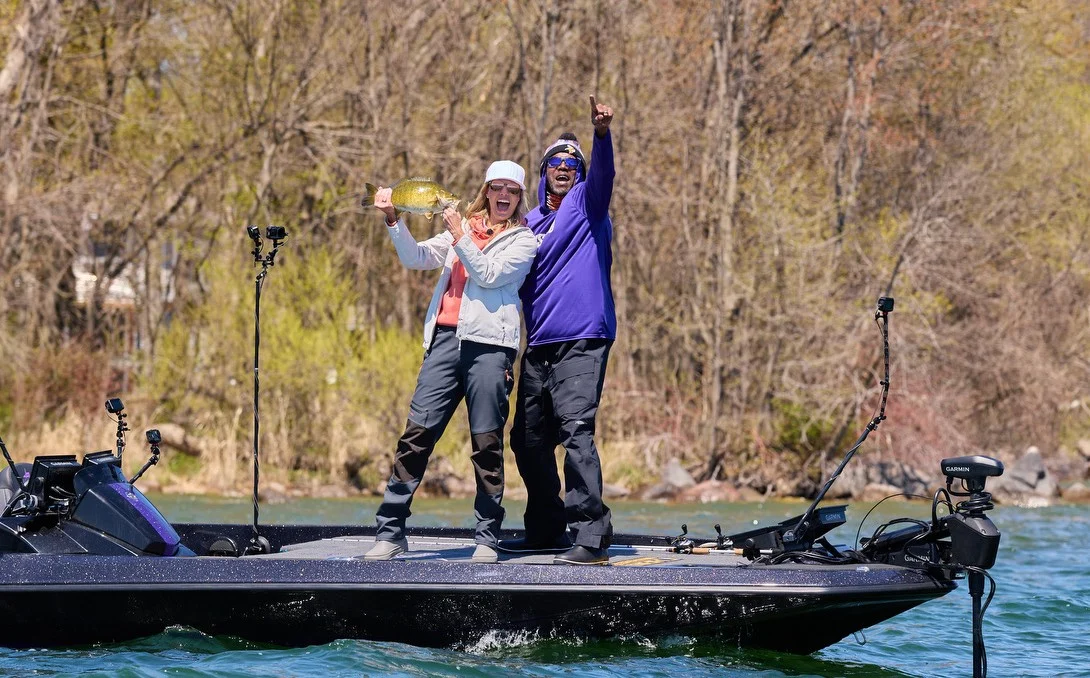
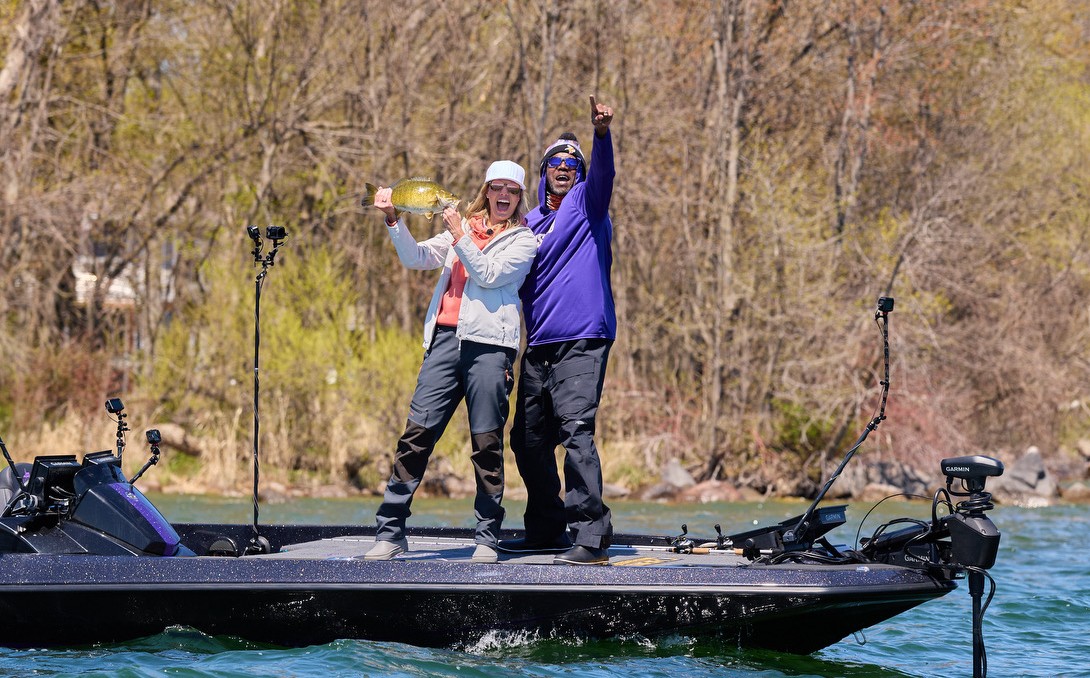
The waters of Leech Lake in northern Minnesota have long served as a sanctuary for those seeking the quiet thrill of the catch, but a recent expedition featured a high-profile pairing aimed at a goal far more significant than a trophy fish. Pro Football Hall of Famer Randy Moss, known for his record-breaking career with the Minnesota Vikings and the New England Patriots, recently transitioned from the gridiron to the Great Lakes to film a special episode of his YouTube series, Chasing 10. While the title of the series usually refers to the elusive pursuit of a double-digit weight catch—the kind of fish that defines a lifetime of angling—Moss pivoted the narrative toward a different kind of pursuit: the "Chasing a Cure" campaign. Joining forces with Kenna Dooley, the Chief Development Officer of the Children’s Cancer Research Fund (CCRF), Moss utilized his platform to highlight the urgent need for advancements in pediatric oncology and to honor a legacy that began on these very shores more than four decades ago.
The Intersection of Sports Legacy and Philanthropy
Randy Moss’s connection to the state of Minnesota remains profound, nearly two decades after his initial departure from the Vikings. His return to the North Woods for this initiative underscores a growing trend of elite athletes leveraging digital content to drive philanthropic engagement. In the Chasing 10 series, Moss often explores the intersection of nature, patience, and the human spirit. However, the collaboration with CCRF added a layer of personal vulnerability and clinical urgency to the broadcast. During the episode, Moss reflected on the grueling nature of medical treatments, drawing a stark comparison between the physical demands of professional football and the internal battle of cancer treatment. Moss noted that the mental toll of chemotherapy often outweighs the physical exhaustion, a sentiment that resonates deeply with the thousands of families currently navigating pediatric cancer diagnoses.
The "Chasing a Cure" campaign is an initiative designed to bridge the funding gap in pediatric research. Despite cancer being the leading cause of death by disease for children in the United States, pediatric cancer research receives only a small fraction of the federal funding allocated to cancer research as a whole. By partnering with a figure of Moss’s stature, CCRF aims to bring mainstream attention to the specific challenges of childhood malignancies, which require vastly different treatment protocols than adult cancers.
The Legacy of Katie Hageboeck and the Birth of CCRF
The choice of Leech Lake as the backdrop for this meeting was not incidental. The location serves as the spiritual home of the Children’s Cancer Research Fund. In the 1970s, Leech Lake was the summer haven for Katie Hageboeck, a young girl who spent her days swimming and fishing from her family’s multi-generational cabin. In 1979, at the age of 13, Katie passed away from leukemia. Before her death, she made a final request: she asked that the money she had saved for a new bicycle be donated to help find a cure for children like her.
That modest initial gift became the seed for what is now one of the nation’s most influential pediatric cancer organizations. Since its inception in 1981, CCRF has raised over $200 million to support innovative research at the University of Minnesota and other leading institutions. The organization’s impact is visible today through "Katie’s Clinic" and "The Porch" at the University of Minnesota, facilities designed to reflect the calming atmosphere of the North Woods that Katie loved. These spaces provide a reprieve from the clinical sterility of hospital environments, acknowledging that healing requires both advanced medicine and emotional support.
The Evolution of Pediatric Oncology: From Chemotherapy to Immunotherapy
A central theme of the discussion between Moss and Dooley on the water was the shifting paradigm of cancer treatment. For decades, the standard of care has relied heavily on chemotherapy and radiation—treatments that are often referred to as "blunt instruments" because they attack both cancerous and healthy cells. While effective in many cases, these treatments carry a heavy burden of "late effects," including secondary cancers, heart damage, and cognitive impairments that can haunt survivors for the rest of their lives.
Kenna Dooley highlighted the promise of immunotherapy, a field where CCRF-funded researchers are making significant strides. Immunotherapy seeks to "re-educate" the patient’s own immune system to recognize and destroy cancer cells without the collateral damage caused by traditional toxins.
"If we can get rid of radiation and chemotherapy, that’s a win-win for everybody," Dooley stated during the outing. The vision shared by CCRF is a future where the "cure" is not as damaging as the disease itself. Current research initiatives include:
- CAR-T Cell Therapy: Engineering a patient’s T-cells to express receptors that target specific proteins on leukemia cells.
- Natural Killer (NK) Cell Research: Utilizing the body’s innate first-line defenders to target solid tumors that have historically been difficult to treat in children.
- Targeted Drug Delivery: Using nanotechnology to deliver medication directly to tumor sites, sparing healthy organs.
Statistical Context: The Urgent Need for Funding
The necessity of the "Chasing a Cure" campaign is underscored by sobering data from the National Cancer Institute (NCI) and the American Cancer Society. While the overall survival rate for childhood cancer has risen to approximately 85% over the last half-century, that figure is misleadingly broad. Certain types of pediatric brain tumors and rare sarcomas still have survival rates near zero.
Furthermore, the financial disparity in research is a major hurdle. According to the Alliance for Childhood Cancer, the NCI allocates only about 4% of its annual budget to pediatric cancer research. This leaves a massive void that must be filled by private organizations like CCRF. The "Chasing 10" collaboration serves as a high-visibility conduit for private donations, which are essential for funding "Phase I" clinical trials—the experimental stage where the most innovative breakthroughs occur but where federal funding is hardest to secure.
The Chronology of Progress in Minnesota
The timeline of pediatric cancer research in Minnesota is a testament to the power of community-driven philanthropy:
- 1979: Katie Hageboeck passes away, leaving her bicycle money to cancer research.
- 1981: The Children’s Cancer Research Fund is officially established in Minneapolis.
- 1990s: CCRF-funded researchers at the University of Minnesota pioneer new techniques in bone marrow transplantation, significantly increasing survival rates for leukemia patients.
- 2010: The opening of the new University of Minnesota Masonic Children’s Hospital, featuring state-of-the-art facilities funded in part by CCRF donors.
- 2020s: The focus shifts toward precision medicine and immunotherapy, aiming to personalize treatment based on the genetic makeup of a child’s specific tumor.
- Present Day: The "Chasing a Cure" campaign integrates celebrity advocacy to reach a younger, more digitally-engaged demographic of donors.
Broader Implications of Celebrity Advocacy
The involvement of Randy Moss represents a sophisticated approach to modern non-profit marketing. By integrating the message of CCRF into a lifestyle and hobby-focused YouTube series, the campaign reaches an audience that might not otherwise engage with traditional medical fundraising appeals. This "lifestyle philanthropy" allows the mission to feel organic rather than transactional.
For Moss, the partnership also humanizes a figure often seen through the lens of athletic dominance. By sharing his own reflections on the grueling nature of medical intervention, he validates the experiences of families in the midst of the struggle. This psychological support is a critical, though often unquantified, component of the CCRF mission.
The implications for the future of the Children’s Cancer Research Fund are clear: as long as there is a gap between the reality of childhood cancer and the resources available to fight it, high-profile partnerships will remain a cornerstone of their strategy. The "Chasing 10" episode concludes not with the landing of a record-breaking fish, but with a call to action. It serves as a reminder that while the pursuit of a "10" on the water is a hobby, the pursuit of a cure is a moral imperative.
Conclusion: A Future Beyond the Hospital Walls
The day spent on Leech Lake was a full-circle moment for the CCRF. It connected the organization’s past—rooted in the loss of a young girl who loved the water—to a future where technology and awareness might prevent such losses for other families. The "Chasing a Cure" campaign continues to gain momentum, fueled by the stories of survivors and the advocacy of icons like Moss.
As research continues to move toward less invasive and more effective treatments, the goal remains the same as it was in 1979: to give children their childhoods back. For Katie Hageboeck, that meant more summers on the lake. For the children of today, it means the chance to grow up, to pursue their own "10s," and to live in a world where a cancer diagnosis is no longer a life-altering trauma, but a manageable hurdle on the way to a long and healthy life. Through the lens of a fishing rod and a Hall of Fame legacy, the message is clear: the most important catch is the one that saves a life.
