
 By admin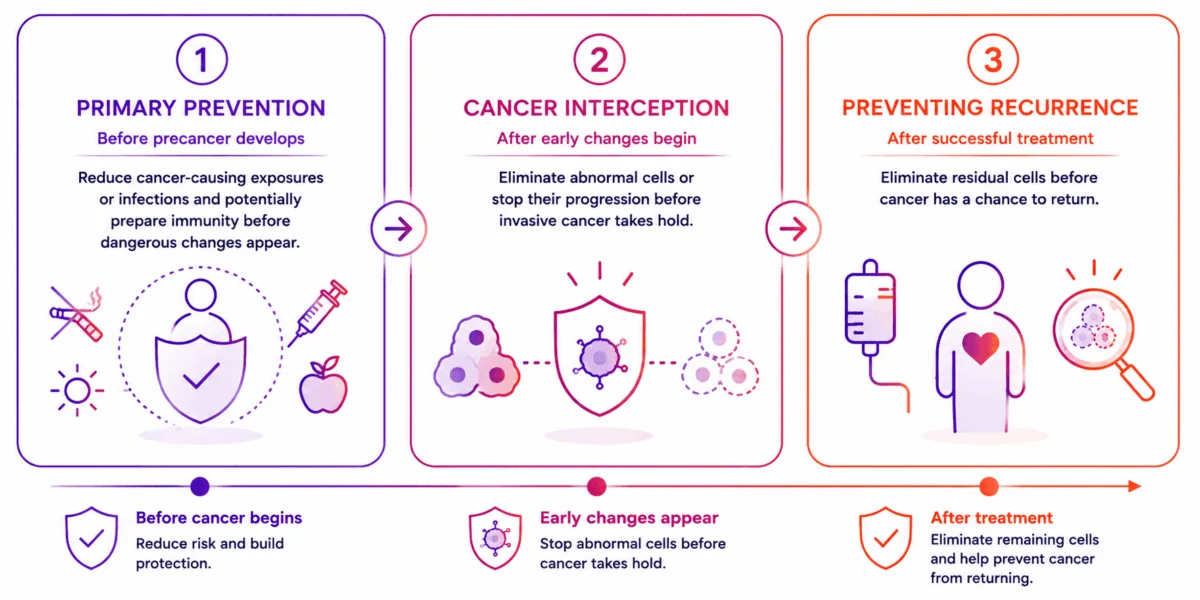
Cancer, a complex disease, rarely manifests overnight. Instead, its insidious journey often spans a decade or more, silently accumulating genetic mutations and subtly altering surrounding tissues long before a tumor becomes visible on a diagnostic scan. This lengthy pre-diagnostic phase, once a hidden and inaccessible period in oncology’s history, is now coming into sharp focus thanks to transformative advancements in genetics, early detection technologies, immune monitoring, and precancer mapping. Much like how heart disease risk factors such as high blood pressure and cholesterol are managed years before a cardiac event, cancer researchers are increasingly recognizing and leveraging a similar window of opportunity for intervention. New technologies, coupled with a deeper biological understanding and emerging clinical evidence, are paving the way for a future where individuals can better understand their personal risk, work collaboratively with healthcare providers to monitor meaningful biological changes, and intervene proactively to prevent cancer from taking hold or returning.
The Shifting Paradigm: From Treatment to Prevention
For generations, the fight against cancer predominantly centered on diagnosing and treating established disease. Oncology’s formidable progress in surgery, chemotherapy, radiation, and more recently, targeted therapies and immunotherapies, has undeniably saved countless lives. However, these interventions often occur after significant disease progression, when treatment becomes more challenging and the impact on a patient’s life is substantial. The paradigm is now shifting, driven by an ambitious vision: to prevent cancer entirely or to intercept it at its earliest, most vulnerable stages. This proactive approach seeks to capitalize on the protracted development timeline of many cancers, transforming the landscape of cancer care from reactive treatment to strategic prevention. Leading institutions and research organizations, including the Cancer Research Institute (CRI), are at the forefront of this pioneering effort, investing heavily in the scientific exploration and clinical translation required to realize this transformative potential.
Understanding the "Cancer Journey"
The journey of cancer begins at the cellular level, with initial genetic alterations that, over time, can lead to the formation of precancerous lesions. These lesions may harbor further mutations, gradually acquiring characteristics that allow them to grow uncontrollably and eventually invade surrounding tissues, marking the transition to invasive cancer. Pancreatic cancer, notorious for its aggressive nature and late diagnosis, serves as a stark example of this prolonged developmental phase, often requiring a decade or more from its earliest genetic changes to clinical presentation. This extended latency period, while challenging to observe, represents a critical window where interventions could potentially be most effective, disrupting the disease process before it becomes life-threatening. The goal is to identify and act upon these early cellular abnormalities, effectively stopping cancer in its tracks.
Three Critical Windows for Intervention
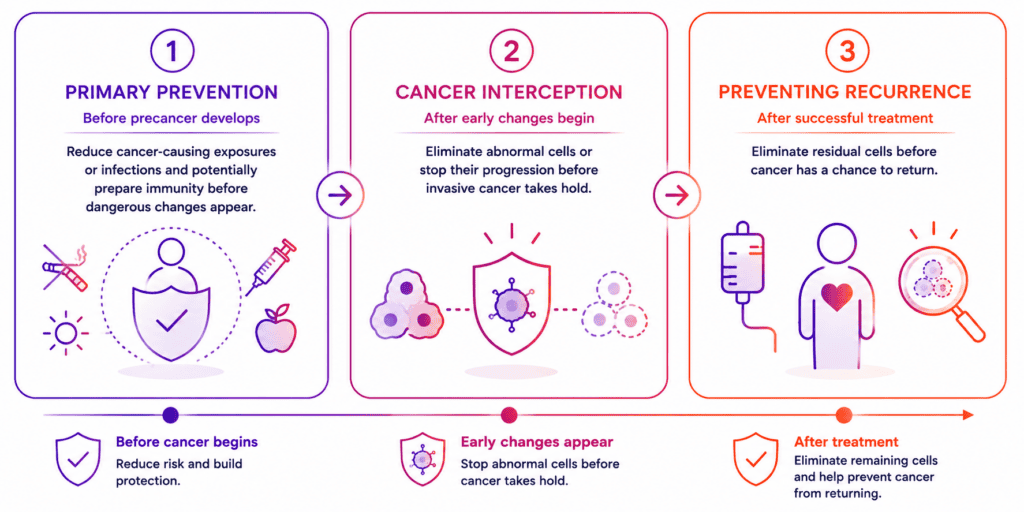
Efforts to prevent cancer from developing or returning are strategically categorized into three distinct, yet interconnected, windows of intervention:
- Primary Prevention: Fortifying Defenses
Primary prevention acts before precancerous changes even appear. This involves strategies aimed at reducing exposure to known carcinogens, preventing cancer-causing infections, and potentially priming the immune system to ward off dangerous cellular transformations. This includes public health initiatives such as anti-smoking campaigns, advocating for healthy diets and lifestyles, and environmental regulations. - Cancer Interception: Halting Progression
Cancer interception targets the period after the earliest dangerous cellular changes have appeared but before invasive cancer has fully taken hold. The objective here is to eliminate these abnormal cells or to halt their progression toward malignancy. This window requires sophisticated tools for early detection and precise interventions that can specifically target precancerous lesions while minimizing harm to healthy tissue. - Preventing Recurrence: Sustaining Health
Preventing recurrence comes into play after a patient has undergone successful treatment for an established cancer. The aim is to eliminate any residual microscopic cancer cells that might remain after primary therapy, thereby preventing the disease from returning. This strategy is particularly relevant for cancers with high recurrence rates and leverages the immune system’s ability to identify and eradicate lingering threats.
In each of these windows, the number of abnormal cells may be limited, or even microscopic, and the immune system might still possess a significant advantage in controlling them. Acting earlier theoretically means fewer cells to contend with and fewer biological barriers to overcome. However, these early changes can be inherently difficult to recognize, and crucially, they may already be initiating mechanisms to suppress the immune system, adding complexity to early intervention strategies.
A Legacy of Success: Viral Cancers and Beyond
The concept of immune-based cancer prevention is not entirely novel; it has already demonstrated profound success in the realm of virally induced cancers. Vaccines against the Hepatitis B virus (HBV) effectively prevent the chronic infection that is a major cause of liver cancer. Similarly, the Human Papillomavirus (HPV) vaccine stands as a monumental public health achievement, preventing infections that lead to cervical, anal, oral, and other cancers. Global initiatives, such as those supported by Gavi, the Vaccine Alliance, have facilitated the vaccination of an estimated 86 million girls in lower-income countries. This monumental effort is projected to avert an astonishing 1.4 million cervical cancer deaths. Projections indicate that achieving 80 percent worldwide coverage with a single-dose HPV vaccination could prevent over 50 million cervical cancer cases in the next century alone, underscoring the immense power of prophylactic vaccination.
The Cancer Research Institute played a pivotal role in advancing this science. Beginning in 1999, CRI provided crucial support to Dr. Ian H. Frazer, whose pioneering work on virus-like particles was instrumental in developing the technology behind Gardasil®, one of the leading HPV vaccines. This historical success story provides a compelling "proof of principle" for immune-mediated cancer prevention.
Beyond viral infections, established interventions already demonstrate the efficacy of acting before invasive cancer. Regular colonoscopies, for instance, allow for the identification and removal of precancerous polyps, significantly reducing the incidence and mortality of colorectal cancer. Chemopreventive agents like daily aspirin have been shown to reduce colorectal cancer risk in individuals with Lynch syndrome, a hereditary condition. Prophylactic surgeries, such as the removal of ovaries and fallopian tubes, drastically lower the risk of ovarian cancer in women carrying BRCA mutations, who are at significantly elevated risk. These examples firmly establish the principle: intervening before invasive cancer emerges can save lives. The current frontier of research is focused on extending this principle to non-viral cancers by leveraging and training the immune system to recognize and eliminate precancerous cells or microscopic residual cancer cells.
Navigating the Frontier: Early Trials and Key Lessons
The nascent field of cancer interception is characterized by both immense promise and significant challenges, as evidenced by initial clinical trials. These early studies are providing invaluable insights into what it will take to successfully implement widespread prevention strategies.
-
The MUC1 Vaccine: Lessons in Immune Readiness
One trial investigated a vaccine targeting MUC1, a protein found altered on precancerous colon growths. While the vaccine successfully produced an immune response in only one in four recipients, among those who did achieve a lasting immune response, recurrence rates were a remarkable 38 percentage points lower compared to a placebo group. A critical lesson emerged: non-responders exhibited a higher baseline presence of immune-suppressing cells and inflammatory signals prior to vaccination. This suggests that the success of such interventions may hinge not only on selecting the right molecular target but also on ensuring the immune system is in a receptive state. Understanding an individual’s baseline immune profile could become crucial for determining who would benefit most from treatment and whether pre-treatment immune modulation is necessary. -
Nivolumab and Oral Lesions: The Safety Imperative
Another trial explored nivolumab, an approved immunotherapy, for shrinking high-risk mouth lesions. The drug successfully reduced lesion size in approximately one in three participants. However, the trial also highlighted critical challenges. Some responders still progressed to invasive cancer, and a concerning one in five experienced severe immune-related side effects. This underscores a vital lesson: shrinking a lesion is not synonymous with preventing cancer. For individuals who do not yet have cancer, any intervention must not only demonstrably reduce future cancer risk but also meticulously safeguard their present health and quality of life. The risk-benefit calculus for preventive treatments is inherently different and more stringent than for established disease. -
Targeting KRAS and Lynch Syndrome: Precision Prevention
More promising avenues are emerging through precision targeting. Over 90 percent of the most common form of pancreatic cancer, along with many of its precancerous lesions, harbor a specific mutation in the KRAS gene. A vaccine designed to target six common KRAS mutations elicited an immune response in 90 percent of 20 high-risk participants, with vaccine-induced immune cells detectable for up to two years. While this study did not directly test prevention, it successfully addressed two fundamental questions: the vaccine’s safety and its ability to generate a durable immune response. A follow-up study involving patients scheduled for surgery aims to answer the next critical question: Do these immune cells effectively reach the precancerous lesions where they are needed to act?Similarly, Lynch syndrome, which dramatically increases the risk of colorectal and other cancers due to a disrupted cellular proofreading system, presents an opportunity for targeted immune prevention. This inherited condition repeatedly produces a shared set of mutations, creating common vaccine targets. A vaccine targeting 209 such mutations generated an immune response in every participant. The next phase of research will determine if these immune responses translate into actual cancer prevention.
Collectively, these studies demonstrate the feasibility of generating durable, targeted immune responses in individuals at elevated cancer risk. The monumental task ahead is to translate these promising immune reactions into tangible prevention strategies that save lives.
The Road Ahead: Defining the Challenges

Realizing the full potential of cancer interception necessitates overcoming several interconnected and complex challenges that define this rapidly evolving field:
- Identifying and Validating Precancerous Targets: Distinguishing truly dangerous precancerous lesions from benign abnormalities is critical. This requires a deep understanding of the molecular and cellular changes that drive progression to invasive cancer. A target is only valuable if it appears early enough in the disease process to allow for effective intervention.
- Developing Highly Sensitive and Specific Early Detection Biomarkers: The ability to detect precancerous changes or the earliest signs of malignancy is paramount. This involves developing advanced biomarkers, such as those found in liquid biopsies or through sophisticated imaging techniques, that can reliably guide intervention and monitor its effectiveness.
- Overcoming Immune Evasion in Early Stages: Even at precancerous stages, abnormal cells may have already developed mechanisms to suppress the immune system. Understanding and counteracting these early immune evasion strategies are crucial for successful immune-based interception.
- Designing and Executing Rigorous Clinical Trials: Preventive trials are inherently complex, requiring long follow-up periods in large cohorts of individuals who do not yet have cancer. Ethical considerations regarding potential side effects in healthy individuals and the need for robust endpoints are paramount.
- Balancing Efficacy with Safety and Quality of Life: For interventions aimed at preventing cancer in otherwise healthy individuals, the safety profile must be exceptionally high, with minimal side effects. The benefit of preventing future cancer must demonstrably outweigh any potential risks or impact on current quality of life.
These challenges are intricately linked. A promising biological target holds little value without a reliable laboratory model that accurately reflects human precancer, or a biomarker that can effectively guide intervention and confirm its success. Sustained progress hinges on seamlessly linking mechanistic discovery with rigorous clinical application, fostering a comprehensive understanding from the fundamental biological level to patient-specific interventions.
Breakthroughs in Preventing Recurrence
Significant progress is already visible within the recurrence window. In August 2026, Merck and Moderna announced groundbreaking results from a large Phase III trial. This study demonstrated that a personalized mRNA vaccine, custom-tailored to each patient’s unique tumor mutations, when combined with pembrolizumab (an established immune checkpoint inhibitor), significantly reduced the risk of melanoma returning after surgery. While full results are still pending publication, this finding provides compelling evidence for immune-based prevention in situations where any remaining disease is microscopic, offering a powerful new strategy to ensure long-term, cancer-free survival for patients. This represents a tangible step forward in the broader strategy of cancer interception and prevention.
A Vision for the Future of Cancer Care
The Cancer Research Institute firmly believes that cancer interception has the potential to fundamentally reshape cancer care, shifting a greater proportion of resources and efforts from treating established disease to preventing cancer from ever taking hold or from returning. Realizing this ambitious vision demands a concerted, team-based scientific approach, seamlessly integrating fundamental immunology and cancer biology with cutting-edge early detection technologies and meticulously designed clinical trials. CRI remains steadfast in its commitment to investing in the brilliant scientists, fostering collaborative research environments, and supporting the translational research necessary to transform early promise into life-saving interventions.
The window before cancer is not merely a theoretical concept; it is a tangible reality. With unwavering scientific rigor and sustained commitment from researchers, clinicians, funding bodies, and policymakers, humanity can learn to effectively utilize this critical window. This will enable us to stop more cancers before individuals ever have to face them, or indeed, face them again, ushering in an era of truly proactive and preventive cancer medicine.
