
 By admin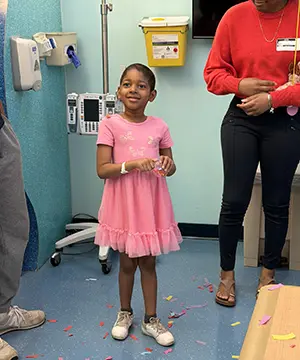
The trajectory of pediatric oncology is often defined by sudden, life-altering transitions that shift a family’s reality from the routine of daily life to the high-stakes environment of emergency medical intervention. For Amari and her mother, Cora H., this transition began abruptly during a standard school week, precipitated by the discovery of hematuria—the presence of blood in the urine. What was initially perceived as a potential minor ailment escalated into a critical medical event that would eventually lead to a diagnosis of Stage 3 anaplastic Wilms tumor. Amari’s journey, culminating in her transition to survivorship, serves as a poignant case study in the complexities of pediatric renal cancer, the evolution of surgical techniques, and the critical importance of sustained research funding during Cancer Survivors Month.
The Clinical Presentation and Diagnostic Process
The onset of Amari’s symptoms followed a pattern familiar to many pediatric oncology specialists. Hematuria in children is a clinical red flag that necessitates immediate diagnostic imaging. Upon arrival at the emergency department, clinicians identified a significant mass on Amari’s kidney. This discovery marked the beginning of an intensive diagnostic and staging process.
Wilms tumor, or nephroblastoma, is the most common type of kidney cancer in children, accounting for approximately 90% of all pediatric renal tumors. However, the specific pathology of Amari’s case—anaplastic Wilms tumor—presented additional clinical challenges. Anaplasia refers to a cellular state where cells lose their specialized features and become highly irregular. In the context of Wilms tumor, anaplastic histology is classified as "unfavorable," as these cells are more resistant to standard chemotherapy and require more aggressive treatment protocols compared to favorable histology tumors.
The staging of the tumor further complicated the prognosis. A Stage 3 diagnosis indicates that the cancer has spread beyond the kidney to nearby lymph nodes or other structures within the abdomen, or that the tumor has ruptured before or during surgery. For Amari’s medical team, the primary objective was to balance the aggressive eradication of malignant cells with the long-term preservation of renal function.
Surgical Innovation: The Shift Toward Nephron-Sparing Procedures
Historically, the standard of care for a unilateral Wilms tumor was a radical nephrectomy—the complete removal of the affected kidney. While the human body can function effectively with a single healthy kidney, pediatric patients face a lifetime of potential renal stress. Consequently, modern oncology has seen a shift toward "nephron-sparing" surgery whenever oncologically feasible.
In Amari’s case, the initial clinical assessment suggested that her entire left kidney would need to be sacrificed. However, following a preliminary course of chemotherapy designed to shrink the tumor—a strategy known as neoadjuvant therapy—the surgical team identified an opportunity to preserve a portion of the organ. After an exhaustive surgical procedure, doctors successfully removed the tumor while salvaging approximately 60% of the healthy kidney tissue. This outcome is significant not only for Amari’s immediate recovery but for her long-term health, as it reduces the risk of chronic kidney disease and hypertension later in life.
The Rigors of the Pediatric Treatment Protocol
The successful surgery was merely one milestone in a protracted 32-week treatment regimen. Because the tumor was staged as anaplastic and Stage 3, the protocol necessitated a multimodal approach, including prolonged chemotherapy. This phase of treatment is often the most taxing for pediatric patients and their families, involving recurring hospitalizations, physical exhaustion, and the management of systemic side effects.
Throughout this period, the integration of psychosocial support proved vital. Amari’s engagement with her cheerleading teammates and her interactions with the Dallas Cowboys Cheerleaders provided a necessary psychological buffer against the rigors of clinical treatment. Pediatric oncology experts increasingly emphasize the "whole-child" approach, recognizing that maintaining a sense of normalcy and pursuing personal passions are essential components of a patient’s resilience during long-term therapy.
Supporting Data: The Landscape of Pediatric Cancer Research
Amari’s story is situated within a broader statistical framework that highlights both the progress and the remaining hurdles in pediatric oncology. According to data from the National Cancer Institute (NCI) and the American Cancer Society:
- Incidence: Approximately 500 to 600 new cases of Wilms tumor are diagnosed in the United States annually.
- Survival Rates: The five-year survival rate for children with Wilms tumor has improved dramatically over the last several decades, now exceeding 90% for favorable histology cases. However, for those with anaplastic features, the survival rate remains lower, hovering between 70% and 80% depending on the stage.
- Research Funding Gaps: Despite cancer being the leading cause of death by disease in children in the U.S., pediatric cancer research receives a disproportionately small fraction of federal funding compared to adult cancers. Organizations like CureSearch for Children’s Cancer work to bridge this gap by funding targeted research aimed at developing less toxic and more effective treatments.
The transition from "treatment" to "survivorship" is a milestone marked by the symbolic "ringing of the bell." For Amari, this event took place on a date of personal significance—the birthday of her late grandmother—surrounded by the multidisciplinary team of doctors and nurses who managed her care.
Implications of Long-term Survivorship
As Amari enters the phase of survivorship, her medical journey enters a new chapter focused on long-term monitoring. Survivorship in pediatric oncology is not merely the absence of disease; it is a lifelong commitment to managing the "late effects" of treatment. These can include cardiovascular issues, potential secondary malignancies, and the long-term monitoring of renal function, especially given that Amari is living with a partial kidney.
June, designated as Cancer Survivors Month, serves as a period of reflection on the growing population of pediatric cancer survivors. There are currently over 500,000 childhood cancer survivors in the United States. As treatment protocols become more successful, the medical community is shifting its focus toward "quality of survival," aiming to minimize the long-term physiological and psychological toll of toxic treatments.
The Role of Advocacy and Community Support
The narrative provided by Cora H. underscores a critical element of the pediatric cancer experience: the transparency and advocacy of the parent. By committing to honesty with her daughters throughout the process, Cora highlighted the importance of family-centered care. Furthermore, the role of non-profit organizations in providing resources and hope cannot be overstated.
CureSearch and similar entities emphasize that stories like Amari’s are the result of decades of clinical trials and scientific breakthroughs. The ability to preserve 60% of a kidney in a Stage 3 anaplastic case is a testament to the precision of modern surgical oncology—a precision that was unavailable to previous generations.
Conclusion: A Call for Continued Momentum
Amari is currently thriving, pursuing interests ranging from K-pop and Demon Slayer to her primary passion, cheerleading. Her recovery is a victory for her family, but in a professional context, it is a data point that affirms the efficacy of current pediatric oncology protocols while highlighting the need for further innovation.
As the medical community observes Cancer Survivors Month, the focus remains on the thousands of children who have yet to ring their own bells. The success seen in Amari’s case is a direct result of aggressive intervention, surgical ingenuity, and the support of research-driven organizations. To ensure that more children can grow into their dreams—whether that involves becoming a Dallas Cowboys Cheerleader or any other aspiration—the momentum in pediatric cancer research must be sustained through both public awareness and private philanthropy. Amari’s journey from a scream on a school night to a celebratory bell-ringing stands as a reminder of the resilience of the human spirit and the life-saving power of medical advancement.
