
 By admin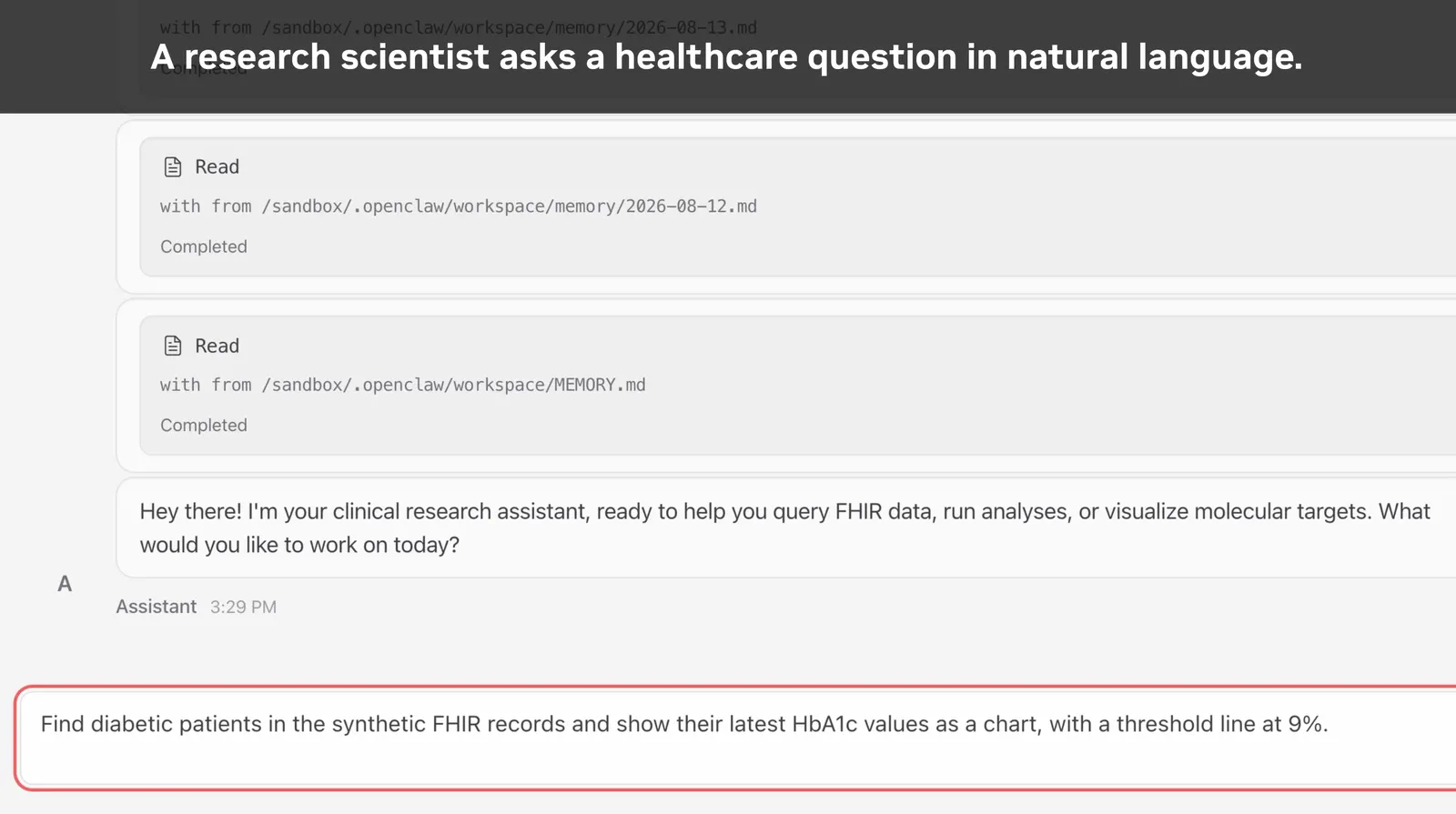
For over a decade, healthcare organizations have grappled with a fundamental dilemma: how to leverage the transformative power of artificial intelligence while rigorously safeguarding sensitive patient data. This persistent tension has often positioned these two critical objectives as opposing forces, with the remarkable clinical reasoning capabilities of cloud-based large language models (LLMs) frequently undermined by the inherent risks of routing protected health information (PHI) through external application programming interfaces (APIs). However, a significant paradigm shift is now underway, driven by a new reference architecture built on the Dell Pro Max with GB300 and the NVIDIA Grace Blackwell Ultra GB300 Superchip. This groundbreaking development demonstrates the viability of sophisticated, multi-agent clinical AI operating entirely on-premises, ensuring that patient data processing remains securely within an organization’s own infrastructure, thereby eliminating the compromise between innovation and impenetrable data security.
The Decade-Long Conundrum: AI’s Promise Versus Privacy Imperatives
The journey towards AI integration in healthcare has been marked by both immense promise and profound challenges. The allure of artificial intelligence for transforming diagnostics, accelerating drug discovery, personalizing treatment plans, and streamlining administrative workflows has been undeniable. Early forays often involved leveraging the vast computational resources and advanced algorithms available through public cloud platforms. These platforms, particularly their large language models, quickly demonstrated an impressive capacity for clinical reasoning, capable of analyzing complex medical literature, assisting in differential diagnoses, and even drafting preliminary reports.
Yet, this promise came with a significant caveat: data privacy. Healthcare data, particularly PHI, is among the most sensitive information an organization handles. Strict regulatory frameworks such as the Health Insurance Portability and Accountability Act (HIPAA) in the United States, the General Data Protection Regulation (GDPR) in Europe, and numerous other national and regional data sovereignty laws impose stringent requirements on how this data is collected, stored, processed, and transmitted. The potential for PHI exposure through external APIs, even those with robust security protocols, has long been a non-starter for many compliance teams and risk-averse healthcare executives. The very idea of patient records, lab results, medication histories, or genomic data traversing outside an organization’s tightly controlled firewalls introduced unacceptable levels of risk, legal liability, and erosion of patient trust. This regulatory and ethical quagmire effectively slowed the widespread adoption of frontier-level AI, confining many applications to anonymized data sets or less sensitive operational tasks. The industry found itself in a holding pattern, recognizing AI’s potential but lacking a secure, compliant pathway to fully realize it.
A New Era: On-Premises Agentic AI with Zero Data Leakage
The landscape is fundamentally changing with the advent of advanced hardware and sophisticated AI architectures designed for local deployment. AI is evolving beyond mere interactive chats to automated, intelligent workloads driven by "agentic tools"—autonomous software entities capable of perceiving, reasoning, planning, and acting to achieve specific goals. This evolution significantly compresses timelines and enables faster, more accurate outcomes.
At the heart of this transformation is a new reference architecture, meticulously detailed in a recently published playbook by NVIDIA. This system leverages the immense power of the Dell Pro Max with GB300, a deskside supercomputer purpose-built for research labs and enterprise AI teams. This powerful machine, integrating the NVIDIA Grace Blackwell Ultra GB300 Superchip, delivers data center-class AI capabilities directly to the deskside, boasting an astonishing 20,000 TFLOPS of FP4 computing power and the memory headroom to host models with up to one trillion parameters. For healthcare, this capability is revolutionary, enabling frontier-scale clinical reasoning to occur precisely where the data originates and resides: entirely within the organization’s own secure infrastructure.
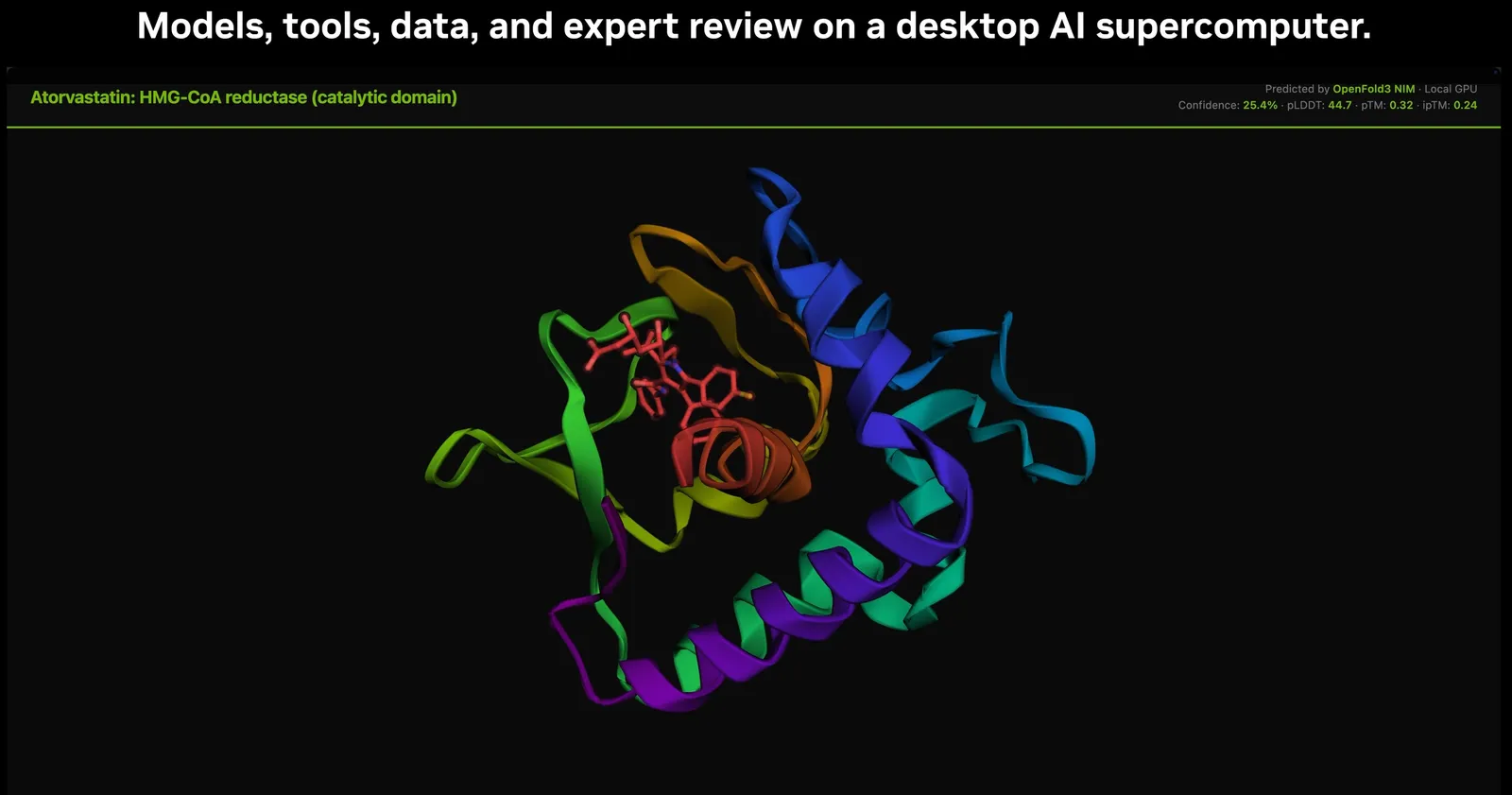
The core of this architecture is its multi-agent system, deploying six specialized AI agents on a single supercomputer. These agents include a central coordinator and five domain experts, each focusing on a critical aspect of patient care: patient data, labs and vitals, medications, clinical analysis, and molecular visualization. This collaborative framework allows for comprehensive and nuanced analysis. Powering this intricate system is NVIDIA Nemotron 3 Super, a 120-billion-parameter mixture-of-experts model, which runs locally via containerized inference. This local execution is paramount to the system’s security guarantees.
A cornerstone of this breakthrough is the commitment to "zero data leakage." The architecture explicitly supports air-gapped deployments, ensuring that patient data never leaves the device. In the playbook’s configuration, all patient data is processed locally and is never passed through a hosted LLM or external AI services. To further reinforce security, the system operates under an implicit-deny network policy, permitting only a small number of carefully controlled, read-only outbound connections for essential updates or external knowledge base access, strictly without PHI transmission. This level of isolation directly addresses the most significant compliance and privacy concerns that have historically hindered AI adoption in sensitive environments.
Augmenting the Clinician, Not Disrupting the Workflow
For biopharma and health system leaders evaluating AI adoption, the crucial question extends beyond mere functionality; it centers on seamless integration and practical utility. The Local Healthcare Agent architecture is deliberately designed to augment existing clinical workflows, rather than competing with or replacing them. This approach acknowledges the complex, established processes within healthcare and aims to enhance them with intelligent automation.
Consider the critical task of care gap identification, a process vital for quality improvement and patient outcomes. Traditionally, quality assurance teams manually cross-reference vast amounts of lab results against evolving measure definitions and clinical guidelines. While accurate, this process is notoriously labor-intensive, time-consuming, and prone to human error when dealing with large datasets. The new AI system automates this query process, rapidly surfacing patients who fall outside predefined target thresholds for various health indicators.
What distinguishes this system is its intelligent flexibility. The clinical knowledge driving these decisions resides in human-readable files, not immutably embedded within the model weights. This means that if a clinical guideline changes—for example, a stricter organizational standard dictates that a target threshold for a specific biomarker shifts from 9.0% to 8.5%—the agents can immediately utilize this updated value on the very next query without requiring extensive retraining or model redeployment. This "editability" is a game-changer in a field where clinical guidelines, drug classifications, and treatment protocols evolve constantly. An AI system that necessitates retraining every time a new quality measure is introduced or an existing one is revised would perpetually lag behind the latest scientific advancements. Conversely, a system that can dynamically read and incorporate updated skill files at query time remains current at the speed of clinical knowledge, offering unparalleled agility and relevance. This capability ensures that AI tools remain valuable and responsive partners to clinicians, adapting to the dynamic nature of medical science and practice.
The Strategic Imperative: Infrastructure, Economics, and Regulation
The argument for local AI in healthcare extends beyond mere technical capability; it encompasses compelling infrastructure, economic, and regulatory considerations. AI workloads can generally be categorized into those suitable for local hardware and those requiring data center or cloud processing. The Dell AI Factory with NVIDIA provides the comprehensive accelerated computing, networking, and software infrastructure to enable organizations to make this distinction judiciously, strategically placing workloads where they yield the most benefit and security. The Dell Pro Max with GB300, specifically, offers the GPU memory density to run both a frontier-class LLM and a complex protein structure prediction model concurrently on a single deskside system, co-locating AI models with the agent harness to minimize inference latency and maximize efficiency.
For healthcare organizations, particularly those navigating stringent data sovereignty requirements, the practical appeal of this on-premises solution is straightforward and profound. In highly regulated industries like healthcare, data is not just information; it is intellectual property, patient trust, and a regulatory minefield. Organizations in these fields frequently require that both training data and model weights remain exclusively within their own secure, firewalled infrastructure. This local deployment unequivocally satisfies these mandates, sidestepping the complexities and legal ambiguities associated with cross-border data transfers or third-party cloud data processing.
Economically, on-premises infrastructure converts variable token spend—a cost that can escalate unpredictably with increased AI usage, especially with agentic workflows that compound token consumption with every agent decision—into a predictable capital investment. This shift from operational expenditure (OpEx) to capital expenditure (CapEx) offers greater financial control and long-term budgeting stability, a significant advantage for large health systems and biopharma companies. Furthermore, the deskside platforms share a consistent architecture with data centers, meaning that scaling from individual deskside deployments to an enterprise-wide AI factory is seamless and efficient, requiring no retraining or re-platforming of validated models. Local AI, therefore, does not just complement enterprise solutions; it fundamentally empowers organizations with greater control, security, and predictability over where sensitive and mission-critical AI workloads run.
Inferred Statements and Industry Reactions
The unveiling of this local healthcare agent playbook has elicited a wave of optimism and strategic alignment across the industry.
A spokesperson for Dell Technologies highlighted the company’s commitment to empowering secure, high-performance computing in critical sectors. "This collaboration with NVIDIA marks a pivotal moment in our mission to deliver transformative AI solutions that meet the stringent demands of healthcare," the spokesperson stated. "The Dell AI Factory with NVIDIA is designed to provide organizations with the accelerated computing and infrastructure necessary to deploy advanced AI securely, bringing intelligence closer to where the data lives and enabling unprecedented control and efficiency for our healthcare clients."
From NVIDIA, a representative emphasized the technological innovation behind the agentic AI framework. "Our goal is to democratize advanced AI, making frontier-class models accessible and deployable in environments where security and privacy are paramount," an NVIDIA executive commented. "The Grace Blackwell Superchip, combined with our agentic tools and Nemotron 3 Super LLM, is empowering healthcare providers and researchers to leverage sophisticated AI without compromising on data integrity. This playbook is a testament to the power of localized, intelligent automation."
For healthcare Chief Information Officers (CIOs) and Chief Technology Officers (CTOs), this solution offers a welcome reprieve from years of balancing innovation with compliance. A representative CIO from a major health system, speaking anonymously, remarked, "This solution directly addresses our primary concerns regarding PHI security. We’ve long seen the potential of AI, but the cloud-first approach presented too many compliance hurdles. The ability to run multi-agent clinical reasoning entirely within our own infrastructure, with full control, is a game-changer for our digital transformation strategy."
A compliance officer echoed this sentiment, stating, "The air-gapped processing and implicit-deny network policy are exactly what we need to meet HIPAA and GDPR requirements confidently. The ability to keep PHI entirely within our firewall, even while leveraging cutting-edge AI, is not just beneficial; it’s foundational for maintaining patient trust and regulatory adherence. This significantly de-risks our AI adoption strategy."
Leaders in biopharmaceutical research and development are also enthusiastic. A research lead at a prominent biopharma firm noted, "The deskside capability for molecular visualization and protein structure prediction, combined with clinical analysis, means we can accelerate drug discovery workflows with unprecedented speed and security. Our researchers can iterate faster, analyze more complex data sets, and ultimately bring life-saving therapies to market more quickly, all while safeguarding our proprietary research data."
Broader Impact and Future Implications
The Local Healthcare Agent playbook, while presented as a proof point rather than a finished product, signals a profound and meaningful shift in the landscape of healthcare AI. The computational barrier to running sophisticated AI locally has demonstrably fallen below the threshold that most health systems and biopharma organizations can now meet. When a single workstation can simultaneously host multi-agent clinical reasoning, perform intricate molecular visualization, and conduct guideline-aware care gap analysis—all within a verified security sandbox—the conversation within the industry fundamentally moves from "Can we do this securely?" to "Where do we start, and how quickly can we scale?"
This paradigm shift has several critical implications:
- Democratization of Advanced AI: Frontier-class AI, once largely confined to hyperscale cloud providers or specialized supercomputing centers, is now accessible to individual research labs, hospital departments, and smaller healthcare entities. This decentralization fosters innovation by empowering more teams to experiment and develop AI applications tailored to their specific needs.
- Acceleration of Research and Clinical Innovation: By removing the data privacy bottleneck, on-premises AI will likely accelerate breakthroughs in drug discovery, disease diagnostics, personalized medicine, and operational efficiency. Researchers can process proprietary and sensitive data sets locally, reducing time-to-insight and fostering more rapid iteration cycles.
- Enhanced Ethical AI Development: Greater control over the entire AI stack—from data ingestion to model deployment—within an organization’s infrastructure allows for more robust governance, transparency, and accountability. This can lead to the development of more ethical AI systems, with better control over potential biases and a clearer understanding of how models make decisions, crucial for patient safety and equity.
- Strengthening Data Sovereignty: This model solidifies an organization’s control over its most valuable asset—patient data—in an increasingly complex global regulatory environment. It allows healthcare providers to adhere strictly to national and regional data residency laws, building stronger trust with patients and avoiding potential legal entanglements.
- Predictable Investment and Scalability: The ability to convert variable operational costs into predictable capital investments, coupled with seamless scalability from deskside to data center, provides financial stability and strategic planning advantages for long-term AI initiatives.
The answer, increasingly, for how to deploy advanced AI securely and effectively in healthcare, is right where the data already lives. The Local Healthcare Agent playbook is now available as an NVIDIA-validated resource, specifically designed for rapid deployment on the Dell AI Factory with NVIDIA. Healthcare and biopharma organizations keen on exploring on-premises clinical AI can download this playbook, deploy the full six-agent system in approximately an hour, and evaluate the workflow against their unique use cases. The architecture’s consistency from deskside to data center ensures that validated local deployments can scale to an enterprise-wide AI factory without the need for retraining or re-platforming, marking a truly transformative moment for the industry.
To learn more about the Dell AI Factory with NVIDIA and explore comprehensive solutions, visit dell.com/nvidia-ai. Further details on Dell Technologies Healthcare and Life Sciences AI solutions can be found at dell.com/en-us/lp/dt/industry-healthcare.
