
 By admin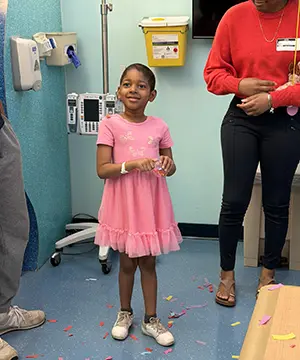
The journey of a pediatric cancer patient often begins with a sudden, localized symptom that masks a life-altering medical emergency, as evidenced by the recent case of Amari, a young girl whose diagnosis of anaplastic Wilms tumor has shed light on the complexities of childhood kidney cancers. What began as a routine school night for Amari and her mother, Cora H., rapidly escalated when the child discovered blood in her urine, a clinical sign known as hematuria. This symptom, while sometimes indicative of minor infections, can also serve as a primary indicator of renal malignancies in children. Upon arrival at the emergency room, diagnostic imaging revealed a significant mass on Amari’s kidney, thrusting her family into the specialized and often harrowing world of pediatric oncology.
According to medical records and personal accounts provided by the family, the diagnosis was confirmed as Stage 3 anaplastic Wilms tumor. This specific classification is critical in the field of oncology; while Wilms tumor (nephroblastoma) is the most common type of kidney cancer in children, the "anaplastic" designation refers to the appearance of the cancer cells under a microscope. Anaplastic cells are characterized by large, distorted nuclei, which typically indicate a more aggressive form of the disease that is more resistant to standard chemotherapy than the "favorable histology" variant. The Stage 3 designation indicates that the tumor had spread beyond the kidney to nearby tissues or lymph nodes within the abdomen, though it had not yet metastasized to distant organs like the lungs or liver.
The Clinical Challenge of Wilms Tumor and Surgical Innovations
The initial prognosis for Amari suggested a radical nephrectomy—the total removal of the affected left kidney. However, advancements in nephron-sparing surgery and preoperative chemotherapy protocols provided an alternative path. In many pediatric cases, the goal of treatment is not only the eradication of the malignancy but also the preservation of as much healthy organ tissue as possible to ensure long-term renal function. After a rigorous regimen of chemotherapy designed to shrink the tumor, surgeons were able to perform a complex procedure that successfully removed the malignancy while preserving approximately 60 percent of Amari’s healthy kidney tissue.
This outcome is representative of a growing trend in pediatric surgery where "partial nephrectomy" is considered when the tumor’s location and response to treatment allow for it. Preserving kidney function is paramount for pediatric survivors, as they face decades of life where renal health will be a critical factor in their overall well-being. The success of Amari’s surgery was a pivotal moment in her 32-week treatment plan, which also included intensive chemotherapy to address the high-risk nature of the anaplastic cells.
Statistical Landscape of Pediatric Cancer in the United States
Amari’s story unfolds against a broader backdrop of pediatric health statistics in the United States. According to the American Cancer Society and the National Cancer Institute, approximately 15,000 children and adolescents under the age of 20 are diagnosed with cancer each year. Wilms tumor accounts for about 5% of all childhood cancers, with roughly 500 to 600 new cases diagnosed annually in the U.S.
While the overall five-year survival rate for Wilms tumor is remarkably high—exceeding 90% due to decades of collaborative research by groups such as the Children’s Oncology Group (COG)—the anaplastic subtype presents a more significant challenge. Survival rates for diffuse anaplastic Wilms tumor are generally lower than those for favorable histology, necessitating more aggressive multi-agent chemotherapy and radiation. The 32-week protocol Amari underwent reflects the standardized intensive approach required to prevent recurrence in Stage 3 cases.
The Psychological and Social Toll on Families
Beyond the physiological battle, the impact of a pediatric cancer diagnosis on the family unit is profound. Cora H., Amari’s mother, highlighted the emotional weight of the diagnostic process, describing the "heavy moments" of waiting for news in hospital hallways. For many families, the transition from a "normal" life to one dictated by hospital schedules, chemotherapy cycles, and the constant fear of neutropenic fevers is jarring.
Cora maintained a policy of transparency with her daughters, a strategy often recommended by child life specialists to help siblings and patients cope with the uncertainty of chronic illness. This approach included preparing for the symbolic "ringing of the bell," a tradition in many oncology wards that marks the conclusion of active treatment. For Amari, this ceremony occurred on a date of significant personal meaning—the birthday of her late grandmother—providing a sense of ancestral connection and closure to a grueling chapter of her life.
Throughout her treatment, Amari remained active in her local cheerleading community. Maintaining a sense of normalcy and pursuing pre-diagnosis passions is cited by pediatric psychologists as a vital component of a child’s resilience during long-term hospitalization. Amari’s interactions with the Dallas Cowboys Cheerleaders served as a motivational milestone, illustrating the importance of community support and "wish-granting" initiatives in the recovery process.
The Significance of Cancer Survivors Month
Amari’s transition into survivorship coincides with June, recognized nationally as Cancer Survivors Month. This period is dedicated to celebrating those who have completed treatment while bringing attention to the ongoing challenges faced by survivors. For pediatric survivors, "ringing the bell" is not the end of the medical journey but the beginning of a lifelong phase of monitoring.
Long-term survivors of childhood cancer are at risk for "late effects," which can include cardiovascular issues, secondary malignancies, and psychological trauma resulting from the toxicity of treatments administered during their developmental years. Organizations like CureSearch for Children’s Cancer emphasize that while survival rates have improved, the goal of modern research is to develop "targeted therapies" that are less toxic than traditional chemotherapy, thereby reducing the incidence of these late effects.
Institutional Responses and Research Implications
The medical community continues to analyze cases like Amari’s to refine treatment protocols. Dr. Alice Weaver, a researcher in pediatric oncology (speaking generally on the implications of such cases), notes that the successful preservation of kidney tissue in a Stage 3 anaplastic case is a testament to the efficacy of neoadjuvant chemotherapy. "When we can shrink a high-risk tumor sufficiently to allow for nephron-sparing surgery, we are significantly improving the patient’s quality of life for the next sixty to seventy years," she stated.
Furthermore, the role of philanthropic and research-funding organizations cannot be overstated. CureSearch and similar entities provide the capital necessary for clinical trials that standard pharmaceutical models may overlook due to the relatively small "market" of pediatric patients compared to adult cancers. The data gathered from Amari’s 32-week treatment contributes to the collective understanding of how anaplastic cells respond to specific drug combinations, potentially informing future protocols for children diagnosed with similar pathologies.
Conclusion: A Reminder of Resilience and the Path Forward
Today, Amari is described as thriving, engaging in interests ranging from K-pop and the anime "Demon Slayer" to her continued passion for dance and cheerleading. Her story serves as a dual narrative: one of individual resilience and another of medical progress. However, it also serves as a call to action for continued advocacy.
The "impact" requested by advocacy groups during Cancer Survivors Month is rooted in the reality that pediatric cancer remains the leading cause of death by disease for children in the United States. While Amari’s successful preservation of 60 percent of her kidney and her current status in survivorship are major victories, they underscore the necessity of early detection, specialized surgical intervention, and a robust support network.
As Amari continues her journey in survivorship, her experience remains a vital case study for families currently entering the "world they never imagined." The sound of the bell ringing at the end of her treatment remains a powerful symbol of hope, but the underlying message from the oncology community is clear: continued research is the only way to ensure that every child, regardless of their tumor’s histology or stage, has the opportunity to ring that bell and pursue their dreams.
