
 By Gabriel Paijo
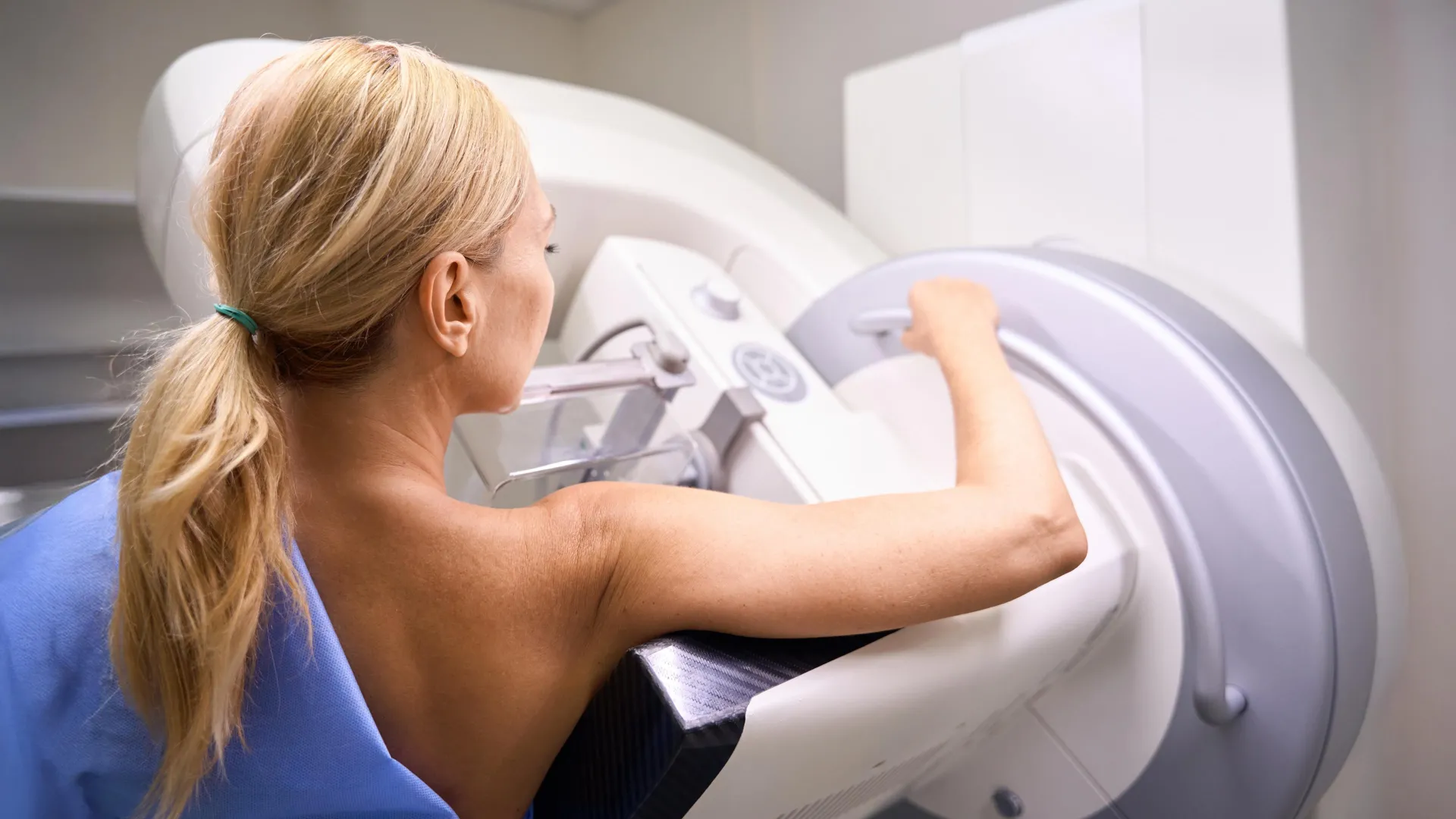
For more than three decades, the medical community and public health officials have been locked in a contentious debate regarding the true impact of breast cancer screening. While mammography is widely credited with reducing mortality rates through early detection, it has also been shadowed by the phenomenon known as overdiagnosis. This occurs when screening identifies small, slow-growing, or indolent tumors that would never have progressed to cause symptoms or threaten a woman’s life during her natural lifespan. For years, some influential studies have suggested that overdiagnosis rates could be as high as 30% to 50%, leading to concerns that mass screening programs may result in widespread unnecessary surgery, radiation, and chemotherapy. However, a landmark reanalysis of historical data, led by researchers from the University of Southern Denmark and Queen Mary University of London, suggests these fears may be significantly overstated.
The new study, which synthesized evidence from all eight major randomized controlled trials (RCTs) of mammography screening and compared them with real-world data from Denmark, concludes that the actual rate of overdiagnosis is likely below 5%. This finding represents a paradigm shift in how the risks and benefits of breast cancer screening are communicated to the public. By accounting for the complex timing of cancer detection and the subsequent "compensatory drop" in diagnoses that occurs as a screening program matures, the research team has provided a more nuanced and arguably more accurate framework for understanding the long-term effects of population-based screening.
The Historical Context of the Overdiagnosis Debate
The debate over overdiagnosis is not merely academic; it has direct implications for international health guidelines and the personal medical decisions of millions of women. Since the introduction of organized mammography in the late 20th century, researchers have sought to quantify the "harm-to-benefit" ratio. The concern is that if a significant portion of detected cancers are "overdiagnosed," the psychological and physical toll of treatment might outweigh the lives saved by early intervention.
Previous high estimates of overdiagnosis—some reaching the 50% mark—often originated from analyses of early randomized trials or observational studies that lacked sufficient follow-up time. These studies frequently pointed to the immediate and sharp rise in breast cancer incidence following the introduction of screening as evidence of overdiagnosis. However, as the new study points out, an initial spike in diagnoses is an expected consequence of "lead time"—the period by which a diagnosis is advanced because of screening. If a study concludes shortly after this spike without waiting for the corresponding drop in diagnoses in later years, the resulting data will inevitably inflate the appearance of overdiagnosis.
Methodology: Reevaluating the Gold Standard Trials
To resolve these discrepancies, the research team, including Sisse Helle Njor, a professor at the University of Southern Denmark and Lillebælt Hospital, and Matejka Rebolj, a Senior Epidemiologist at Queen Mary University of London, conducted a comprehensive reanalysis. They focused on the eight foundational randomized controlled trials that have historically shaped screening policy:
- The New York Health Insurance Plan (HIP) trial
- The Malmö Mammographic Screening Trial
- The Swedish Two-County Trial (Kopparberg and Östergötland)
- The Edinburgh Trial
- The Canadian National Breast Screening Study (CNBSS)
- The Stockholm Trial
- The Gothenburg Trial
- The UK Age Trial
These trials, conducted between the 1960s and 1990s, are considered the "gold standard" of clinical evidence. However, the researchers argued that many previous interpretations of these trials failed to account for the "temporal context"—specifically, the way screening shifts the timeline of diagnosis. By pooling the data and applying a more rigorous longitudinal lens, the team sought to distinguish between "early detection" (finding a cancer sooner than it would have appeared clinically) and "overdiagnosis" (finding a cancer that would never have appeared at all).
The Danish Reference Point: A Unique Real-World Laboratory
A critical component of the study was the comparison of trial data with real-world evidence from Denmark. Denmark provided a unique "natural experiment" because the country did not implement its national screening program all at once. Instead, organized screening began in certain regions, such as Copenhagen and Frederiksberg, nearly 17 years before it was introduced in other parts of the country.
This staggered implementation allowed researchers to track two distinct populations over decades. They could observe exactly how the incidence of breast cancer changed in screened regions compared to non-screened regions. "Denmark offered a useful real-world reference," noted the researchers, because it allowed them to see the full "rise and fall" cycle of cancer incidence.
Professor Emerita Elsebeth Lynge of the University of Copenhagen explained that when screening starts, the number of diagnoses naturally rises because doctors are finding cancers that would have normally stayed hidden for several more years. "Over time, this should be followed by a drop, as some of these cancers would otherwise have been diagnosed later," Lynge said. This "compensatory drop" is the key to measuring overdiagnosis. If the drop eventually offsets the initial rise, overdiagnosis is minimal. If a permanent "excess" of cases remains even years after the initial spike, that excess represents true overdiagnosis.
Key Findings: From 50% Down to 5%
The reanalysis revealed that when the "timing effects" and "lead time" were properly factored in, the data from the eight randomized trials closely mirrored the Danish experience. In the Danish model, overdiagnosis is estimated to be below 5%. The researchers found that the previously reported high estimates of 30-50% were largely artifacts of "immature" data—studies that were published before the compensatory drop could be fully observed or studies that failed to account for the fact that women in the "control" groups often ended up getting screened anyway once the trials concluded.
The study also looked specifically at Ductal Carcinoma In Situ (DCIS), a non-invasive condition where abnormal cells are found in the lining of a breast duct. DCIS is often cited as a major driver of overdiagnosis because it is unclear how many of these cases would eventually become invasive. Even including DCIS in their calculations, the researchers found that the long-term data did not support the high overdiagnosis figures previously used to criticize screening programs.
Implications for Public Health and Patient Communication
The implications of this study are profound for both policymakers and patients. For decades, the fear of overdiagnosis has been a primary argument used by skeptics of mass mammography. It has influenced the age at which women are encouraged to start screening and the frequency of those appointments. In some cases, communication materials sent to women have emphasized the high risk of "unnecessary treatment" as a major drawback.
With the new evidence suggesting the risk is actually less than 5%, the benefit-to-harm ratio of mammography becomes significantly more favorable. Professor Sisse Helle Njor emphasized that while overdiagnosis is a real phenomenon, its scale has been misunderstood. "Most women will not develop breast cancer, but with this study, we can now be reassured that the benefits of detecting breast cancer early and preventing premature death will outweigh the small risk of unnecessary treatment," she stated.
This shift in data allows for a more confident recommendation of screening. Instead of warning women that they have a "one in three" or "one in two" chance of being overdiagnosed, health providers can now communicate a much lower risk, potentially increasing participation rates in screening programs which are essential for reducing breast cancer mortality.
Analysis of Methodological Challenges
The researchers highlighted three specific factors that have historically distorted overdiagnosis estimates:
- Lead Time Bias: The failure to wait long enough for the "screened" group to show a decrease in diagnoses as the "advanced" cases are cleared from the pipeline.
- Control Group Contamination: In many trials, women in the control group (who were not supposed to be screened) eventually sought mammograms on their own or were invited to screening once the trial period ended. If researchers compare a screened group to a "partially screened" control group without adjusting for this, the results become skewed.
- Follow-up Duration: Many studies lacked the 15- to 20-year follow-up necessary to see the full stabilization of cancer incidence rates.
By adjusting for these factors, the research team demonstrated that the "excess" cancers found in screening were almost entirely cancers that were simply found earlier, not "extra" cancers that would have never surfaced.
Global Reactions and Future Outlook
While the study has been met with praise from many in the oncology and radiology communities, it is expected to spark further discussion among statisticians and epidemiologists who have long championed the higher overdiagnosis estimates. Critics of mass screening may argue that even a 5% overdiagnosis rate is significant when applied to millions of women, but the weight of the evidence now suggests that the "crisis" of overdiagnosis may have been a product of statistical misinterpretation rather than clinical reality.
Moving forward, the researchers hope their findings will lead to a revision of screening guidelines and the information provided to women during the informed consent process. Matejka Rebolj of Queen Mary University of London noted that previous high estimates "influenced screening guidelines and communication" based on evidence that had not fully matured. "When interpreted in their full temporal context, randomized trial data are consistent with overdiagnosis of less than five percent," she concluded.
The study, supported by the Novo Nordisk Foundation and Cancer Research UK, provides a robust framework for future research. It suggests that the focus of the medical community should perhaps shift from debating the existence of mass overdiagnosis to refining screening techniques (such as 3D mammography or AI-assisted detection) that can better distinguish between aggressive and indolent tumors, further minimizing the 5% risk that remains.
In conclusion, this comprehensive reanalysis serves as a vital correction to the historical record. It reaffirms the value of mammography as a life-saving tool and provides a clearer, evidence-based foundation for women to make informed decisions about their breast health. As screening programs continue to evolve with new technology, the reassurance that overdiagnosis is a manageable and relatively rare occurrence will likely bolster public trust in early detection initiatives worldwide.
