
 By Billy Candra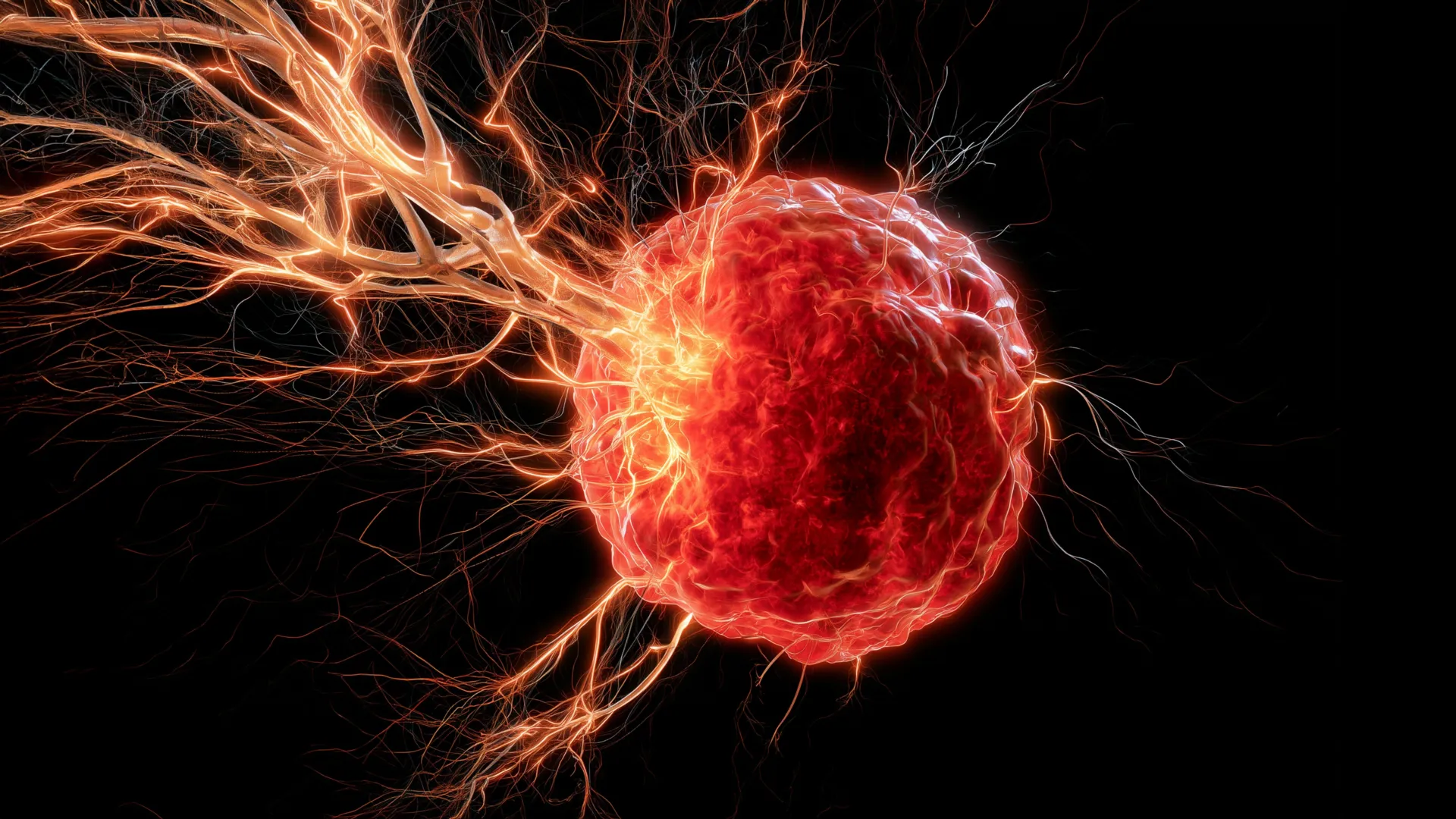
This groundbreaking discovery, published in the esteemed journal Cell Death & Differentiation, sheds critical light on a previously opaque aspect of cancer biology: the intricate relationship between tumors and the nervous system. For years, scientists have observed the presence of extensive nerve networks within various solid tumors, yet the precise mechanisms by which these nerves infiltrate and support cancerous growths remained largely elusive. The University of Oklahoma study, spearheaded by researchers at the OU College of Medicine and OU Health Stephenson Cancer Center, provides a compelling explanation for this phenomenon, specifically focusing on triple-negative breast cancer (TNBC), a particularly challenging and aggressive subtype of the disease known for its limited treatment options and poor prognosis.
Understanding Triple-Negative Breast Cancer: A Formidable Foe
Triple-negative breast cancer represents approximately 10-15% of all breast cancers, but its impact is disproportionately severe. Unlike other forms of breast cancer, TNBC cells lack three key receptors: estrogen receptors (ER), progesterone receptors (PR), and human epidermal growth factor receptor 2 (HER2). This absence means that targeted therapies, which have revolutionized the treatment of ER/PR-positive and HER2-positive breast cancers, are ineffective against TNBC. Consequently, treatment for TNBC primarily relies on chemotherapy, which, while often initially effective, carries a higher risk of recurrence and metastasis. Patients diagnosed with TNBC, particularly younger women and those of African American descent, often face more aggressive disease progression and poorer survival outcomes compared to other breast cancer types. The urgent need for novel therapeutic strategies for TNBC underscores the significance of research like that conducted at the University of Oklahoma.
The Enigmatic Tumor Microenvironment and Nerve Infiltration
The concept of the tumor microenvironment (TME) has become central to modern cancer research. The TME is not merely a passive backdrop for cancer cells; it is a dynamic and complex ecosystem comprising various cellular and non-cellular components, including immune cells, fibroblasts, blood vessels, lymphatic vessels, and increasingly recognized, nerves. These components interact in intricate ways, influencing tumor initiation, growth, metastasis, and resistance to therapy.
Historically, nerves within tumors were often considered bystanders, passively incorporated as the tumor expanded. However, a growing body of evidence over the past two decades has challenged this view, revealing that nerves are active participants in tumor progression. This burgeoning field, often termed neuro-oncology or cancer neuroscience, explores the bidirectional communication between tumor cells and the peripheral nervous system. Studies have shown significant nerve density in a range of solid tumors, including prostate cancer, pancreatic cancer, gastric cancer, and now, emphatically, breast cancer. The presence of nerves has been linked to various pro-tumorigenic processes, including enhanced tumor growth, angiogenesis (the formation of new blood vessels that feed the tumor), and metastasis (the spread of cancer to distant sites). The OU study builds upon this foundation by pinpointing a specific mechanism for nerve recruitment in TNBC.
Macrophages: Double-Edged Swords in Cancer Biology
A key revelation from the University of Oklahoma team centers on the role of macrophages, a type of immune cell traditionally recognized for its beneficial functions in the body. Macrophages are essential components of the innate immune system, acting as phagocytes that engulf pathogens, cellular debris, and foreign substances. They also play a crucial role in wound healing, tissue repair, and orchestrating immune responses. However, within the context of cancer, macrophages exhibit a remarkable plasticity, often adopting pro-tumorigenic phenotypes.
These "tumor-associated macrophages" (TAMs) are frequently abundant within the TME and can be manipulated by cancer cells to promote tumor growth, angiogenesis, immune suppression, and metastasis. In the OU study, researchers discovered that TNBC tumors actively attract these macrophages. Once within the tumor microenvironment, these recruited macrophages undergo a functional shift, transforming from potential defenders into unwitting collaborators that facilitate cancer progression. This functional reprogramming is crucial to the mechanism identified.
Brain-Derived Neurotrophic Factor (BDNF): A Repurposed Signal
The specific molecular mechanism identified by Dr. Maureen Cox, an assistant professor in the Department of Microbiology and Immunology at the OU College of Medicine and a research member of OU Health Stephenson Cancer Center, and her colleagues, involves brain-derived neurotrophic factor (BDNF). BDNF is a potent neurotrophin, a family of proteins that support the survival, growth, and differentiation of neurons. It is most widely known for its critical roles in the central nervous system, where it regulates synaptic plasticity, learning, and memory. Its physiological importance in maintaining neuronal health is undeniable.
However, the OU team uncovered a sinister repurposing of this vital biological signal by aggressive breast cancer. They found that the macrophages, once recruited into the TNBC tumor, become significant secretors of BDNF. This secreted BDNF acts as a powerful chemoattractant and growth factor for nerves, essentially sending out a molecular beacon that encourages nearby peripheral nerves to grow directly towards and infiltrate the tumor mass. By hijacking this naturally occurring neurotrophic pathway, TNBC effectively engineers its own supportive neural network, creating conditions conducive to its proliferation and resilience. Dr. Cox emphasized this paradoxical role: "Macrophages are the critical source for drawing nerves into the tumor. Although macrophages typically play a positive role in the body, they are facilitating a negative function in this scenario of breast cancer." This statement underscores the cunning adaptability of cancer cells in subverting normal biological processes for their own survival.
From Lab Bench to Potential Bedside: Experimental Validation
The researchers didn’t stop at identifying the mechanism; they proceeded to test its therapeutic potential. In a crucial set of experiments, Cox and her team investigated whether interrupting this BDNF signaling pathway could impede tumor growth. They utilized mouse models of triple-negative breast cancer, a standard and widely accepted method for preclinical drug testing.
The strategy involved administering a drug known to block BDNF signaling. The results were remarkably promising: in mice treated with the BDNF blocking agent, the extensive growth of nerves into the tumors was significantly curtailed. More importantly, this reduction in nerve infiltration correlated with a substantial decrease in tumor growth. This outcome suggests that disrupting the nerve-tumor axis could be a viable therapeutic strategy.
The potential for rapid translation to clinical application is heightened by the fact that the drug used in the study is "already on the market," as noted by Dr. Cox. This means it has likely undergone extensive safety testing and regulatory approval for other conditions, potentially accelerating its repurposing for cancer treatment. This approach represents a paradigm shift from traditional cancer therapies that focus solely on directly destroying cancer cells. Instead, it targets the tumor’s supportive microenvironment, aiming to dismantle the infrastructure that fuels its progression.
Furthermore, Dr. Cox elaborated on the underlying rationale: "We believe that the nerves are immunosuppressive, so if we can stop the nerves from growing in the first place, maybe we can boost the immune response to help fight the cancer." This hypothesis opens the door to combination therapies, where BDNF inhibitors could potentially be combined with immunotherapies to enhance the body’s natural anti-cancer defenses, offering a more comprehensive attack on the disease.
Translational Relevance: Evidence from Human Patients
To ascertain the human relevance of their findings, the University of Oklahoma researchers meticulously examined clinical data from patients diagnosed with triple-negative breast cancer. This critical step in translational research helps bridge the gap between laboratory discoveries and real-world patient outcomes. Their analysis revealed a compelling correlation: TNBC tumors that exhibited higher levels of macrophages and BDNF were consistently linked with poorer survival rates among patients. This robust correlation provides strong epidemiological evidence that the mechanism observed in mouse models is not an isolated phenomenon but is indeed pertinent and clinically significant in human TNBC patients. Such validation is paramount for advancing a discovery from preclinical research to clinical trials, offering hope that targeting this pathway could translate into tangible benefits for patients.
Charting the Future: Therapeutic Implications and Ongoing Research
The implications of this research are far-reaching. It proposes an entirely new avenue for cancer treatment, one that focuses on disarming the tumor’s ability to manipulate its surroundings rather than solely attacking the cancer cells themselves. This "microenvironment-centric" approach could prove particularly effective against aggressive cancers like TNBC, which have historically resisted conventional targeted therapies.
Looking ahead, Dr. Cox and her team are eager to delve deeper into the precise mechanisms by which nerves contribute to tumor growth. While the study established that nerves are drawn into tumors and their presence correlates with progression, the exact cascade of events remains an area of active investigation. Some existing evidence suggests that nerves may play a role in stimulating angiogenesis, the formation of new blood vessels essential for supplying tumors with oxygen and nutrients. Other research indicates that cancer cells might exploit nerve fibers as conduits, migrating along them as they metastasize from the primary tumor to distant organs. Understanding these intricate interactions will be crucial for developing even more refined and effective therapeutic strategies.
The OU team also plans to broaden the scope of their investigation by testing the same BDNF-blocking intervention in other aggressive cancers. High-grade ovarian cancer, another notoriously difficult-to-treat malignancy with a high recurrence rate, is a primary target for this expansion. If successful, this could indicate that the identified mechanism of nerve recruitment and its therapeutic vulnerability might be conserved across multiple types of solid tumors, paving the way for a more generalized therapeutic strategy.
Ultimately, the overarching goal of this research, as articulated by Dr. Cox, is to "turn the anti-tumor immunity back on in cancer patients so their own immune systems can reject the tumors." By disrupting the immunosuppressive environment fostered by tumor-associated nerves, the hope is to unleash the full potential of the patient’s own immune system to recognize and eliminate cancer cells, leading to more durable and effective treatments.
The Role of Research Funding and Collaborative Efforts
This significant scientific endeavor was made possible through substantial support from various esteemed organizations. The National Institute of General Medical Sciences of the NIH (award numbers P20GM103447 and P20GM103639) provided crucial funding, highlighting the national importance of this line of inquiry. Additionally, Oklahoma’s Tobacco Settlement Endowment Trust (TSET), a primary funder of the Stephenson Cancer Center and TSET Health Promotion Research Center at the University of Oklahoma, played a vital role. Further support came from the Oklahoma Shared Clinical and Translational Resources through an Institutional Development Award from the National Institute of General Medical Sciences (grant no. U54GM104938). These collaborative funding efforts underscore the commitment to advancing cancer research and underscore the multi-faceted approach required to tackle complex diseases like triple-negative breast cancer. The sustained investment from these agencies is critical for fostering the innovative research necessary to translate laboratory discoveries into life-saving therapies for patients worldwide.
