
 By admin
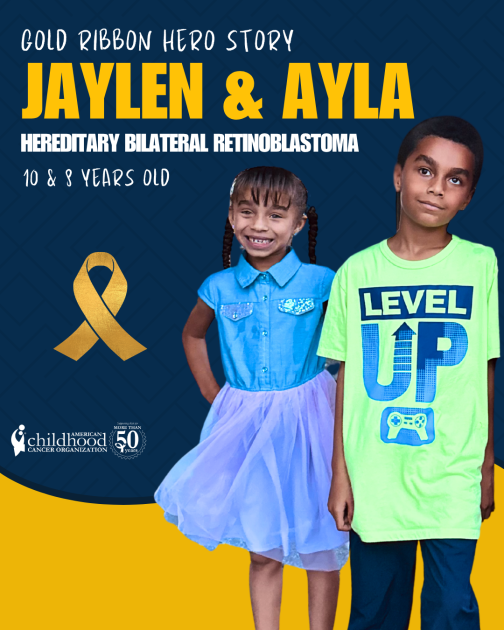
The journey of Jaylen, now 10, and his sister Ayla, 8, serves as a profound testament to the intersection of pediatric oncology, hereditary genetics, and the ongoing struggle for disability rights within the American medical system. Both siblings are survivors of hereditary bilateral retinoblastoma, a rare and aggressive form of eye cancer that affects the light-sensitive tissue of the retina. Their story, while one of ultimate triumph and survival, highlights the critical importance of early detection through the "retinoblastoma glow" and the systemic barriers faced by parents with disabilities when seeking life-saving care for their children.
The family’s confrontation with cancer began when Jaylen was just two months old. His mother, Denice, noticed a subtle but persistent physical anomaly: his left eye appeared to veer outward, a condition known medically as strabismus. While strabismus can be a benign developmental issue, in the context of pediatric ophthalmology, it is frequently a secondary symptom of an underlying intraocular tumor. At the time, the family also observed a peculiar reflection in Jaylen’s eyes in photographs—a white sheen where a "red-eye" reflex should have been. This phenomenon, known as leukocoria or the "glow," is the most common clinical sign of retinoblastoma, yet it is often dismissed by parents as a mere photographic glitch or a trick of the light.
The path to a definitive diagnosis for Jaylen was obstructed not by medical complexity, but by systemic failure. When Jaylen reached four months of age, Denice sought a routine check-up to address her concerns. However, as a deaf mother, she was met with a direct refusal of service. The medical facility at which she sought care declined to provide an American Sign Language (ASL) interpreter, effectively barring her from communicating with healthcare providers about her son’s health. This refusal represented a significant breach of the Americans with Disabilities Act (ADA), which mandates that healthcare providers provide auxiliary aids and services to ensure effective communication with patients and their family members.
Undeterred by the medical establishment’s negligence, Denice was forced to navigate the healthcare landscape independently, acting as her own advocate and investigator. Her persistence eventually led to a successful consultation with a specialist who recognized the urgency of Jaylen’s symptoms. The diagnosis was bilateral retinoblastoma, meaning tumors were present in both eyes. Because this form of the disease is often hereditary, the family was placed under strict surveillance. This proactive monitoring allowed for the early detection of the same condition in Jaylen’s younger sister, Ayla, who was diagnosed at just four weeks old.
Understanding Retinoblastoma and the Genetic Implications
Retinoblastoma is the most common primary intraocular malignancy of childhood, yet it remains rare, occurring in approximately one out of every 15,000 to 20,000 live births. It is caused by a mutation in the RB1 gene, a tumor suppressor gene located on chromosome 13. In cases of bilateral retinoblastoma, such as those experienced by Jaylen and Ayla, the condition is almost always hereditary, meaning the child either inherited a mutated copy of the RB1 gene from a parent or a new mutation occurred very early in embryonic development.
Children with the hereditary form of the disease are predisposed to developing multiple tumors in both eyes, typically before the age of five. The medical community emphasizes that the survival rate for retinoblastoma in developed nations is high—exceeding 95%—provided the cancer is detected before it spreads beyond the eye. However, the preservation of vision and the eye itself remains a significant challenge. For Jaylen and Ayla, the bilateral nature of their diagnosis necessitated a multi-year, aggressive treatment regimen designed to save their lives while attempting to salvage as much sight as possible.
The "glow" that Denice initially noticed in Jaylen’s photographs is a critical diagnostic marker. In a healthy eye, the retina reflects red when a camera flash hits it. When a tumor is present, the light reflects off the white mass of the cancer, creating a white or golden-yellow "glow" in the pupil. Organizations like the American Childhood Cancer Organization (ACCO) and "Know the Glow" have worked extensively to educate the public on this sign, as early detection can be the difference between a simple localized treatment and the surgical removal of the eye.
A Chronology of Treatment and the Burden of Advocacy
The treatment odyssey for Jaylen and Ayla spanned several years and involved a complex array of medical interventions. For Jaylen, the primary focus was on controlling the tumors while correcting the physical misalignment of his eyes. His treatment plan included systemic chemotherapy to shrink the intraocular masses, combined with focal therapies such as cryotherapy (the use of extreme cold to freeze and destroy cancer cells) and laser photocoagulation. Additionally, Jaylen underwent strabismus surgery to realign his ocular muscles, a procedure necessitated by the initial symptoms that led to his diagnosis.
Ayla’s journey followed a similar clinical path but required more drastic surgical intervention. Despite early detection at four weeks old, the progression of the disease in one of her eyes necessitated an enucleation—the surgical removal of the entire eye. Enucleation is typically reserved for cases where the tumor is too large to be treated by other means, where there is a risk of the cancer spreading via the optic nerve to the brain, or where the eye has lost all potential for vision and is causing pain.
Following her enucleation, Ayla was fitted with a prosthetic eye. Both siblings have since adapted to life with ocular prostheses, a process that requires significant psychological and physical adjustment. Denice’s role transitioned from a mother seeking a diagnosis to what she describes as the "ultimate advocate and manager" for her children’s health. This involved managing countless appointments, navigating the nuances of prosthetic maintenance, and ensuring that her children remained emotionally resilient in the face of chronic illness.
The Intersection of Disability Rights and Medical Ethics
The refusal of the initial medical provider to provide an ASL interpreter for Denice is a focal point of the family’s story that carries broad legal and ethical implications. Under Title III of the ADA, hospitals and doctors’ offices are considered "public accommodations." They are legally required to provide "effective communication" to individuals with disabilities. For many deaf individuals, this means providing a qualified ASL interpreter.
The denial of care based on a lack of an interpreter is not merely an administrative oversight; it is a form of discrimination that can lead to delayed diagnoses and catastrophic health outcomes. In the case of retinoblastoma, where days and weeks can determine whether a child loses an eye or their life, such barriers are particularly perilous. Denice’s frustration was "compounded by anger and frustration at the medical system that tried turning a deaf mother away," a sentiment that resonates with many in the disability community who face "communication barriers" in clinical settings.
This incident underscores the need for greater awareness and compliance training within medical facilities. The burden of ensuring accessibility should not fall on the patient or the parent, especially during a medical crisis. Denice’s experience highlights a systemic gap where the rights of the parent are inextricably linked to the health outcomes of the child.
Resilience, Style, and the "Legendary" Triumphs of Survivorship
Today, Jaylen and Ayla are thriving, a result that Denice characterizes as "absolutely legendary." Their survival is marked not just by the absence of cancer, but by an active embrace of their circumstances. Ayla, in particular, has turned the necessity of a prosthetic eye into a medium for self-expression. She has curated a collection of custom-colored irises, allowing her to "swap her eyes out" and match her prosthetic to her personal style and mood. This empowerment transforms a medical necessity into a tool for agency and confidence.
Furthermore, the family has used their platform to address the social pressures and criticisms that often accompany public health journeys. Denice has been open about her choice to "beautifully spoil" her children, prioritizing their joy and the "present moment" over traditional or external parenting expectations. This philosophy is a common response among families who have faced the life-threatening reality of pediatric cancer, where the fragility of life becomes a daily consideration.
Ayla has also begun learning ASL, a move that bridges the communication gap within the family and honors her mother’s identity. The children’s participation in awareness campaigns, sharing their "smiles and the glow," serves to educate other parents on the warning signs of retinoblastoma, potentially saving the sight of other children through the power of community storytelling.
Broader Impact and the Path Forward
The story of Jaylen and Ayla is more than a personal victory; it is a call to action for the pediatric oncology community and the healthcare system at large. It emphasizes three critical areas for improvement:
- Public Awareness of Leukocoria: The "glow" must be recognized as a medical emergency until proven otherwise. Continued public health campaigns are essential to ensure that parents and primary care physicians do not overlook this early warning sign.
- Genetic Counseling and Screening: For families with a history of bilateral retinoblastoma, early and frequent screening of newborns is vital. The fact that Ayla was diagnosed at four weeks old because of Jaylen’s history demonstrates the efficacy of genetic surveillance.
- Mandatory Accessibility in Healthcare: The medical system must move beyond a "compliance-only" mindset regarding the ADA. Providing interpreters and accessible communication is a fundamental component of patient safety and health equity. No parent should be turned away from a life-saving consultation because of their disability.
As Jaylen and Ayla continue to grow, their journey serves as a beacon of hope for other families navigating the "terrifying" word that is cancer. By choosing joy and presence, and by fearlessly advocating for their right to be heard and treated, they have proven that a diagnosis of childhood cancer is not the end of a joyful life, but the beginning of a new, resilient chapter. The family’s commitment to "celebrating life over anyone else’s opinions" remains a powerful message of empowerment for the pediatric cancer community worldwide.
