
 By Billy Candra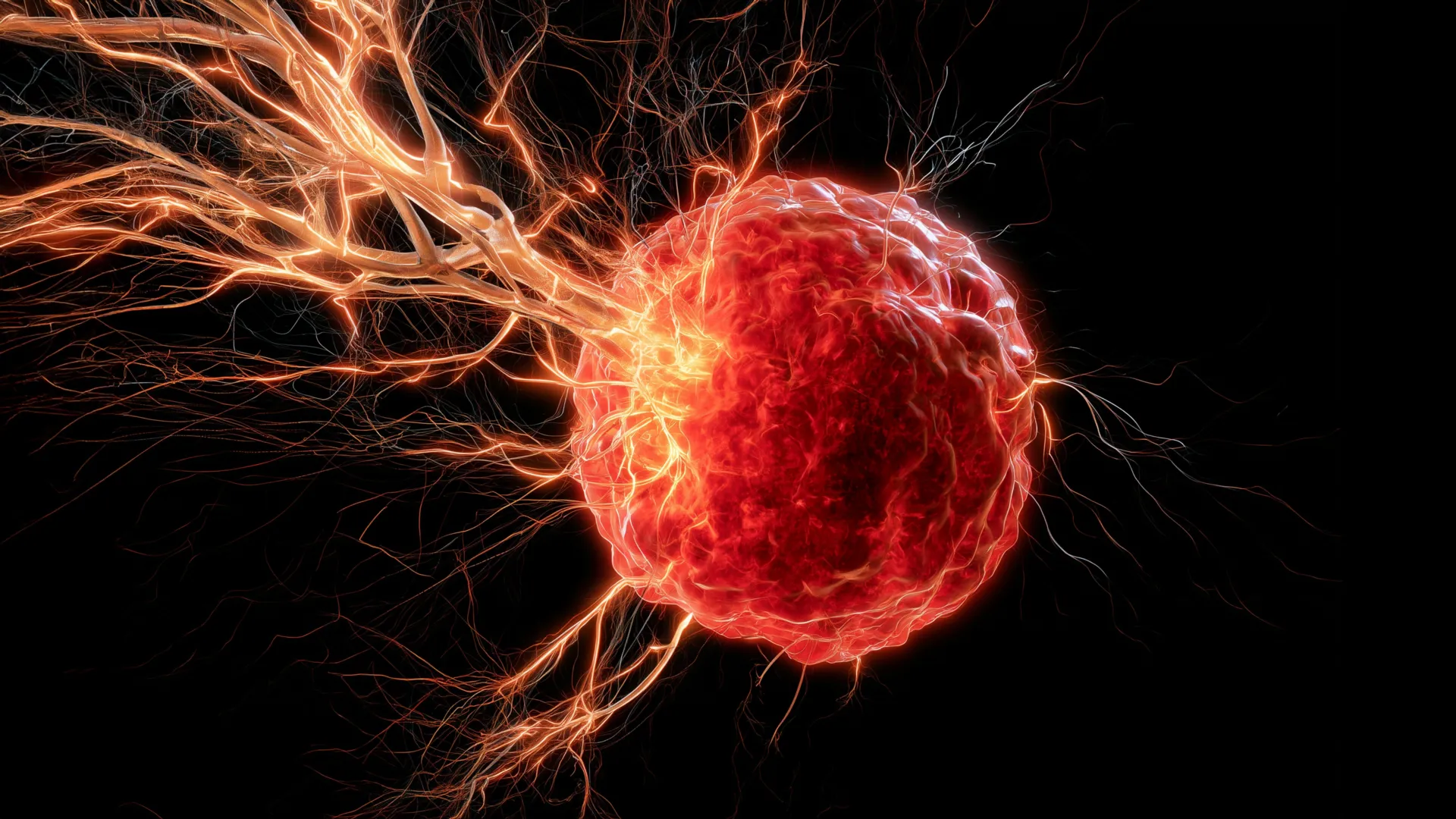
New research from the University of Oklahoma has revealed a critical mechanism by which an aggressive form of breast cancer manipulates the immune system to recruit nerves into tumors, thereby creating an environment conducive to its growth and potentially enhancing its resistance to treatment. This groundbreaking study, published in the esteemed journal Cell Death & Differentiation, provides an unprecedented explanation for how nerve networks, long known to be present in many solid tumors, are initially established, specifically focusing on the particularly challenging triple-negative breast cancer (TNBC). The findings offer a promising new avenue for therapeutic intervention, potentially paving the way for novel strategies that target the tumor microenvironment rather than solely focusing on the direct destruction of cancer cells.
The Enigma of Tumor Innervation: A Long-Standing Question
For decades, scientists have observed the presence of extensive nerve networks within various solid tumors. This phenomenon, known as tumor innervation or neurogenesis, has increasingly been recognized as a significant, albeit poorly understood, component of the tumor microenvironment. While the mere presence of nerves suggested a potential role in tumor biology, the precise mechanisms by which these nerves were recruited into the malignant tissue remained largely obscure. Understanding this process is crucial because nerves are not merely passive bystanders; they are dynamic communicators within the body, capable of influencing cell growth, differentiation, and even immune responses. Their integration into a tumor suggests a deeper, more sinister interaction that could contribute to cancer’s relentless progression.
The University of Oklahoma team, led by Dr. Maureen Cox, an assistant professor in the Department of Microbiology and Immunology at the OU College of Medicine and a research member of OU Health Stephenson Cancer Center, set out to unravel this mystery. Their focus on triple-negative breast cancer was deliberate, given its aggressive nature, high recurrence rates, and limited treatment options compared to other breast cancer subtypes.
Unmasking the Immune System’s Unwitting Complicity
The core of the OU research uncovers a sophisticated manipulation orchestrated by TNBC cells. The study found that tumors actively attract macrophages, a type of immune cell traditionally recognized for its beneficial roles in fighting infections, engulfing cellular debris, and facilitating tissue repair. These macrophages, once recruited into the tumor microenvironment, undergo a phenotypic shift, becoming what are often termed tumor-associated macrophages (TAMs). Instead of fulfilling their protective duties, TAMs are frequently co-opted by cancer cells to support tumor growth, angiogenesis (formation of new blood vessels), and metastasis.
In a pivotal discovery, the researchers identified that these tumor-infiltrating macrophages release brain-derived neurotrophic factor (BDNF). BDNF is a protein widely celebrated for its crucial role in the central nervous system, where it supports the growth, survival, and differentiation of neurons. It is fundamental for brain development, learning, and memory. However, the OU study meticulously demonstrated how breast cancer tumors exploit this very same biological signal. By secreting BDNF, the macrophages effectively send out a powerful chemical beacon, encouraging nearby nerves to grow directly towards and penetrate the cancerous mass. This process, driven by BDNF, appears to be a critical step in establishing the neural networks within the tumor.
Dr. Cox elaborated on this critical finding, stating, "Macrophages are the critical source for drawing nerves into the tumor. Although macrophages typically play a positive role in the body, they are facilitating a negative function in this scenario of breast cancer." This statement underscores the cunning adaptability of cancer, which can subvert the body’s own defense mechanisms into instruments of its proliferation. The understanding that immune cells, intended to protect, are instead facilitating nerve growth that aids the tumor, marks a significant shift in how scientists view the intricate interplay within the tumor microenvironment.
The Landscape of Triple-Negative Breast Cancer: A Formidable Foe
Triple-negative breast cancer accounts for approximately 10-15% of all breast cancers and is characterized by the absence of estrogen receptors (ER), progesterone receptors (PR), and human epidermal growth factor receptor 2 (HER2) amplification. This lack of specific receptors means that TNBC does not respond to hormone therapies or HER2-targeted drugs, which are highly effective in other breast cancer subtypes. Consequently, treatment options for TNBC are primarily limited to surgery, chemotherapy, and radiation therapy, often with less favorable outcomes. Patients with TNBC face higher rates of recurrence and metastasis, particularly to distant organs such as the brain, lungs, and liver, within the first few years after diagnosis. The median survival for metastatic TNBC remains challenging, highlighting the urgent need for novel therapeutic targets and strategies. This context amplifies the importance of the OU team’s discovery, as it identifies a new vulnerability in a particularly aggressive and recalcitrant disease.
Preclinical Validation: Blocking BDNF Signaling Halts Tumor Growth
The implications of this discovery are profound, suggesting a novel approach to cancer treatment that moves beyond the conventional focus on cytotoxic agents. Instead of exclusively targeting cancer cells for destruction, future therapies could aim to disrupt the intricate signaling pathways that foster tumor growth and resilience. The OU researchers put this hypothesis to the test in preclinical models, specifically in mice engineered to develop breast cancer.
They administered a drug designed to block BDNF signaling. The results were remarkably promising: in mice treated with the BDNF inhibitor, the growth of nerves into the tumors was significantly curtailed. More importantly, this interruption of nerve infiltration correlated with a substantial reduction in overall tumor growth. These findings provide compelling evidence that targeting the BDNF pathway could be a viable therapeutic strategy.
Dr. Cox expressed optimism about these results: "It looks really promising that we can use this drug, which is already on the market, to target BDNF." The potential to repurpose an existing drug, one that has already undergone rigorous safety testing and regulatory approval for other conditions, could dramatically accelerate the timeline for bringing this therapeutic approach to cancer patients. This aspect is particularly exciting for the medical community, as drug repurposing offers a more efficient and cost-effective pathway to new treatments compared to developing entirely new compounds from scratch.
Furthermore, Dr. Cox articulated a broader hypothesis regarding the role of these nerves: "We believe that the nerves are immunosuppressive, so if we can stop the nerves from growing in the first place, maybe we can boost the immune response to help fight the cancer." This suggests that the invading nerves might actively contribute to creating an immunosuppressive microenvironment within the tumor, effectively shielding cancer cells from attack by the body’s immune system. If this hypothesis holds true, blocking nerve growth could not only inhibit tumor progression directly but also render the tumors more susceptible to immunotherapies, which aim to unleash the body’s own immune defenses against cancer. This dual benefit positions BDNF inhibition as a potentially powerful adjunct therapy.
Translational Insights: Evidence from Human Patients
To ascertain the clinical relevance of their findings in mice, the researchers meticulously examined data from human patients diagnosed with triple-negative breast cancer. This critical step in translational research sought to determine whether the biological patterns observed in laboratory models were mirrored in human disease. The analysis revealed a compelling correlation: tumors from patients with higher levels of both macrophages and BDNF were significantly linked with poorer survival outcomes. This direct evidence strongly suggests that the mechanism identified in mice – where macrophages release BDNF to draw nerves into tumors – is indeed relevant to the progression and prognosis of TNBC in humans.
This translational validation is paramount. It bridges the gap between basic scientific discovery and clinical application, providing a robust foundation for pursuing human trials. The consistent correlation between high macrophage/BDNF levels and adverse patient outcomes underscores the potential prognostic and therapeutic value of this research. It indicates that these biomarkers could not only identify patients at higher risk but also serve as targets for personalized treatment strategies.
Future Directions: Unraveling the Nerve-Tumor Nexus
The University of Oklahoma team is not resting on its laurels. Their next phase of research is focused on dissecting the precise mechanisms by which nerves contribute to tumor growth and progression. While the current study has established that nerves are drawn into tumors and that this process aids growth, the how remains a subject of intense investigation.
Several hypotheses are being explored. One line of inquiry suggests that nerves may stimulate angiogenesis, the formation of new blood vessels. Tumors, being rapidly growing entities, have an insatiable demand for oxygen and nutrients. A robust blood supply, facilitated by angiogenesis, is essential for their survival and expansion. If nerves indeed promote blood vessel formation, they would be acting as critical enablers of tumor sustenance.
Another compelling area of research posits that cancer cells may exploit nerves as migratory pathways. As cancer cells become more aggressive, they often acquire the ability to detach from the primary tumor and invade surrounding tissues, a process known as metastasis. Some evidence indicates that cancer cells might "hitchhike" along nerve fibers, using them as conduits to disseminate from the original tumor site and colonize distant organs. This perineural invasion is a known poor prognostic factor in several cancers, including those of the head and neck and prostate. Understanding if and how TNBC cells utilize nerves for metastasis could open up new strategies to prevent disease spread, a major cause of cancer-related mortality.
Beyond TNBC, the researchers are also keen to test the same therapeutic intervention – blocking BDNF signaling – in other aggressive cancers. High-grade ovarian cancer is a primary candidate for this translational research. Like TNBC, ovarian cancer is often diagnosed at advanced stages, is highly aggressive, and presents significant challenges in treatment, frequently developing resistance to chemotherapy. If the nerve-recruitment mechanism is conserved across different aggressive cancer types, the therapeutic implications of blocking BDNF could extend far beyond breast cancer, offering a broader impact on cancer care.
Dr. Cox articulated the overarching goal: "Ultimately, we want to turn the anti-tumor immunity back on in cancer patients so their own immune systems can reject the tumors." This statement encapsulates a major paradigm shift in oncology: moving towards therapies that empower the body’s innate defenses to fight cancer, rather than relying solely on external agents. By disrupting the tumor’s ability to create a protective, growth-promoting microenvironment through nerve recruitment, the immune system may regain its ability to recognize and eliminate cancerous cells.
Broader Impact and Implications for Cancer Treatment
The findings from the University of Oklahoma represent a significant stride in understanding the complex interplay between cancer cells, the immune system, and the nervous system. This interdisciplinary approach to cancer research is crucial for uncovering novel vulnerabilities that traditional, cell-centric models might overlook.
The potential to repurpose an existing drug to target BDNF signaling offers a realistic and potentially rapid pathway to clinical trials. If successful, such a therapy could be integrated into current treatment regimens for triple-negative breast cancer, potentially improving patient outcomes by reducing tumor growth, preventing metastasis, and enhancing the efficacy of immunotherapies. For patients facing the daunting diagnosis of TNBC, a disease with limited targeted options, this research offers a tangible beacon of hope for more effective and less toxic treatments.
Moreover, the study contributes to the growing body of evidence highlighting the critical role of the tumor microenvironment in cancer progression. It reinforces the idea that cancer is not merely a disease of aberrant cells but a systemic illness involving complex interactions with surrounding healthy tissues, immune cells, and even nerve fibers. Future cancer research and drug development will increasingly need to consider these intricate ecological relationships within the tumor.
This research was supported by critical funding from the National Institute of General Medical Sciences of the NIH (award numbers P20GM103447 and P20GM103639), Oklahoma’s Tobacco Settlement Endowment Trust (TSET), a primary funder of the Stephenson Cancer Center and TSET Health Promotion Research Center at the University of Oklahoma, and by the Oklahoma Shared Clinical and Translational Resources through an Institutional Development Award from the National Institute of General Medical Sciences (grant no. U54GM104938). Such public and state-level support is indispensable for advancing fundamental scientific discoveries that hold the promise of transforming medical care and improving human health.
