
 By admin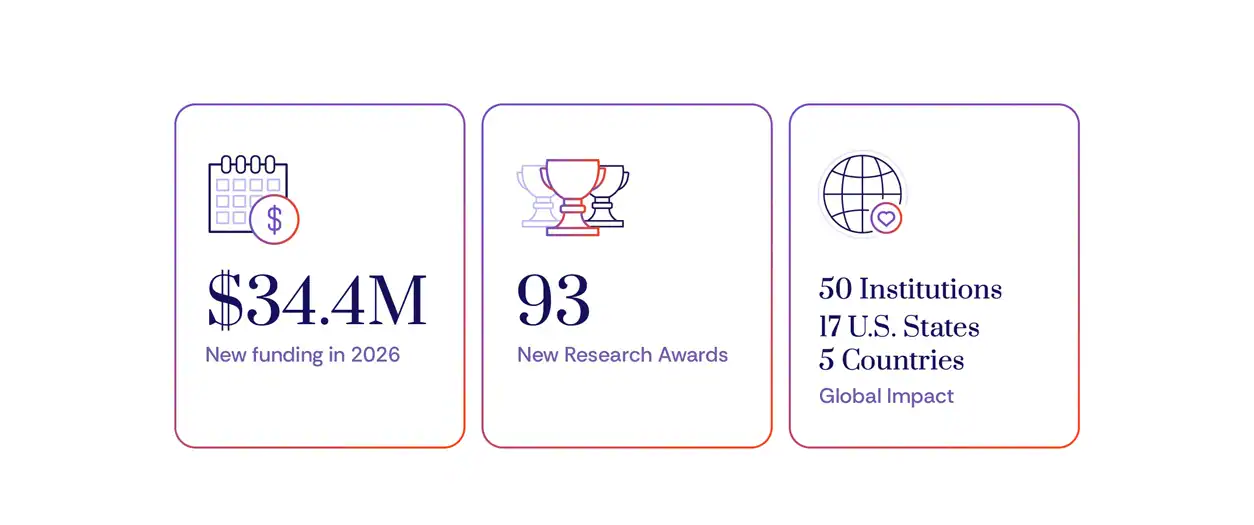
In a fiscal year marked by widespread funding cuts and an increasingly precarious environment for scientific research across the nation, the Cancer Research Institute (CRI) demonstrated an unwavering commitment to its core mission: to keep the vital work of science relentlessly moving forward. This strategic decision led to an unprecedented level of investment, propelling the organization to its largest grantmaking year in history.
Strategic Commitment Amidst Uncertainty
The past year, specifically fiscal year 2025-26, presented a formidable challenge to research institutions and individual scientists alike. Economic headwinds, shifting national priorities, and intense competition for dwindling federal grants created a landscape of significant uncertainty. Many researchers found their projects stalled, their laboratories under strain, and the trajectory of their careers, particularly for those in early stages, placed in jeopardy. It was within this challenging climate that CRI made a deliberate and impactful choice, reinforcing its dedication to the eradication of cancer through immunotherapy research.
For over seven decades, the Cancer Research Institute has stood at the forefront of pioneering cancer research, consistently championing innovative science and supporting exceptional talent. Its legacy is built on the belief that sustained investment in groundbreaking ideas and the brilliant minds behind them is the only path to transformative medical breakthroughs. This ethos was never more evident than in its response to the recent funding crises. CRI leadership recognized that moments of uncertainty are precisely when steadfast support is most crucial, preventing promising research from languishing and ensuring that momentum towards cures is not lost.
A Record-Breaking Year for Grantmaking
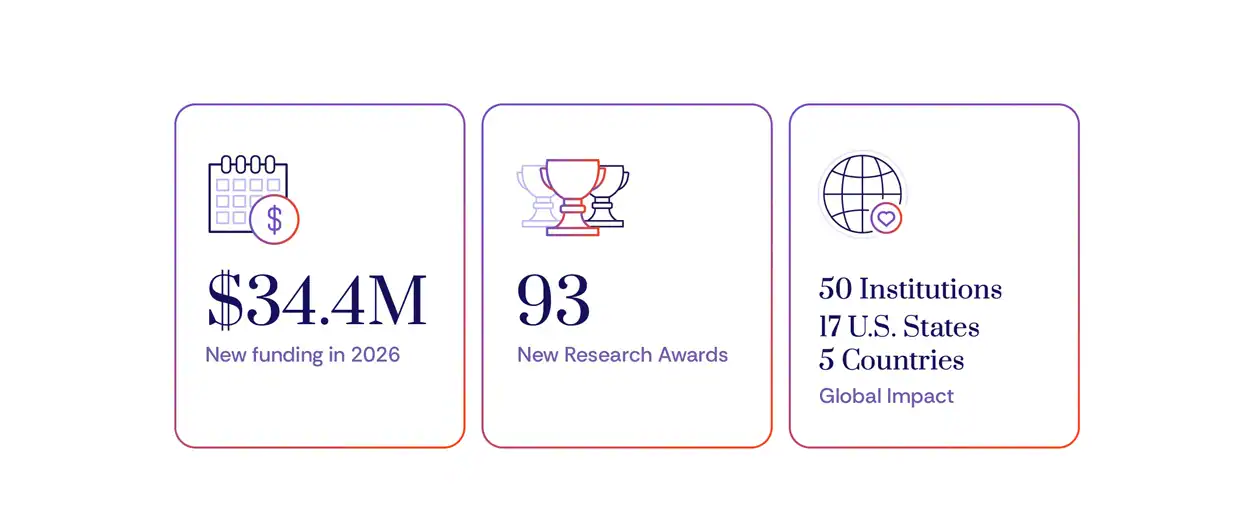
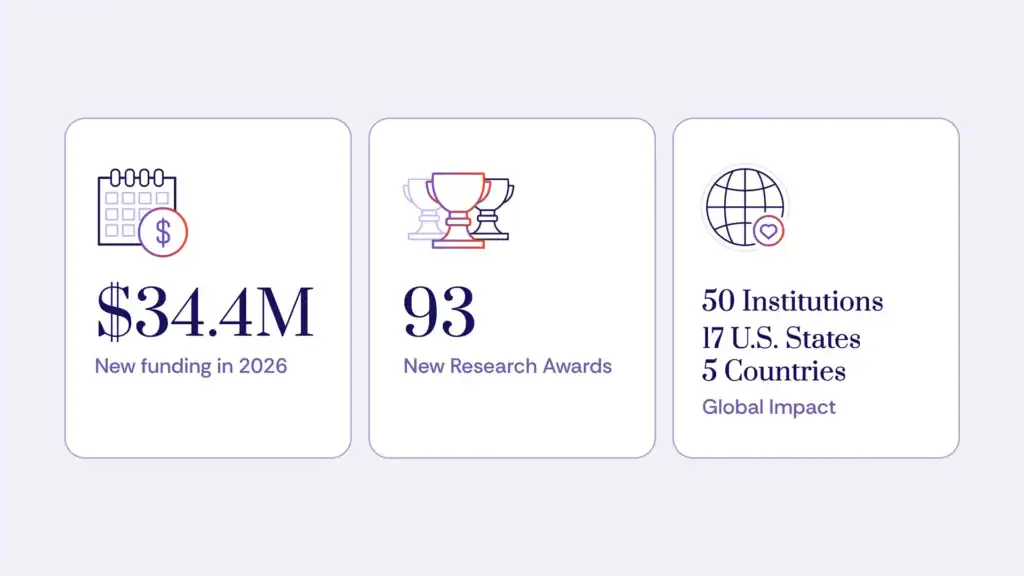
During fiscal year 2025-26, the Cancer Research Institute committed a staggering $34.4 million in new funding. This substantial investment was distributed across 93 distinct awards, reaching scientists in 50 institutions spanning five countries and 17 states within the U.S. This record-breaking grantmaking year underscores CRI’s expanded global reach and its strategic approach to fostering a diverse and interconnected network of researchers dedicated to unraveling the complexities of cancer.
The allocation of these funds was not merely a matter of quantity but of strategic intent. Each award represents an investment in a scientist pursuing an important, often high-risk, high-reward question. These recipients range from individuals just embarking on their independent research careers, establishing their first laboratories, to seasoned investigators leading ambitious programs capable of fundamentally reshaping the direction of the field of cancer immunotherapy. The depth and breadth of these investments highlight CRI’s understanding that scientific progress requires nurturing talent at every stage of professional development. Beyond merely providing financial resources, CRI offers the flexibility and confidence that empowers scientists to follow unexpected leads and take the calculated risks inherent in truly innovative research. This approach has been central to CRI’s philosophy for more than 70 years, supporting scientists even before their most significant discoveries come to fruition.
Nurturing the Next Generation: The IGNITE Award
One of the most significant initiatives launched in response to the challenging funding landscape is the new CRI IGNITE Award, an acronym for "Inspiring Growth and Nurturing Independence Through Excellence." This award directly addresses one of the most critical and vulnerable junctures in a scientist’s professional journey: the transition from postdoctoral training to establishing an independent research career.
The "valley of death," as this period is often termed within the scientific community, is fraught with unique challenges. Postdoctoral fellows, despite often possessing groundbreaking ideas and extensive training, must secure their own laboratories, define entirely original areas of investigation, and generate sufficient preliminary data to compete for long-term, highly competitive federal funding. Without adequate support during this pivotal phase, many promising ideas and brilliant young scientists risk being derailed, not due to a lack of potential or scientific merit, but simply because the essential resources needed to bridge this gap are incredibly difficult to secure. The national average success rate for securing initial independent research grants can be dishearteningly low, often hovering in the single-digit percentages for early-career investigators, making targeted support like IGNITE critically important.
The IGNITE Award is meticulously designed to help exceptional early-career scientists navigate this treacherous transition. It provides crucial support precisely when talented researchers are poised to build their independent programs and pursue bold, innovative questions that are uniquely their own. By offering financial stability and scientific freedom at this crucial moment, CRI aims to retain top talent within cancer research and accelerate the development of novel immunotherapies. This proactive intervention ensures that the next generation of scientific leaders is equipped to push the boundaries of knowledge without undue financial pressure or bureaucratic hurdles during their most formative years as independent investigators.
Spotlight on Innovation: Dr. Simone Park’s Journey
The profound impact of this sustained investment is vividly exemplified by the trajectory of Dr. Simone Park, an inaugural IGNITE Award recipient at the University of Pennsylvania. Dr. Park’s journey is a testament to the power of continuous support in fostering scientific excellence and independence. CRI first recognized Dr. Park’s exceptional potential by supporting her as a postdoctoral fellow, providing foundational backing for her early research endeavors.
Now, as she embarks on the next significant phase of her career, the IGNITE Award is instrumental in enabling her to establish her independent research program. Dr. Park’s work focuses on tissue-resident memory T cells – a specialized subset of immune cells that persist within tissues and are believed to play a crucial role in providing long-lasting protection against cancer recurrence. Her research delves into fundamental questions: what mechanisms enable these potent anti-tumor defenders to endure within tissues, and how can their remarkable durability be harnessed to create stronger, more sustained immune responses against cancer? By uncovering the intricate biology behind their persistence, Dr. Park aims to identify novel strategies that could revolutionize long-term cancer immunity, potentially preventing relapse and offering more durable cures for patients.
Dr. Park’s career path is more than an individual success story; it embodies CRI’s long-term vision. It underscores the immense value of supporting promising scientists across their entire professional continuum: from helping them cultivate specialized expertise during their postdoctoral training, to fostering their independence as they launch their own labs, and ultimately, enabling them to evolve into the scientific leaders who will define and shape the future of cancer immunotherapy. This multi-stage, holistic approach is a cornerstone of CRI’s strategy to maximize its impact on cancer research.
A Holistic Approach to Cancer Eradication
CRI’s commitment extends far beyond direct research awards. Its comprehensive programs form a continuum of support designed to cultivate a robust and dynamic scientific ecosystem. This includes:
- Postdoctoral Fellowships: Serving as vital launchpads for research careers, attracting and retaining top young talent.
- IGNITE Awards: As detailed, these awards bridge the critical gap to independence, ensuring that innovative ideas do not falter.
- CRI Lloyd J. Old STAR Awards: These prestigious awards provide established investigators with the freedom and substantial funding necessary to pursue high-risk, high-impact ideas that might be too unconventional for traditional funding mechanisms. This ensures that even the most audacious and potentially transformative concepts receive the support needed to be explored.
Together, these interconnected programs ensure that exceptional individuals are empowered with opportunities to advance their groundbreaking work at every pivotal moment in their careers, fostering both individual brilliance and collective progress.
Furthermore, CRI’s influence permeates other critical areas of cancer research and patient care. The organization actively advances clinical studies, translating promising laboratory discoveries into tangible patient treatments. It develops sophisticated data programs and shared resources, recognizing that open science and collaborative data sharing are essential for accelerating discovery in an increasingly complex biological landscape. CRI also equips scientists with new computational skills, acknowledging the growing importance of bioinformatics, artificial intelligence, and machine learning in modern biological research. Crucially, its mission also extends to patients and caregivers, providing trusted information and support to help them navigate the often-complex world of cancer immunotherapy. Each of these diverse investments contributes to a broader, interconnected ecosystem specifically designed to propel discovery forward and translate increasingly intricate biological insights into more effective and personalized treatments for patients globally.
The Broader Impact and Future Outlook

The decision by CRI to escalate its funding during a period of national research austerity carries significant implications for the entire scientific community and, ultimately, for millions of cancer patients. In an environment where federal funding for basic and translational research can be subject to political tides and economic fluctuations, the role of well-resourced philanthropic organizations like CRI becomes even more critical. They act as stabilizers, ensuring a continuous flow of support for innovative research that might otherwise be delayed or abandoned.
This strategic investment not only nurtures individual careers and accelerates specific research projects but also sends a powerful message: that the pursuit of knowledge and the fight against cancer must remain an unwavering priority, irrespective of external uncertainties. By investing heavily in early-career researchers through initiatives like IGNITE, CRI is safeguarding the future scientific workforce, preventing potential brain drain, and ensuring a vibrant pipeline of talent dedicated to addressing one of humanity’s greatest health challenges. The success stories emerging from this investment, such as Dr. Simone Park’s work on tissue-resident memory T cells, hold the promise of leading to next-generation immunotherapies that could dramatically improve patient outcomes, offering more durable remissions and, eventually, cures.
The Cancer Research Institute’s 2026 Annual Impact Report is expected to provide a detailed account of what this profound commitment has made possible during this record-setting year. It will serve as a tangible record of promises kept: promises to the brilliant scientists whose innovative ideas deserve every chance to flourish, to the patients and their families who await new possibilities and breakthroughs with hope, and to the dedicated supporters who believe implicitly in the transformative power of research to change and save lives.
While uncertainty may indeed alter the landscape in which science operates, it fundamentally does not change the core requirements for progress: exceptional people, bold and pioneering ideas, and the sustained, unwavering support necessary to bring these elements together. With its record-breaking investment and strategic initiatives, the Cancer Research Institute reaffirms its leadership in the global fight against cancer. There is extraordinary work still ahead, and by all indications, the CRI is just getting started in its relentless pursuit of a future free from cancer.
