
 By Billy Candra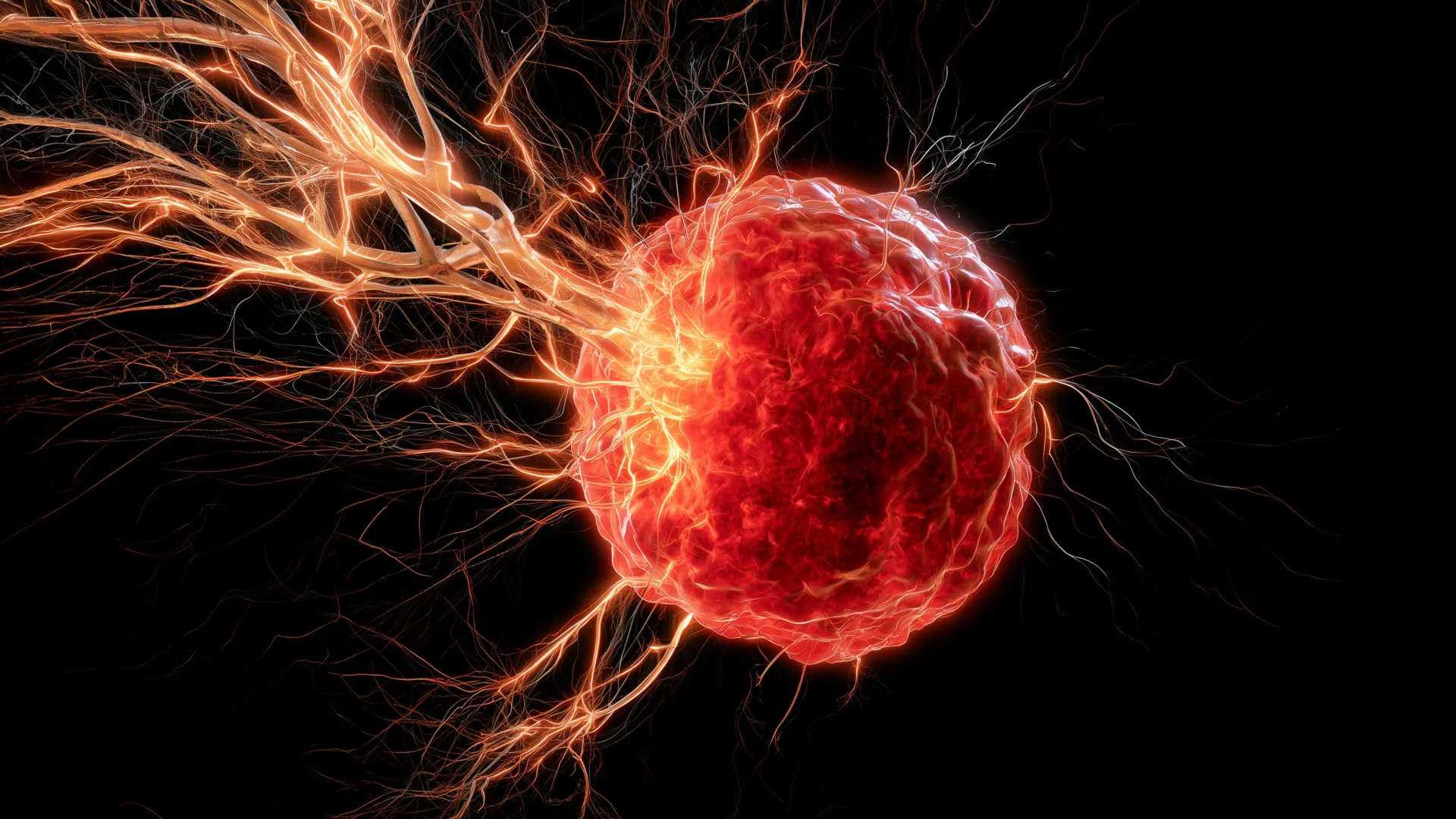
For decades, oncologists and cancer researchers have observed the presence of extensive nerve networks within many solid tumors. While the existence of these neural infiltrations was acknowledged, the precise mechanisms by which nerves are recruited into the tumor microenvironment remained largely a mystery. This new investigation by the University of Oklahoma team provides a compelling explanation for this complex process, particularly in the context of TNBC, a subtype known for its rapid progression and high rates of recurrence and metastasis.
Unraveling the Neural Recruitment Mechanism in Triple-Negative Breast Cancer
The core of the OU researchers’ discovery lies in identifying a sophisticated manipulative strategy employed by aggressive breast cancer cells. The study found that tumors actively attract macrophages, a versatile type of immune cell traditionally recognized for its protective roles in fighting infections and facilitating tissue repair. However, once these macrophages infiltrate the tumor, their benevolent functions are subverted. The researchers determined that these tumor-associated macrophages (TAMs) begin to secrete brain-derived neurotrophic factor (BDNF), a potent protein known to promote the growth and survival of nerve cells. In this cancerous context, BDNF acts as a molecular beacon, drawing nearby nerves directly towards and into the growing tumor mass.
BDNF is widely understood for its crucial role in neurogenesis and neuronal maintenance within the central nervous system. Its involvement in breast cancer, however, highlights a disturbing instance of biological mimicry and exploitation. The cancer essentially hijacks a fundamental biological signal intended for healthy neural development and repurposes it to foster its own nefarious expansion. This nerve recruitment, facilitated by BDNF, appears to contribute significantly to cancer progression and, critically, to resistance against conventional treatments.
Dr. Maureen Cox, Ph.D., an assistant professor in the Department of Microbiology and Immunology at the OU College of Medicine and a research member of OU Health Stephenson Cancer Center, emphasized the unexpected role of these immune cells. "Macrophages are the critical source for drawing nerves into the tumor," Dr. Cox stated. "Although macrophages typically play a positive role in the body, they are facilitating a negative function in this scenario of breast cancer." This paradoxical role underscores the intricate and often contradictory nature of the tumor microenvironment, where components of the immune system can be reprogrammed to support, rather than suppress, cancer growth.
The Aggressive Nature of Triple-Negative Breast Cancer: A Clinical Imperative
Triple-negative breast cancer accounts for approximately 10-15% of all breast cancers, yet it disproportionately contributes to breast cancer mortality. Characterized by its lack of expression for estrogen receptors (ER), progesterone receptors (PR), and human epidermal growth factor receptor 2 (HER2), TNBC is "triple-negative" because it lacks the three most common targets for breast cancer therapies. This absence of specific molecular targets means that many of the highly effective hormone therapies and HER2-targeted drugs, which have revolutionized treatment for other breast cancer subtypes, are ineffective against TNBC.
Patients diagnosed with TNBC typically face a more aggressive disease course, higher rates of metastasis, and a poorer prognosis compared to those with other breast cancer types. Standard treatment for TNBC primarily relies on chemotherapy, often administered before surgery (neoadjuvant) or after (adjuvant), sometimes combined with radiation therapy. While chemotherapy can be effective, TNBC tumors often develop resistance, leading to recurrence. The discovery of novel therapeutic targets and mechanisms for TNvention in TNBC remains a paramount objective in oncology research, making the University of Oklahoma’s findings particularly significant. The median survival for metastatic TNBC, despite advances, remains tragically low, highlighting the urgent need for new treatment paradigms.
A New Therapeutic Horizon: Blocking the BDNF Signal
The implications of this discovery extend beyond merely understanding cancer biology; they open a tangible new avenue for therapeutic intervention. Rather than solely focusing on the direct eradication of cancer cells, future treatment strategies could involve disrupting the intricate signaling pathways that foster the tumor’s growth and resilience. The research suggests a paradigm shift towards targeting the tumor microenvironment, specifically the cross-talk between immune cells and nerves that appears to support tumor proliferation.
To test this innovative approach, Dr. Cox and her team conducted preclinical experiments using mouse models. They administered a drug designed to block BDNF signaling, effectively inhibiting the communication pathway that lures nerves into tumors. The results were highly encouraging: nerve infiltration into the tumors was significantly curtailed, and, crucially, tumor growth itself was substantially reduced.
"It looks really promising that we can use this drug, which is already on the market, to target BDNF," Dr. Cox revealed. This detail is particularly noteworthy for its potential to accelerate clinical translation. Repurposing an existing, FDA-approved drug could dramatically shorten the lengthy and expensive development process typically required for novel pharmaceuticals, potentially bringing a new treatment option to patients much faster. The ability to leverage an already established safety profile could pave the way for expedited clinical trials.
The researchers hypothesize that the nerves, once embedded within the tumor, may actively contribute to an immunosuppressive environment, further hindering the body’s natural defenses. "We believe that the nerves are immunosuppressive, so if we can stop the nerves from growing in the first place, maybe we can boost the immune response to help fight the cancer," Dr. Cox elaborated. This insight connects the findings to the rapidly evolving field of immuno-oncology, suggesting that targeting neural infiltration could potentially enhance the efficacy of existing or emerging immunotherapies by reactivating the anti-tumor immune response.
Validating the Human Connection: Evidence from Patient Data
To ascertain the human relevance of their findings, the research team undertook a critical step: examining clinical data from patients diagnosed with triple-negative breast cancer. This retrospective analysis sought to determine whether the biological patterns observed in laboratory models translated to real-world patient outcomes. The investigation revealed a compelling correlation: tumors from patients with higher levels of both macrophages and BDNF were statistically linked with poorer survival rates.
This patient-centric data provides robust evidence that the macrophage-BDNF-nerve pathway, meticulously detailed in mouse models, is highly likely to be a significant contributing factor to disease progression and adverse outcomes in human TNBC patients. Such validation is paramount in translational research, bridging the gap between preclinical discoveries and clinical application. It strengthens the hypothesis that targeting this pathway could indeed offer a meaningful therapeutic benefit for individuals battling this aggressive cancer.
The Broader Impact and Future Directions in Cancer Research
The discovery from the University of Oklahoma team represents a significant leap forward in understanding the complex interplay between cancer cells, the immune system, and the nervous system. The implications are far-reaching, potentially influencing the development of next-generation cancer therapies and refining existing treatment protocols.
Dr. Cox and her colleagues are now focused on several critical lines of inquiry to build upon their initial findings. A primary objective is to precisely elucidate the mechanisms by which nerves contribute to tumor growth and aggression. While the current study establishes the recruitment of nerves, the exact downstream effects remain an area of active investigation. Some preliminary evidence suggests that these tumor-infiltrating nerves may play a role in promoting angiogenesis—the formation of new blood vessels that supply tumors with vital oxygen and nutrients, essentially fueling their growth. Other research indicates that cancer cells might exploit these nerve pathways as conduits for metastasis, using them as "highways" to disseminate from the primary tumor to distant sites in the body, a process central to cancer’s lethality.
Beyond breast cancer, the researchers are also exploring the broader applicability of their findings. Given the aggressive nature and treatment challenges associated with high-grade ovarian cancer, Dr. Cox and her team plan to investigate whether a similar macrophage-BDNF-nerve signaling axis contributes to its progression. Should this mechanism prove conserved across different aggressive cancer types, the potential for a widely applicable therapeutic strategy would be immense.
"Ultimately, we want to turn the anti-tumor immunity back on in cancer patients so their own immune systems can reject the tumors," Dr. Cox affirmed, encapsulating the overarching goal of her research. This vision aligns perfectly with the current momentum in oncology towards harnessing the body’s intrinsic defenses to combat cancer, moving beyond therapies that primarily focus on cytotoxicity.
Sustaining Innovation: The Role of Research Funding
This vital research was made possible through the generous support of several key funding bodies. The National Institute of General Medical Sciences of the NIH provided crucial grants (award numbers P20GM103447 and P20GM103639), underscoring the national commitment to advancing biomedical understanding. Additionally, Oklahoma’s Tobacco Settlement Endowment Trust (TSET), a primary funder of the Stephenson Cancer Center and TSET Health Promotion Research Center at the University of Oklahoma, played a significant role. Further support came from the Oklahoma Shared Clinical and Translational Resources through an Institutional Development Award from the National Institute of General Medical Sciences (grant no. U54GM104938).
These financial contributions are indispensable for sustaining the rigorous and often long-term endeavors required for groundbreaking scientific discovery. They enable researchers like Dr. Cox and her team to pursue innovative hypotheses, conduct complex experiments, and ultimately translate their findings into tangible benefits for patients. The success of this study exemplifies the profound impact of strategic investments in basic and translational research.
Conclusion: A Step Towards Personalized and Immunotherapy-Enhanced Care
The University of Oklahoma’s latest research represents a pivotal moment in the fight against aggressive cancers like triple-negative breast cancer. By meticulously detailing how tumors orchestrate the infiltration of nerves through a macrophage-BDNF pathway, the study not only demystifies a long-standing observation but also presents a compelling new target for therapeutic intervention. The potential to repurpose existing drugs to disrupt this nerve-tumor symbiosis, coupled with the possibility of enhancing the body’s own immune response, offers a beacon of hope for patients facing limited treatment options. As research continues to unravel the intricate mechanisms of cancer, studies like this bring us closer to a future where more personalized, effective, and less toxic treatments can be developed, ultimately improving the lives of countless individuals affected by this devastating disease.
