
 By George Ongkojoyo
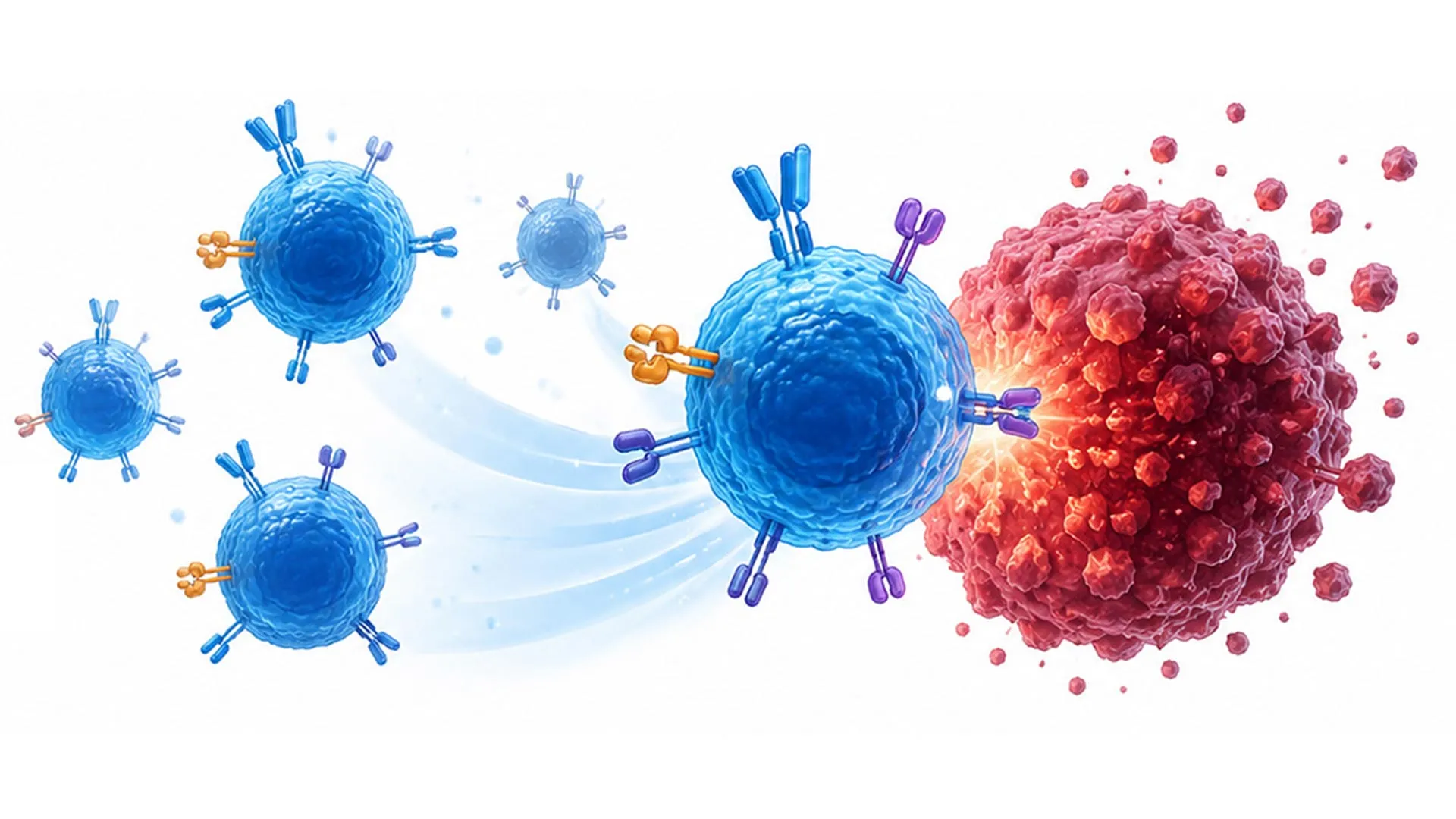
In a significant advancement for the field of oncology and regenerative medicine, a research team at the University of California, Los Angeles (UCLA) has unveiled a novel method for producing "off-the-shelf" immune cells capable of targeting solid tumors with unprecedented precision and cost-effectiveness. The study, published in the journal Cell Reports Medicine, details a scalable platform that utilizes blood stem cells from donated umbilical cord blood to generate high-quality T cell receptor (TCR) therapies. By overcoming the dual hurdles of high manufacturing costs and the risk of immune rejection, this development could represent a paradigm shift in how advanced cancers are treated globally.
For over a decade, immunotherapy has been hailed as the "fourth pillar" of cancer treatment, joining surgery, chemotherapy, and radiation. However, while therapies like Chimeric Antigen Receptor (CAR) T-cell therapy have seen remarkable success in treating blood cancers, such as leukemia and lymphoma, they have largely struggled against solid tumors. The UCLA team’s new approach, centered on TCR therapy, aims to breach the defenses of solid tumors by identifying cancer markers that remain hidden from traditional treatments.
The Evolution of Cell-Based Immunotherapy
To understand the magnitude of the UCLA breakthrough, it is necessary to examine the current landscape of adoptive cell transfer. The most prominent existing technology, CAR T-cell therapy, involves harvesting a patient’s own T cells and genetically engineering them to produce receptors on their surface. These receptors allow the T cells to recognize and latch onto specific proteins—antigens—that reside on the exterior of cancer cells.
While effective for certain malignancies, CAR T-cell therapy has two primary limitations. First, it can only detect antigens present on the cell surface. Second, many solid tumors do not express unique surface proteins, making them "invisible" to CAR T cells. TCR therapy offers a more sophisticated detection mechanism. Unlike CAR T cells, TCR-engineered cells can "see" fragments of proteins that originate inside the cancer cell. These fragments are brought to the surface by the Major Histocompatibility Complex (MHC), acting as molecular "tags" that signal the cell’s internal cancerous state.
Because many of the mutations that drive cancer occur deep within the cell’s internal machinery, TCR therapy has a much broader library of potential targets. However, the practical application of TCR therapy has been hindered by the necessity of using autologous cells—cells taken from the patient themselves—which leads to a slow, expensive, and often inaccessible treatment model.
Overcoming the Bottleneck of Personalization
Currently, most FDA-approved T-cell therapies are autologous. This means that for every single patient, a specialized manufacturing run must be initiated. A patient’s blood is drawn, their T cells are isolated and shipped to a laboratory, genetically modified, expanded into the millions, and then shipped back to the hospital for infusion.
This process typically takes three to six weeks—a timeframe that many patients with advanced, aggressive stage IV cancers simply do not have. Furthermore, the complexity of this "one-batch-one-patient" model drives costs into the range of $400,000 to $500,000 per dose, excluding the costs of hospitalization and managing side effects.
The alternative—allogeneic or "off-the-shelf" therapy—involves using cells from healthy donors. While this would allow for mass production and immediate availability, it introduces the risk of Graft-versus-Host Disease (GvHD). In GvHD, the donor’s mature T cells, which possess their own unique and random receptors, recognize the patient’s healthy organs as foreign and launch a systemic attack. To prevent this, scientists have previously attempted to use CRISPR or other gene-editing tools to "knock out" the natural receptors of donor T cells, but this adds another layer of complexity and potential for genetic errors.
A Breakthrough in Stem Cell Engineering
The UCLA researchers, led by co-senior author Lili Yang, a professor of microbiology, immunology, and molecular genetics, devised a strategy to bypass the GvHD problem by starting at an earlier stage of cellular development. Instead of using mature T cells from a donor, the team used hematopoietic (blood) stem cells derived from donated umbilical cord blood.
"Stem cells are undifferentiated—they’re not yet mature T cells with a fixed receptor already in place," explained co-first author Yichen (John) Zhu, a graduate student at the UCLA Broad Stem Cell Research Center.
By inserting the gene for a specific TCR into these immature stem cells, the researchers were able to guide their development in a controlled laboratory environment. As these stem cells matured into T cells, they did not develop the vast, random array of natural receptors that cause GvHD. Instead, the resulting population of T cells was uniform, with nearly every cell programmed to recognize a single cancer target: NY-ESO-1.
NY-ESO-1 is a well-known cancer-testis antigen. While it is generally absent from healthy adult tissues, it is frequently expressed in various solid tumors, including melanoma, sarcoma, and ovarian, prostate, and lung cancers. By targeting this specific protein fragment, the UCLA-engineered cells—dubbed AlloESO-T cells—can zero in on malignant cells with surgical precision.
Solving the Crisis of Antigen Escape
One of the most frustrating aspects of treating solid tumors is their heterogeneity. Even within a single tumor, cancer cells are not identical. Some cells may express the target antigen (like NY-ESO-1), while others do not. Furthermore, under the selective pressure of immunotherapy, cancer cells can undergo "antigen escape," where they stop producing the target protein to evade detection.
To address this, the UCLA team engineered a "fail-safe" into the AlloESO-T cells. In addition to the specific TCR, these cells also carry natural killer (NK) cell receptors. These receptors are designed to detect broad "stress signals" that are common to almost all cancer cells, regardless of their specific mutations.
"When a therapy built around a single target loses its grip due to antigen escape, our stem cell-derived cells still have a second mechanism to kill those tumor cells," said Zhu. In laboratory tests involving human melanoma and prostate cancer cells, the team demonstrated that even when the NY-ESO-1 signal was lost, the AlloESO-T cells continued to destroy the tumor cells using this secondary NK-based pathway.
Preclinical Success and Comparative Data
The efficacy of the AlloESO-T cells was tested in rigorous mouse models of ovarian cancer and melanoma. The results, as detailed in the study, showed a stark contrast between the UCLA approach and conventional donor-derived therapies.
In the ovarian cancer models, a single infusion of AlloESO-T cells led to sustained tumor regression and significantly extended survival rates. Perhaps more importantly, the mice showed no signs of GvHD. In contrast, mice treated with T cells engineered from mature donor blood experienced only temporary tumor control before the cells began attacking the animals’ healthy organs, leading to lethal toxicity.
The researchers also tracked the behavior of the cells post-infusion. The AlloESO-T cells demonstrated a remarkable "expansion" capability, increasing their numbers by approximately 100-fold within the body. They specifically migrated to the site of the tumors and remained active for several weeks. Conversely, the traditional donor T cells tended to accumulate in the liver and lungs, causing the inflammation and tissue damage characteristic of GvHD.
Economic Implications and Scalability
The manufacturing potential of the AlloESO-T platform is perhaps its most disruptive feature. Because hematopoietic stem cells from cord blood are highly proliferative, a single unit of donated cord blood can serve as the starting material for a massive quantity of therapeutic cells.
"From a small number of cord blood stem cells, we can generate trillions of therapeutic cells—enough for thousands of doses—within about six weeks," said co-senior author Yanruide (Charlie) Li, a postdoctoral scholar in the Yang lab.
The researchers estimate that if this process is scaled up for clinical use, the cost per dose could drop to approximately $5,000. Compared to the $400,000+ price tag of current autologous CAR-T therapies, this represents a 98% reduction in cost. Such a price point would not only make the treatment accessible to a much larger portion of the population in developed nations but could also allow for its introduction in middle-income countries where personalized cell therapy is currently non-existent.
Chronology and Path to Clinical Trials
The development of the AlloESO-T platform is the result of years of iterative research at UCLA. The team previously developed a similar "off-the-shelf" platform using invariant natural killer T (iNKT) cells, which is currently being moved toward clinical application.
The timeline for the AlloESO-T project is as follows:
- Discovery Phase: Identification of cord blood stem cells as a viable source for TCR therapy and the integration of the NY-ESO-1 receptor.
- Optimization Phase: Development of the "dual-targeting" mechanism (TCR + NK receptors) to combat antigen escape.
- Preclinical Testing: Validation of the cells in mouse models and human cell lines (the current stage published in Cell Reports Medicine).
- Manufacturing Scale-up: Partnering with the UCLA Health Center for Advanced Biotherapies to produce clinical-grade cells under Good Manufacturing Practice (GMP) standards.
- Future Phase: Submission of an Investigational New Drug (IND) application to the FDA to begin Phase I human clinical trials.
While the results are promising, the researchers emphasize that human trials are the essential next step. Mouse models, while useful, do not perfectly replicate the human immune system, and the safety and longevity of AlloESO-T cells in humans must be proven before the therapy can reach the market.
Broader Impact on the Oncology Landscape
The implications of this research extend far beyond NY-ESO-1 and ovarian cancer. The UCLA team views this not as a single drug, but as a modular platform.
"As long as a receptor for a given cancer antigen has been validated, we can build it into this system and generate T cells specific to that target," said Li. This means the platform could theoretically be adapted to target any number of solid tumors, including hard-to-treat glioblastomas, pancreatic cancers, and breast cancers, simply by "swapping out" the TCR gene.
Furthermore, the ability to have "frozen and ready-to-go" doses changes the clinical workflow. Instead of waiting weeks for a laboratory to process a patient’s cells, doctors could prescribe the therapy and administer it within 24 hours, much like a traditional pharmaceutical drug. This "on-demand" immunotherapy could be life-saving for patients with rapidly progressing disease.
As the oncology community moves toward more personalized yet accessible treatments, the work coming out of UCLA provides a blueprint for a future where high-tech cancer cures are no longer a luxury for the few, but a standard of care for the many. The integration of stem cell biology, genetic engineering, and scalable manufacturing marks a pivotal moment in the fight against solid tumors, potentially closing the gap between laboratory innovation and bedside reality.
