
 By Gabriel Paijo
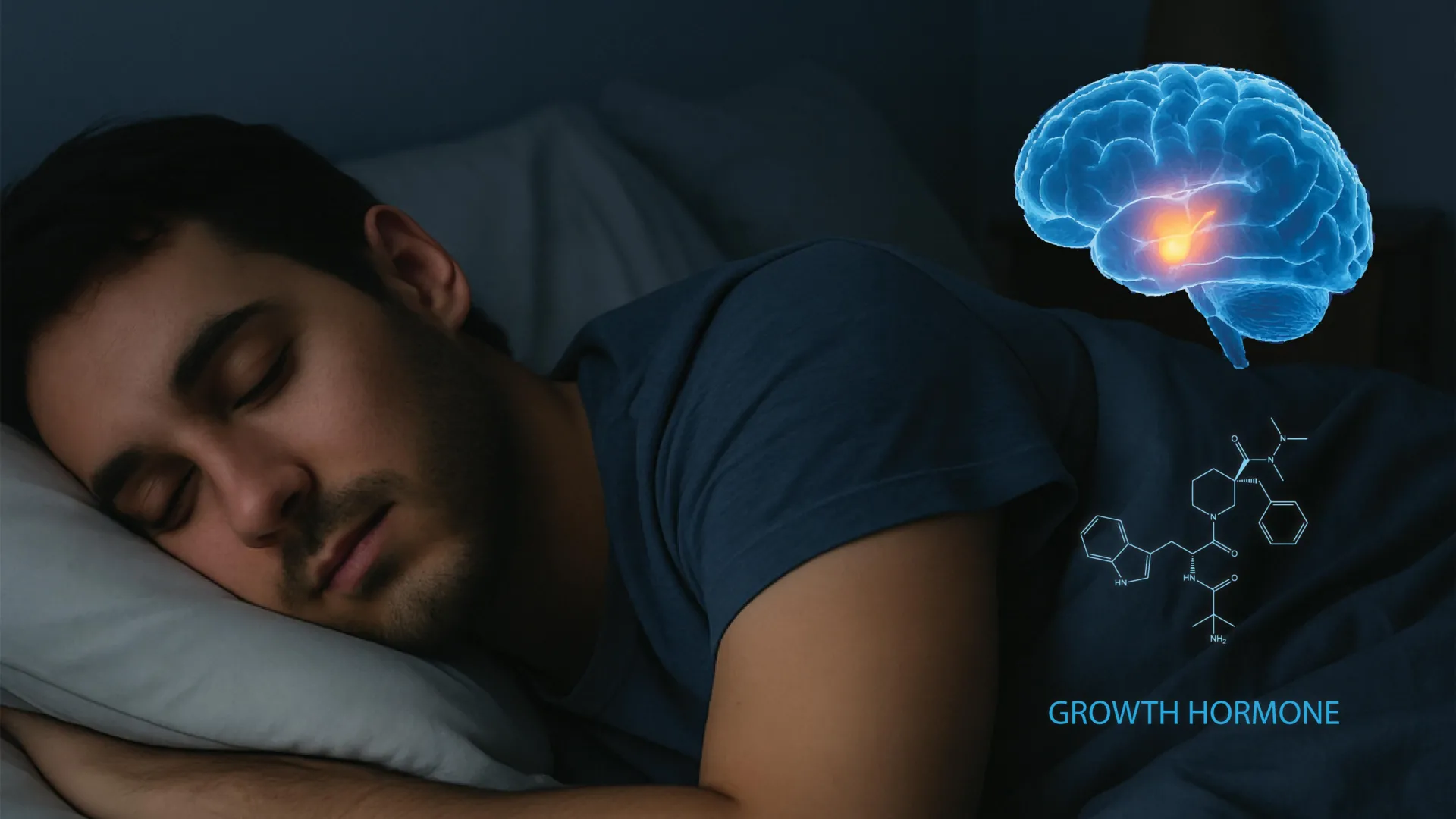
In a landmark study published in the journal Cell, neuroscientists at the University of California, Berkeley, have identified the specific brain circuitry responsible for the release of growth hormone during sleep. The research provides the first direct evidence of a bidirectional feedback loop between the brain’s sleep centers and the endocrine system, revealing that while sleep triggers the production of growth hormone, the hormone itself eventually signals the brain to wake up. This discovery offers a new neurological framework for understanding the profound connection between restorative rest, physical development, and metabolic health, potentially opening doors for novel treatments for sleep disorders, diabetes, and neurodegenerative diseases.
For decades, the medical community has recognized a temporal correlation between deep sleep and the secretion of growth hormone (GH). Clinical observations have long shown that the highest concentrations of GH in the human bloodstream occur during the initial hours of the night, specifically during non-rapid eye movement (non-REM) sleep. However, the precise neural mechanisms that coordinate this release remained elusive. By utilizing advanced optogenetic techniques and real-time neural recording in mice, the UC Berkeley team has successfully mapped the intricate dialogue between the hypothalamus and the pituitary gland, providing a "basic circuit" that scientists can now target for therapeutic intervention.
The Biological Significance of Growth Hormone
Growth hormone, secreted by the pituitary gland, is a vital chemical messenger that serves as a cornerstone of human physiology. While its name highlights its role in childhood and adolescent development—where it is essential for bone elongation and muscle growth—its importance does not diminish in adulthood. In adults, GH is a primary regulator of metabolism. It facilitates the breakdown of fats (lipolysis), supports the maintenance of lean muscle mass, and plays a critical role in glucose homeostasis.
When GH regulation is compromised due to chronic sleep deprivation, the consequences are systemic. Insufficient sleep has been linked to a higher risk of obesity, type 2 diabetes, and cardiovascular disease, largely because the body loses its ability to effectively manage energy stores and blood sugar levels. The UC Berkeley study provides a mechanistic explanation for these links, showing how the disruption of specific hypothalamic neurons can lead to a cascade of metabolic failures.
Mapping the Hypothalamic Control Center
The research, conducted in the laboratory of Yang Dan, a professor of neuroscience and an investigator with the Howard Hughes Medical Institute, focused on the hypothalamus. This pea-sized region at the base of the brain acts as the body’s "master switchboard," regulating everything from body temperature and hunger to the circadian rhythms that govern the sleep-wake cycle.
Within the hypothalamus, the researchers identified two competing groups of neurons that dictate GH production: those that produce growth hormone-releasing hormone (GHRH) and those that produce somatostatin.
- GHRH Neurons: These act as the "accelerator" for growth hormone production. When activated, they signal the pituitary gland to release GH into the bloodstream.
- Somatostatin Neurons: These act as the "brake," suppressing the release of GH to ensure levels do not become excessive.
The Berkeley team discovered that these neurons behave with high specificity depending on the stage of sleep. During non-REM sleep—the deep, restorative phase—somatostatin activity drops significantly, removing the "brake," while GHRH activity rises, pushing the "accelerator." Surprisingly, the researchers found that during REM sleep, the stage associated with vivid dreaming, both types of neurons increase their activity in a coordinated fashion that still results in an overall increase in GH secretion. This suggests that the brain prioritizes hormone production across multiple stages of the sleep cycle, albeit through different neural pathways.
The Feedback Loop: Growth Hormone as a Wakefulness Signal
One of the most significant revelations of the study is that the relationship between sleep and GH is not a one-way street. Historically, GH was viewed as a passive byproduct of sleep. The new data shows that GH actively communicates back to the brain to influence arousal levels.
The researchers traced the effects of GH to the locus coeruleus (LC), a cluster of neurons in the brainstem that serves as the primary source of norepinephrine, a chemical responsible for alertness and the "fight or flight" response. As GH levels peak during sleep, the hormone stimulates the LC. This stimulation gradually increases the brain’s excitability, eventually tipping the balance from sleep to wakefulness.
"This suggests that sleep and growth hormone form a tightly balanced system," noted Daniel Silverman, a UC Berkeley postdoctoral fellow and study co-author. "Too little sleep reduces growth hormone release, and too much growth hormone can in turn push the brain toward wakefulness."
This homeostatic balance is essential. It ensures that the body receives enough deep sleep to perform necessary repairs and metabolic regulation, but it also provides a biological "alarm clock" that prevents the body from remaining in a state of deep sedation indefinitely.
Methodology and the Use of Mouse Models
To achieve these findings, the research team utilized mice, which share many fundamental brain structures and hormonal pathways with humans. Mice are particularly advantageous for sleep research because of their polyphasic sleep patterns. Unlike humans, who typically sleep in one long consolidated block, mice sleep in short bursts throughout a 24-hour period.
Using electrodes implanted in the hypothalamus and the locus coeruleus, the scientists were able to record neural firing patterns with millisecond precision. They also employed optogenetics—a technique where light is used to turn specific neurons on or off in living tissue. By stimulating GHRH neurons with pulses of light, the researchers could induce GH release and observe the subsequent reaction in the brain’s arousal centers. This level of direct observation was previously impossible in human subjects, where GH levels could only be measured through periodic blood draws, which lack the temporal resolution to match specific neural events.
Clinical Implications: From Diabetes to Dementia
The identification of this brain circuit has profound implications for public health. Currently, millions of people suffer from sleep disorders that are intrinsically linked to metabolic and neurological health.
Metabolic Health:
By understanding how the hypothalamus controls GH, scientists may develop "hormonal chronotherapies" that restore normal GH rhythms in patients with obesity or type 2 diabetes. If the GHRH/somatostatin circuit can be modulated, it may be possible to improve a patient’s metabolic profile simply by improving the quality of their deep sleep.
Neurological and Psychiatric Disorders:
The locus coeruleus, which the study identified as a target of GH feedback, is heavily implicated in several high-profile conditions. In Alzheimer’s and Parkinson’s disease, the LC is often one of the first areas of the brain to show signs of degeneration. Furthermore, disruptions in LC activity are linked to ADHD, anxiety, and clinical depression.
"This circuit could be a novel handle to try to dial back the excitability of the locus coeruleus," Silverman explained. If GH-based therapies can stabilize the LC, they might offer a new way to treat the cognitive decline and sleep disturbances associated with neurodegeneration.
A New Era of Sleep Science
The study by Ding, Silverman, and Dan marks a shift in how we perceive the "quiet" brain. The findings underscore that sleep is not a period of neural inactivity, but a highly orchestrated performance of chemical signaling.
The research was supported by the Howard Hughes Medical Institute and the Pivotal Life Sciences Chancellor’s Chair fund, highlighting the high priority the scientific community places on mapping the brain’s "interactome"—the complex web of interactions between different systems.
While the results are groundbreaking, the authors caution that further research is needed to translate these findings into human medicine. The next steps will involve determining if the same feedback loops can be safely manipulated in humans and investigating how aging—a period when both sleep quality and GH production naturally decline—affects this newly discovered circuit.
Ultimately, the study reaffirms the necessity of prioritizing sleep. "Growth hormone not only helps you build your muscle and bones and reduce your fat tissue, but may also have cognitive benefits, promoting your overall arousal level when you wake up," said lead author Xinlu Ding. In an age of chronic sleep deprivation, the UC Berkeley research provides a powerful reminder that the quality of our waking life is inextricably tied to the biological processes that occur while we are unconscious.
