
 By Billy Candra
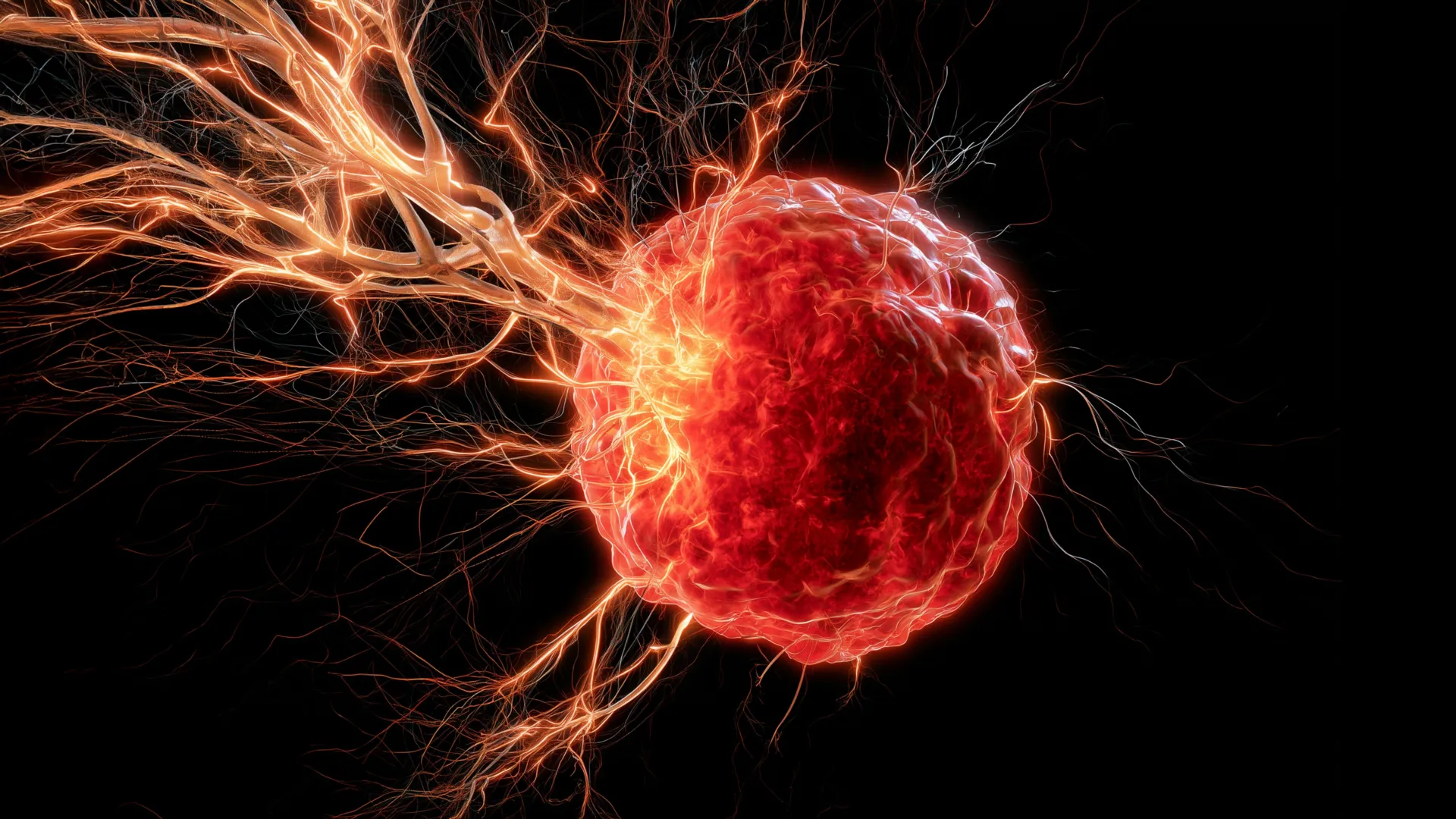
A groundbreaking study from the University of Oklahoma has illuminated a previously unclear pathway by which an aggressive form of breast cancer, triple-negative breast cancer (TNBC), cunningly manipulates the body’s own immune system to recruit nerves into tumors. This intricate process, detailed in the journal Cell Death & Differentiation, creates a microenvironment that appears to foster cancer growth, progression, and resistance to existing treatments, offering a promising new avenue for therapeutic intervention.
For decades, scientists have observed the presence of extensive nerve networks within many solid tumors. However, the precise mechanisms governing the infiltration of these nerves into cancerous masses have largely remained elusive. This new research provides a significant step forward, explaining how these nerves are drawn into TNBC, a particularly challenging subtype of breast cancer due to its aggressive nature and limited targeted treatment options. The discovery not only sheds light on a fundamental aspect of tumor biology but also identifies a potential target for novel therapies that could disrupt this nerve-cancer alliance.
Deciphering the Tumor’s Neural Network
The concept of nerves playing an active role in cancer progression, rather than merely being bystanders, has gained increasing traction in recent years. These "tumor-associated nerves" (TANs) are no longer viewed simply as passive structures that tumors encounter as they grow. Instead, they are increasingly recognized as dynamic components of the tumor microenvironment, actively participating in various stages of cancer development, from initiation and growth to metastasis and recurrence. Studies have indicated that nerve density within tumors can correlate with prognosis in several cancer types, including prostate, gastric, and pancreatic cancers. The challenge has been to understand the signaling pathways that orchestrate this neural recruitment.
The University of Oklahoma team’s pivotal finding identifies macrophages, a type of immune cell traditionally known for its protective roles in fighting infections and repairing damaged tissues, as the key orchestrators in this nerve recruitment process within TNBC. The researchers found that once these macrophages infiltrate the tumor, they undergo a transformation, becoming unwitting accomplices in the cancer’s scheme. They begin to release a potent signaling protein called brain-derived neurotrophic factor (BDNF).
The Immune System’s Unwitting Complicity: Macrophages as Architects
Macrophages are highly plastic immune cells, capable of adapting their function based on environmental cues. In a healthy physiological context, they are vital for initiating inflammatory responses, clearing cellular debris, and promoting tissue repair. However, within the complex and often hostile tumor microenvironment, these cells can be reprogrammed, evolving into what are known as tumor-associated macrophages (TAMs). TAMs are frequently associated with pro-tumorigenic activities, including promoting angiogenesis (new blood vessel formation), suppressing anti-tumor immune responses, and facilitating metastasis.
The OU study specifically highlights a novel pro-tumorigenic role for TAMs: their ability to secrete BDNF, thereby actively attracting nerves. BDNF is a member of the neurotrophin family, a group of proteins crucial for the survival, growth, and differentiation of neurons in both the central and peripheral nervous systems. While BDNF is predominantly recognized for its vital functions in brain development and plasticity, the researchers discovered that TNBC tumors exploit this very same biological signal to their advantage. By eliciting the growth of nerves into the tumor, this macrophage-BDNF axis potentially contributes to increased tumor aggression, resistance to therapy, and a poorer prognosis for patients.
Dr. Maureen Cox, Ph.D., an assistant professor in the Department of Microbiology and Immunology at the OU College of Medicine and a research member of OU Health Stephenson Cancer Center, underscored this paradoxical role. "Macrophages are the critical source for drawing nerves into the tumor. Although macrophages typically play a positive role in the body, they are facilitating a negative function in this scenario of breast cancer," Dr. Cox explained. This statement succinctly captures the insidious nature of cancer’s ability to hijack normal physiological processes for its own survival and proliferation.
The Urgent Need for Innovation: Understanding Triple-Negative Breast Cancer
Triple-negative breast cancer represents approximately 10-15% of all diagnosed breast cancers, but it accounts for a disproportionately higher percentage of breast cancer deaths. It is characterized by the absence of three key receptors that are typically targeted in other breast cancer subtypes: estrogen receptors (ER), progesterone receptors (PR), and human epidermal growth factor receptor 2 (HER2). This lack of receptors means that TNBC does not respond to hormone therapy or HER2-targeted therapies, leaving chemotherapy as the primary systemic treatment option.
TNBC is notoriously aggressive, often diagnosed in younger women, and tends to grow and spread more rapidly than other types of breast cancer. It has a higher likelihood of recurrence and metastasis, particularly to distant organs such as the brain, lungs, and liver. While significant advancements have been made in breast cancer treatment overall, TNBC remains a formidable challenge, with poorer long-term survival rates compared to ER-positive or HER2-positive breast cancers. The urgent need for novel therapeutic targets and strategies that can improve outcomes for TNBC patients cannot be overstated. The OU research, by uncovering a fundamental mechanism of TNBC progression, directly addresses this critical unmet medical need.
Preclinical Breakthrough: Blocking the Neural Infiltration Pathway
The identification of the macrophage-BDNF-nerve axis as a driver of TNBC growth immediately suggested a potential therapeutic strategy: interrupting this signaling pathway. Dr. Cox and her colleagues put this hypothesis to the test in preclinical models, specifically in mice with triple-negative breast cancer. They administered a drug known to block BDNF signaling. The results were compelling: the treated mice showed a significant reduction in nerve infiltration into the tumors. More importantly, this interruption of nerve growth was associated with a substantial reduction in tumor growth.
This finding carries immense translational potential, particularly because drugs that target BDNF signaling pathways are already in existence and, in some cases, on the market for other neurological conditions. The possibility of repurposing an existing drug could dramatically accelerate the timeline for bringing this novel approach to cancer patients, bypassing some of the lengthy and costly early-stage drug development processes.
Dr. Cox expressed optimism about these results, stating, "It looks really promising that we can use this drug, which is already on the market, to target BDNF." She further elaborated on the potential downstream effects of this intervention, hypothesizing that "we believe that the nerves are immunosuppressive, so if we can stop the nerves from growing in the first place, maybe we can boost the immune response to help fight the cancer." This suggests a multifaceted benefit, not only hindering tumor growth directly but also potentially re-engaging the body’s own immune defenses against the cancer.
Translating Findings to Human Impact: Clinical Relevance
A crucial step in any preclinical research is to ascertain its relevance to human disease. To this end, the OU researchers meticulously examined data from patients diagnosed with triple-negative breast cancer. Their analysis revealed a compelling correlation: tumors from patients with higher levels of macrophages and BDNF were linked with poorer survival outcomes. This direct evidence from human patient data strongly supports the translatability of the mechanisms observed in the mouse models, suggesting that the macrophage-BDNF-nerve axis is indeed active and clinically significant in human TNBC. This validation is vital for advancing the research toward clinical trials and underscores the potential for this discovery to directly impact patient care.
Unraveling Deeper Connections: How Nerves Fuel Cancer
While the OU study has elucidated how nerves infiltrate tumors, the precise mechanisms by which these nerves then contribute to tumor growth and progression remain an active area of investigation. Dr. Cox and her team are now focused on delving deeper into these interactions. Several hypotheses are currently being explored:
- Angiogenesis Promotion: Nerves are known to release growth factors that can stimulate the formation of new blood vessels (angiogenesis). Tumors are highly dependent on a robust blood supply for oxygen and nutrients to fuel their rapid growth. If nerves contribute to angiogenesis within the tumor, they would be directly supporting its expansion.
- Metastasis Pathways: Emerging evidence suggests that nerves can serve as physical scaffolds or "highways" along which cancer cells migrate, facilitating their escape from the primary tumor and subsequent metastasis to distant sites. Perineural invasion, where cancer cells invade and spread along nerves, is a well-recognized aggressive feature in several cancer types.
- Direct Trophic Support: Nerves may also directly secrete factors that promote the proliferation and survival of cancer cells themselves, essentially feeding the tumor.
- Immune Modulation: As Dr. Cox hinted, nerves might actively contribute to the immunosuppressive microenvironment within the tumor, dampening the body’s natural anti-cancer immune response. This could involve direct signaling to immune cells or altering the expression of immune checkpoints.
Understanding these detailed mechanisms will be crucial for developing even more precise and effective therapeutic strategies.
Looking Beyond Breast Cancer: Broader Therapeutic Horizons
The implications of this research extend beyond triple-negative breast cancer. Given that nerve infiltration is a common feature across many solid tumors, the macrophage-BDNF-nerve axis could represent a more generalizable mechanism of tumor progression. Dr. Cox and her team have already initiated plans to investigate this same intervention in high-grade ovarian cancer, another aggressive malignancy that presents significant treatment challenges and often has a poor prognosis.
The potential applicability to other nerve-rich cancers, such as pancreatic, prostate, and gastric cancers, is also a tantalizing prospect. If a common signaling pathway drives nerve infiltration and subsequent tumor growth across various cancer types, blocking BDNF could emerge as a "pan-cancer" therapeutic strategy, offering a novel approach for a broad spectrum of aggressive diseases.
Ultimately, the overarching goal of this research, as articulated by Dr. Cox, is to "turn the anti-tumor immunity back on in cancer patients so their own immune systems can reject the tumors." This vision aligns with the broader paradigm shift in oncology towards harnessing the power of the patient’s own immune system to fight cancer, either through direct immunotherapy or by removing immunosuppressive barriers within the tumor microenvironment.
A New Paradigm in Cancer Therapy: Targeting the Microenvironment
This University of Oklahoma study exemplifies a growing trend in cancer research: moving beyond the sole focus on cancer cells themselves to understand and manipulate the complex tumor microenvironment. The tumor is not an isolated entity; it is a dynamic ecosystem comprising cancer cells, immune cells, fibroblasts, blood vessels, and nerves, all interacting in intricate ways. By identifying and disrupting key interactions within this microenvironment, such as the macrophage-BDNF-nerve axis, researchers can uncover vulnerabilities that were previously overlooked.
The potential for combination therapies is particularly exciting. A BDNF-blocking agent could be used in conjunction with traditional chemotherapy, existing immunotherapies, or other targeted agents to achieve synergistic effects, improving treatment efficacy and potentially overcoming resistance mechanisms. This multidisciplinary approach, integrating insights from immunology, neuroscience, and oncology, is vital for pushing the boundaries of cancer treatment.
Research Support and Collaborative Excellence
This pivotal research was made possible through significant support from various funding bodies, underscoring the importance of sustained investment in basic and translational science. The National Institute of General Medical Sciences of the NIH (award numbers P20GM103447 and P20GM103639) provided crucial backing. Additionally, the project received support from Oklahoma’s Tobacco Settlement Endowment Trust (TSET), a primary funder of the Stephenson Cancer Center and TSET Health Promotion Research Center at the University of Oklahoma. Further support came from the Oklahoma Shared Clinical and Translational Resources through an Institutional Development Award from the National Institute of General Medical Sciences (grant no. U54GM104938). These collaborations and funding mechanisms highlight the collective effort required to advance scientific understanding and translate discoveries into tangible benefits for patients. The work at institutions like the OU Health Stephenson Cancer Center plays a critical role in fostering such innovative research, bringing hope for improved outcomes for those battling aggressive cancers like triple-negative breast cancer.
