
 By Lina carolina
The pursuit of more effective and personalized cancer therapies is a central challenge in modern medicine. A significant hurdle has been the observed variability in patient response to treatments, where a drug that proves life-saving for one individual may be ineffective for another, even when battling the same cancer type. This disparity is particularly pronounced with targeted therapies, which rely on precise molecular interactions to combat cancer cells. A groundbreaking study, published in the esteemed journal Nature Communications, has illuminated a critical, previously underappreciated factor influencing the efficacy of a prominent class of cancer drugs: PARP inhibitors. Led by Dr. Louise Fets at the MRC Laboratory of Medical Sciences (LMS), the research team has employed cutting-edge imaging techniques to map the intricate journey of these drugs within ovarian tumor samples, revealing that cellular recycling centers, known as lysosomes, play a pivotal role in determining treatment success.
The Uneven Landscape of Cancer Drug Distribution: A Persistent Puzzle
For years, the cancer research community has grappled with understanding why the delivery of a potent drug to a tumor doesn’t always translate into a successful outcome. While advancements in drug discovery have yielded highly specific agents like PARP inhibitors, their clinical application has highlighted a persistent gap in knowledge regarding their intra-tumoral distribution and intracellular accumulation. PARP inhibitors, a cornerstone in the treatment of ovarian, breast, and prostate cancers, function by inhibiting the poly (ADP-ribose) polymerase enzyme, which is crucial for DNA repair in cancer cells. When this repair mechanism is blocked, cancer cells with specific genetic mutations (often BRCA mutations) become highly susceptible to DNA damage, leading to cell death. However, for these drugs to exert their therapeutic effect, they must reach and accumulate within cancer cells at sufficiently high concentrations. The current study, building upon decades of research into DNA repair pathways and targeted therapies, directly addresses this fundamental question of drug distribution.
The research team, comprising scientists from the LMS and Imperial College London, focused their investigation on ovarian tumor samples. Ovarian cancer, known for its often late diagnosis and propensity for recurrence, has seen significant improvements in patient outcomes with the advent of PARP inhibitors. Nevertheless, a substantial proportion of patients do not respond to these drugs, and acquired resistance remains a significant clinical challenge. This new study posits that the effectiveness of PARP inhibitors is not solely dictated by their initial delivery to the tumor mass, but critically by their subsequent movement and retention within the tumor’s cellular architecture.
Pioneering Imaging Techniques Illuminate Drug Pathways
To gain an unprecedented view of drug dynamics, the researchers utilized advanced experimental models. They worked with patient-derived ovarian tumor explants – small, living pieces of human tumor tissue maintained in the laboratory. This approach allowed for direct observation of drug behavior within authentic human tumor microenvironments, a significant step beyond studies using cell lines or animal models alone. These explants were treated with various PARP inhibitors, enabling the scientists to meticulously track the drugs’ diffusion and localization.
The study’s innovative methodology involved a dual-pronged approach:
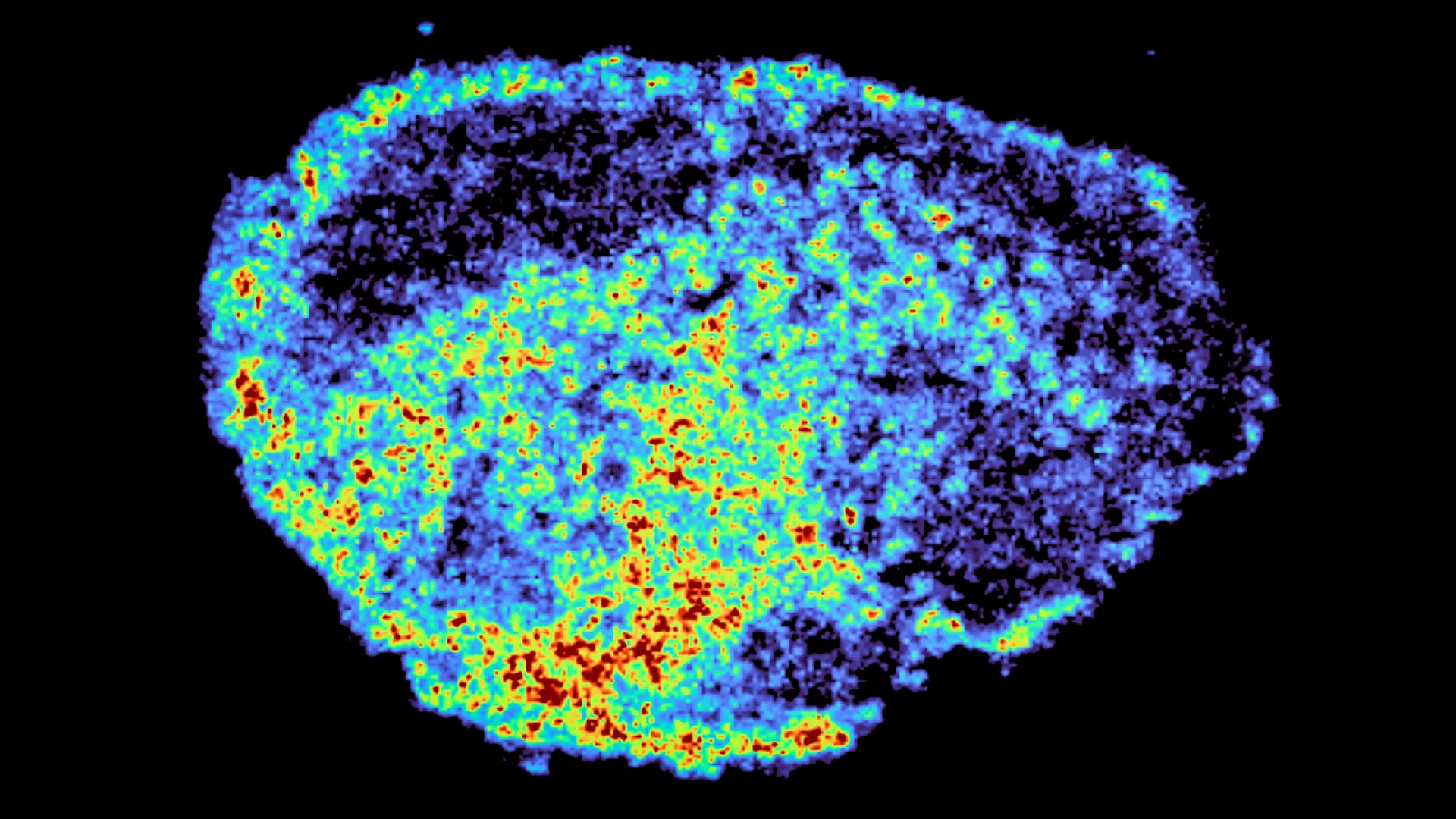
- Mass Spectrometry Imaging (MSI): This powerful technique provided detailed, pixel-by-pixel maps of drug distribution within the tumor tissue. MSI allows researchers to visualize and quantify the precise location of drug molecules, revealing areas of high and low drug concentration with remarkable spatial resolution. This generated a literal roadmap of where the PARP inhibitors were accumulating.
- Spatial Transcriptomics: Complementing the MSI data, spatial transcriptomics enabled the researchers to simultaneously analyze gene expression patterns within the same tissue slices, correlating cellular activity with drug presence. By examining the genetic landscape of regions with high versus low drug levels, the team could investigate how drug distribution influenced cellular function and potentially predict treatment response.
"A novel aspect of this study was the use of mass spectrometry imaging to directly measure and visualize drug uptake in patient tumour tissue," stated Dr. Zoe Hall, a senior author on the study and Associate Professor at Imperial’s Department of Metabolism, Digestion and Reproduction. "Through the spatial mapping of drug molecules, we could pinpoint regions of high and low drug and compare gene expression, from the same tissue slice, using spatial transcriptomics." This integrated approach provided a holistic view, connecting the physical presence of the drug with its biological impact at a cellular level.
The results were striking and underscored the heterogeneity of drug distribution. The MSI maps revealed significant variations in PARP inhibitor accumulation, not only between different patients’ tumors but also within individual tumors. This unevenness persisted even when identical drug doses were administered, suggesting intrinsic biological factors within the tumor microenvironment were at play.
Lysosomes: The Unexpected Drug Traps
The central revelation of the study lies in the unexpected role of lysosomes. These organelles, commonly understood as the cell’s "recycling centers" responsible for breaking down waste materials and cellular debris, were found to act as significant reservoirs for certain PARP inhibitors. The researchers observed that specific PARP inhibitors were actively transported into lysosomes and became sequestered within these compartments.
"We were surprised to see large variability in drug accumulation at the single-cell level," explained Dr. Carmen Ramirez Moncayo, the study’s first author and a Postdoctoral Researcher at the LMS. "This variability was driven by the build-up of a drug in lysosomes, which are acting as reservoirs, increasing the exposure of cancer cells to drugs, by storing and releasing the drug when needed."
This lysosomal sequestration has profound implications for drug efficacy. Instead of freely diffusing throughout the cell to reach their targets, some PARP inhibitors become trapped in lysosomes. This creates localized pockets of high drug concentration within specific cells or regions of the tumor, while other cells or areas may experience significantly lower drug exposure. The lysosomes, therefore, function as slow-release depots, gradually releasing the drug over time. This intermittent and uneven release could explain why some cells are effectively killed by the drug, while others, receiving insufficient exposure, survive and potentially contribute to treatment resistance or relapse.
Crucially, the study identified that this lysosomal trapping phenomenon is not universal across all PARP inhibitors. The research demonstrated that drugs such as rucaparib and niraparib are significantly influenced by this lysosomal accumulation, leading to heterogeneous distribution. In contrast, olaparib, another widely used PARP inhibitor, appeared to be less affected by this particular mechanism, suggesting distinct intracellular trafficking pathways for different drugs within this class. This differentiation in behavior is a critical piece of the puzzle, potentially explaining why patients respond differently to various PARP inhibitors.
Implications for Precision Oncology and Future Treatment Strategies
The findings from Dr. Fets’ team have far-reaching implications for the future of cancer treatment, particularly in the realm of precision oncology. Understanding the intricate mechanisms governing drug distribution and cellular retention is paramount to optimizing therapeutic strategies and overcoming treatment resistance.
"By understanding how drugs are taken up into cells, we can understand whether this influences why cancer drugs work for some people and not for others," Dr. Fets articulated, senior author and Head of the LMS’ Drug Transport and Tumour Metabolism Group. "Eventually, we hope to be able to study the molecular signature of a patient’s tumor to help to tailor therapeutic approaches in a more personalized way."
The ability to predict or even manipulate drug distribution within tumors could pave the way for several advancements:
- Personalized Drug Selection: Identifying tumors with a propensity for lysosomal drug sequestration could guide the selection of PARP inhibitors that are less susceptible to this trapping mechanism, potentially improving response rates for those patients. Conversely, for tumors where lysosomal release is beneficial, specific dosing strategies might be developed.
- Overcoming Resistance: Resistance to PARP inhibitors is often associated with the reactivation of DNA repair pathways or other compensatory mechanisms. If uneven drug distribution contributes to the survival of resistant clones, strategies to ensure more uniform and sustained drug exposure could be developed.
- Novel Drug Development: The insights gained from this study could inform the design of future cancer drugs with improved pharmacokinetic profiles and enhanced tumor penetration, potentially minimizing off-target effects and maximizing therapeutic benefit.
The study’s current findings were based on ex vivo tumor samples. The researchers acknowledge that in a living patient, drug delivery is mediated by the bloodstream, and the often disorganized vascular network within tumors can further exacerbate uneven drug distribution. This introduces another layer of complexity to the drug journey within the body.
The Road Ahead: Translating Insights into Clinical Practice
To bridge the gap between laboratory findings and clinical application, the research team plans to extend their investigations. Future studies will leverage animal models to simulate the in vivo delivery of drugs and to explore the interplay between drug delivery systems, tumor microenvironment characteristics, and lysosomal storage in a more dynamic setting. Larger patient cohorts will also be crucial for validating these findings and for developing predictive biomarkers. Particular attention will be paid to understanding drug distribution in relapsed cancers, where resistance mechanisms are often more entrenched.
The research was made possible through substantial funding from the Medical Research Council, Cancer Research UK, the Integrative Toxicology Training Partnership administered by the MRC Toxicology Unit, and a Victoria’s Secret Global Fund for Women’s Cancers Career Development Award, in partnership with Pelotonia and AACR. This collaborative effort underscores the multidisciplinary nature of modern cancer research and the importance of sustained investment in fundamental scientific inquiry.
In conclusion, the work by Dr. Fets and her colleagues marks a significant step forward in unraveling the complexities of cancer therapy. By revealing the critical role of lysosomes as intracellular drug reservoirs, this study provides a tangible explanation for the observed variability in PARP inhibitor efficacy. This deeper understanding not only addresses a long-standing enigma in cancer pharmacodynamics but also offers a promising roadmap for developing more intelligent, personalized, and ultimately, more effective cancer treatments for patients worldwide. The journey from the lab bench to the patient’s bedside is often long and arduous, but discoveries like these illuminate the path towards a future where cancer care is precisely tailored to each individual’s unique biological landscape.
