
 By admin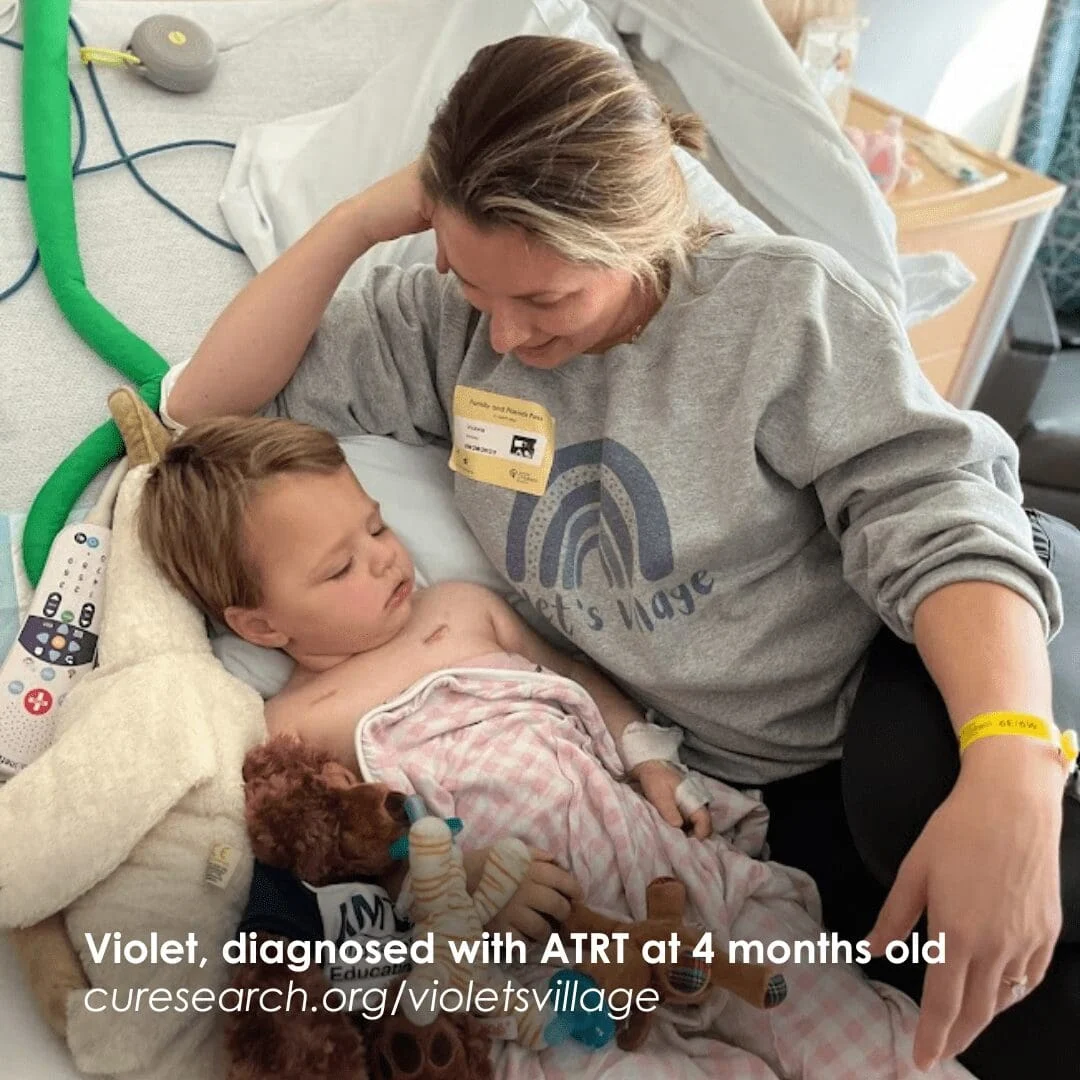
Dr. John Prensner of the University of Michigan has been named the recipient of the 2025 CureSearch Young Investigator Award, a prestigious grant designed to accelerate the development of targeted therapies for some of the most lethal forms of childhood cancer. The award specifically supports Dr. Prensner’s pioneering work on atypical teratoid rhabdoid tumor (ATRT), a rare and exceptionally aggressive central nervous system malignancy that primarily affects infants and toddlers under the age of three. This research initiative is a collaborative effort, co-funded by the Jeff Gordon Children’s Foundation (JGCF) and Violet’s Village: The Violet Kenney Legacy Fund, marking a significant investment in the next generation of pediatric oncologists and the search for a cure for brain tumors that currently lack effective treatment protocols.
The Clinical Challenge of Atypical Teratoid Rhabdoid Tumor
Atypical teratoid rhabdoid tumor (ATRT) represents one of the most formidable challenges in pediatric oncology. While brain tumors are the leading cause of cancer-related death in children, ATRT is particularly devastating due to its rapid growth and its tendency to occur in the earliest stages of human development. These tumors typically manifest in the cerebellum, which governs motor control and balance, or the brainstem, the critical junction that regulates autonomic functions such as breathing and heart rate. Because the patients are often infants, their developing brains are highly sensitive to the neurotoxic effects of traditional treatments, creating a precarious balance between eradicating the cancer and preserving the child’s cognitive and physical future.
The current standard of care for ATRT involves a combination of aggressive surgical resection, high-dose chemotherapy, and occasionally radiation. However, these interventions are often insufficient. Unlike many adult cancers, which may stem from decades of accumulated genetic mutations, ATRT is characterized by a "quiet" genome, often driven by a single genetic alteration—the loss of the SMARCB1 (also known as INI1) gene. This lack of diverse genetic targets has historically left researchers with few avenues for developing the "smart drugs" or targeted therapies that have revolutionized the treatment of other cancers, such as leukemia or adult lung cancer.
Dr. John Prensner and the Exploration of "Junk DNA"
Dr. Prensner’s research at the University of Michigan seeks to break this therapeutic stalemate by looking beyond traditional genetic mutations. His project focuses on small open reading frames (sORFs), which are segments of the genome that were long dismissed by the scientific community as "junk DNA." For decades, genomic research focused almost exclusively on large genes that code for well-known proteins. Dr. Prensner is among a new wave of scientists who believe that these overlooked sORFs are far from useless; instead, they produce microproteins that may play a fundamental role in the survival and proliferation of cancer cells.
By identifying which microproteins are essential to ATRT cells, Dr. Prensner aims to uncover hidden vulnerabilities in the tumor’s biology. If a specific microprotein is found to be necessary for ATRT growth but is not present in healthy brain tissue, it could serve as a perfect target for a new generation of drugs. This approach represents a paradigm shift in how pediatric brain tumors are studied, moving from the analysis of major gene deletions to the fine-scale mapping of the "hidden" functional genome. Dr. Prensner’s work is expected to provide a foundational understanding of the childhood cancer genome, potentially revealing why ATRT is so resistant to conventional therapies.
The Role of the CureSearch Young Investigator Award
The CureSearch Young Investigator Award is a strategic response to a growing crisis in cancer research: the "brain drain" of talented scientists from the pediatric field. Early-career researchers often face significant hurdles in securing federal funding, such as grants from the National Institutes of Health (NIH), which tend to favor established investigators with decades of data. Without early financial support, many promising oncologists are forced to transition into adult cancer research or private industry, leaving pediatric patients with fewer champions.
CureSearch for Children’s Cancer addresses this gap by providing critical seed funding to investigators like Dr. Prensner. This support allows them to gather the preliminary data necessary to compete for larger federal grants in the future, ensuring a continuous pipeline of innovation in the pediatric space. Dr. Paisley Myers, Director of Research and Programs at CureSearch, emphasized the urgency of this mission, noting that children with ATRT have not yet benefited from the wave of precision medicine that has saved lives in other oncology sectors. The 2025 award is intended to change that narrative by providing the resources needed to move laboratory discoveries into clinical applications.

Philanthropic Synergy: Jeff Gordon and Violet’s Village
The funding for Dr. Prensner’s project is a testament to the power of collaborative philanthropy. The Jeff Gordon Children’s Foundation, established by the four-time NASCAR Cup Series champion, has been a cornerstone of pediatric cancer advocacy since 1999. Over the past two decades, the foundation has raised more than $25 million to support clinical trials and research. Susan Robinson, Executive Director of the Jeff Gordon Children’s Foundation, highlighted the specific focus on brain tumors, citing them as the deadliest form of childhood cancer and a priority for the foundation’s 2025 initiatives.
Joining the effort is Violet’s Village: The Violet Kenney Legacy Fund. This fund was established in memory of Violet Kenney, a young girl whose battle with cancer inspired a community-wide movement to fund research that is often overlooked by major pharmaceutical companies. By pooling resources, these organizations can fund high-risk, high-reward research that might otherwise go unfunded. This co-funding model not only maximizes the financial impact but also unites various stakeholders—from professional athletes to grieving families—under a single goal of eradicating ATRT.
Chronology and Historical Context of ATRT Research
The recognition of ATRT as a distinct clinical entity is a relatively recent development in medical history. It was only in 1987 that researchers first distinguished ATRT from other pediatric brain tumors, such as medulloblastoma, which it often mimics in appearance. The discovery of the SMARCB1 mutation in 1998 was a landmark moment, providing the first clear biological marker for the disease.
Despite these milestones, progress in the 2000s and 2010s was slow. Survival rates for ATRT remained stubbornly low, often hovering between 30% and 50% depending on the age of the child and whether the cancer had spread to the spinal cord at the time of diagnosis. The primary hurdle was the blood-brain barrier, which prevents many chemotherapy drugs from reaching the tumor. In the last five years, however, the rise of genomic sequencing has allowed researchers to identify different molecular subgroups of ATRT (ATRT-SHH, ATRT-TYR, and ATRT-MYC), suggesting that the disease is even more complex than previously thought. Dr. Prensner’s 2025 project arrives at a critical juncture, as the field shifts from broad-spectrum treatments to personalized medicine based on a tumor’s specific molecular profile.
Data Analysis and Implications for the Future
Statistical data regarding pediatric cancer funding reveals a stark disparity between adult and childhood research. Historically, only about 4% of the federal budget for cancer research is allocated specifically to pediatric cancers. This makes private funding through organizations like CureSearch and the Jeff Gordon Children’s Foundation essential for the survival of the field.
The implications of Dr. Prensner’s research extend beyond ATRT. The discovery of functional microproteins in "junk DNA" could have a ripple effect across all of oncology. If sORFs are proven to be drivers of ATRT, researchers will likely begin scanning the genomes of other rare pediatric tumors, such as Ewing sarcoma or osteosarcoma, for similar mechanisms. This could lead to a massive expansion of the "druggable" genome—the portion of our DNA that can be targeted by medicine.
Furthermore, the focus on microproteins offers hope for less toxic treatments. Because these proteins are often highly specific to certain stages of development or specific cell types, drugs designed to inhibit them may have fewer side effects than traditional chemotherapy, which attacks all rapidly dividing cells in the body. For a three-year-old patient, the difference between a toxic systemic treatment and a precise microprotein inhibitor could mean the difference between a life of chronic health issues and a healthy, normal childhood.
As Dr. Prensner begins his work under the 2025 CureSearch Young Investigator Award, the pediatric oncology community remains cautiously optimistic. While the road from genomic discovery to a bedside treatment is long—often taking a decade or more—the investment in high-caliber research is the only path forward. Through the combined efforts of academic researchers, national non-profits, and dedicated philanthropic foundations, the goal of a 100% survival rate for children with ATRT is moving from a distant hope to a tangible scientific objective.
