
 By Gabriel Paijo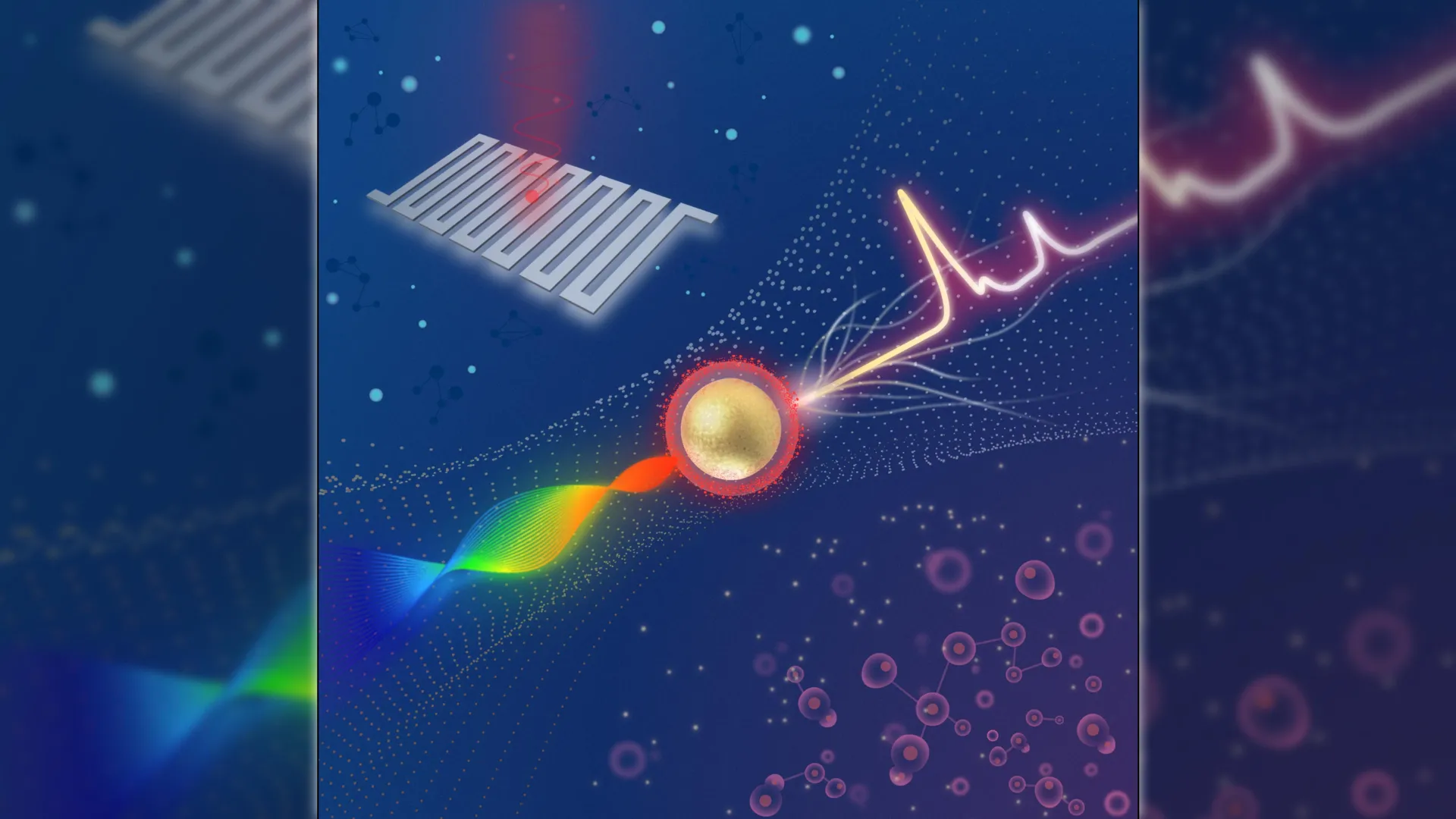
The pursuit of early cancer detection has long been a cornerstone of oncological research, driven by the understanding that early intervention significantly improves patient survival rates. Researchers at Michigan State University (MSU) have recently unveiled a significant technological leap in this field: a compact Raman imaging system capable of distinguishing cancerous tissue from healthy tissue with unprecedented sensitivity. By integrating advanced quantum detection technology with traditional molecular imaging, the team has developed a platform that could transition from the specialized environment of research laboratories into the high-pressure setting of clinical operating rooms and diagnostic clinics.
The system, developed under the leadership of Zhen Qiu, an assistant professor at MSU’s Institute for Quantitative Health Science and Engineering (IQ), addresses a critical bottleneck in modern medicine. While medical imaging has advanced rapidly, the ability to identify tumor margins and microscopic clusters of malignant cells in real-time remains a challenge. This new imaging platform utilizes Surface-Enhanced Raman Scattering (SERS) nanoparticles, which act as biological beacons, and a high-efficiency detection architecture to provide a rapid, automated assessment of tissue samples.
The Evolution of Molecular Imaging in Oncology
To understand the significance of this development, it is necessary to examine the current landscape of cancer diagnostics. For decades, the "gold standard" for cancer diagnosis has been histopathology. This process involves the surgical removal of a tissue sample (biopsy), which is then fixed, sliced into thin sections, stained with chemical dyes, and examined under a microscope by a trained pathologist. While highly accurate, this process is inherently slow, often requiring days to provide a definitive result. Furthermore, it is labor-intensive and subject to human interpretation, which can lead to variability in results.
Raman spectroscopy emerged as a potential alternative because it provides a "chemical fingerprint" of a sample without the need for invasive staining. Based on the inelastic scattering of photons—a phenomenon discovered by Sir C.V. Raman in 1928—the technique measures the vibrational modes of molecules. However, the Raman signal is naturally very weak, with only about one in every ten million photons undergoing Raman scattering. This inherent weakness has historically limited the use of Raman imaging in clinical settings, as it required long acquisition times and bulky, expensive equipment.
The introduction of Surface-Enhanced Raman Scattering (SERS) in the late 20th century provided a solution to the signal strength problem. By using metallic nanoparticles—typically gold or silver—researchers could amplify the Raman signal by several orders of magnitude. However, even with SERS, the detection limits of commercial systems often fell short when dealing with the complex, noisy environment of living biological tissue. The MSU team’s innovation lies in their unique hardware configuration, which pushes these detection limits further than previously thought possible.
Technical Innovations: SNSPDs and Swept-Source Architecture
The breakthrough reported in the journal Optica centers on two primary technical innovations: the use of Superconducting Nanowire Single-Photon Detectors (SNSPDs) and a swept-source Raman architecture.
SNSPDs represent the pinnacle of light-detection technology. These detectors consist of a thin film of superconducting material, such as niobium nitride, cooled to temperatures near absolute zero. When a single photon hits the nanowire, it disrupts the superconducting state, creating a measurable electrical pulse. This allows the detector to count individual particles of light with near-perfect efficiency and extremely low "dark counts"—the background noise that often plagues traditional silicon-based detectors.
"Traditional Raman systems use Charge-Coupled Device (CCD) cameras or complementary metal-oxide-semiconductor (CMOS) sensors, which are excellent for capturing images but often struggle with the extremely low light levels associated with deep-tissue imaging," explained a technical analyst familiar with the project. "By switching to SNSPDs, the MSU team has essentially given their system ‘night vision’ at the molecular level."
Complementing the detector is a swept-source laser system. Unlike traditional Raman systems that use a fixed-wavelength laser and a spectrometer to spread the scattered light across a sensor, a swept-source system rapidly changes the wavelength of the excitation laser. This allows the researchers to use a single-point detector (the SNSPD) to collect all the light at each wavelength step. This configuration is not only more sensitive but also significantly more compact, as it eliminates the need for bulky spectrometers and large-area sensors.
According to the published data, this combination allows the system to detect Raman signals that are approximately four times weaker than those detectable by high-end commercial Raman spectrometers. In laboratory tests, the system achieved "femtomolar" sensitivity—a level of precision that allows for the detection of substances at concentrations of one quadrillionth of a mole per liter.
Experimental Validation and Targeted Nanoparticles
The efficacy of the imaging system was validated through a series of experiments targeting CD44, a cell-surface glycoprotein that is overexpressed in many types of cancer, including breast, colon, and lung tumors. To target this protein, the researchers engineered SERS nanoparticles coated with hyaluronan acid, which has a natural affinity for CD44.
The experimental chronology followed a rigorous path:
- Sensitivity Testing: The system was first tested with varying concentrations of nanoparticle solutions to establish its detection limits.
- Cellular Imaging: The platform was used to image cultured breast cancer cells. The system successfully mapped the distribution of CD44 on the cell surfaces, showing high-contrast images where the nanoparticles had bound to the malignant cells.
- Animal Models: The researchers then moved to mouse models, comparing tumor tissue with healthy muscle and organ tissue.
- Tissue Contrast: The results showed a stark contrast; the SERS signals were heavily concentrated in the tumor regions, while healthy tissues showed almost no signal.
"The ability to provide reliable tumor-versus-healthy contrast is the holy grail of intraoperative imaging," noted Dr. Zhen Qiu. By providing a clear visual "map" of the tumor, the system could eventually help surgeons ensure they have removed all cancerous cells during a procedure—a process known as achieving "clear margins"—while sparing as much healthy tissue as possible.
Industrial Collaboration and Peer Reaction
The development of this system was a collaborative effort, notably involving Quantum Opus, an industry leader in superconducting technologies. Quantum Opus provided the SNSPD devices that were central to the system’s performance. This partnership highlights a growing trend in the biotech sector where academic research is accelerated by direct access to cutting-edge industrial hardware.
While the medical community has reacted with cautious optimism, the implications of the MSU study are widely recognized. Pathologists, while not seeing this as a replacement for their expertise, view it as a potential "triage" tool. In a busy hospital setting, a rapid Raman scan could identify high-priority samples that require immediate attention, thereby reducing the diagnostic backlog that often delays the start of treatment.
Dr. Sarah Jenkins, an oncologist not involved in the study, remarked on the potential impact: "If this technology can be miniaturized into a handheld probe, it would change the way we perform biopsies. Instead of taking multiple blind samples and hoping we hit the tumor, we could use this system to guide the needle directly to the most suspicious areas."
Broader Implications for Clinical Practice
The transition of Raman imaging from a benchtop laboratory tool to a clinical device has several profound implications for the future of healthcare:
1. Reduced Diagnostic Delays: By providing near-instantaneous feedback on tissue composition, the system could shorten the time between a patient’s initial screening and their definitive diagnosis. In aggressive cancers, where every day counts, this could lead to significantly better outcomes.
2. Precision Surgery: One of the greatest challenges in cancer surgery is distinguishing the "edge" of a tumor. If a surgeon leaves behind even a few malignant cells, the cancer is likely to recur. A compact, high-sensitivity Raman system could be integrated into surgical microscopes or robotic surgery platforms to provide real-time guidance.
3. Less Invasive Monitoring: The MSU team noted that by changing the targeting molecule on the nanoparticles, the system could be adapted to look for a wide variety of biomarkers. This flexibility suggests the technology could be used for liquid biopsies—detecting cancer markers in blood or other bodily fluids—which would be far less invasive than traditional tissue biopsies.
4. Miniaturization and Accessibility: The fiber-coupled design of the MSU system is a critical step toward miniaturization. Unlike older Raman systems that required a dedicated room and stable environment, the new architecture is robust and could eventually be housed in a unit the size of a standard desktop computer or even a portable cart.
Future Research and the Path to Clinical Adoption
Despite the impressive results, the MSU researchers acknowledge that several hurdles remain before the system becomes a staple in hospitals. One primary challenge is the speed of data acquisition. While the system is highly sensitive, scanning a large area of tissue still takes more time than would be ideal for a real-time surgical application.
The team is currently exploring the use of faster laser sources, such as Vertical-Cavity Surface-Emitting Lasers (VCSELs), and optimizing the wavelength sweep range to increase readout speeds. Additionally, they plan to conduct "multiplexing" experiments. This involves using different types of nanoparticles, each designed to attach to a different biomarker and emit a unique Raman signal. Such a system could simultaneously screen for multiple types of cancer or provide a more detailed "molecular profile" of a single tumor.
The timeline for clinical adoption typically involves several years of human clinical trials and FDA (Food and Drug Administration) oversight. The researchers must demonstrate not only that the system works in a controlled lab environment but also that it is safe, reliable, and effective across diverse patient populations.
The work at Michigan State University represents a fusion of quantum physics and clinical medicine that was once the stuff of science fiction. By leveraging the extreme sensitivity of superconducting detectors, Zhen Qiu and his colleagues have opened a new door in the fight against cancer—one where the light of a single photon may one day save a life. As the technology continues to mature, it stands as a testament to the power of interdisciplinary research in solving some of the most complex challenges in human health.
