
 By admin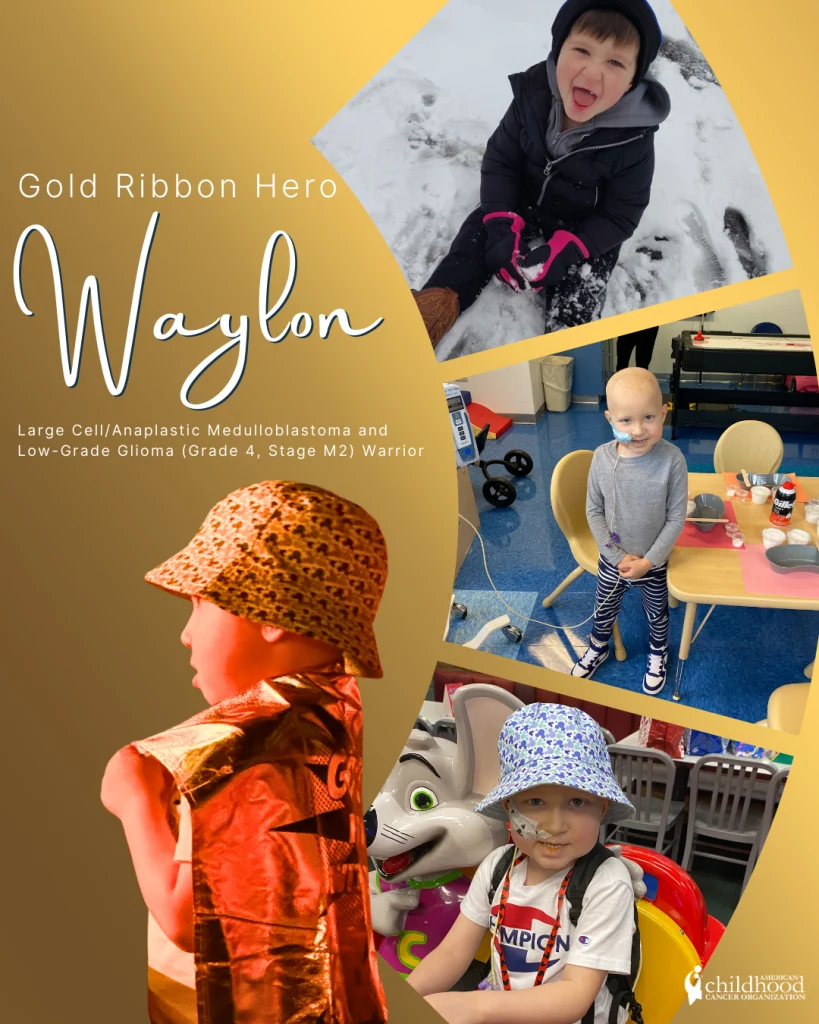
In the spring of 2025, the life of a five-year-old boy named Waylon and his family underwent a profound and sudden transformation following a series of escalating health concerns that culminated in a devastating oncological diagnosis. What began as a collection of common childhood ailments—persistent headaches, recurring bouts of vomiting, and noticeable issues with physical balance—soon revealed a much more sinister underlying cause. On April 24, 2025, medical professionals confirmed that Waylon was suffering from large cell/anaplastic medulloblastoma and a low-grade glioma, classified as Grade 4, Stage M2. This diagnosis placed Waylon at the center of a rigorous medical battle, highlighting the aggressive nature of pediatric brain tumors and the resilience required by young patients and their support systems.
Kayla, Waylon’s mother, described the moment of diagnosis as a seismic shift for their household, noting that the family’s "whole world was turned upside down." The transition from a typical childhood to one defined by hospital corridors, surgical theaters, and intensive therapy cycles is a reality faced by thousands of families annually, yet each case presents unique physiological and emotional challenges. For Waylon, the diagnosis was the beginning of a multi-modal treatment plan designed to combat one of the most aggressive forms of pediatric cancer.
Clinical Progression and Treatment Timeline
The medical response to Waylon’s diagnosis was immediate and comprehensive. Given the Grade 4 classification of the medulloblastoma, which indicates a fast-growing and highly malignant tumor, and the Stage M2 designation, which signifies that the cancer had spread into the cerebrospinal fluid within the brain, a combination of surgery, radiation, and chemotherapy was deemed necessary.
To date, Waylon’s clinical journey has included two significant brain surgeries aimed at resecting the tumor mass and relieving intracranial pressure. Following the surgical interventions, Waylon transitioned into the systemic phase of his treatment. This involved a grueling schedule of 37 planned rounds of chemotherapy. As of the most recent reporting, Waylon has successfully completed 33 of these rounds, demonstrating a remarkable level of physical endurance.
In addition to chemotherapy, Waylon underwent a full course of radiation treatment. Radiation therapy for pediatric brain tumors is a delicate process, particularly in patients as young as five, as clinicians must balance the need to eradicate malignant cells with the imperative to protect developing brain tissue. The completion of his radiation marks a major milestone in his recovery roadmap, though the long-term monitoring of such high-intensity treatments remains a standard component of pediatric oncology.
Understanding Medulloblastoma and Pediatric Gliomas
To understand the gravity of Waylon’s situation, it is necessary to examine the pathology of his specific diagnosis. Medulloblastoma is the most common malignant brain tumor found in children, accounting for nearly 20% of all pediatric brain tumors. The "large cell/anaplastic" variant diagnosed in Waylon is considered a high-risk subtype. This variant is characterized by rapid cellular division and a higher likelihood of metastasis compared to other forms of the disease.
The presence of a Stage M2 designation indicates that tumor cells were detected in the cerebellar or cerebral subarachnoid space. This necessitates a more aggressive therapeutic approach than localized tumors. Furthermore, the concurrent diagnosis of a low-grade glioma—a different type of tumor that arises from the glial (supportive) cells of the brain—complicates the clinical picture, requiring oncologists to manage two distinct pathological entities simultaneously.
According to data from the National Cancer Institute, while advancements in neuro-surgery and proton-beam radiation have improved the five-year survival rate for medulloblastoma to approximately 70% to 80%, the large cell/anaplastic subtype remains a significant challenge for researchers. Cases like Waylon’s underscore the critical need for continued funding into targeted molecular therapies that can minimize the long-term cognitive and physical side effects associated with traditional "blunt force" treatments like high-dose radiation and systemic chemotherapy.
Community Integration and the Grand Ole Opry Partnership
Amidst the rigors of medical treatment, Waylon and his family were recently spotlighted during a major community event in Nashville, Tennessee. Waylon was selected to serve as an ambassador at the Grand Ole Opry Chili Cook-Off, a high-profile fundraiser held in collaboration with the American Childhood Cancer Organization (ACCO). This event serves as a bridge between the clinical realities of childhood cancer and the broader community, fostering awareness and generating vital resources for patient support.
During the event, Waylon and his family were granted a behind-the-scenes experience at one of the most iconic venues in American music history. The experience included a tour of the Grand Ole Opry facilities and an opportunity to attend the employee chili cook-off, an internal event that has become a staple of the Opry’s charitable initiatives. The day culminated in the family watching a live show, providing a rare moment of normalcy and celebration for a child who has spent the better part of the year in medical facilities.
The partnership between the Grand Ole Opry and the ACCO is part of the "Go Gold" campaign, a national movement held every September during Childhood Cancer Awareness Month. By utilizing the cultural reach of the Grand Ole Opry, advocates are able to bring the stories of "warriors" like Waylon to a mainstream audience, humanizing the statistics and encouraging public participation in advocacy.
The Role of Advocacy and Corporate Social Responsibility
The involvement of institutions like the Grand Ole Opry in Waylon’s journey highlights the importance of corporate social responsibility in the healthcare sector. When major cultural landmarks align themselves with pediatric health causes, it amplifies the message of organizations like the ACCO, which work to provide educational resources and support to families navigating the complexities of a cancer diagnosis.
Statements from the event organizers emphasized that the chili cook-off is not merely a social gathering but a strategic effort to fund the distribution of "Medical Play Kits" and other resources that help children understand their treatments. For a five-year-old, the abstract concepts of "chemotherapy" and "radiation" can be terrifying; advocacy groups use these funds to create age-appropriate materials that demystify the process, thereby reducing the psychological trauma associated with chronic illness.
Inferred reactions from the Nashville community and the staff at the Grand Ole Opry suggest a high level of engagement with Waylon’s story. Ambassadors like Waylon provide a face for the "Gold Ribbon" cause, reminding the public that behind the medical jargon and the fundraising targets are children who are fighting for their futures.
Broader Implications for Pediatric Oncology
Waylon’s case is a microcosm of the broader landscape of pediatric oncology in the United States. While pediatric cancer is often described as "rare," it remains the leading cause of death by disease for children past infancy. Each year, approximately 15,000 children and adolescents are diagnosed with cancer in the U.S. alone.
The economic and social implications of these diagnoses are vast. Families often face significant financial strain due to the costs of specialized care, travel to major medical centers, and the loss of income when parents must become full-time caregivers. Furthermore, the "survivorship" phase brings its own set of challenges. Children who survive high-grade brain tumors often require lifelong follow-up care to manage endocrine issues, hearing loss, or cognitive delays resulting from the very treatments that saved their lives.
Analysis of current trends suggests that the future of treatment lies in precision medicine. Researchers are increasingly looking at the genetic drivers of medulloblastoma to develop drugs that can target cancer cells without damaging healthy brain tissue. For children like Waylon, these advancements could mean a future where the "cure" is less taxing on the body.
Conclusion
Waylon’s journey from the onset of symptoms in early 2025 to his current status as a community ambassador is a testament to both the advancements in modern medicine and the indomitable spirit of young patients. Having navigated two surgeries and the vast majority of his chemotherapy and radiation, Waylon represents the thousands of children currently in the "warrior" phase of their lives.
The collaboration between the American Childhood Cancer Organization and the Grand Ole Opry ensures that stories like Waylon’s are not told in isolation. By integrating these families into the cultural fabric of the community, advocacy groups foster an environment of collective responsibility. As Waylon nears the completion of his initial treatment protocol, the focus remains on his continued recovery and the broader mission of ensuring that no family has to face a Grade 4 diagnosis without the full support of their community and the best resources science has to offer.
