
 By admin
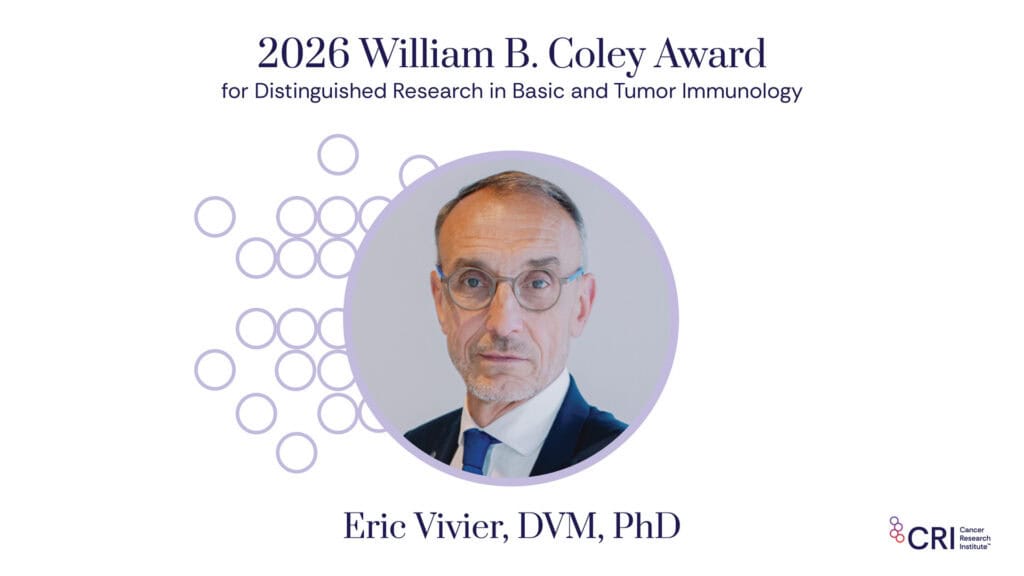
The Cancer Research Institute (CRI) has proudly announced the distinguished recipients of its 2026 Scientific Achievement Awards, recognizing two visionary immunologists whose groundbreaking work has profoundly reshaped our understanding of the immune system and its formidable potential in the fight against cancer. Eric Vivier, DVM, PhD, a towering figure in the field of innate immunity, will receive the prestigious William B. Coley Award for Distinguished Research in Basic and Tumor Immunology. Concurrently, Joseph Sun, PhD, a luminary whose discoveries have revolutionized our comprehension of immunological memory, will be honored with the Frederick W. Alt Award for New Discoveries in Immunology. These accolades underscore CRI’s unwavering commitment to fostering scientific breakthroughs that pave the way for innovative cancer immunotherapies. The scientific community eagerly anticipates the presentation of these awards at CRI’s Annual Awards Gala, scheduled for Tuesday, October 20, 2026, at the historic Guastavino’s in New York City, an event poised to celebrate monumental strides in biomedical research. Further details regarding this eminent gathering will be disseminated in the forthcoming weeks.
Dr. Eric Vivier: A Pioneer in Innate Immunity and Natural Killer Cell Biology
Dr. Eric Vivier, a distinguished Professor of Immunology at Marseille Medical School and head of the Innate Lymphoid Cells laboratory at the Centre d’Immunologie de Marseille-Luminy, stands as an internationally recognized titan for his seminal contributions to the understanding of natural killer (NK) cells and the intricate mechanisms of innate immunity. His research has not merely added to existing knowledge but has fundamentally recalibrated our perception of how the body’s intrinsic defense systems recognize and effectively eliminate cancerous cells. Before Dr. Vivier’s pioneering efforts, the role of innate immunity, particularly NK cells, in directly targeting and destroying tumor cells was not fully appreciated. His work brought these crucial immune components into the spotlight, establishing innate immunity as an indispensable cornerstone of modern cancer immunotherapy.
NK cells, a type of lymphocyte, are often referred to as the "first responders" of the immune system. Unlike T cells, they do not require prior activation to recognize and kill infected or cancerous cells. Dr. Vivier’s extensive research has elucidated the complex signaling pathways and receptor interactions that govern NK cell activation and function. He has identified key molecules and mechanisms that dictate how NK cells differentiate between healthy and diseased cells, thereby preventing autoimmunity while effectively clearing threats. This foundational understanding has been critical for designing therapeutic strategies that harness the intrinsic power of NK cells. For instance, his work has shown how NK cells can be primed or enhanced to become more potent anti-cancer agents, laying the groundwork for adoptive NK cell therapies and antibody-dependent cellular cytotoxicity (ADCC) enhancing drugs.
Beyond his profound academic contributions, Dr. Vivier has demonstrated an exceptional commitment to translating his laboratory discoveries into tangible clinical benefits for patients. His leadership in biotechnology, notably as a co-founder of Innate Pharma, a leading biotechnology company focused on developing first-in-class therapeutic antibodies that harness the innate immune system, exemplifies this dedication. Innate Pharma’s pipeline, built upon insights from Dr. Vivier’s research, includes novel therapies targeting various immune checkpoints and receptors on NK cells and other innate immune cells, aiming to unleash their full anti-tumor potential. This seamless transition from basic science to clinical development underscores the practical applicability and immense promise of his research.
Dr. Vivier’s illustrious career is adorned with numerous accolades and distinctions, reflecting his immense influence and scholarly excellence. He has been recognized as a Highly Cited Researcher since 2015, a testament to the profound impact and frequent referencing of his work within the global scientific community. His achievements also include election to the prestigious French National Academy of Medicine and the European Molecular Biology Organization (EMBO), as well as receiving some of France’s highest civilian distinctions. These honors collectively affirm his status as a leading figure whose work has not only advanced scientific understanding but also inspired a new generation of immunologists.
In addition to receiving the Coley Award at the CRI Gala, Dr. Vivier is slated to deliver the highly anticipated 2026 Coley Lecture at the Society for Immunotherapy of Cancer (SITC) Annual Meeting. This prominent gathering of cancer immunotherapy experts will take place from November 4 to 8, 2026, in Phoenix, Arizona. His lecture, scheduled for Sunday, November 8, promises to be a highlight of the conference, offering attendees a unique opportunity to delve deeper into his groundbreaking research and its implications for the future of cancer treatment. The Coley Lecture itself carries historical weight, honoring Dr. William B. Coley, the "Father of Immunotherapy," whose late 19th-century observations on bacterial toxins stimulating tumor regression laid the earliest foundations for the field that Dr. Vivier now champions.
Dr. Joseph Sun: Redefining Immunological Memory
Dr. Joseph Sun, a distinguished Member of the Immunology Program at Memorial Sloan Kettering Cancer Center and Professor and Director of the Immunology and Microbial Pathogenesis Program at Weill Cornell Medical College, is being recognized with the Frederick W. Alt Award for New Discoveries in Immunology for his transformative discoveries that have profoundly reshaped our understanding of immunological memory. Dr. Sun’s research has been instrumental in uncovering fundamental mechanisms governing both T cell and NK cell memory, challenging long-held paradigms within immunology and opening exciting new avenues for therapeutic intervention.
For decades, immunological memory—the ability of the immune system to "remember" previous encounters with pathogens and mount a more rapid and potent response upon re-exposure—was predominantly attributed to adaptive immune cells, specifically T and B lymphocytes. Innate immune cells, like NK cells, were traditionally considered to be short-lived, non-specific responders without the capacity for memory. Dr. Sun’s pioneering work dramatically overturned this dogma. As a CRI Irvington Postdoctoral Fellow from 2007–2009 in the renowned laboratory of Dr. Lewis Lanier, PhD, at the University of California, San Francisco (UCSF), Dr. Sun conducted seminal research demonstrating that NK cells can indeed exhibit adaptive immune features, including clonal expansion and the formation of long-lived memory following viral infection. This discovery was revolutionary, fundamentally blurring the once-distinct lines between innate and adaptive immunity and ushering in the concept of "innate immunological memory."
His subsequent research has further illuminated the molecular pathways and epigenetic changes that drive this surprising phenomenon in NK cells. Understanding how NK cells can acquire memory-like characteristics has profound implications for vaccine development, infectious disease control, and, critically, cancer immunotherapy. If NK cells can remember previous encounters with cancer cells, they could potentially be trained or engineered to mount more effective and sustained anti-tumor responses. This paradigm shift has sparked intense interest in harnessing memory-like NK cells for therapeutic applications, offering a novel strategy to enhance the durability and efficacy of cancer treatments.
Moreover, Dr. Sun’s investigations extend to understanding T cell memory, exploring the intricate cellular and molecular cues that dictate the differentiation and maintenance of various memory T cell subsets. By dissecting these fundamental processes, his research continues to inform the development of next-generation immunotherapies, particularly those aiming to generate robust and long-lasting anti-tumor immunity. His work contributes to the design of more effective CAR T-cell therapies, neoantigen vaccines, and checkpoint blockade strategies by providing deeper insights into how to foster durable immune responses.
Dr. Lewis Lanier, a distinguished Member of CRI’s Scientific Advisory Council and Dr. Sun’s postdoctoral mentor, offered a powerful endorsement of his former trainee’s accomplishments: “Dr. Sun has been an absolute leader in his field, and I’m so happy that we’re going to acknowledge him as being one of the superstars that launched their careers with his CRI Irvington Fellowship.” This statement not only highlights Dr. Sun’s exceptional talent and leadership but also underscores the critical role that CRI’s fellowship programs play in nurturing the careers of future scientific luminaries. The Frederick W. Alt Award, named in honor of Dr. Frederick W. Alt, a pioneering geneticist known for his groundbreaking work in gene amplification and recombination, similarly recognizes researchers who have made transformative discoveries that open entirely new avenues of immunological investigation.
The Significance of CRI’s Scientific Achievement Awards
The Cancer Research Institute (CRI) has a storied history spanning over 70 years, dedicated to advancing the field of immunology and developing effective immunotherapies for all cancers. Founded in 1953, CRI was among the first organizations to exclusively focus on the immune system’s role in cancer. Its mission is to save more lives by funding and championing the most promising scientific research that uncovers the immune system’s full potential to conquer cancer. The Scientific Achievement Awards are a cornerstone of this mission, serving as a powerful mechanism to recognize and celebrate scientists whose work exemplifies the highest standards of innovation and impact in basic and tumor immunology.
These awards are not merely accolades; they are critical signposts in the journey of scientific discovery. By honoring researchers like Dr. Vivier and Dr. Sun, CRI not only provides well-deserved recognition but also amplifies the importance of their findings to the broader scientific community, potential funders, and the public. Such recognition often catalyzes further research, attracting talent and resources to these vital areas of investigation. The William B. Coley Award, in particular, carries the legacy of CRI’s founder and reflects a commitment to supporting fundamental research that underpins all clinical advances. The Frederick W. Alt Award, conversely, emphasizes the importance of truly novel discoveries that challenge existing paradigms and open up entirely new fields of study. Together, these awards paint a comprehensive picture of CRI’s dedication to both foundational science and groundbreaking innovation.
CRI’s impact extends far beyond these awards, through its extensive funding programs, including postdoctoral fellowships, clinical trial initiatives, and investigator grants. These programs have historically supported a vast network of scientists, many of whom have gone on to become leaders in immunology and oncology. The fact that Dr. Sun was a CRI Irvington Postdoctoral Fellow is a testament to the Institute’s foresight in identifying and nurturing promising talent at crucial stages of their careers, demonstrating a powerful return on investment in scientific human capital.
The Awards Gala: A Celebration of Scientific Progress and Future Hope
The Annual Awards Gala, set for October 20, 2026, at Guastavino’s in New York City, transcends a mere awards ceremony. It serves as a pivotal gathering point for leaders in science, philanthropy, industry, and patient advocacy. This event provides a unique platform for networking, collaboration, and collective reflection on the progress made in cancer immunology. Attendees will include prominent researchers from institutions worldwide, pharmaceutical executives investing in immunotherapy development, major philanthropists supporting medical research, and patients and their families who stand to benefit most from these scientific advancements.
The elegant setting of Guastavino’s, a landmark architectural marvel beneath the Queensboro Bridge, will provide a fitting backdrop for celebrating intellectual prowess and humanitarian dedication. The gala typically features speeches from CRI leadership, the award recipients themselves, and often includes poignant testimonials from individuals whose lives have been positively impacted by immunotherapy. These moments serve to remind everyone present of the profound human significance behind the complex scientific endeavors being honored. The atmosphere is one of shared purpose and optimism, reinforcing the collective commitment to conquering cancer through immunological research. Announcements regarding specific program details, guest speakers, and opportunities for engagement will be made in the coming weeks, building anticipation for what promises to be an inspiring and memorable evening.
Broader Implications for Cancer Immunotherapy and Patient Outcomes
The cumulative work of scientists like Dr. Vivier and Dr. Sun is not confined to academic journals or laboratory benches; it directly translates into tangible hope for millions of cancer patients worldwide. Their discoveries are foundational to the ongoing revolution in cancer immunotherapy, a field that has already transformed the treatment landscape for numerous malignancies, including melanoma, lung cancer, and various hematological cancers. The global burden of cancer remains immense, with millions of new cases diagnosed annually and cancer remaining a leading cause of mortality. Immunotherapy offers a powerful, often more durable, alternative to traditional treatments like chemotherapy and radiation, which can have significant side effects and limited long-term efficacy in advanced stages.
By expanding our understanding of immune cell biology – specifically how NK cells function, how innate immunity contributes to tumor surveillance, and how immunological memory can be harnessed – these researchers are directly informing the development of "next-generation" immunotherapies. This includes the creation of novel cell-based therapies, such as enhanced NK cell infusions or engineered T cells, as well as the design of smarter checkpoint inhibitors and cancer vaccines. The insights into innate immunological memory, for instance, open the door to developing vaccines that prime NK cells for long-term anti-cancer surveillance, potentially preventing recurrence or even initial tumor formation in high-risk individuals. The integration of innate and adaptive immune strategies holds particular promise for combination therapies, which are increasingly recognized as the most effective approach to overcoming tumor resistance and achieving sustained responses.
The work of Drs. Vivier and Sun exemplifies the iterative and collaborative nature of scientific discovery. Their research not only builds upon decades of prior immunological investigation but also lays critical groundwork for future generations of scientists. Their contributions will undoubtedly inspire new avenues of inquiry into personalized medicine, where treatments are tailored to an individual patient’s unique immune profile and tumor characteristics. As the scientific community continues to unravel the complexities of the immune system, the insights provided by these awardees will be indispensable in refining existing treatments and conceptualizing entirely new therapeutic paradigms. Ultimately, their dedication to pushing the boundaries of immunological knowledge moves us significantly closer to a future where cancer is not just treatable, but curable for all.
