
 By Lina carolina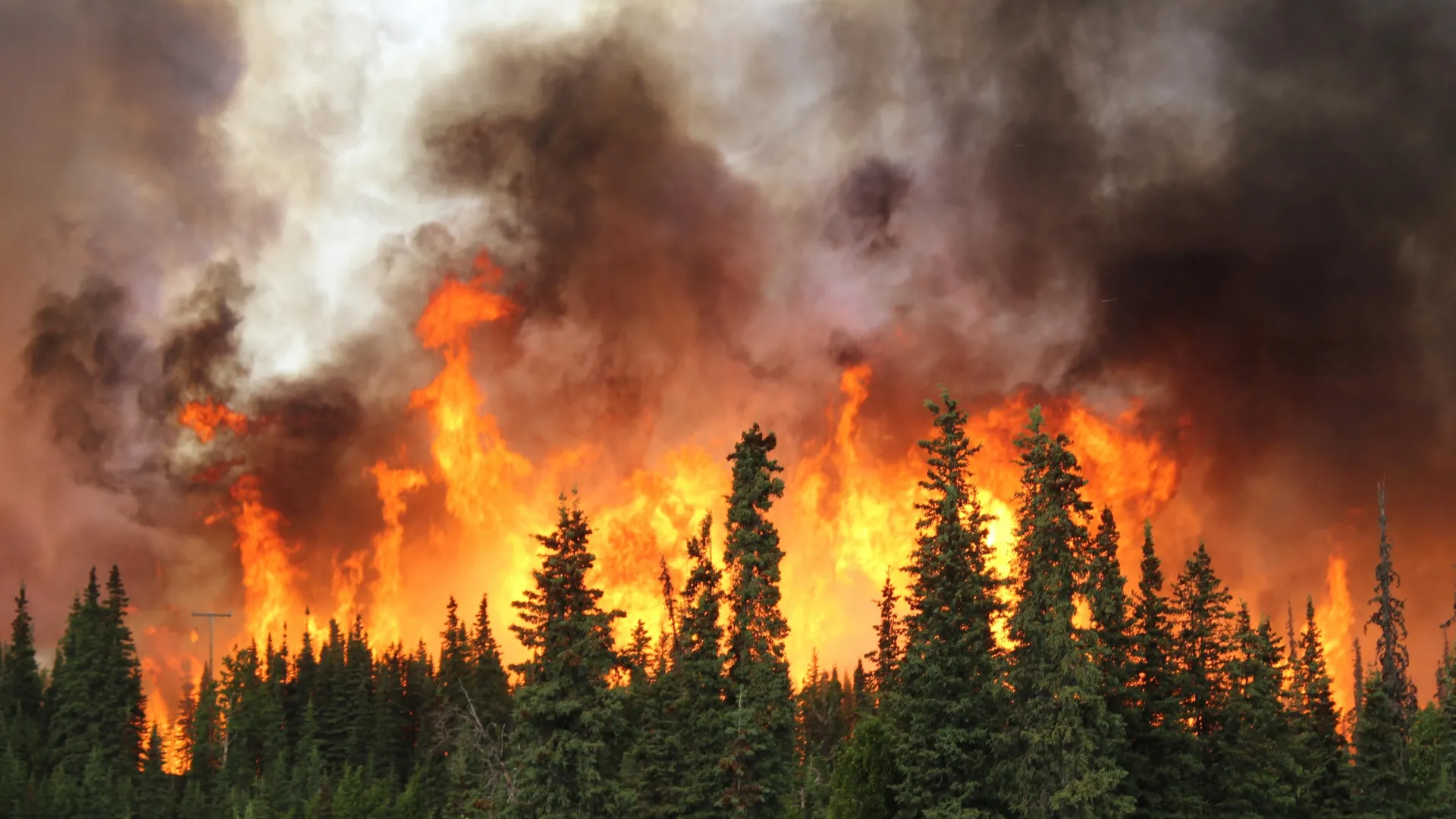
Wildfires currently raging across vast swaths of Canada and the Western United States are not merely a regional concern; they are spewing plumes of smoke that have enveloped millions of Americans, transforming hazy skies into a recurring and increasingly dangerous reality. This pervasive ashy haze represents a stark illustration of how climate-driven wildfires are becoming more frequent, intense, and widespread, with health impacts that scientists now estimate are significantly more severe than previously understood. A groundbreaking study published in the journal Nature on September 18th by researchers at Stanford University projects that the escalating effects of global warming could lead to approximately 30,000 additional deaths annually nationwide by 2050, primarily due to increased smoke pollution across North America driven by climate change.
The study’s senior author, Marshall Burke, a professor of environmental social sciences at the Stanford Doerr School of Sustainability, underscored the urgency of these findings. "There’s a broad understanding that wildfire activity and wildfire smoke exposure are changing quickly," Burke stated. "This is a lived experience, unfortunately, for folks on the West Coast over the last decade and folks on the East Coast in the last few years. Our paper puts some numbers on what that change in exposure means for health outcomes, both now and in the future as the climate warms."
The Expanding Reach of Wildfire Smoke
While wildfires have historically been an intrinsic element of life in the Western United States, a confluence of warmer temperatures and prolonged dry spells is now fueling blazes that are larger, more frequent, and of longer duration. Consequently, the smoke generated by these infernos is traveling farther and lingering for extended periods. The Stanford study’s alarming projections reveal that no community in the U.S. is exempt from the potential for smoke exposure.
When the economic consequences of these smoke-related deaths are quantified, the study estimates that annual damages could surge to $608 billion by 2050 under a "business-as-usual" emissions scenario. This scenario assumes global temperatures rise by approximately 2 degrees Celsius above pre-industrial levels. This projected economic toll eclipses current estimates for all other climate-driven damages in the U.S. combined, including deaths attributed to heatwaves, agricultural losses, and damage from severe storms.
Minghao Qiu, lead author of the study and an assistant professor at Stony Brook University, who conducted the research as a postdoctoral scholar in Burke’s lab, highlighted the nationwide scope of the issue. "What we see, and this is consistent with what others find, is a nationwide increase in wildfire smoke," Qiu explained. "There are larger increases on the West Coast, but there’s also long-range transport of wildfire smoke across the country, including massive recent smoke events in the Eastern and Midwestern U.S. from Canadian fires." This phenomenon, where smoke from distant wildfires travels thousands of miles, was vividly demonstrated in the summer of 2023, when smoke from Canadian wildfires caused historically poor air quality across major U.S. cities, including New York, Chicago, and Philadelphia, prompting widespread health advisories and disruptions.
Uniquely Dangerous Pollution: The Nuances of Wildfire Smoke
The lethality of wildfire smoke stems from its complex chemical composition. Unlike other forms of air pollution, wildfires can expose large populations to a cocktail of toxic substances for days or even weeks. Critically, the study reveals that these exposures can contribute to mortality for up to three years following the initial inhalation of smoke.
While much research has focused on fine particulate matter, or PM2.5, from various sources, which can penetrate deep into the lungs and enter the bloodstream, the specific dangers posed by PM2.5 originating from wildfire smoke are less understood. However, emerging research indicates that wildfire smoke contains a broader spectrum of toxic chemicals detrimental to human health. Qiu, Burke, and their team employed a sophisticated methodology to assess these elevated risks.
Methodology and Projected Impacts
The researchers meticulously combined county-level U.S. death records from 2006 to 2019 with data on ground-level smoke emissions, wind patterns, and the movement of airborne particulate matter. Utilizing advanced machine learning techniques, they modeled how changes in wildfire emissions in one region could influence smoke concentrations in distant areas. By correlating these shifts in smoke concentration with historical mortality variations, and then integrating global climate models to forecast future fire activity and smoke levels under different warming scenarios, they were able to project health impacts through 2050.
The findings are stark: under a business-as-usual emissions trajectory, excess deaths linked to smoke PM2.5 exposure could escalate by over 70%, rising from an average of roughly 40,000 annual deaths attributed to smoke between 2011 and 2020 to an alarming 70,000 per year by 2050. The geographical distribution of these projected increases highlights significant vulnerabilities. California is anticipated to experience the largest rise in annual smoke exposure deaths, with an additional 5,060 fatalities. Other states facing substantial increases include New York (1,810 additional deaths), Washington (1,730), Texas (1,700), and Pennsylvania (1,600).
A Hidden Economic and Health Tax
By quantifying the economic damage associated with smoke-related mortality, the study illuminates a significant, often overlooked, financial burden on both families and businesses. Even under optimistic climate mitigation scenarios, where global emissions are rapidly reduced to stabilize temperatures below 2 degrees Celsius by the end of the century, U.S. deaths from climate-driven smoke exposure are still projected to exceed 60,000 annually by 2050.
Qiu emphasized the inadequacy of current climate impact assessments. "If you look at the leading climate impact assessment tools that are used to inform policy, none of them incorporate how changes in climate could influence wildfire smoke and related human mortality," he stated. "Our study shows climate models are missing a huge part of the climate impacts in the U.S. – it’s like leaving the main character out of a movie."
The economic implications extend beyond direct healthcare costs. Lost productivity due to illness, increased demand for emergency services, and the disruption of daily life caused by poor air quality all contribute to this substantial economic burden. For businesses, particularly those reliant on outdoor activities or with outdoor workforces, smoke events can lead to significant operational disruptions and financial losses.
A Shared Burden and Potential Mitigation Strategies
The study’s findings also reveal that the vulnerability to wildfire smoke exposure is far broader than initially assumed. Burke elaborated, "Our understanding of who is vulnerable to this exposure is much broader than we thought. It’s pregnant people, it’s kids in schools, it’s anyone with asthma, it’s people with cancer. We look at one specific health outcome in this study – mortality – and unfortunately find a shared burden of exposure for individuals across the U.S." This underscores the pervasive nature of the threat, impacting diverse populations with pre-existing health conditions and those with developing bodies.
Despite the grim projections, the study also points towards actionable strategies that public health officials and communities can implement to mitigate this escalating threat. Investing in advanced indoor air filtration systems, for instance, can provide crucial protection for vulnerable individuals and communities during smoke events. Furthermore, proactive land management practices, such as prescribed burns and other fuel reduction techniques, can help reduce the intensity and spread of wildfires, thereby diminishing the severity of resulting smoke waves.
Broader Implications and Future Research
The implications of this research are far-reaching, demanding a re-evaluation of climate change adaptation and mitigation strategies. It highlights the interconnectedness of environmental factors and public health, underscoring the need for integrated policy responses. The study’s emphasis on the economic consequences also provides a compelling argument for increased investment in climate action, framing it not just as an environmental imperative but as a critical economic safeguard.
Future research could delve deeper into the specific toxicological effects of wildfire smoke on human health, explore the differential impacts on various demographic groups, and assess the long-term economic consequences beyond mortality. Continued monitoring of air quality and health outcomes in regions frequently affected by wildfire smoke will be crucial for refining these projections and informing effective public health interventions.
The widespread nature of wildfire smoke, as demonstrated by this study and recent events, signifies a profound shift in the climate landscape. It demands a comprehensive and urgent response, integrating public health, environmental policy, and economic considerations to protect communities from this increasingly dangerous, climate-driven hazard.
The research was supported by the Keck Foundation, Stanford’s Center for Innovation in Global Health, Stony Brook University, the Harvard University Center for the Environment, and the Stanford Research Computing Center. Additional co-authors on the study include Jessica Li, Renzhi Jing, Makoto Kelp, Jeff Wen, Mathew Kiang, Sam Heft-Neal, and Noah Diffenbaugh from Stanford University, along with researchers from the University of California, San Diego, the University of Washington, Princeton University, the National Oceanic and Atmospheric Administration, and the National Bureau of Economic Research.
