
 By admin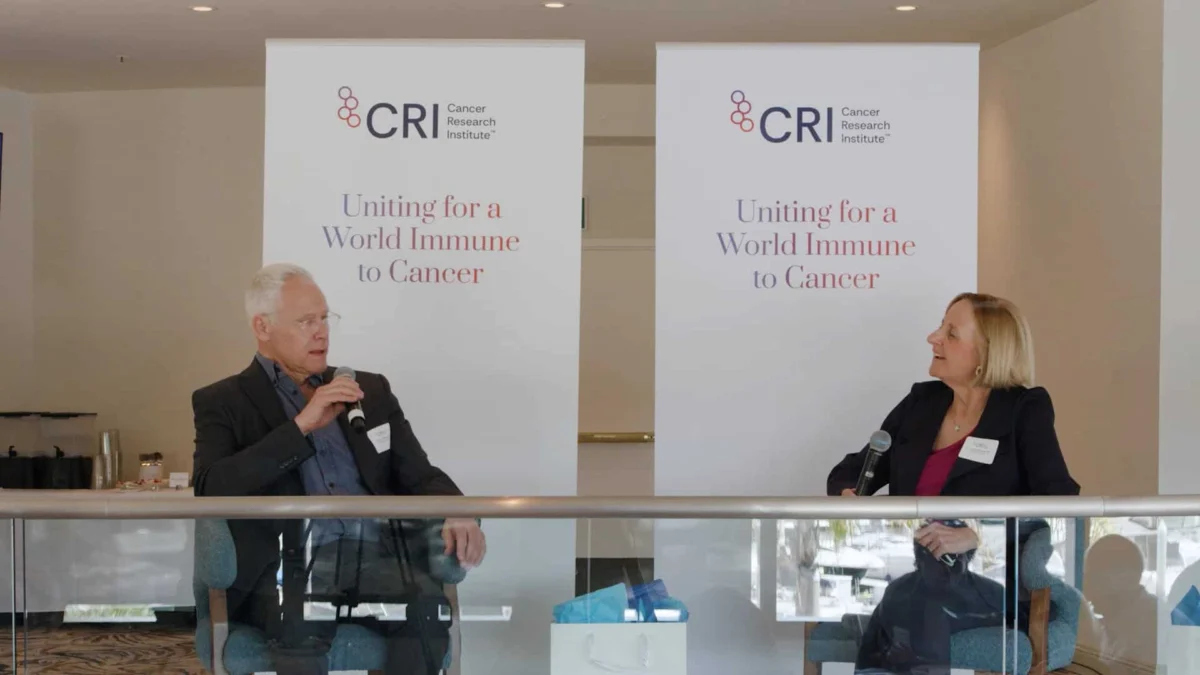
At the highly anticipated 2026 AACR Annual Meeting, a beacon event in the global cancer research calendar, the Cancer Research Institute (CRI) and the American Association for Cancer Research (AACR) collectively bestowed the distinguished AACR–CRI Lloyd J. Old Award in Cancer Immunology upon Kenneth M. Murphy, MD, PhD. This prestigious accolade, reserved for scientists whose pioneering work fundamentally transforms the understanding and treatment of cancer, recognized Dr. Murphy’s profound and indelible impact on the field. His decades of meticulous research, particularly in defining the critical roles of dendritic cells (DCs) in orchestrating immune responses, have irrevocably shaped the trajectory of modern cancer immunology and laid essential groundwork for contemporary immunotherapeutic strategies.
The annual meeting, a nexus for thousands of scientists, clinicians, and advocates worldwide, serves as a vital platform for sharing groundbreaking discoveries and fostering collaborative efforts against cancer. Against this backdrop of scientific exchange, the recognition of Dr. Murphy underscored the enduring importance of basic immunological research in driving clinical advancements. This year, the CRI introduced an innovative format for the award ceremony: a fireside-style conversation that brought Dr. Murphy together with the previous year’s recipient, Crystal Mackall, MD. This engaging discussion transcended a typical lecture, offering a candid and expansive exploration into the realities of scientific discovery, the often-nonlinear path of research, and the future horizons of cancer immunology. The dialogue provided attendees with a rare glimpse into the minds of two luminaries, revealing the personal philosophies and intellectual rigor that underpin transformative scientific careers.
The Legacy of Lloyd J. Old and the Award’s Significance
The AACR-CRI Lloyd J. Old Award in Cancer Immunology carries significant weight within the scientific community, embodying the spirit of a true pioneer. Dr. Lloyd J. Old, for whom the award is named, is widely regarded as the "father of modern tumor immunology." His seminal work in the mid-20th century laid the conceptual and experimental foundations for understanding the immune system’s interaction with cancer. Dr. Old’s groundbreaking discoveries, including the identification of tumor antigens and the concept of cancer immunosurveillance, were often met with skepticism in an era dominated by chemotherapy and radiation. Yet, his unwavering belief in the immune system’s potential to fight cancer ultimately paved the way for the revolutionary immunotherapies we see today. The award, therefore, not only recognizes outstanding contemporary achievements but also serves as a perpetual tribute to Dr. Old’s visionary leadership and relentless pursuit of knowledge, celebrating those who continue to build upon his monumental legacy.
The Cancer Research Institute (CRI), a driving force behind the award, has been at the forefront of supporting basic and translational research in cancer immunology for over 70 years. Its mission is to save more lives by fueling the discovery and development of powerful immunotherapies for all cancers. The partnership with the AACR, a global leader in cancer research, amplifies the award’s reach and significance, ensuring that the most impactful contributions to cancer immunology receive the highest possible recognition.
Dr. Murphy’s Foundational Discoveries: Defining Dendritic Cells
Dr. Murphy’s receipt of the Lloyd J. Old Award is a testament to his profound and sustained contributions to understanding the immune system’s intricacies. His career has been largely dedicated to unraveling the mysteries of dendritic cells (DCs), a specialized type of antigen-presenting cell (APC) that plays a central, often decisive, role in initiating and shaping immune responses. DCs act as sentinels of the immune system, constantly sampling their environment for foreign invaders or abnormal self-cells, such as cancer cells. Upon detecting a threat, they mature, migrate to lymph nodes, and present processed antigens to T cells, thereby activating specific adaptive immune responses.
One of Dr. Murphy’s most impactful discoveries involved the identification and characterization of specific subsets of dendritic cells, particularly the conventional type 1 dendritic cell (cDC1) subset. His research meticulously demonstrated that cDC1s are uniquely potent in their ability to cross-present antigens and activate CD8+ T cells, often referred to as cytotoxic T lymphocytes (CTLs). These CD8+ T cells are the primary effectors responsible for directly recognizing and killing cancer cells. Prior to his work, the nuanced roles of different DC subsets were not fully appreciated, leading to a less targeted approach in immunotherapy development. Dr. Murphy’s findings provided critical insights into why some immune responses are robust and durable, while others are not, fundamentally reshaping the accepted understanding of anti-tumor immunity. This distinction is particularly crucial in the context of cancer, where an effective CD8+ T cell response is often the hallmark of successful immune eradication of tumors.
The practical implications of Dr. Murphy’s work are far-reaching. The success of groundbreaking immunotherapies, such as immune checkpoint inhibitors (e.g., pembrolizumab, nivolumab, ipilimumab), which have revolutionized the treatment of various cancers, relies heavily on the proper functioning of dendritic cells. While checkpoint inhibitors work by releasing the "brakes" on T cells, allowing them to attack cancer more effectively, they still depend on the initial priming and activation of these T cells by DCs. Dr. Murphy’s research illuminated that even these successful treatments ultimately depend on robust DC function, particularly the cDC1 subset, to initiate and sustain anti-tumor immunity. Without effective DC presentation, the T cells might not be sufficiently activated or targeted, limiting the efficacy of checkpoint blockade.
The Fireside Chat: A Candid Look at Scientific Progress
The fireside conversation between Dr. Murphy and Dr. Mackall offered a unique, unfiltered perspective on the scientific journey. A central theme that emerged immediately was the inherently nonlinear nature of scientific progress. Dr. Murphy candidly described his career not as a predetermined series of planned breakthroughs, but rather as a mosaic of incremental steps, often propelled by innate curiosity rather than a rigidly defined endpoint. "We’re still asking the same question that we started off with," he reflected, highlighting how core biological questions can sustain decades of inquiry, evolving in complexity but retaining their fundamental essence. This philosophy—of following the biology wherever it leads, rather than forcing a preconceived hypothesis—has been instrumental in many of the field’s most significant advances. It underscores the importance of basic, curiosity-driven research as the bedrock upon which applied science and clinical breakthroughs are built.
The discussion also reinforced how much remains unknown despite significant strides. Dr. Murphy emphasized that many fundamental questions in immune biology remain unresolved, particularly concerning the precise mechanisms by which immune responses are initiated, sustained, and ultimately terminated. He highlighted the critical transition between "stem-like" T cells, which possess self-renewal capacity and can differentiate into various effector subsets, and "short-lived effector cells," which are terminally differentiated and execute immediate immune functions but lack long-term persistence. Understanding and manipulating this transition, he posited, could be key to determining the durability and effectiveness of anti-tumor responses in patients, potentially leading to more enduring remissions in immunotherapy.
Challenges and Opportunities: Vaccines, AI, and Mentorship
The conversation naturally extended to other complex areas within cancer immunology, including cancer vaccines. Both speakers acknowledged the field’s cyclical history of optimism and disappointment surrounding vaccine development. Dr. Murphy pointed out that the success of these approaches might hinge less on the specific antigen being targeted and more on the identity and functionality of the cells presenting that antigen. Reiterating his foundational work, he emphasized that not all DCs are created equal. cDC1-driven priming consistently leads to stronger, more durable CD8+ T cell responses, while other DC subsets may elicit less effective or even tolerogenic responses. New findings from his laboratory further underscore this point, suggesting that in advanced vaccine platforms, such as mRNA and cDNA vaccines, DCs are absolutely essential for activating potent and lasting immune responses. This research has profound implications for designing next-generation cancer vaccines that can reliably induce robust anti-tumor immunity.
Beyond the specifics of immunology, the discussion broadened to encompass the evolving landscape of science itself. Both Drs. Murphy and Mackall reflected on the profound changes occurring in the research environment, from mounting funding pressures to the rapidly expanding role of artificial intelligence (AI). Dr. Murphy viewed AI as an undeniably powerful and useful tool, particularly for managing, analyzing, and extracting insights from the vast and ever-growing datasets generated in modern biological research. However, he cautioned against viewing AI as a panacea or a substitute for the core intellectual processes of scientific discovery. He stressed that identifying the right scientific question, formulating insightful hypotheses, and interpreting results with critical context and nuanced understanding remain uniquely human endeavors, irreplaceable by even the most sophisticated algorithms.
Dr. Mackall echoed a related concern: the sheer volume of scientific information now available can, paradoxically, make it harder for young scientists to identify those truly critical, unanswered questions. In this information-rich but potentially overwhelming environment, the roles of mentorship, critical thinking, and the ability to synthesize disparate pieces of knowledge into a coherent understanding become even more paramount. The guidance of experienced researchers, like Drs. Murphy and Mackall, is crucial in helping the next generation navigate this complex landscape, fostering their ability to discern signal from noise and focus on impactful inquiries.
The Enduring Value of Basic Science and Future Outlook
If there was a singular, unifying message that resonated across Dr. Murphy’s award lecture and the subsequent conversation, it was the undeniable truth that breakthroughs in cancer immunotherapy are profoundly and inextricably rooted in basic scientific research. The transformative advances that are revolutionizing patient care today – from the remarkable efficacy of immune checkpoint blockade to the promising frontier of next-generation cancer vaccines – are not the result of sudden leaps. Rather, they are built meticulously, brick by brick, upon decades of foundational discoveries concerning the intricate workings of the immune system. Dr. Murphy’s work on dendritic cells stands as a prime example of how deep dives into fundamental biological mechanisms can unlock revolutionary clinical applications.
As Dr. Murphy’s ongoing research continues to demonstrate, there remains an immense amount to learn about the immune system and its complex interplay with cancer. The future of cancer immunotherapy, while promising, is still replete with challenges and unanswered questions. However, if history serves as any guide, the next wave of significant progress will not likely emerge from rigid, predetermined plans or overly prescriptive research agendas. Instead, it will spring forth from the same spirit that has driven Dr. Murphy’s illustrious career: a relentless curiosity, an unwavering commitment to following the elegant logic of biology, and the courage to pursue fundamental questions, one discovery at a time. This approach, grounded in scientific rigor and intellectual humility, promises to continue pushing the boundaries of what is possible in the fight against cancer, ultimately translating into more effective therapies and brighter futures for patients worldwide. The legacy of the Lloyd J. Old Award, carried forward by scientists like Kenneth M. Murphy, underscores the timeless power of basic science to transform human health.
